

Jalala is populated by people of different backgrounds and ethnicities, although almost all of its residents are Pashtuns. The people of Jalala are not usually entwined in tribal culture.
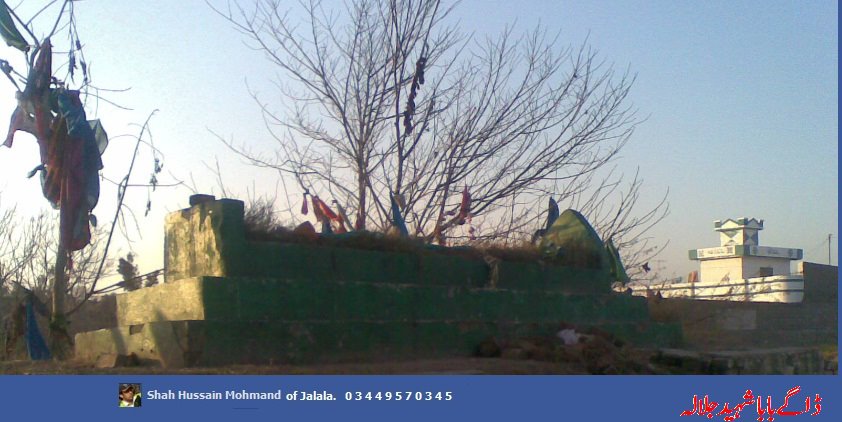
The Yousafzai, Myaghan, Sayyads, Kakar,i, Mohmand, Khattak, Shilmani,Mians and Kakakhels Mians are also present in Jalala. The Syed Akhunkhel Mians, Peers enjoy special respect amongst the Pathans on account of their ancestry. These individuals were religious people who traveled many years back and the Pukhtons welcomed and honored them. Visits to shrines or ziarats were very common especially by the women, however this is gradually declining as the implications of bida't are getting familiar.
Popular foods are beef cooked as chapli kabab, seekh kabab, tikkas, and qahwa (green tea). A tandoor (oven) for baking bread is present in many houses.Most of the people like Cholay (Chick pea) and Lobya (beans),Saag and Roti of Juwar (maize) is liked by a lot of people.
There is significant difference in dress of common people and educated and upper classes. The upper class people are inclined to western dress. The middle and lower classes are generally wearing typical pathan dress, the old loose coat or khalqa has been replaced by the less cumbersome qamiz with blanket and coarse chader during winter season around the body. Among the villagers use of mazari cloth is common for qamiz and shalwar. A chitrali woolen cap is used in winter, while a typical light color cap is worn in the summer. Sapley (studded, leather sandals) are the most common footwear. Shalwar qamiz and dopatta is the dress of women. Pardah is universal among women in a form of a printed coarse piece of cloth called "Parhoone" or plain white version or burqa.
The use of ornaments among women is also common, such as earrings and bangles, and sometimes a quba, which consists of two egg-like cups connected by a chain or a flat circle of shaped gold hanging on the forehead
Religion has a great impact on the culture of people. The Majority of the population are strict followers of the sunnah (Sunni).
Festivals and fairs are a part of the Pukhton life. The most important festivals are the two Eids. There are weekly cattle fairs in Jalala at which cattle and other necessities of life are bought and sold.


Links
PEOPLE
Foods
Dress and Ornaments
Religion
Festivals