
More powerful
and dangerous hurricanes
Warmer water in the oceans pumps more energy into tropical storms, making them more intense and potentially more destructive.
Example:
- The number of category 4 and 5 storms has greatly increased over the past 35 years, along with ocean temperature.
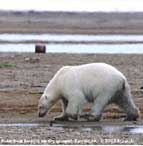 |
| Thawing in the arctic |
Melting ice glaciers,
early ice thaw
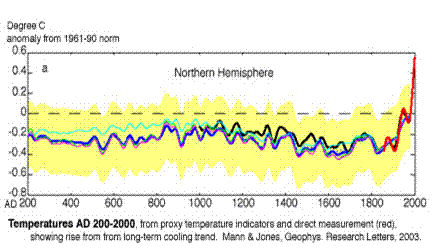
Rising global temperatures will speed the melting of glaciers and ice caps, and cause early ice thaw on rivers and lakes.
Examples:
- At the current rate of retreat, all of the glaciers in Glacier National Park will be gone by 2070.
- After existing for many millennia, the northern section of the Larsen B ice shelf in Antarctica -- a section larger than the state of Rhode Island -- collapsed between January and March 2002, disintegrating at a rate that astonished scientists. Since 1995 the ice shelf's area has shrunk by 40 percent.
- According to NASA, the polar ice cap is now melting at the alarming rate of nine percent per decade. Arctic ice thickness has decreased 40 percent since the 1960s.
- In 82 years of record-keeping, four of the five earliest thaws on Alaska's Tanana River were in the 1990s.
Rising sea levels
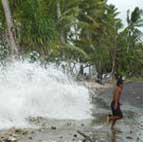 |
Oceans will swallow up island nations |
Example:
- The current pace of sea-level rise is three times the historical rate and appears to be accelerating.
- Global sea level has already risen by four to eight inches in the past century. Scientists' best estimate is that sea level will rise by an additional 19 inches by 2100, and perhaps by as much as 37 inches.