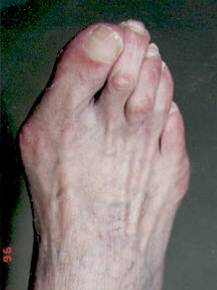
Bunions
Misaligned big toe joints which can become swollen and
tender, causing the first joint of the big toe to slant outward, and the
second joint to angle toward the other toes. Bunions tend to be
hereditary, but can be aggravated by shoes that are too narrow in the
forefoot and toe.
Achilles Tendinitis
Irritation and Achilles Tendinitis inflammation of the
tendon that attaches to the back of the heel bone. Achilles tendinitis can
be caused by improper warm up or overtraining.
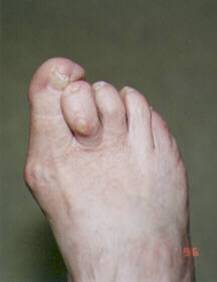
Hammertoe
A condition, usually stemming from muscle imbalance, in
which the toe is bent in a claw-like position. It occurs most frequently
with the second toe, often when a bunion slants the big toe toward and
under it, but any of the other three smaller toes can be affected.
Heel Spurs
Growths of bone on the underside, forepart of the heel
bone. Heel spurs occur when the plantar tendon pulls at its attachment to
the heel bone. This area of the heel can later calcify to form a spur.
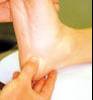
Plantar
Fasciitis
Plantar fasciitis (or heel pain) is commonly traced to an inflammation on the bottom of the foot

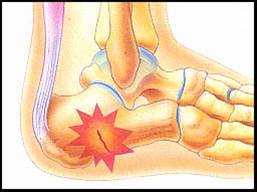
Stress
Fractures
?One of the
various types of fractures, stress fractures require vastly different
treatment. Stress fractures are incomplete cracks in bone caused by
overuse.
Sesamoiditis
Sometimes known as the "ball bearings of the foot," the
sesamoids are two small bones found beneath the first metatarsal bones.
They can inflame or rupture under the stress of exercise.

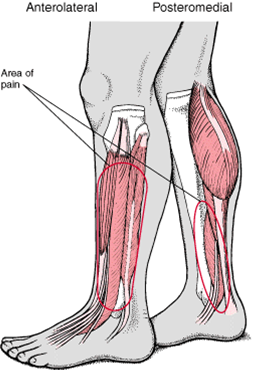
Shin Splints
?Pain to either side
of the leg bone, caused by muscle or tendon inflammation. It
is commonly related to excessive foot pronation (collapsing arch), but
may be related to a muscle imbalance between opposing muscle groups in
the leg.
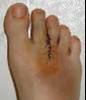
Neuromas
Enlarged benign growths of nerves, most commonly between
the third and fourth toes. They are caused by tissue rubbing against and
irritating the nerves. Pressure from ill-fitting shoes or abnormal bone
structure can create the condition as well.
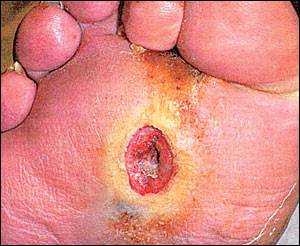
Diabetic
?Foot
disorders such as ulceration, infection, and gangrene are the leading
causes of hospitalization in patients with diabetes mellitus
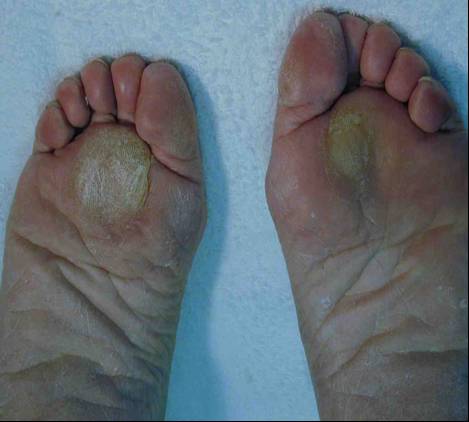
Calluses
A callus is an area of thickened skin tissue on the
bottom of the foot due to irritation
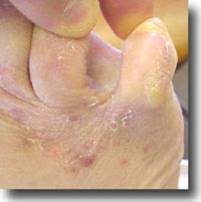
Athlete's
foot
Athlete's foot (tinea pedis) is a common, persistent
infection of the foot caused by a dermatophyte, a microscopic fungus that
lives on dead tissue of the hair, toenails, and outer skin layers.
Fungus nails
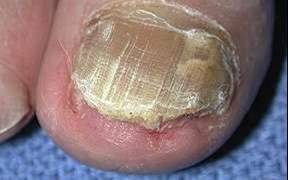
Nail Fungus often presents itself as a
thickened, brittle nail with changes
in color that range from yellow-white
to gray to black.
thickened, brittle nail with changes
in color that range from yellow-white
to gray to black.