raised mounds of clay from the disintegrated logs and clay chinking. The lack of wall evidencepossibly reflects the immediate post-abandonment scavenging of logs by locals and the resultant
dispersal of the clay daub.
Separating Features 94 and 95 is a large depression (Feature 68). A possible explanation
for this feature, and similar features located throughout the camp, is that it began life as a borrow
pit. Such pits were excavated by soldiers to obtain clay used in daubing the structure and the
chimney. Materials recovered from the pit are similar to those finds found within the hearth—
consisting of dense concentrations of small burnt nails and burnt clay all materials that were
potentially swept from the hearth and deposited in the pit.
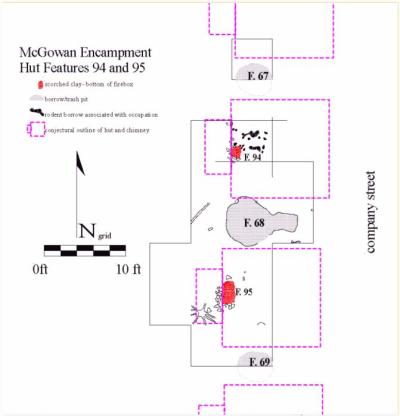
Figure 5. Map showing layout of features with conjectured hut sites superimposed in pink.
The layout of the huts and pit features in this portion of the camp is particularly revealing