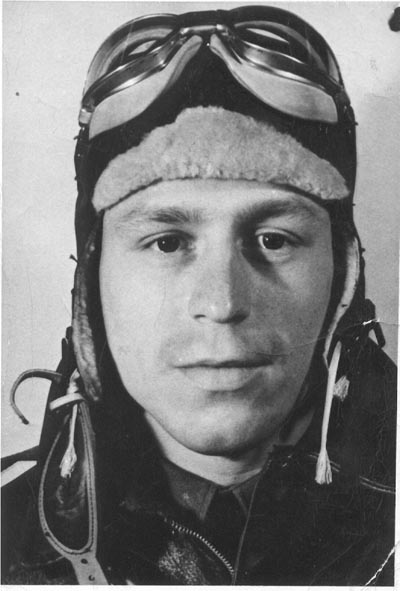
Ernest Christian Tompson
First Lieutenant, US Army Air Force, World War II
Stateside Service
July 24, 1944: HQ, First General Hospital, Etousa: ECT released from hospital to
"a general hospital for further observation and treatment" (ECT annotation ="Home at Last!")
1944 Newspaper clipping about ECT flying transport plane
over Winchester also notes:
"Lt. Tompson returned from overseas duty himself July 28, 1944, after 21 months overseas duty.
He was a fighter pilot during the African campaign and was finally sent home on sick leave.
Since then he has recovered his health and has been assigned to the Air Transport Command."
August 11, 1944: Lovell General Hospital, Fort Devers, MA: ECT and other officer patients assigned
to AAF Redistribution Center, Atlantic City, NJ
October 4, 1944: Officers released from AAF Redist. Ctr., and reassigned -- ECT to 800th AAF Base
Unit Stout Field, Indianapolis
1944: ECT flying, either as Pilot or Copilot, and transporting patients to hospitals near
their homes (called "air evacuation")
In January, 1945, ECT and others from Stout AFB were assigned to Morrison Field, Palm Beach, FL,
to "participate in Gypsy Task Force Mission," which I think was flying planes or ? to/from Cuba
1944-45: ECT also did, as Pilot or Copilot, some transporting of planes and gliders around
the U.S. (I have lots of records of these flights, but don't think they are interesting enough to list here.)
1/25/46: Greenville Army Air Base, Greenville, SC: ECT and other officers of the 80th AAF Base
Unit, Squadron A, assigned to duties - ECT "Asst Base Personal Affairs"
5/23/46: ECT recommended for relief from active duty "based on reduction in organizational
strength of officers...this in no way reflects on your past record of service"
5/28/46: Letter from ECT to Commanding Officer, Greenville Air Base, requesting he continue on
active duty. At this time he had 2200 hours of flight time. At this time he and another officer were
doing Casualty Assistance, notifying bereaved families of men lost in the war. He makes his case for
retention principally on two points:
casualty assistance is not a one person job, a very large work load; and,
he has done extra work and study in psychology to enable him to better provide assistance to the bereaved.
ECT ordered to Separation Center, Fort Dix, NJ, to report 7/18/46
7/20/46: Fort Dix: Officers granted leaves of absence - ECT 106 days
11/4/46: ECT relieved from active duty with rank of Captain