
ST. MARY'S CATHOLIC PARISH
OUR SEASONS


Our Worship Space
Our Symbols & Sacraments
Our Seasons
Our Devotions
Our Liturgical Items
Our Prayers
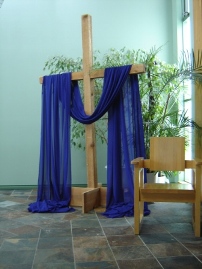
Lent extends from Ash Wednesday to the afternoon of Holy Thursday. During Lent, we don't sing the Gloria (except on feast days) or the Alleluia. This "fasting" helps us to welcome their return with greater joy during the Triduum.
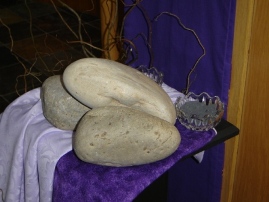
This season of Ordinary Time begins after the Feast of the Baptism of the Lord and lasts until Shrove Tuesday (the day before Ash Wednesday). It can be anywhere from a month to two months long. Technically speaking, Ordinary Time isn't even a church season, it's the time between the other seasons. And yet it builds on what has gone before.
Advent/Christmas/Epiphany was full of beginnings. As we begin Ordinary Time, we build upon those beginnings. "Repent and believe the Good News". And we look ahead to the coming season of Lent: "Seek justice; seek humility".
And in the middle of this period we have the Presentation of the Lord on Feburary 2, previously known as Candlemas. As the name suggests, it is a feast of lights, when candles are blessed nd we march in procession to acclaim Christ the Light of the world.
At Christmas the light came into the world.
At Epiphany it rose to shine in glory like a star on high.
At Candlesmas the light is placed in our arms.
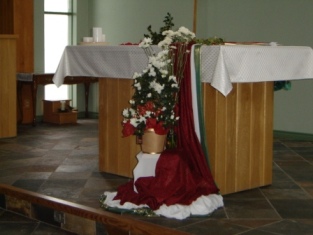
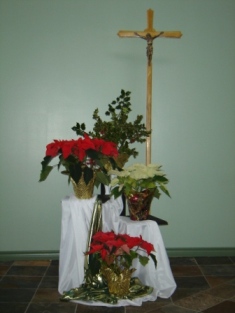
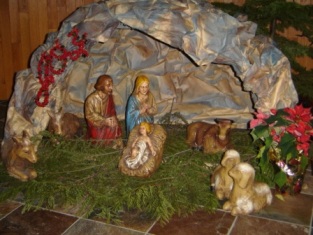
Christmas is one of our most important seasons, for in it, we celebrate the Incarnation of our God and the revelation of Jesus Christ to all people's. And yet, it is not our most important celebration or season. That is reserved for the Easter Vigil and the following Easter Season. For it is there that our redemption and salvation is accomplished.
The Christmas Season is full of many different feasts and celebrations. On December 26, we celebrated the Feast of St. Stephen, the first Christian martyr. On December 27, we celebrated the Feast of St. John, and on December 28, it was the Feast of the Holy Innocents. In most years, the Feast of the Holy Family is celebrated on a Sunday, but because the season was so short, it was moved back to a Friday, December 30. That leaves us with the last 3 major celebrations: Mary the Mother of God on January 1, Epiphany on January 8 and the Baptism of the Lord on January 9. What a season!!! Jam-packed with celebrations and feasts, all celebrating some aspect of the Incarnation of our Lord, Jesus Christ.
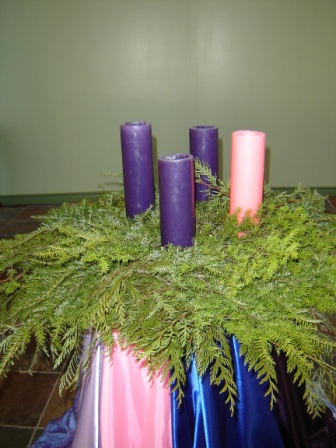
The wreath of evergreens symbolizes continuous life.
The circle, which has no beginning or end, symbolizes the eternity of God, the immortality of the soul, and the everlasting life found in Christ.
The four candles represent the four weeks of Advent. Three of the candles are purple and one is rose. The purple candles in particular symbolize the prayer, penance, and preparatory sacrifices and goods works undertaken at this time. The rose candle is lit on the third Sunday, Gaudete Sunday, the Sunday of rejoicing, because the faithful have arrived at the midpoint of Advent, when their preparation is now half over and they are close to Christmas.
The progressive lighting of the candles symbolizes the expectation and hope surrounding our Lord�s first coming into the world and the anticipation of His second coming to judge the living and the dead. The light again signifies Christ, the Light of the world.
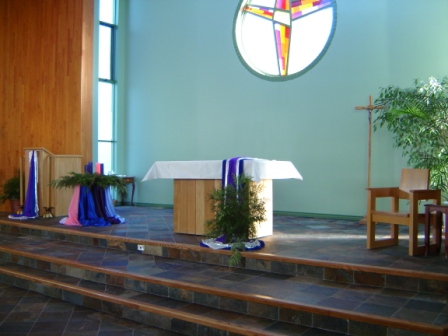
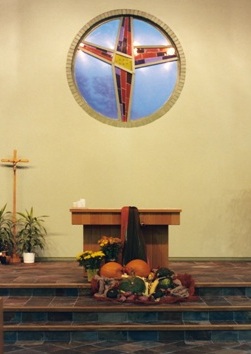
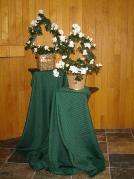
The primary colour for Ordinary Time is green, which has a long association in our tradition with hope.
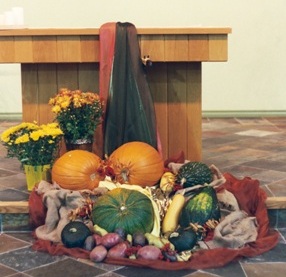
Ordinary Time is a chopped up season, with a small block between Christmas and Lent, and then the largest block between Pentecost and Advent. The liturgical season of Ordinary Time spans a great variety of climatic seasons: winter, spring, summer and fall. It helps us to enter into the spirit of the season, if we also tie it into the climatic season. Thus, the theme of the autumnal harvest ties in quite nicely with the end of the liturgical year in November. Particularly during November, we anticipate Christ's Second Coming at the end of time, when we will all be gathered up, the fruits of the Lord's harvest.
phone - 250-564-4097 fax - 250-562-3540
stmarys.parish(at)shawcable.com