















 |
| Should the death penalty be reinstated? |

Springs, a poorer white area on the outskirts of Johannesburg, proved to be the breeding ground of a new generation of rockers - rockers as unimpressed by the commercial blandishments of the mainstream industry as they were disillusioned about South Africa's repressive white regime.
The Radio Rats provided social satire, while Corporal Punishment released "Darkie", a sarcastic picture of white angst ("Darkie's gonna get you"). Bands such as The Asylum Kids and Dog Detachment also carried the flag of youthful rebellion, and gained significant followings.
By the mid-1980s an alternative rock culture had developed, and showed considerable diversity.
James Phillips, a founding member of Corporal Punishment, was a central figure. As Bernoldus Niemand, he produced an album of satirical Afrikaans songs such as "Hou My Vas, Korporaal" (Hold Me Tight, Corporal), a satire on the army, thereby influencing an entire "Alternative Afrikaans" movement of Afrikaners protesting against repressive social mores; bands such as The Gereformeerde Blues Band and singers such as Koos Kombuis were later to gain an enthusiastic following.
'Dylan' of Afrikaans rock dies
At the same time, Phillips produced superbly bluesy rock with his band The Cherry-Faced Lurchers. A vibrant underground rock scene, featuring bands such as The Softees, The Aeroplanes, Bright Blue and The Dynamics, kept rebellious young white South Africans "jolling" through the 1980s.
Crossing over
At the same time, a crossover was beginning to happen between black and white musicians.Johnny Clegg, a sociologist who learnt so much about Zulu music and dance that he formed his own group, Juluka, with Sipho Mchunu, led the charge. Juluka's ability to mix traditional Zulu music with white pop and folk was in itself a challenge to the racial boundaries the apartheid regime attempted to erect between blacks and whites.
With often a more pop-driven style, bands such as eVoid, Via Afrika and Mango Groove followed the crossover trail blazed by Clegg (hailed overseas as "the white Zulu"), whose later band, Savuka, continued to reproduce his earlier success.
Moving on
The white pop/rock tradition has continued up to the present in South Africa, growing ever bigger and more diverse. Bands such as The Springbok Nude Girls, possibly the finest South African rock band of the 1990s, spearheaded a drive into harder, guitar-driven sounds, while groups such as the acclaimed Fetish began to experiment with the new electronic palette made available by computers and sampling. Today, an exciting pop/rock/electronic scene exists all across South Africa.
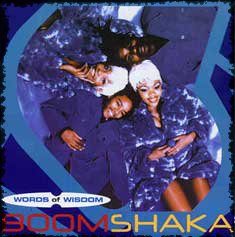
Boom Shaka's 'It's About Time' swept the charts
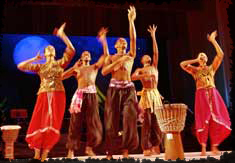
Dance has finally become respectable, with a number of home-grown productions wowing audiences in SA and abroad

SA bids for Square Kilometre Array
South African scientists have submitted a bid to host the Square Kilometre Array (SKA), an enormous radio telescope.......
