















 |
| Should the death penalty be reinstated? |

Pop, rock & cultural crossover
From the 1960s onward, more and more white rockers and pop groups appeared to appeal to white audiences in a segregated South Africa.
Four Jacks and a Jill
Among the most successful was the band Four Jacks and a Jill (the name echoed their line-up of four men and a woman), who had their first number one hit with "Timothy" in 1967. Within the next year, they had an international hit on their hands with "Master Jack", which reached number eight in the USA and number one in Canada, Malaysia, New Zealand and Australia.Throughout the 1970s Four Jacks and a Jill were perhaps South Africa's most successful pop group, touring Britain, the US, Australia and other places, including Rhodesia (now Zimbabwe).
Despite the generally unthreatening, pretty nature of their music, the band managed to get a song banned by the SABC and were the focus of protests by conservative elements who doubtless found any pop music akin to devil-worship. After many line-up changes, the original pair at the heart of the band, Clive Harding and Glenys Lynne, eventually disbanded the group in 1983 when they became reborn Christians.
By contrast, 1966 saw the birth of Freedom's Children, a band dedicated to the kind of "acid rock" pioneered in the USA by bands such as The Grateful Dead and Jefferson Airplane.
Four Jacks and a Jill may once have been criticised for having long hair, but that was nothing compared to the opprobrium heaped on Freedom's Children - they were seen as hippies who threatened the very progress of civilisation. Yet they travelled the country, building up a solid fan base among the more progressive youth, and recorded two albums, "Astra" and "Galactic Vibes", that proved inspirational to later "alternative" rockers.
In the mid-1970s, the "boy band" hit South Africa in the form of Rabbitt, four young men who kicked off their career with a cover of a Jethro Tull song and, in a singularly daring move, posed naked on their second album cover ("A Croak and a Grunt in the Night").
Imaginatively managed by producer-impresario Patric van Blerk, Rabbitt brought the teen pop market of South Africa to a pitch of Beatles-like hysteria before disbanding in 1977. Member Trevor Rabin went on to a successful career in the US, working as a sessioneer in top rock groups as well as producing movie soundtracks.
A change in mood
As the 1970s drew to a close, however, the mood began to change, and the echoes of Britain's angry working-class punk movement began to reach South Africa.
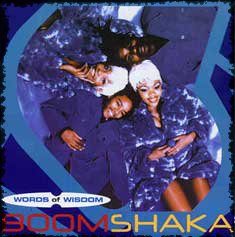
Boom Shaka's 'It's About Time' swept the charts

Dance has finally become respectable, with a number of home-grown productions wowing audiences in SA and abroad

SA bids for Square Kilometre Array
South African scientists have submitted a bid to host the Square Kilometre Array (SKA), an enormous radio telescope.......
