

Tue / Thur� 2:15-3:45pm�� Building 60, Room 62A
Instructor:��� Scott Wilson, PhD Candidate
Dept. of Cultural and Social Anthropology
Stanford University
[email protected]
������������������
Course Description:
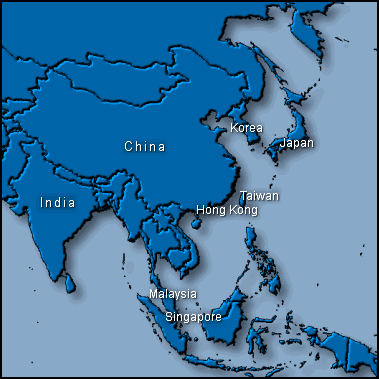
This course focuses on 20th century identity processes in China, Taiwan, Korea and Japan.� We will examine how racial and ethnic identities are constructed within the context of nationalism, translocal processes, and political economy.� How have identities such as "Chinese" and "Japanese" changed to include and exclude different people over time? How have global processes affected local identities?� We will also examine how race and ethnicity fit with other aspects of identity such as class, gender and sexual preference.� Class sessions will revolve around the specific ways in which majorities and minorities have been constructed in various East Asian areas, in comparative fashion.� The purpose of focusing on issues, rather than national histories, is to allow each student to delve more deeply into the ways in which factors such as culture, gender and capitalism operate in differing ways over time and space.� After the first week, each meeting will involve one or two students summarizing assigned readings, as well as starting and leading class discussions, after brief presentations by the instructor.