|
What's New?
|
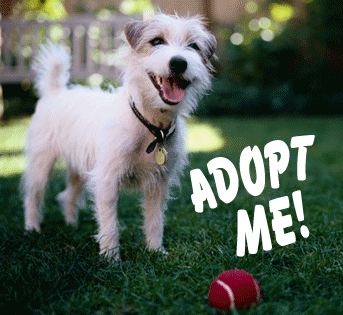
This is George and he is two years old. "The great pleasure of a dog is that you make |








How Dogs Learn.
by Veronica Boutelle
It works the other way, too. If your dog has a negative association with other dogs, you can reverse it, for instance by using treats and enough distance to allow your dog to slowly get used to other dogs. Counterintuitive as that seems, you are not rewarding the dog for his ugly display, you're changing his associations.Dogs also learn by consequence. For example, most dogs jump on people to get their attention. But if you consistently turn or walk away when your dog does that, and only fuss over him when he's got four paws on the floor, he'll soon work out that jumping makes you go away and since what he wants is your attention, this strategy doesn't work. Sitting nicely or wagging his tail, however, does seem to work, so he's going to do that, while the jumping behavior that didn't work slowly dies away.
The important point here is that the world of dogs is safe vs. dangerous and works vs. doesn't work, not right vs. wrong. It's a myth that dogs do things we don't like to get back at us or to be naughty. If you ignore the barking he'll eventually give up and try something else. He's not trying to be obnoxious, he's just doing what works. If you ask a dog to sit and she doesn't sit, she's not being stubborn, she just hasn't been trained enough yet.
Knowing all this gives us valuable insights as dog owners.
Veronica Boutelle, CTC, MA and former Director of Behavior and Training for the SF/SPCA.