
All pictures taken by Ross SCUBA Club Members.
|
Pictures |
Description |
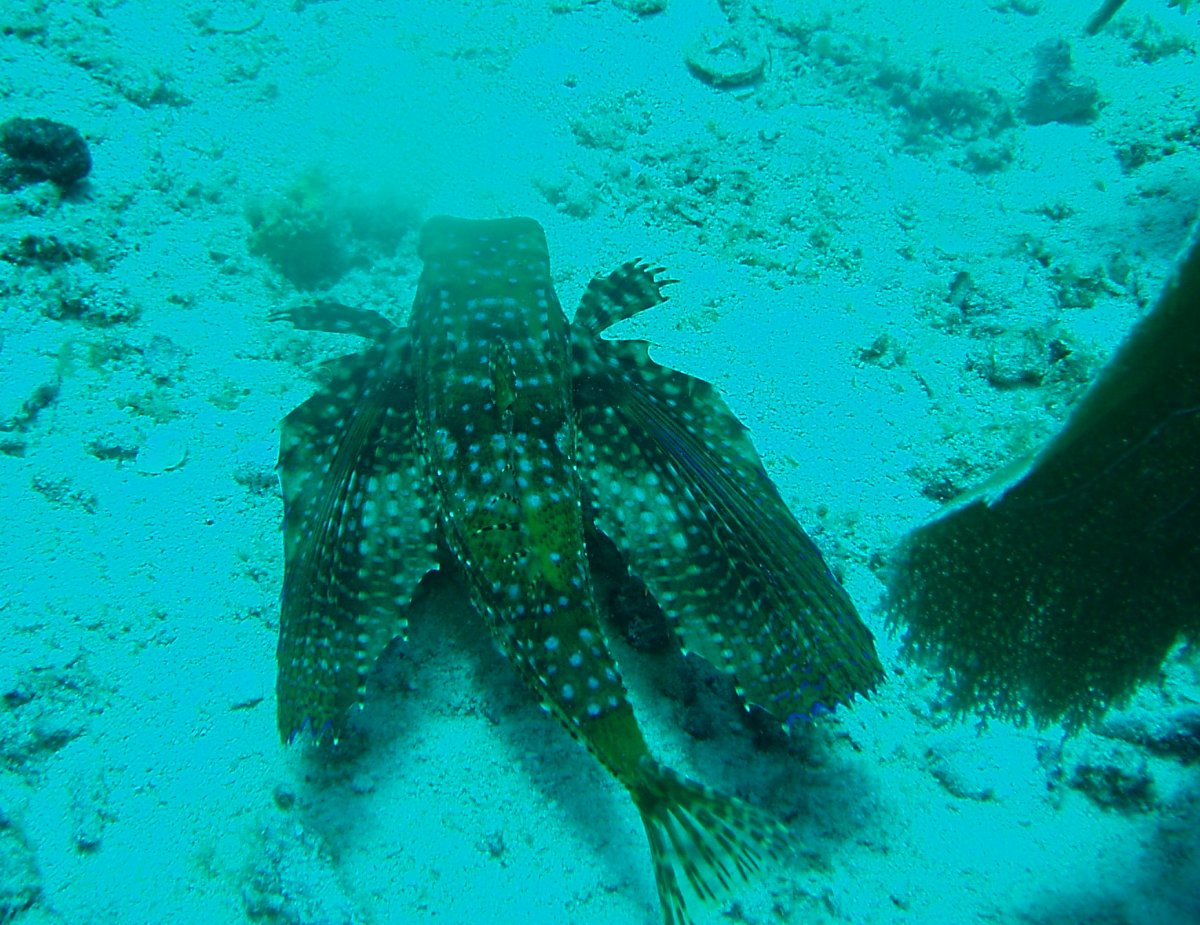 |
Flying Gurnard (Dactylopterus volitans) Sounding more like a circus act, the flying gurnards are easily recognized by their large, wing-like pectoral fins. Contrary to their name, they do not actually fly. Their large fins help them to swim low over the sand as they search for food. Flying gurnards are found in the shallow water reefs along the eastern coast of North America, from Massachusetts to the Caribbean
|
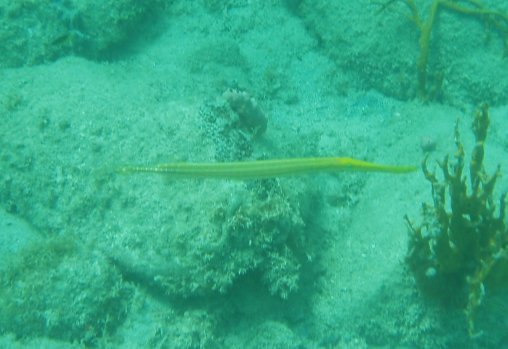 |
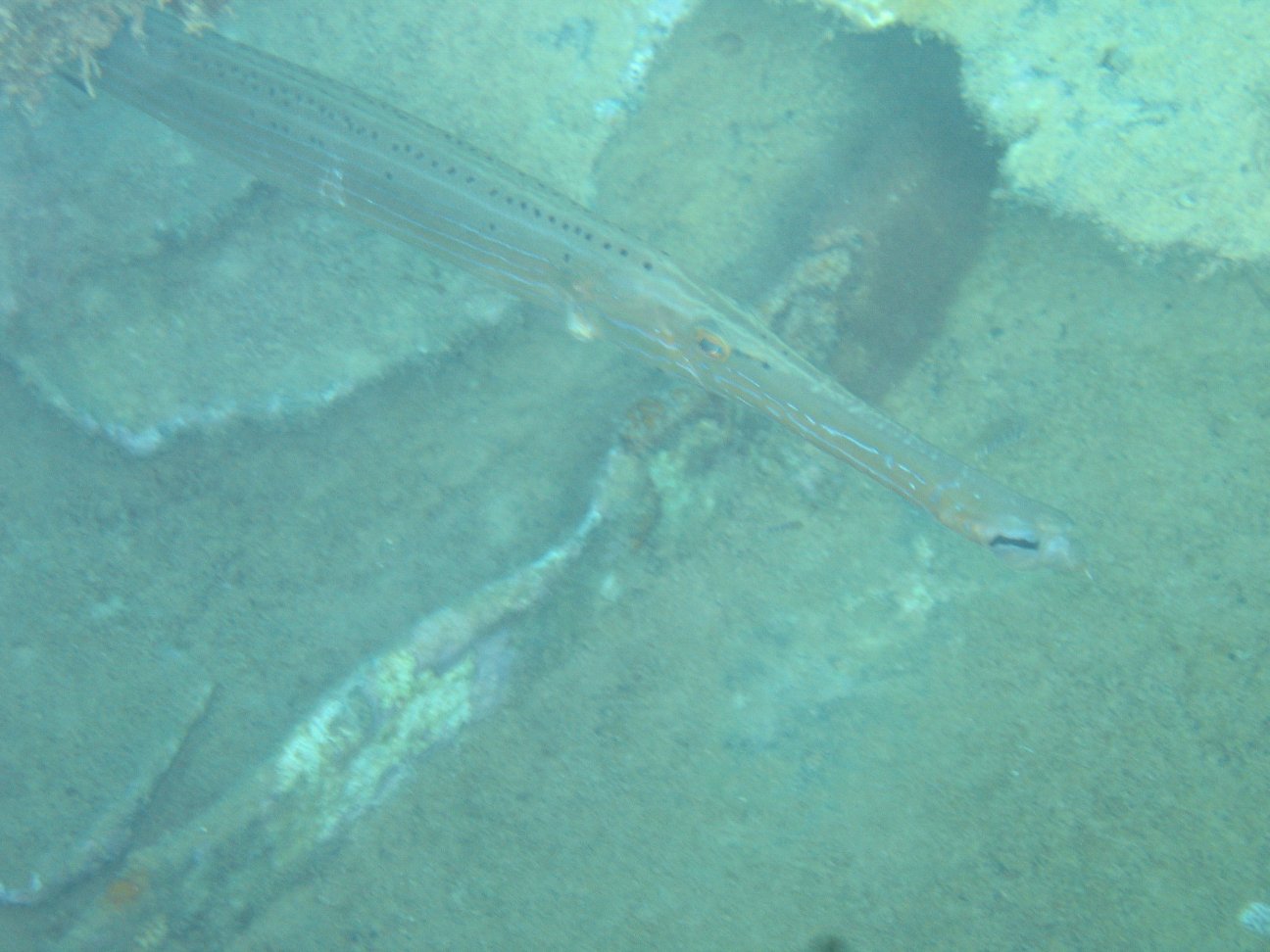
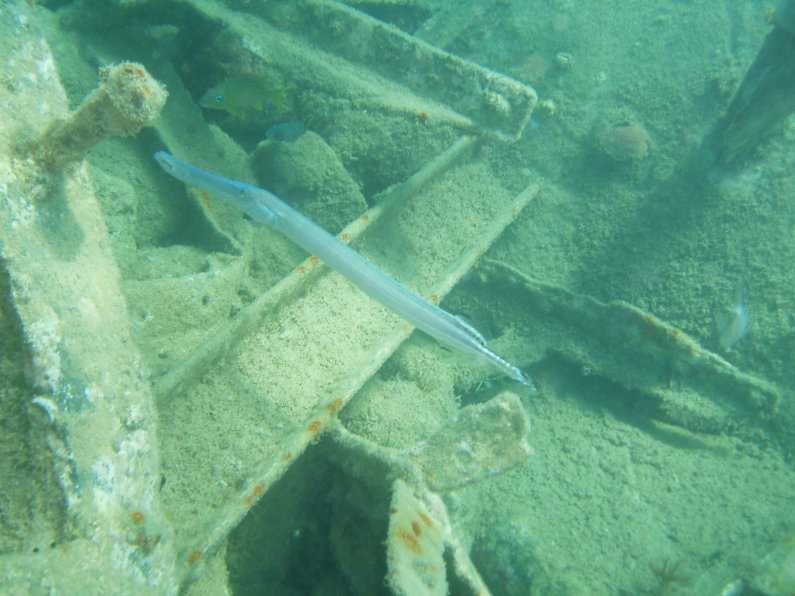
Trumpetfish (Aulostomus maculatus) Trumpetfishes are characterized by their elongated bodies and small, upturned mouths. They are often seen hovering in a vertical position with their heads pointed downward. This allows them to hide among corals as they search for prey. They feed on small fish and invertebrates by sucking them suddenly into their small mouths. Trumpetfishes are common throughout the Caribbean and Gulf of Mexico
|
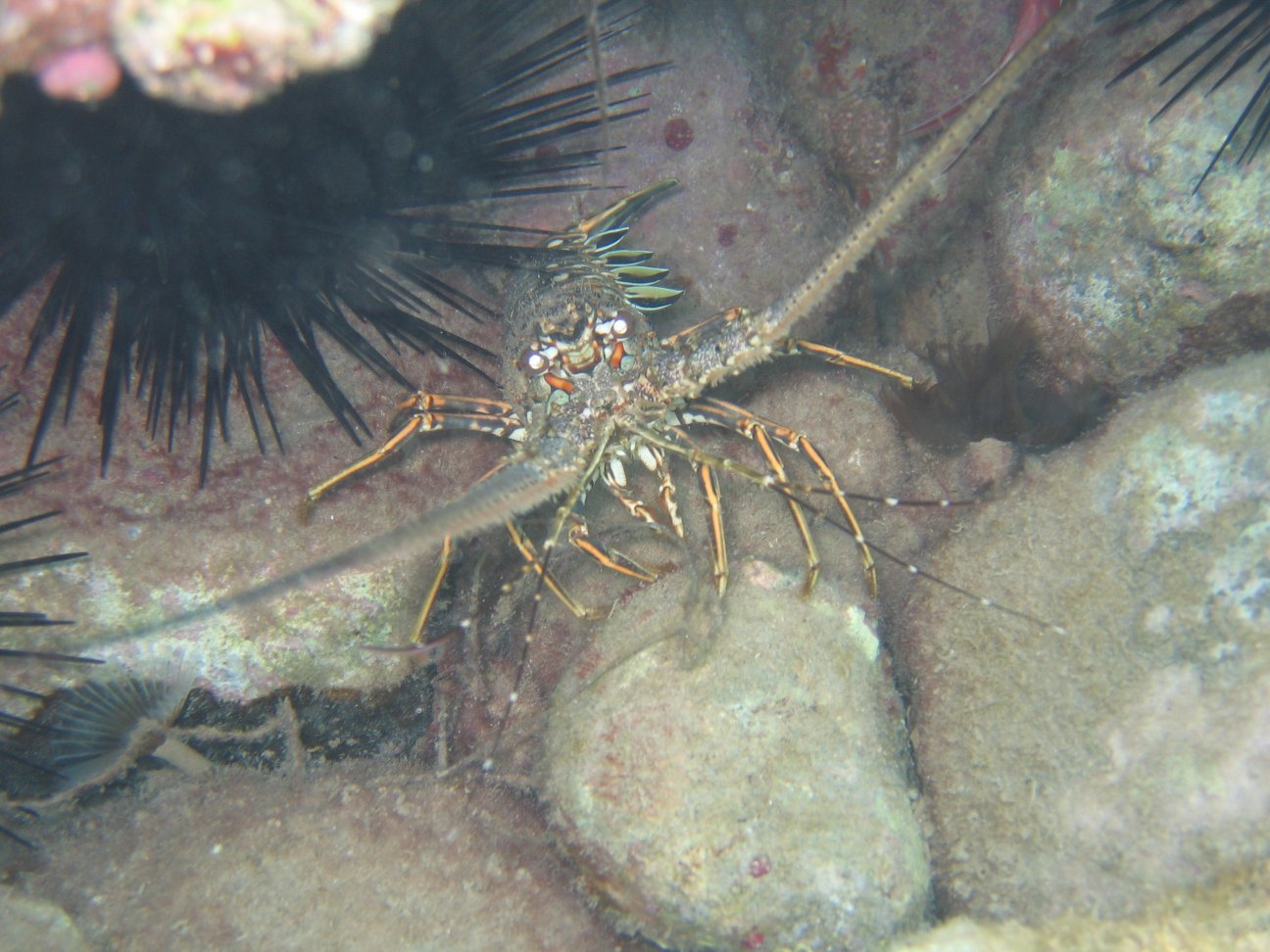 |
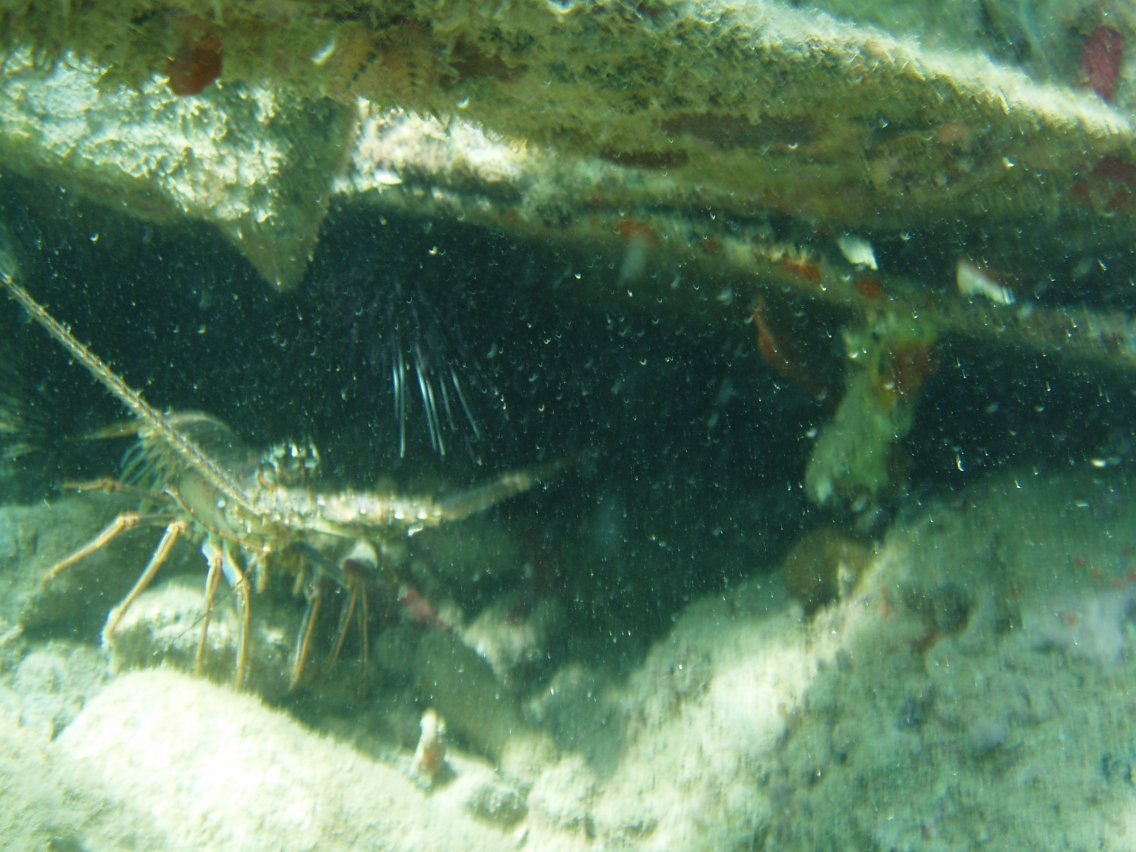
Spiny Lobster (Panulirus argus) The spiny lobster gets its name from the large long spines protruding from the front of its shell. They vary in color from pale almost white, to deep orange, to dark red and brown. These lobsters occasionally participate in mass migrations where a lead lobster will by followed by thousands of others marching in a single file line.
|
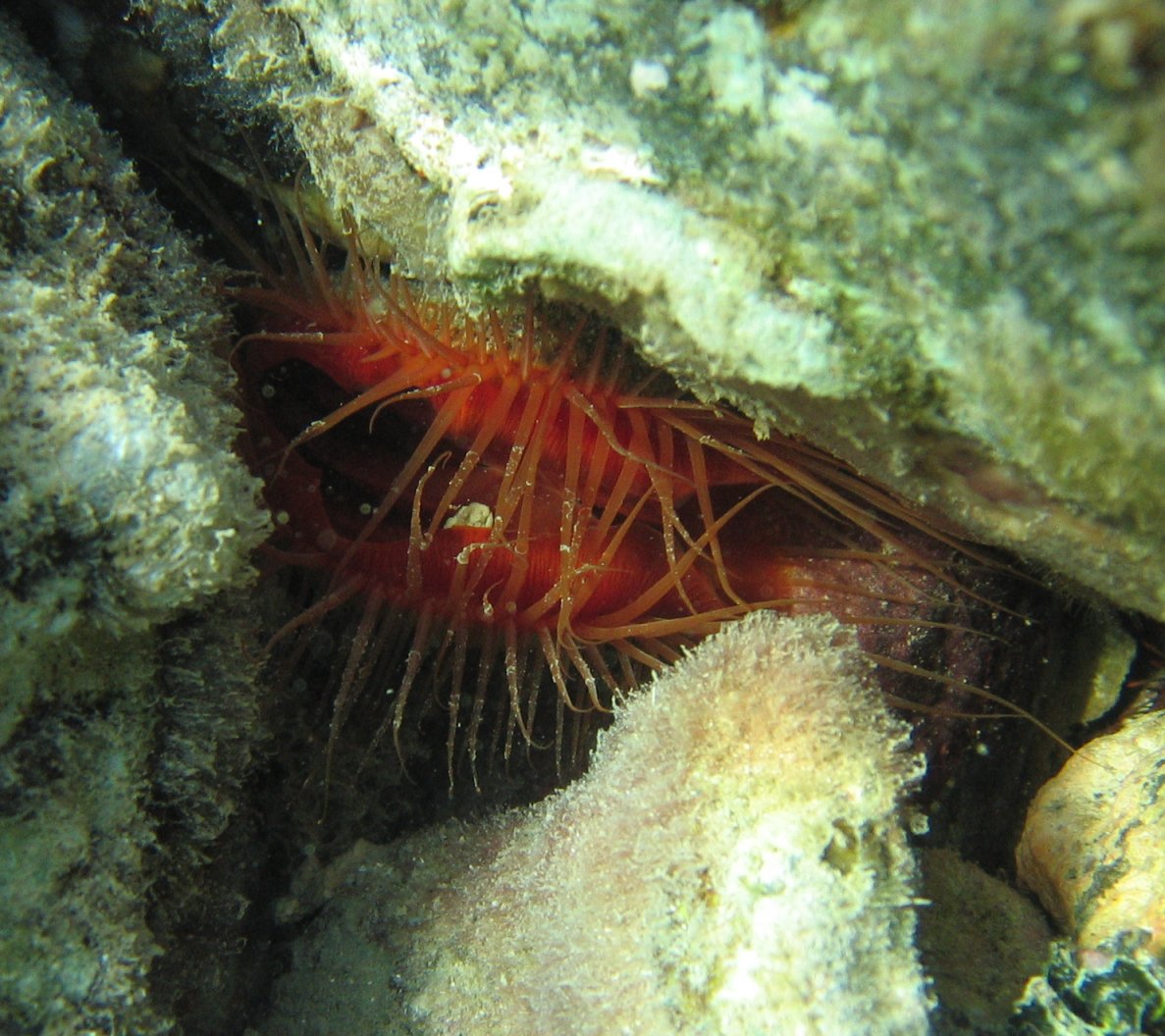 |
Flame Scallop (Lima scabra) This extremely colorful species of scallop is found in the Caribbean, and reaches a size of 3 inches. They have an amusing method of propulsion which involves clapping their shells together to jet propel themselves through the water. They are filter feeders and feed on plankton and other nutrients in the water.
|
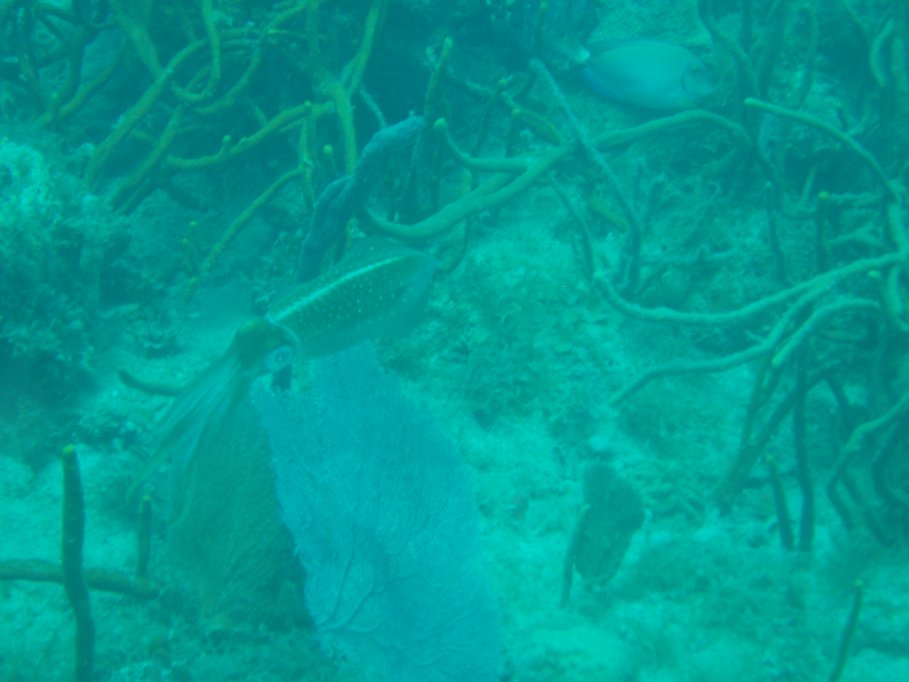 |
Reef
Squid (Sepioteuthis sepioidea)
This squid is commonly
mistaken for a cuttlefish. It is often unafraid of divers if not curious
about them. Adults have a mantle length of up to 20cm. A voracious eater
it can consume up to 60% of its body weight in small fish, mollusks, or
crustaceans per day.
|
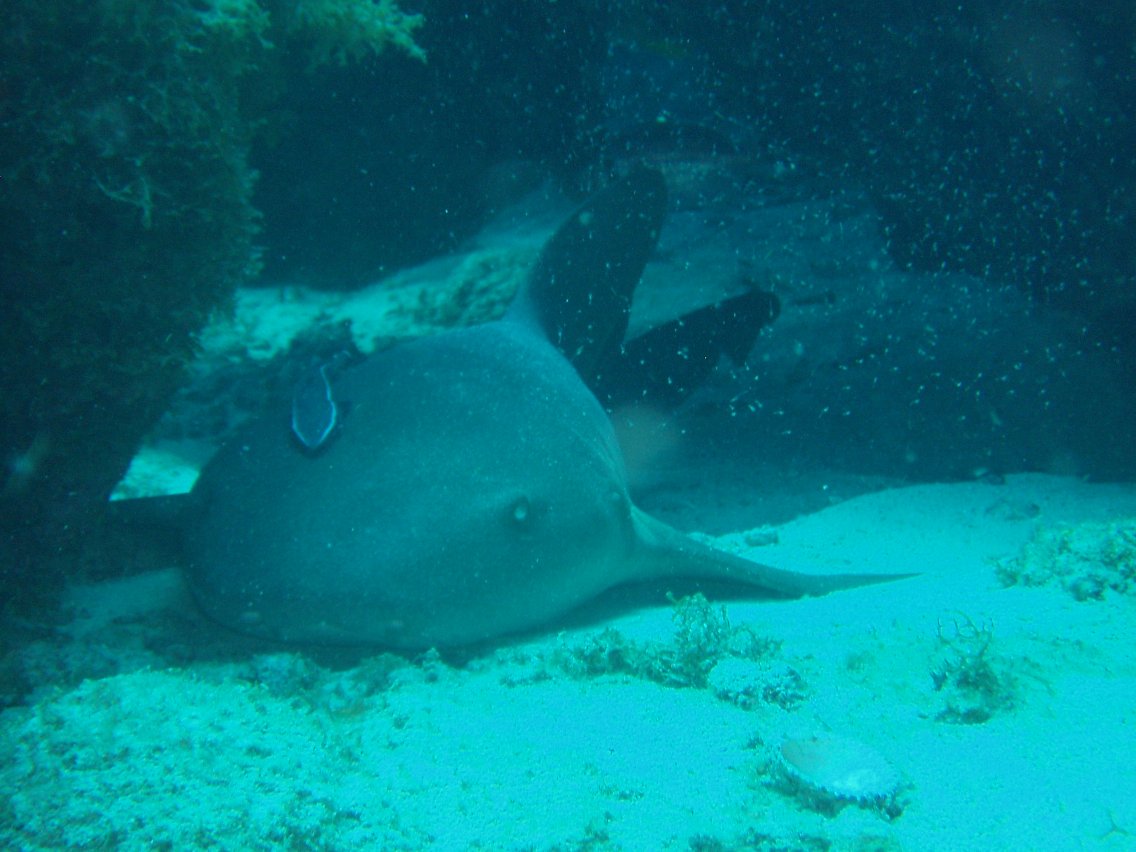 |
Nurse Shark (Ginglymostoma cirratum) The nurse shark is a very docile and unaggressive species. It is a sluggish bottom feeder, and it uses its pavement-like teeth to crush shellfish. The Nurse Shark is commonly seen lying motionless on the ocean floor. It grows to an average length of 8 feet. Although any wild animal can be dangerous if cornered, the nurse shark is not considered a threat to man.
|
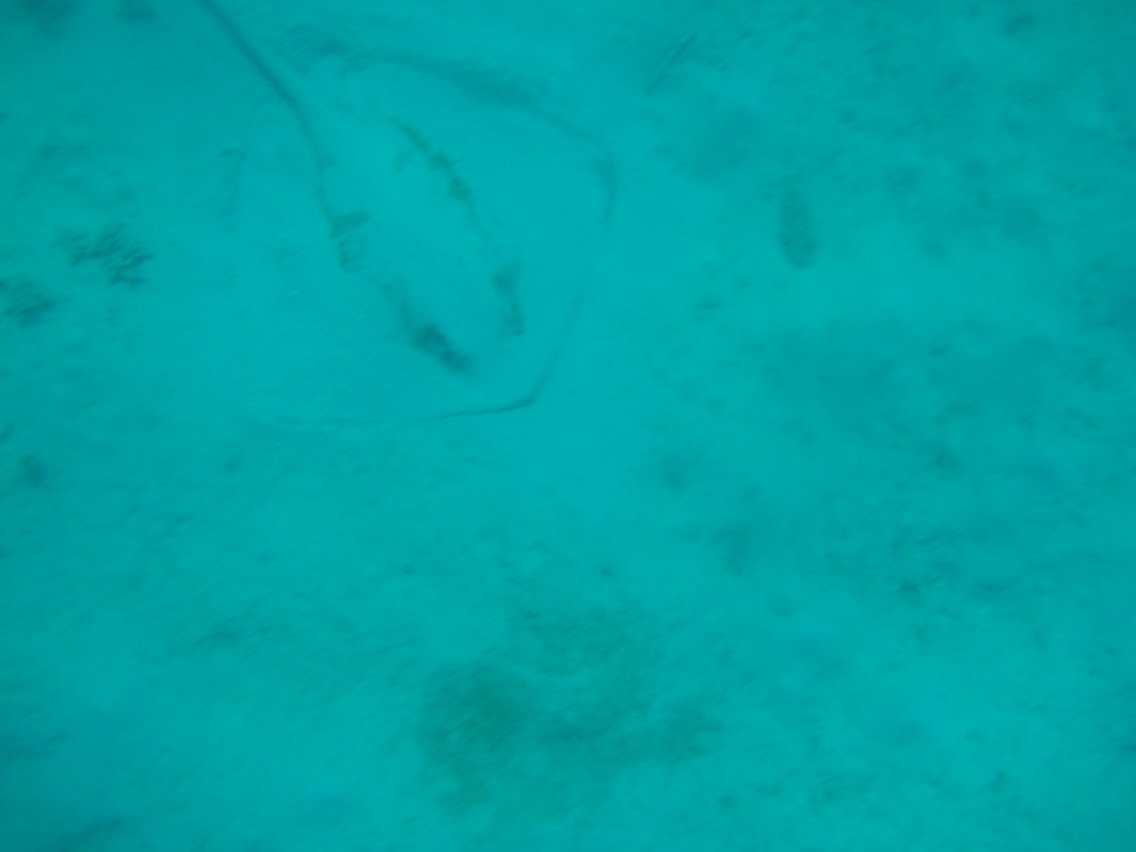 |
Southern Stingray (Dasyatis americana) The southern stingray is one of the more common stingray species along the Atlantic coast of the United States. The tail of this species carries one or two sharp spines, which can deliver a powerful toxic sting. This ray is a bottom feeder, and is often found buried in the sand along the ocean floor.
|
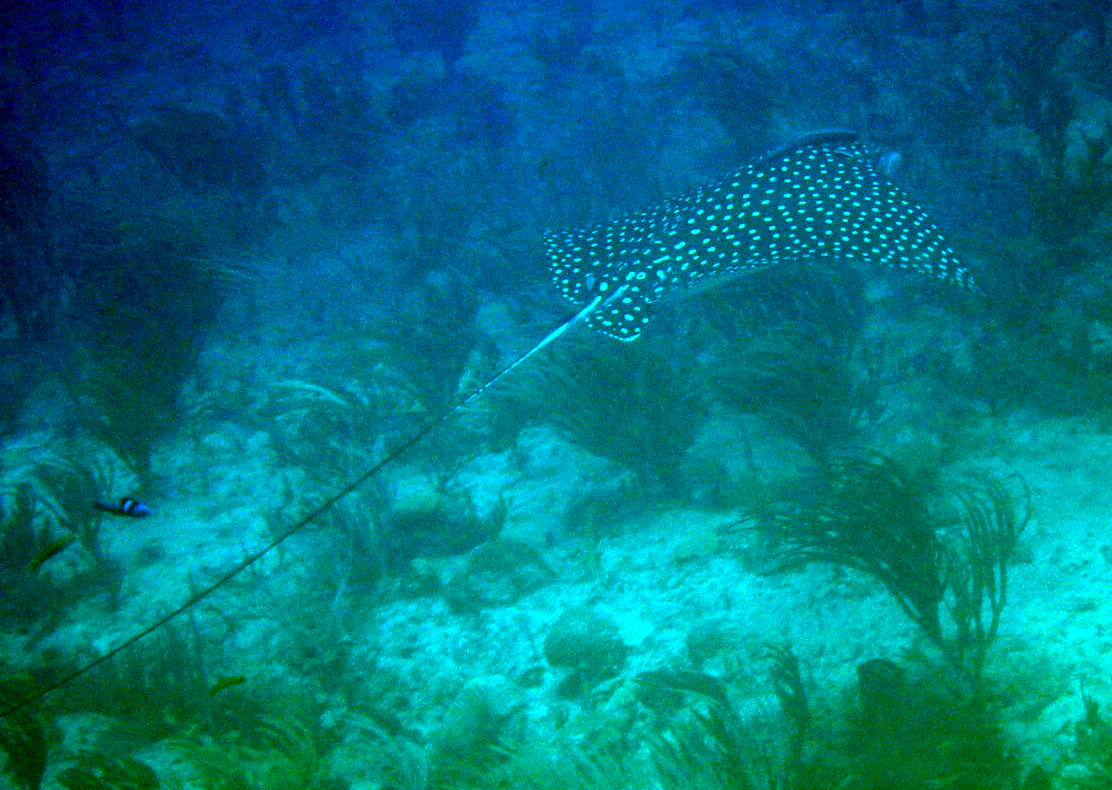 |
Spotted Eagle Ray (Aetobatus narinari) The Spotted Eagle Ray is a large ray species. It can grow up to 3 meters wide and up to 9 meters long. It typically feed on bivalves, but will feed on crustaceans and other mollusks as well.
|
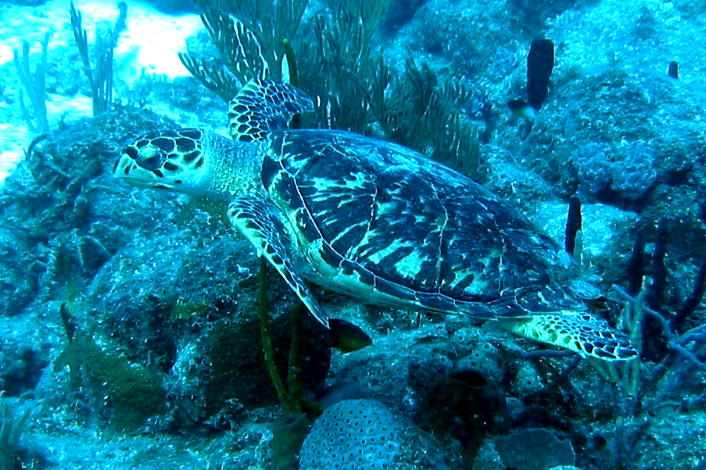 |
Hawksbill Turtle (Eretmochelys imbricata) The hawksbill turtle gets its name from its hawk-like beak. It ranges in size from 30 to 36 inches in length. This turtle's shell is the source of "tortoise shell", and because of this commercial exploitation has caused their numbers to dwindle. Their shell and oils are in constant demand, placing this turtle in danger.
|
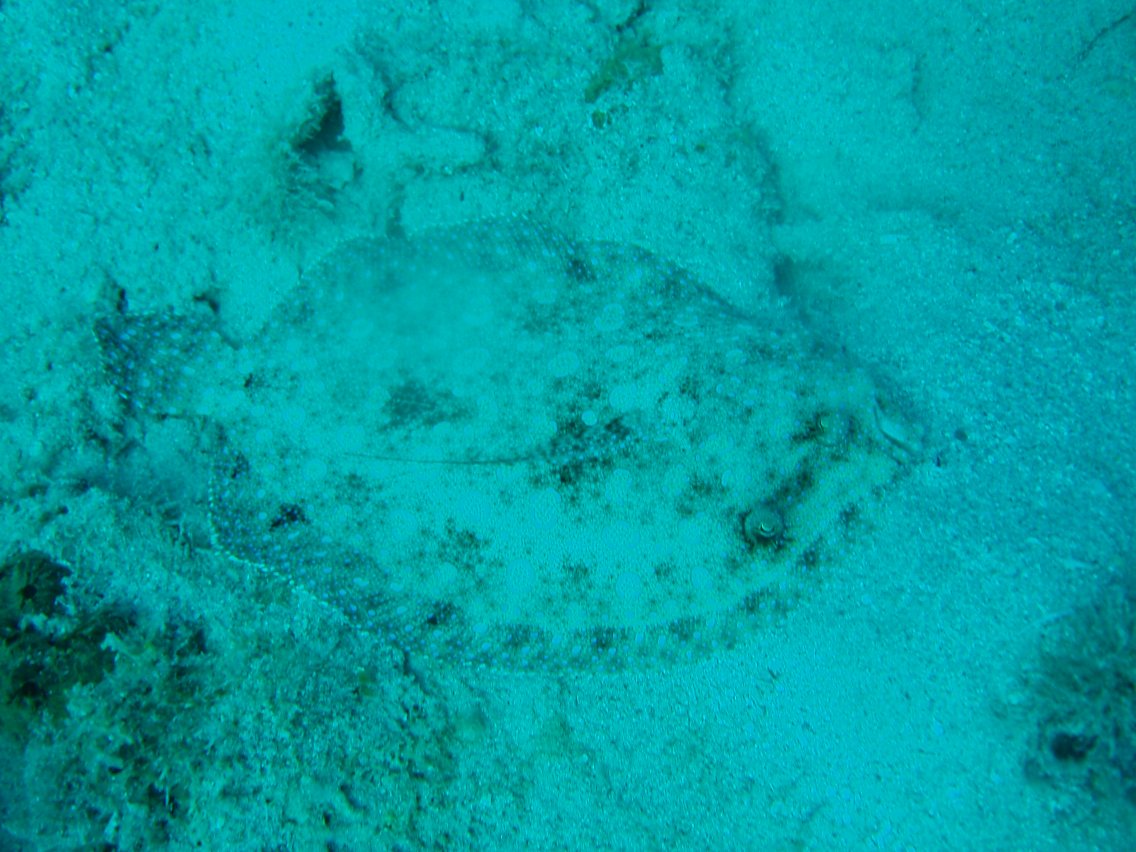 |
Peacock Flounder (Bothus lunatus) This is the more common flounder in the area, reaching a length of up to 18in and readily identifiable by its light blue rosettes and it's widely spaced eyes. Living on the ocean floor up to 40 feet deep it relies on its camouflage until closely approached when if flees swimming with a wave-like motion. It uses it's ability to rapidly change color and marking to blend into its surroundings.
|
 |
Queen
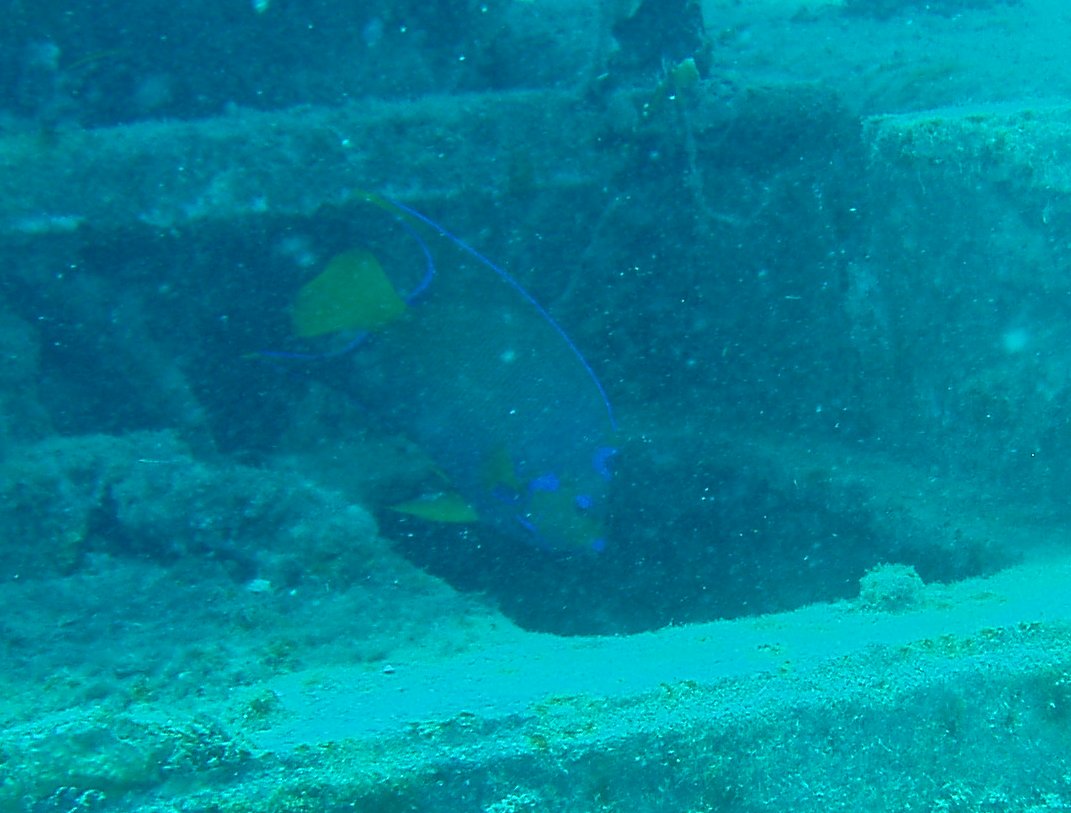
Angelfish (Holacanthus ciliaris) This large angelfish is fairly common. It is easily identifiable by its large size, up to 18in, by the crown on it's head and the full yellow tail. It can be seen in waters up to 80 feet deep. This fish is somewhat shy, yet curious and will swim away when a approached and turn around to observe the diver.
|
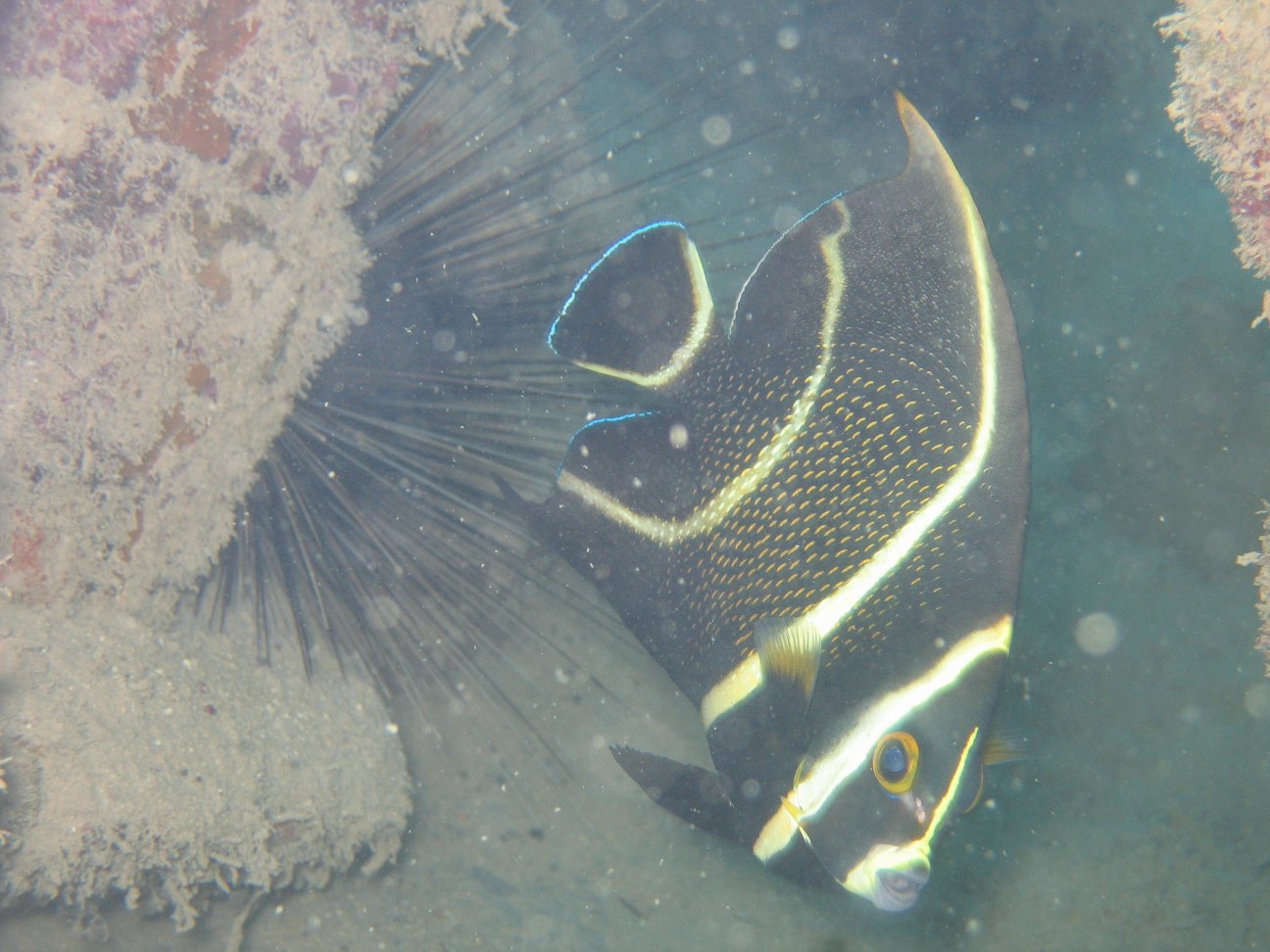 |
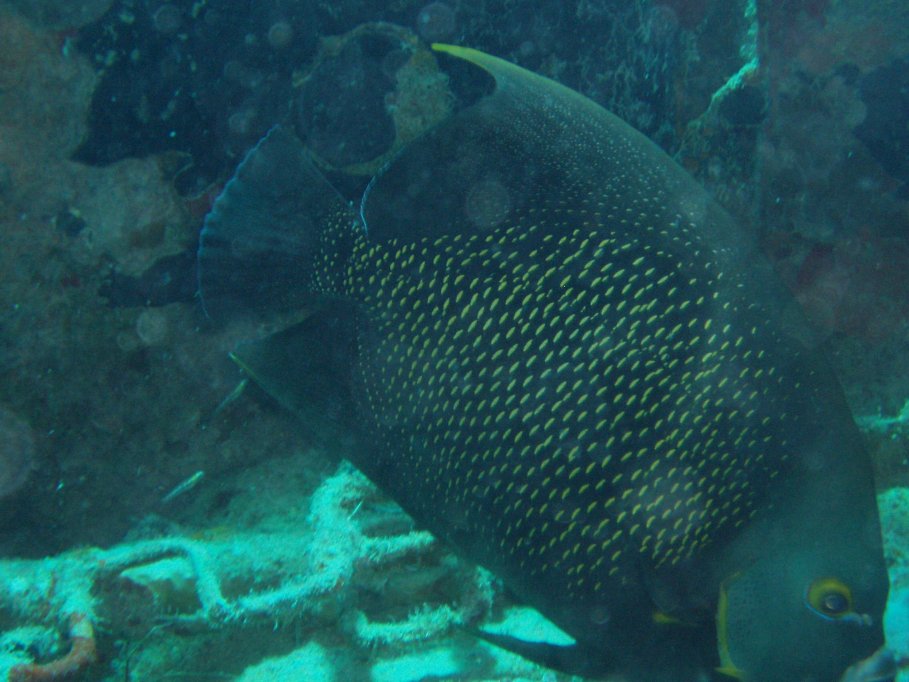
French Angelfish (Pomacanthus paru) This is a very common angelfish in the area. The juvenile (not pictured) is dark black with bright yellow stripes, a yellow boarder around the tail and blue tips on the pectoral and pelvic fins. The adult (far left) is absent of all stripes, but with a yellow background on its scales giving it a speckled appearance. The intermediate (near left) is somewhere in the process of loosing is stripes and gaining its speckling. All stages have the characteristic yellow ring around the eyes. The species is relatively unafraid and can be closely approached.
|
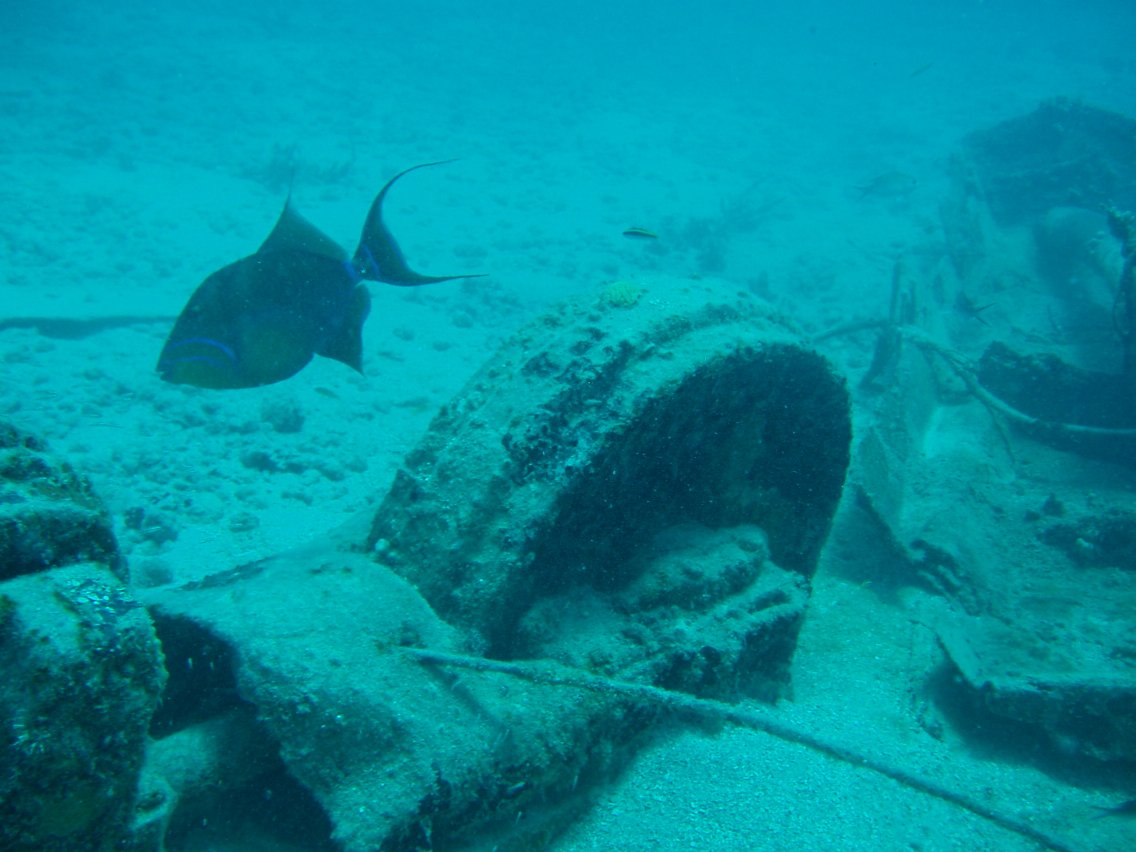 |
Queen
Triggerfish (Balistes vetula) The Queen Triggerfish varies greatly in color but is readily identifiable by the two parallel blue lines on the face and the lines radiating from around its eye. A large fish it can grow up to 2 feet and is found up to 50 feet deep. It is especially fond of eating sea urchins. A chy fish it is difficult to approach, but occasionally one will be crious and swim near divers.
|
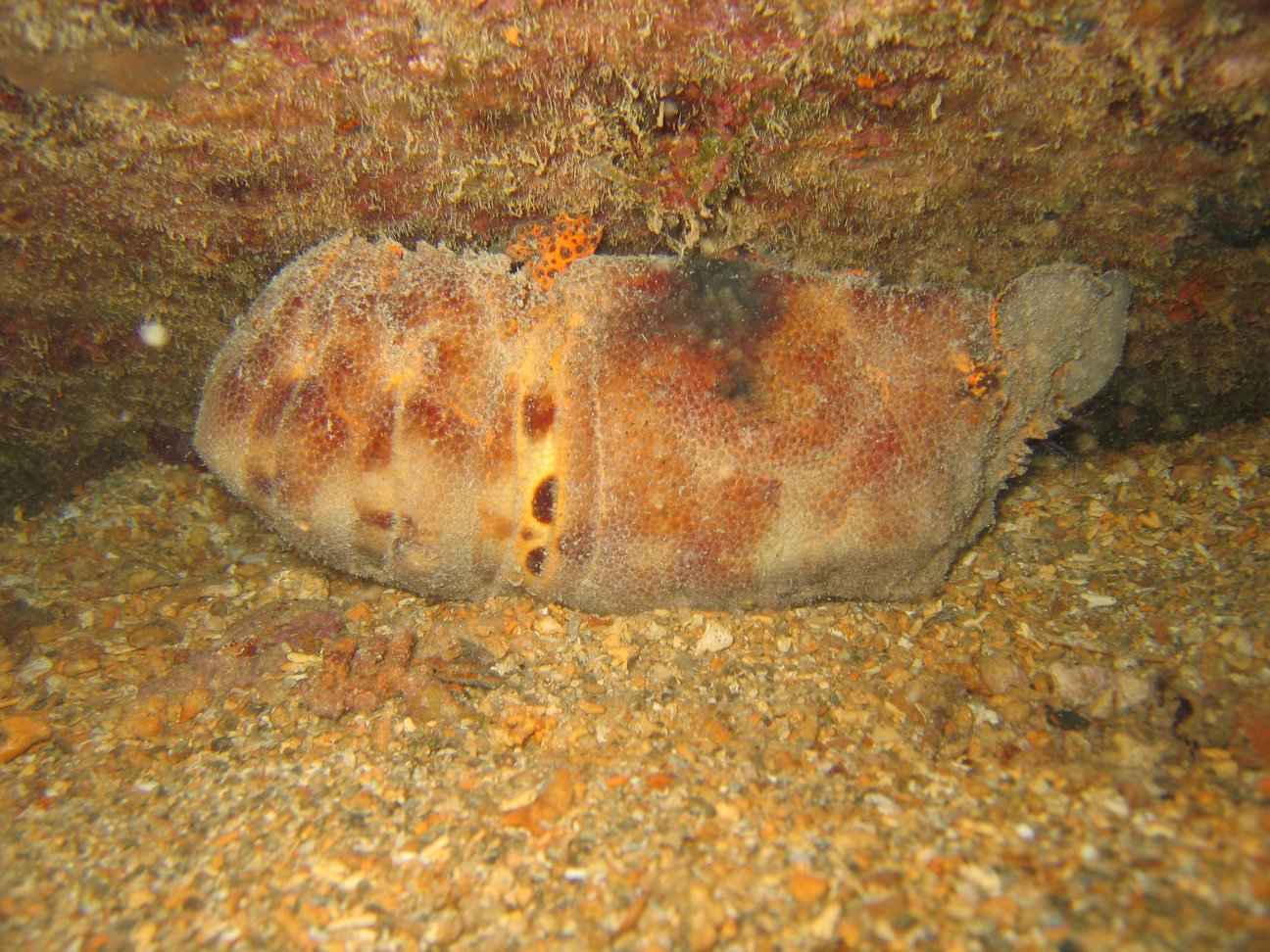 |
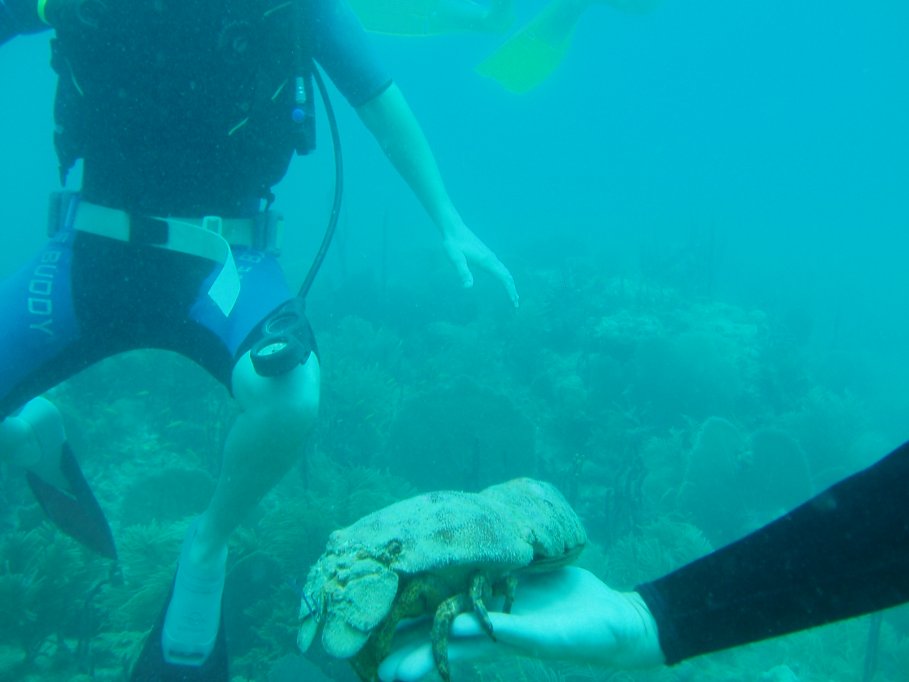
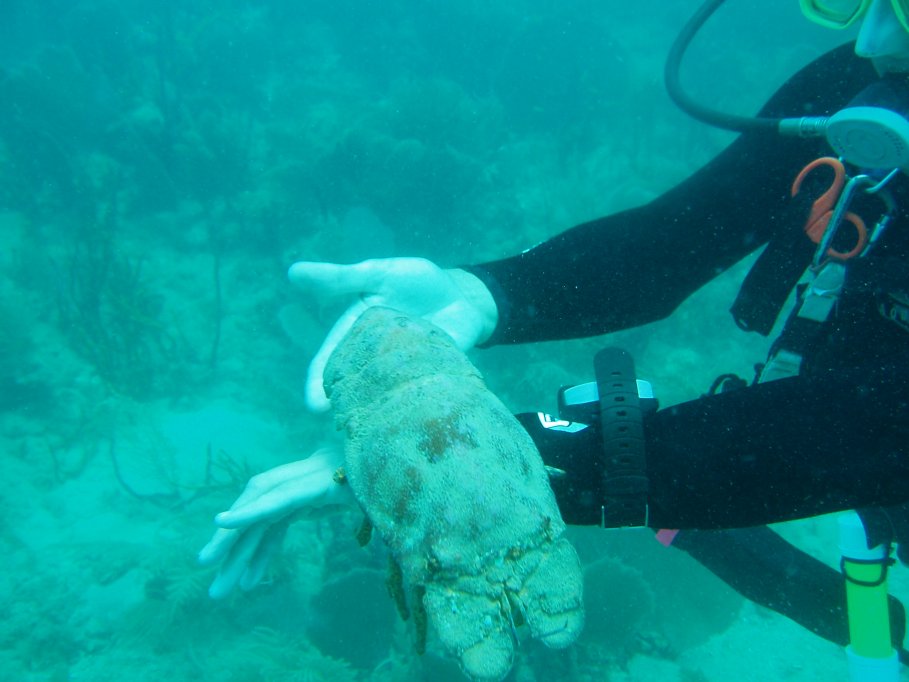
Spanish Slipper Lobster (Scyllarides aequinoctialis) An interesting species it can grow up to 30cm. They are nocturnal and bury themselves in the sand during the day. A sluggish animal it is easily approachable. They feed on detritus, and often caught in traps set for other lobster species.
|
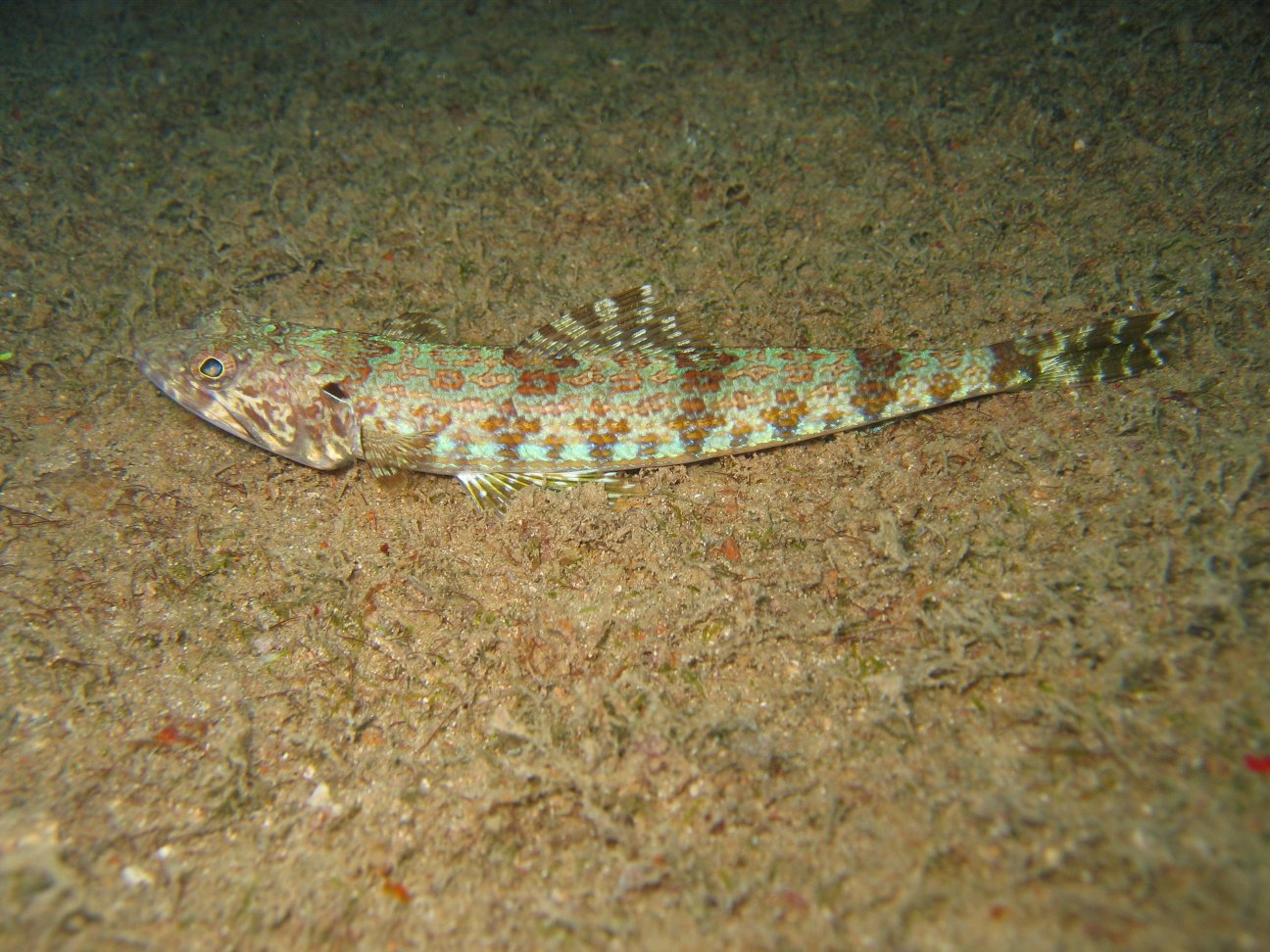 |
Sand
Diver (Synodus intermedius) This fish is common in the area, typically seen resting on the sandy bottom. It can grow up to 18in and is seen as deep as 80 feet. A wary fish it depends on its coloration as a defense and will usually remain motionless when approached.
|
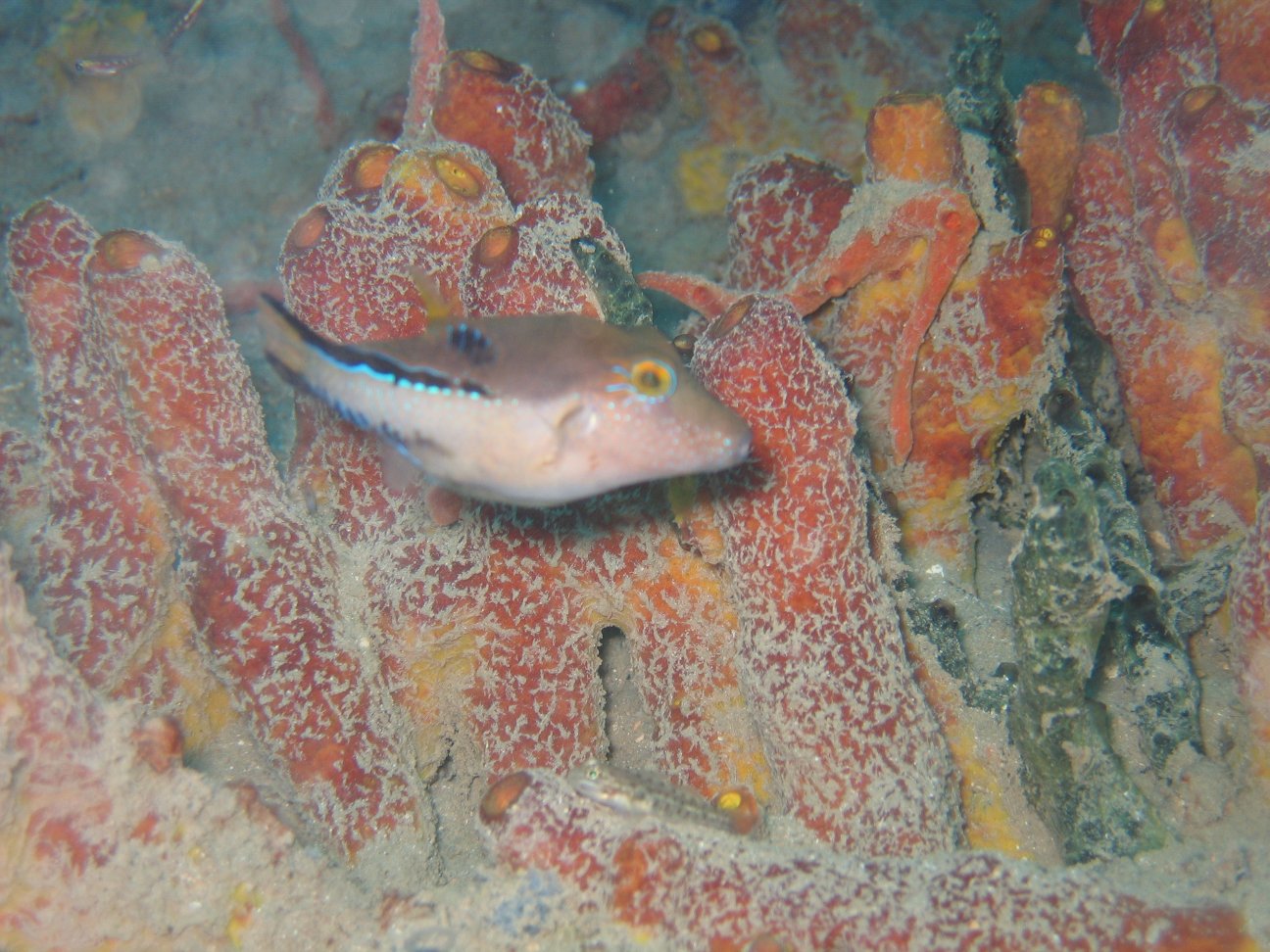 |
Sharpnose Puffer (Canthigaster rostraga)
This small puffer only reaches
4.5in but dives deep down to 100ft. Like to nibble on grasses and small
invertebrates. Relatively unafraid of divers it will usually allow a close
approach. |
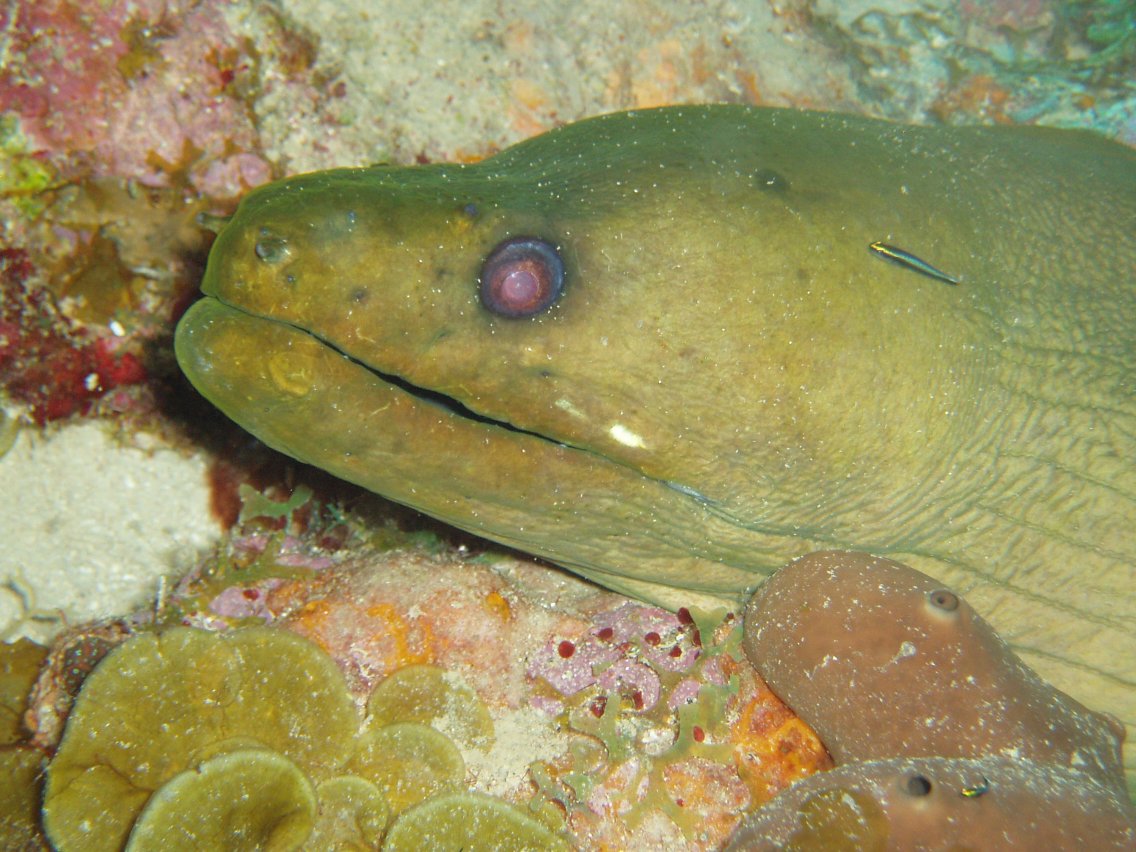 |
Green
Moray (Gymnothorax funebris) The typical eel the green moray is what we all envision upon hearing the name. This monster can grow up to 8ft and live in almost any saltwater habitat from murky bays to clear-water reefs and as deep as 100ft. The moray is nocturnal, foraging at night and resting in caverns and crevasses during the day usually with its head exposed. The opening and closing of its mouth is an act required for respiration and not a threat. These animals are unconcerned with a divers presence and usually allow close approach. But, they can become aggressive and bite if provoked!
|
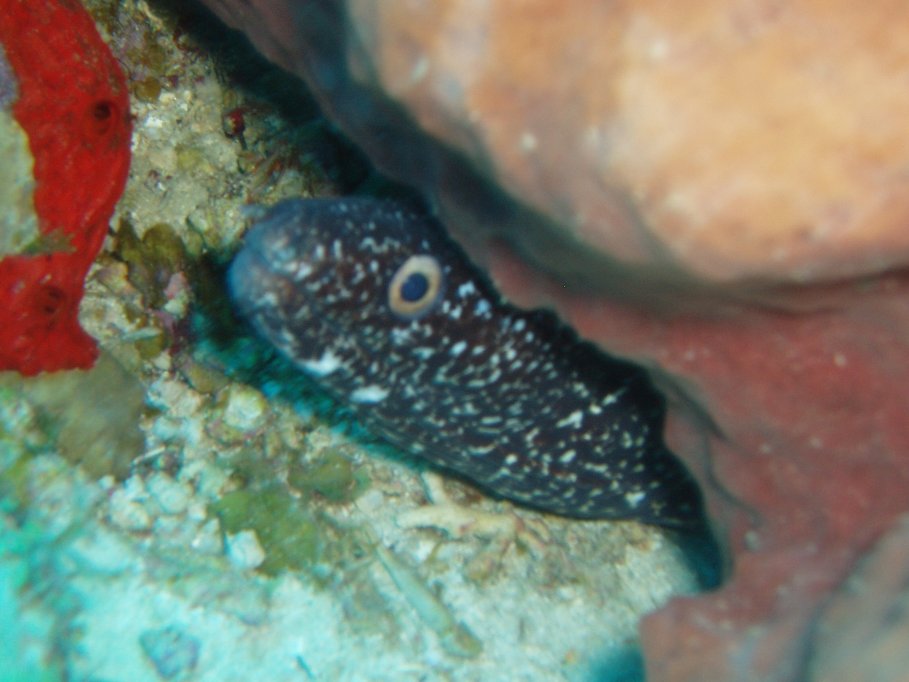 |
Spotted Moray (Gymnithorax moringa) A much smaller member of the moray group only grows to about 4ft and found up to 40ft deep. They prefer shallow reefs, but otherwise their behavior is much like their larger cousin the green moray.
|
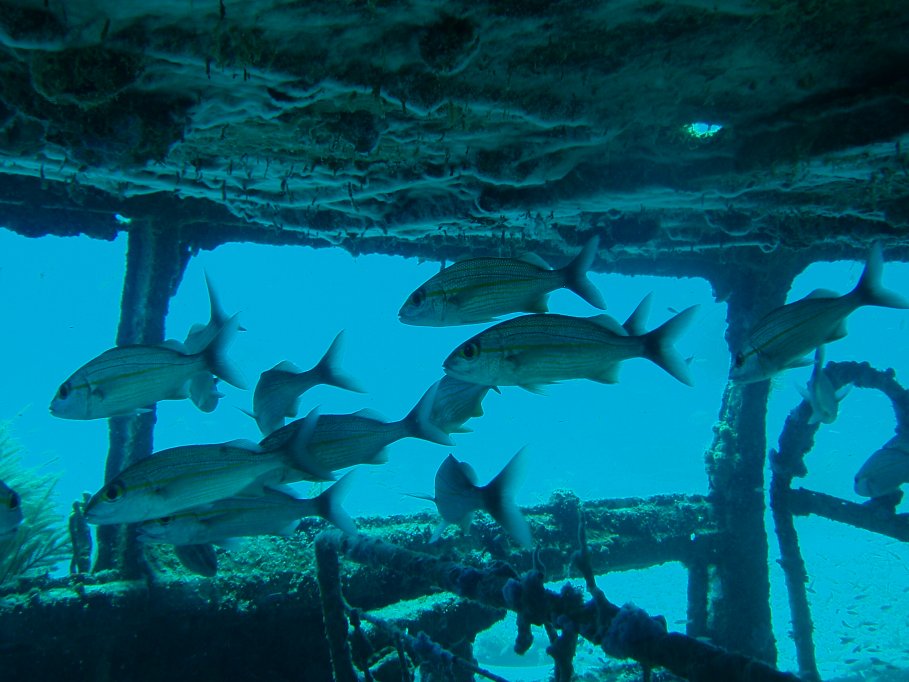 |
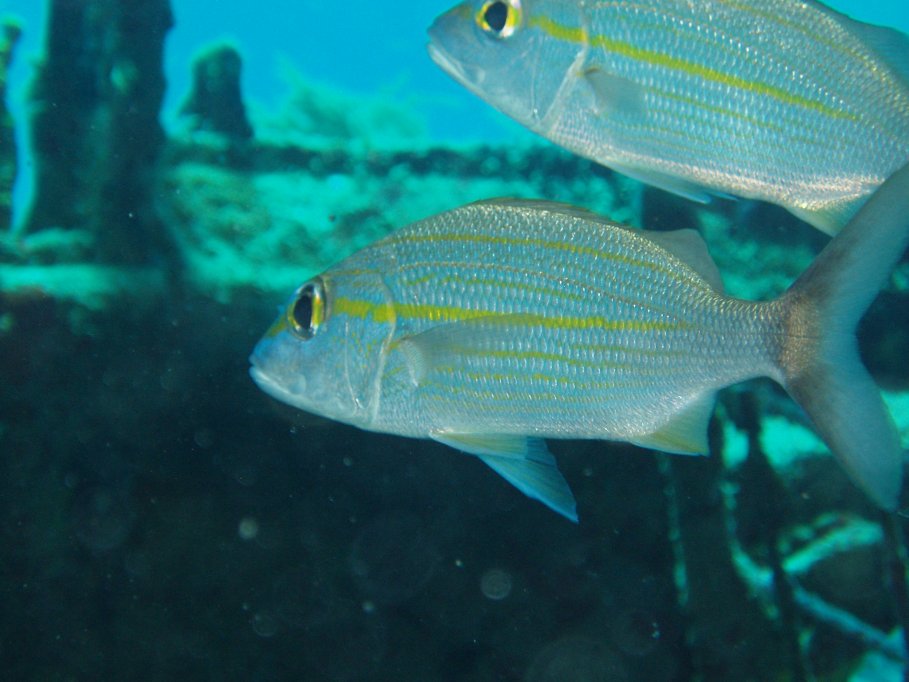
Tomate (Haemulon aurolineatum) This is a common fish in the area. A member of the grunt family it swims in small to large schools up to 65ft deep but they prefer shallower reefs. Individuals can grow up to 10in and are easily identifiable by their silver body with the two parallel yellow to bronze linse running the length of their body, one of which stars at the nose and passes through the eye. Some individuals will also have a black spot at the base of the tail. A wary fish, a patient slow approach is needed for a close view.
|
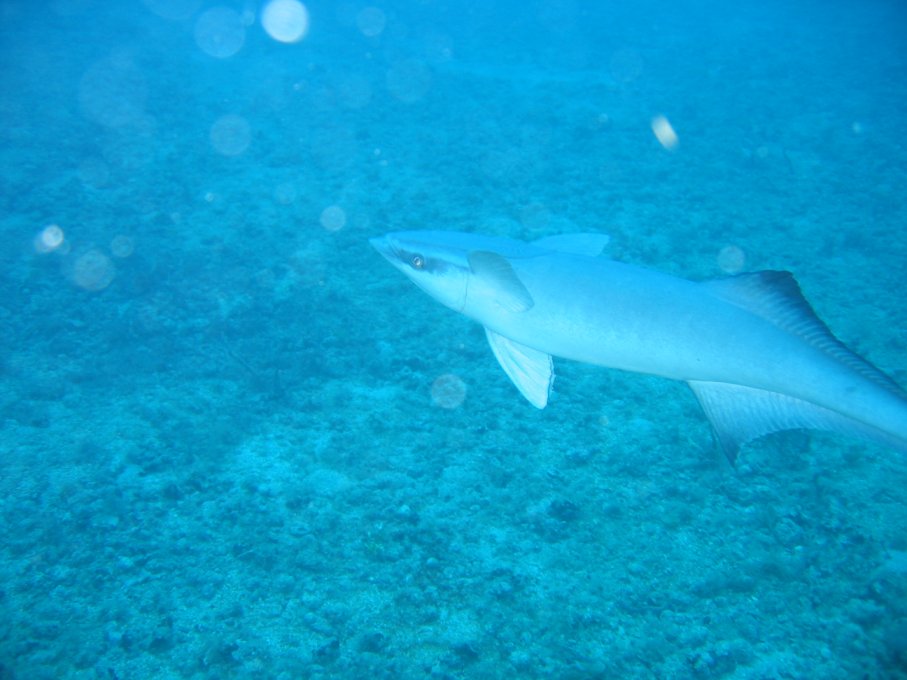 |
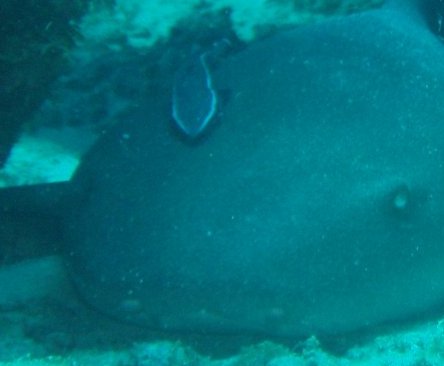
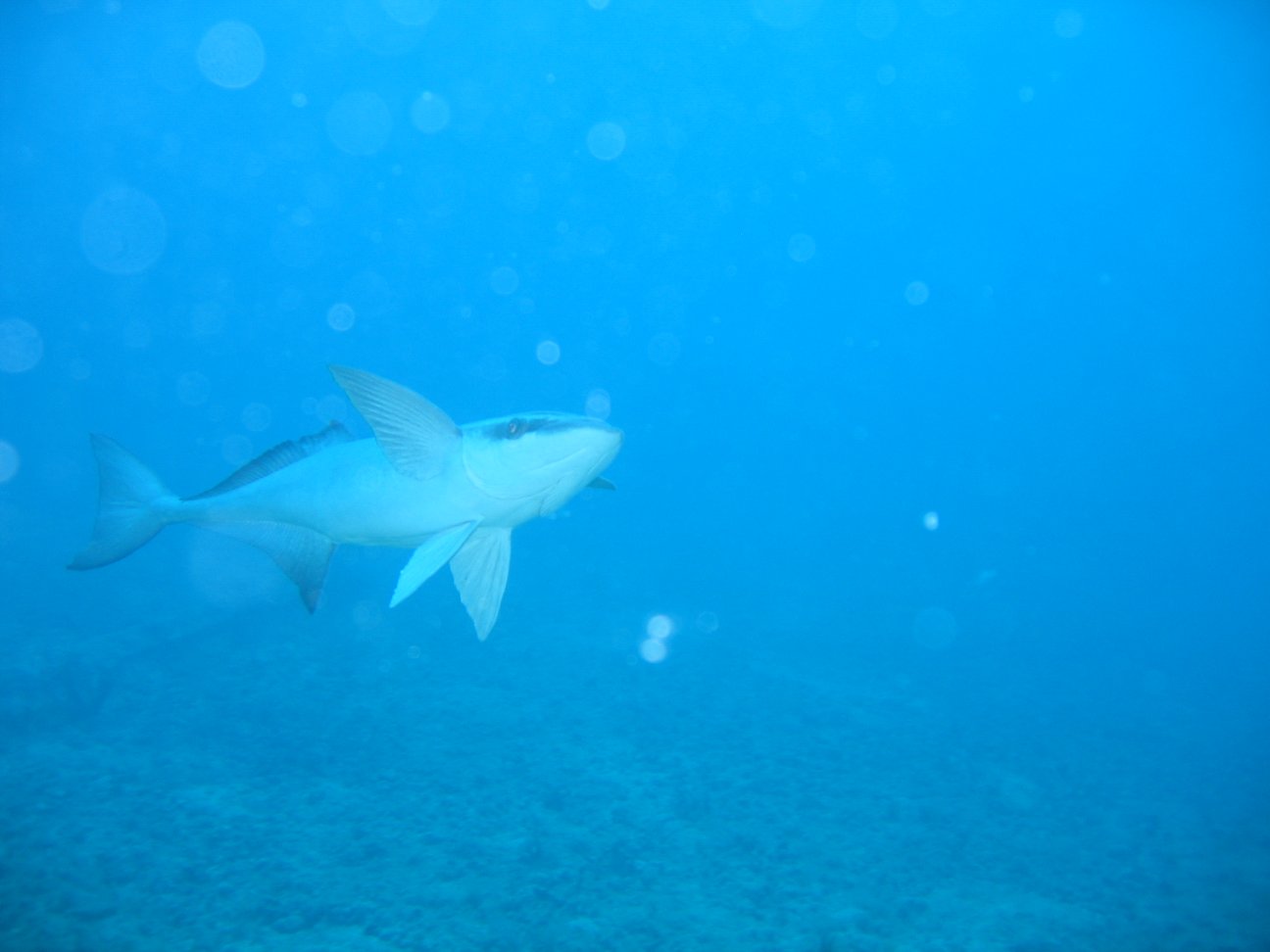
Sharksucker (Echeneis naucrates) A species of remora it can grow up to 3.5 feet and is found at depths of up to 150 feet. The younger individuals will attach to sharks, rays, large fish, turtles, even divers. The adults are the most common free-swimming remora. Usually unafraid of divers, if they attach the grip is firm but harmless. To unattach, gently but firmly push the remora forward.
|
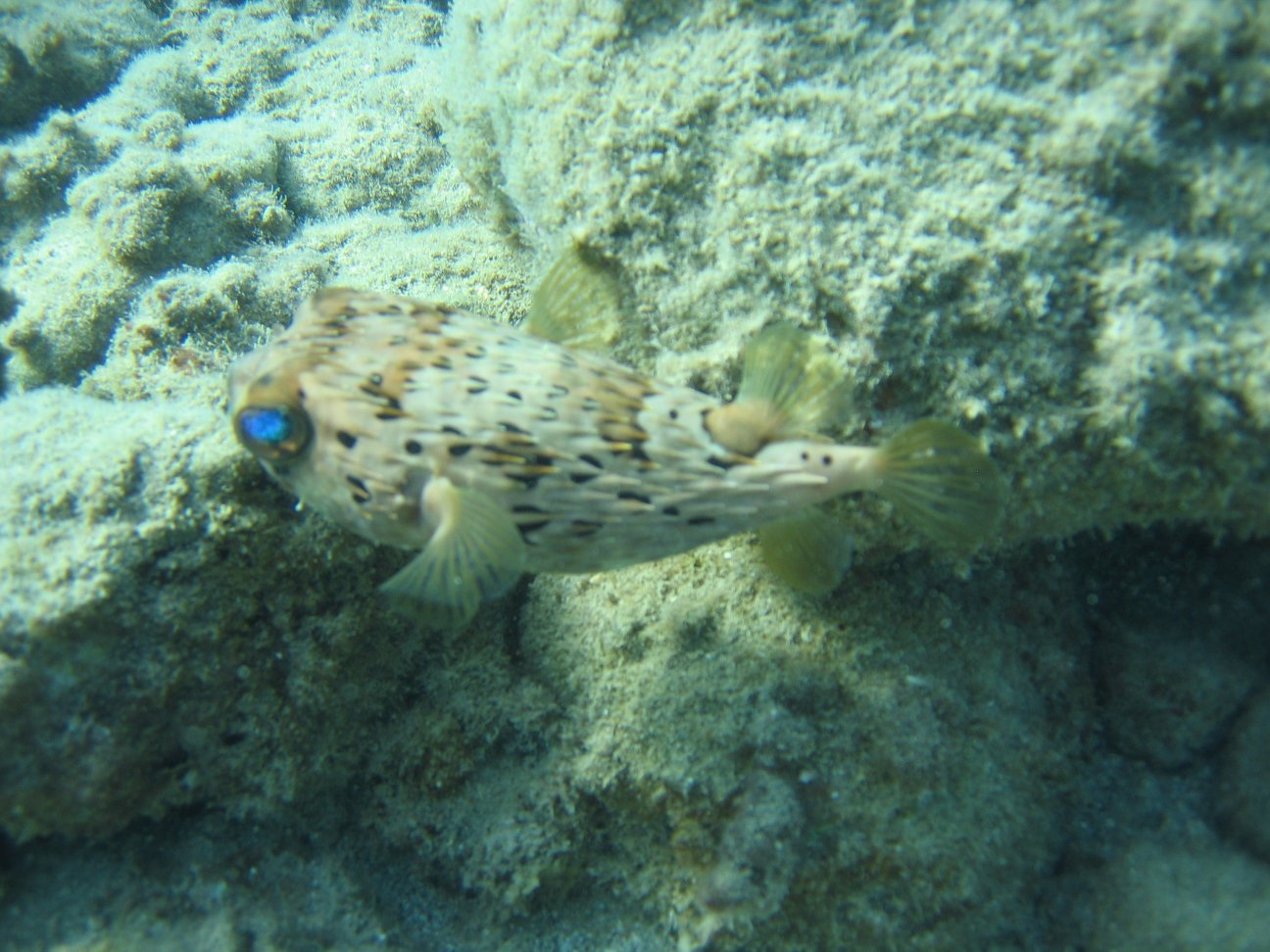 |
Balloonfish (Diodon holocanthus) A not so common sight the balloonfish is wary and often retreats before you see it. It can grow up to 20in and be seen as deep as 50ft. They prefer grassy areas and shallow reefs. The spines are usually held flat but may become erect without inflating the body.
|
 |
Blackbar Soldierfish (Myripristis jacobus) A member of the Squirrelfishes it is identifiable by the black vertical bar behind its gill-plate and can grow up to 8.5in. Individually it will hide in dark crevasses, but schools are large to huge. They can be found in depths up to 60ft. A curious but timid fish it will allow close approach if it is in a secure hole or crevasse.
|
 |
Great
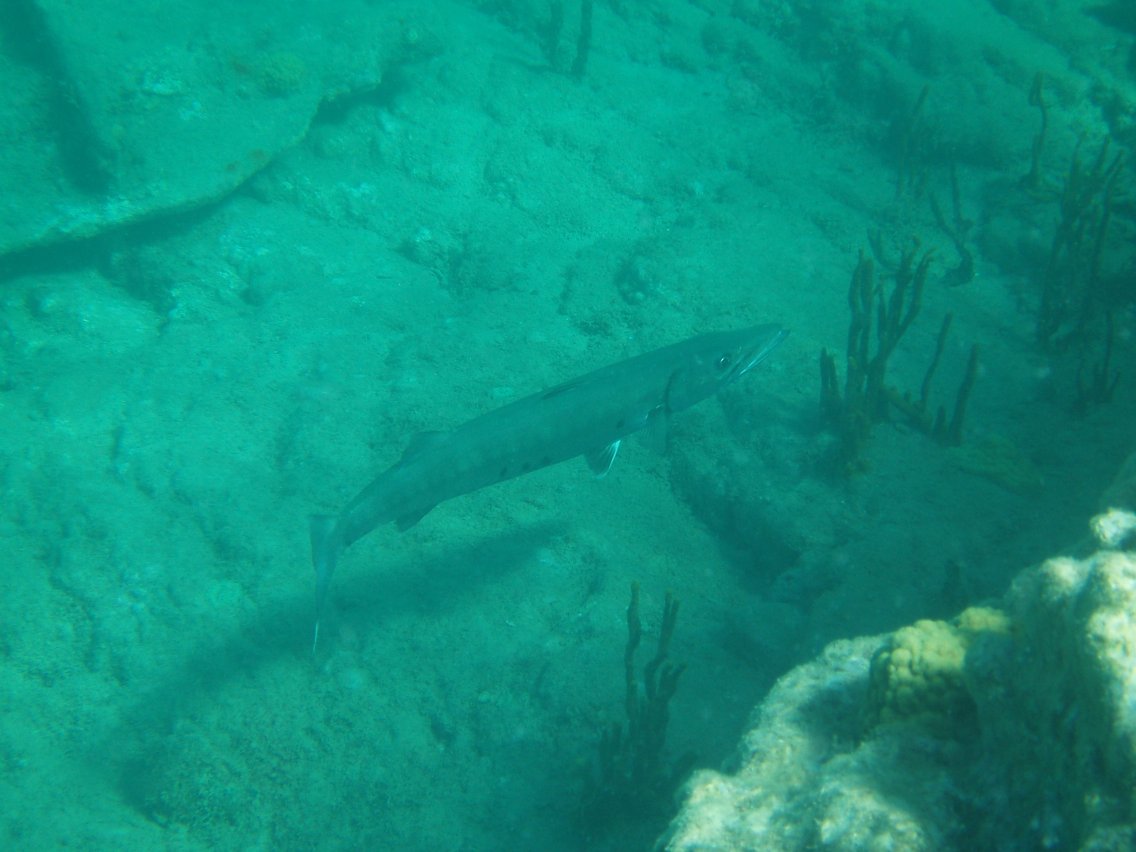
Barracuda (Sphyraena barracuda) The largest of the barracudas it can reach up to 6ft in length and is found at depths up to 60 feet. This usually solitary hunter drifts around reefs looking for food, it will form small loose schools. It has an unnerving habit of approaching divers, but the only confirmed attacks have involved spear-fishing or hand-feeding.
|
Home | Contact Us | Links | Photos | Used Gear | Officers