Fighting Dogs Come to America
When English colonists settled
in America they brought with them bull baiting, bear baiting, and, of course,
dog fighting as well as other public spectacles varying in violent depth.
Studies of gambling in early American history by Stephen Longstreet (Win
or Lose - A Social History of Gambling in America, 1977) indicate that
animals during this time were regarded as creatures to be used for either
food or sport.
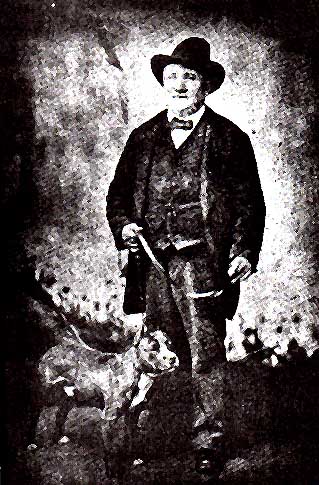 Undoubtedly,
fighting dog against dog continued, as the breeders of fighting dogs were
virtually the only record keepers of breedings and litters. In fact many
of them registered their dogs with the United Kennel Club (U.K.C.) as it
was founded in 1898 on the fighting dogs and the act of pitting dog against
dog.
Undoubtedly,
fighting dog against dog continued, as the breeders of fighting dogs were
virtually the only record keepers of breedings and litters. In fact many
of them registered their dogs with the United Kennel Club (U.K.C.) as it
was founded in 1898 on the fighting dogs and the act of pitting dog against
dog.
My own speculation is that the
early pioneers of the west deserve more credit than they are given for
the developement of this breed as both workers and companions. Many took
the dogs westward with them to protect the farm from vermin and preditors.
It is easy to see how the increase in size over the English version could
be derived from a desire to produce dogs better equipped to contend with
opponents such as wolves and coyotes. This same factor could have also
contributed to the Amstaff's origins being so deeply rooted in the southwest
and midwest.
Regardless of where the credit
belongs the dogs were finally making their way from the pits to the home.
Their open exploitation would continue for decades, but would taper off
none the less, until it became socially unacceptable and could only take
place in the dark corners of society where criminals choose to reside.
Chapter
Four
Home
Index
About Us
If you have comments or suggestions, email us at[email protected]