Read on !!!
Unfortunately, chronic kidney disease often cannot be cured. But if you
are in the early stages of a kidney disease, you may be able to make
your kidneys last longer by taking certain steps.
If you have diabetes, watch your blood glucose closely to keep it
under control. Consult your doctor for the latest in treatment.
Avoid pain pills that may make your kidney disease worse.
Check with your doctor before taking any medicine.
Blood pressure
People with reduced kidney function
(a high creatinine level in the blood
or a low creatinine clearance) should have their blood pressure
controlled, and an ACE inhibitor should be one of their medications. If
they also have proteinuria, the blood pressure should be maintained
below 125/75 mm Hg.
Diet
People with reduced kidney function need to be aware
that some parts
of a normal diet may speed their kidney failure.
Protein
Protein is important to your
body. It helps your body repair muscles
and fight disease. Protein comes mostly from meat. As discussed in an
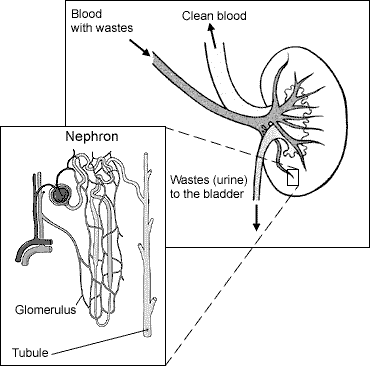
earlier section, healthy kidneys take wastes out of the blood but leave
protein. Impaired kidneys may fail to separate the protein from the
wastes.
Some doctors tell their kidney patients to limit the amount of protein
they eat so that the kidneys have less work to do. But you cannot avoid
protein entirely. You may need to work with a dietitian to find the right
food plan.
Cholesterol
Another problem that may be associated with kidney failure is too much
cholesterol (koh-LES-tuh-rawl) in your blood. High levels of
cholesterol may result from a high fat diet.
Cholesterol can build up on the inside walls of your blood vessels. The
buildup makes pumping blood through the vessels harder for your heart
and can cause heart attacks and strokes.
Sodium
Sodium is a chemical found in salt and other foods. Sodium in your diet
may raise your blood pressure, so you should limit foods that contain
high levels of sodium. High sodium foods include canned or processed
foods like frozen dinners and hot dogs.
Potassium
Potassium is a mineral found
naturally in many fruits and vegetables, like
potatoes, bananas, dried fruits, dried beans and peas, and nuts. Healthy
kidneys measure potassium in your blood and remove excess amounts.
Diseased kidneys may fail to remove excess potassium, and with very
poor kidney function, high potassium levels can affect the heart rhythm.
Treating anemia
Anemia is a condition in which
the blood does not contain enough red
blood cells. These cells are important because they carry oxygen
throughout the body. If you are anemic, you will feel tired and look
pale. Healthy kidneys make the hormone EPO, which stimulates the
bones to make red blood cells. Diseased kidneys may not make
enough EPO. You may need to take injections of a manmade form of
EPO.
Preparing for end stage renal disease
As your kidney disease progresses, you will need to make several
decisions. You will need to learn about your options for treating ESRD
so that you can make an informed choice between hemodialysis,
peritoneal dialysis, and transplantation.