
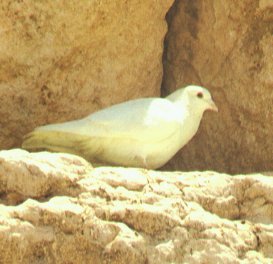
THE REVELATION OF THE HOLY TRINITY: HEAVENLY KING
Greek: "Vasilieu Ouranie"
Hebrew: "Melekh HaShamayim"
Slavonic: "Tzariu Nebesnyi"
We have shown that the principle of preexistence of the Messiah is deeply enrooted in the Jewish traditions as mentioned in Talmud Tractates Nedarim 39B and Pessahim 54a. Therefore, according to this tradition, the Shem HaMashiah [Name of the Messiah] is present and still assists the inception of the world, time and space. Thus Jesus Christ declares: "Before Abraham was, I am" [John 8:58]. In the Creed of the Church, we proclaim: "He sits at the right hand of the Father", conforming this specific Presence of the Messiah very closely to the Creator.
The eighth chapter of the Book of Proverbs also refers to a very similar concept of the prexistence of the "Hokhmah", God's Wisdom. The Book of Ben Sirakh or Siracide, written in Greek and not included among the canonical Books of the Hebrew Bible [though considered with much respect today], insists on the roll of the initial Wisdom and predetermines the Trinitarian revelation.
Each Byzantine service begins with numerous prayers calling to the Holy Trinity and to the power of the Holy Spirit, defining the interactivity between the Three Persons of the Holy Trinity. The Monarchy of the Father is displaying in the Divine Person of the Only-Begotten Son and the sheltering Presence of the Holy Spirit. It appears to be a permanent misunderstanding that the faithful as well as the clergy separate the different Persons of the Holy Trinity. We do have to call upon the Name of Our Lord Jesus Christ, but He directed all his deeds and prayers to the Heavenly Father to whom He refers at all times: "But of that day and hour [of fulfillment] knows no man, no, not the angels in heaven, but my Father, only" [Matthew 24:36].
In Hebrew and Aramaic the words Shekhinah/Shekina/'Shekinta' are very present as also in the interpretative versions of the TaNaKH [Bible, Five Books of Moses], i.e. the Targumim [interpretative translations] and the Aramaic versions of the Holy Scriptures which were more understandable to the faithful by the time of the exile in Babylon.
Moreover, another Aramaic word is used to refer to the Divine Essence, to God as the Inceptor and Creator: "Memra yeqara": "Precious Word". This is a rule in normal Jewish Communities to read the pericope of the Week in Hebrew, then in Aramaic according to the translation made by the proselyte Onkelos [thus a non-Jew] and only to read it in the local vernacular tongue at the end of all these readings. The Sages said that the translation made by Onkelos the Proselyte is of great importance for the understanding of the Sacred Texts. It should be noted that the Evangelist Luke was also a proselyte whose aim was to "translate or report without betraying the meaning of the words and the described context", constantly appealing to the Divine Essence. The interpretative "Memra" [Word of God] is to be compared to the "Logos" [Substantial Verb of God] and explains the Unique character of the Holy Trinity as well as the Shekhinah. This aspect has been studied by Franz Rosenzweig in his book "The Star of Redemption/ Stern der Erloesung" and in some way by Martin Buber in their common translation of the Torah into Modern German just before World War II.
We read in the Book of Numbers 14:42: "Go not up, because the Lord is not among you [beqirbekhem]". The Onkelos Targum uses the word "Shekhinah" to the Name of God as also in Numbers 14:14: "For they have heard that you Lord are among this people". This example is interesting because when, during the Divine Liturgy according to the Byzantine tradition the clergy kiss each other as a sign of Jesus, they say: "Christ is amidst us" and the answer is "He is and will be". The well-known Professor of Christian theology at the Hebrew University, the late David Flusser does not think that these words have really the same meaning as shown in Saint Matthew 18:20. He considers that Jesus could not have said the words "amidst them/ you", but that the only mention that the disciples are "gathered in My Name" includes the two Hebraic concepts expressed as "leShmi" [toward My Name, for the sake of My Name], which definitely implies to be gathered in the Name of God or His Messiah/Christ. These remarks are important since they show how the Shekhinah gathers in a similar way God the father, the Only-begotten Son[Israel according to Isaiah 4:22; the Messiah if considering the Christian theology] and all human beings which are given a breath of life. Thus, the Word of God creates mansions "amidst us" because he is present "within our heart", i.e. "in the core of the Church.
TO CONTINUE TO PAGE 2 PLEASE PRESS HERE

HOW to contact us?