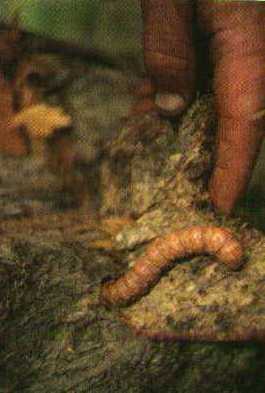
A nearly full-grown puriri moth larva. The colours are a bit more purplish in reality. A truely amazing colour.
A nearly full-grown puriri moth larva. The colours are a bit more purplish in reality. A truely amazing colour. | |
A larva tends to live in the same "7" shaped burrow for the entire time. The construction of the burrow is quite clever. The short top passage of the "7" slopes upwards, preventing rain from filling the burrow. The larva also constructs a tent out of silk and pieces of bark over the feeding area around the opening. These can be so well camoflaged that you'll miss most larval burrows completely. The larva eats the juicy regrowing cambium layer just under the bark, leaving scars that are characteristic for each tree species.
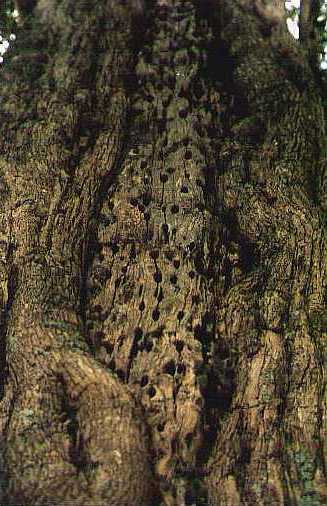
Over a period of time many larva can make a sieve out of a puriri tree. On the picture above you can see the holes made by the larvae. The larvae don't seem to affect the health of puriri trees at all. But all those holes in the timber can limit it's use.
Larval incidence can be reduced by keeping deadwood out of a puriri grove. The young larvae start off feeding on fungi, and then find a nice juicy tree. More than 60 species of tree (native and introduced) are palatable to the puriri moth larvae.