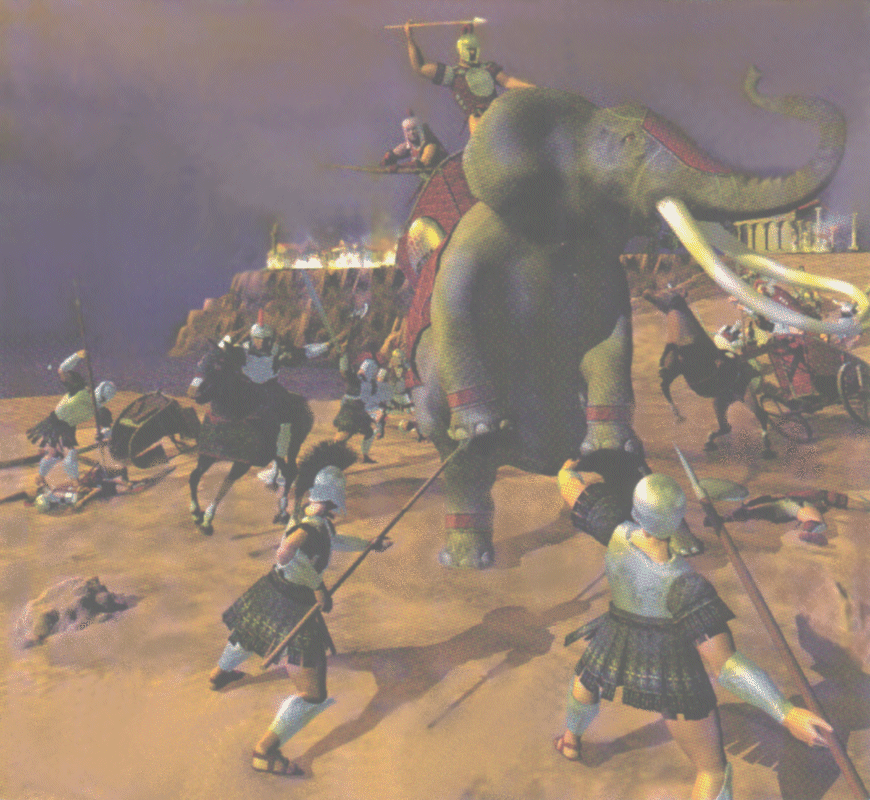
| With the end of the Third Punic War in 146BC, Rome was now in possesion of all the nations surrounding the western Mediterranean and had taken a major step on her quest for world domination. This quest however was more of an accident than a conscious decision, and was dictated by Rome's aggressive foreign policy which meant in general they waged war on any country seen as a potential threat to them. In a short space of time the Romans had conquered all of their Italian neighbours as well as Sicily, Sardinia, Northern Africa and Spain and had fought off the most feared armies of their day. The discipline and strength of this military state was set to take over the whole of the known world. The slow disintegration of the Punic strongholds in Northern Africa and the demise of her naval supremacy in the Mediterranean Sea, came to a final and pitiable end when the Romans burned Carthage to the ground in 146BC. The Carthaginians, descendants from the great Phoenician Empire who went on to build a powerful expansionist state of their own, fought with everything they had in the last desperate and vain attempt to save their city, but in the end Rome effectively wiped their civilization off the map. In the years that Rome was securing her hold over the Italian cities, another powerful state in northern Greece had built an unstoppable military force with which they used to first conquer all of the Greek mainland and then under the leadership of one the most famous generals in history, went on to forge the largest empire the world had ever seen. Alexander III of Macedon, known to history as Alexander the Great, conquered in less than ten years, the whole of Persia and most of the known world with his military genius and visciously murderous Macedonian phalanx. After the Punic Wars, Rome turned her attention almost immediately towards Greece, and in the following years went into conflict with the kingdoms left behind by Alexander. The underlying reason again was that Greek power could certainly become a threat to the dominance of the Romans, who were no doubt convinced by this time that the whole world should submit to the rule of their glorious empire. The wars between Rome and the Carthage, a defining moment in world history, were the result of a bitter rivalry between the two nations for dominant control over the land surrounding the western Mediterranean. The Punic Wars were a bloody and violent conflict, fought by men consumed by warlike passion and blind patriotism to their countries, and the countless lives lost in battle should always be remembered. While it is easy to be captured by the astonishing manouvres, the brilliance of great leaders and the tactics they used to win victory, the enormous amounts of troops gathered in defiance of foreign invaders, and even the appearance of ancient warriors dressed in bronze plated armour and helmets adorned with huge crests, its important to remember that the battle itself involved brutally murdering the enemy face to face. War is the most violent and horrific phenomenon ever known to man, and the lessons learnt from it should never be forgotten - for if they are, in the words of Polybius, "we are destined to make the same mistakes again." |
| The End of the Punic Wars |
| ... |
 |
| ... |