|
Sanshou
You can translate “sanshou” from Chinese to “free fighting” but a better description is the use of Chinese martial arts techniques in combat. It contains several categories:
Military sanshou: These are the hand-to-hand combat techniques of the Chinese army. Generally speaking these technique are designed to overpower enemy troops as quickly as possible using all available natural weapons: fists, feet, elbows, knees, etc. There are also specific techniques for sentry removal and taking prisoners.
Civilian sanshou: Throughout the history of China there have constantly been martial arts contests and tournaments allowing practitioners to test their skills. These duels were organized both by the government as well as by local townspeople. As there were virtually no rules, injury and death was a common result. A typical element is that the fights were held on a raised platform called “lei tai”. If a fighter was forced off that stage, he lost the fight.
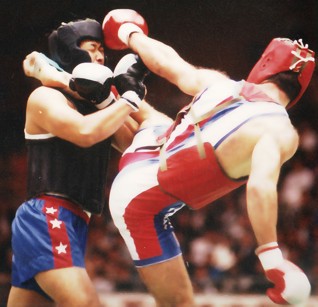
Sports sanshou Also called “sanda”, this is form is the most known throughout the world. Though the techniques in it are based upon those of the previous two categories, their deadly character has been altered. The purpose is now to beat the opponent in a safe way and with fair-play. The fighters can use punching, kicking, knee strikes and stand-up grappling to win the match. For safety reasons they wear different types of protective gear: boxing gloves, shin guards, chest protector and head gear. Sanshou fighters can compete at amateur, semi-professional and professional levels in the different circuits. The duration of each match and the techniques allowed vary accordingly. This spectacular sport is the ideal venue for Chinese martial artists to test their skills. Wim Demeere is responsible for introducing sports sanshou in Belgium during his time as national coach for the Belgian Wushu federation. At his insistence sanshou made it's debut during the Belgian nationals of 2001
The classes in Meise focus exclusively on sports sanshou. Civilian sanshou is only available during workshops or private classes.
|