




Bandura has developed many concepts that are involved with the social learning theory, I will provide and overview of this theory through the use of explanations and examples.
1) People learn through Observational Learning (Van Wagner, n.d.)
There are three different types of observation learning that Bandura identifies (as cited in Van Wagner, n.d.);
* "A live model, which involves an actual individual demonstrating or acting out a behaviour" (Van Wagner, n.d., n.p.).
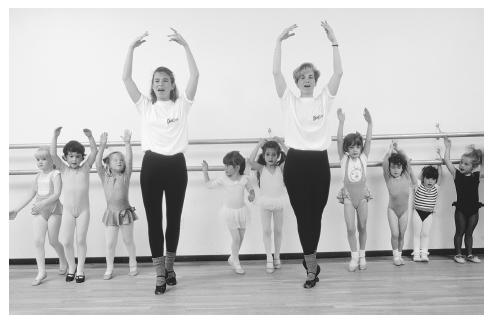
* "A verbal instructional model, which involves descriptions and explanations of a behaviour" (Van Wagner, n.d., n.p.).
* "A symbolic model, which involves real or fictional characters displaying behaviours in books, films, television
programs, or online media" (Van Wagner, n.d., n.p.).
Example - A child watches movies or video games
2) "Mental states are important to learning" (Van Wagner, n.d., n.p.)
Bandura believed external or environmental factors were not completely responsible for influencing learning and behaviour and with that belief came the idea of intrinsic reinforcement (Van Wagner, n.d).
Intrinsic reinforcement is "...a form internal reward, such as pride, satisfaction, and a sense of accomplishment" (Van Wagner, n.d.). Example - a child felt good inside when they did well on their report card
 (
( 3) Learning does not necessary result in behaviour change (Van Wagner, n.d.)
There are certain steps that are required in the learning/modelling process, for learning to be effective, that Bandura has identified (Van Wagner, n.d.). I will provide examples to the four steps of the modelling process below. These steps are;
"Attention": To learn behaviours effectively, paying attention is a must (Van Wagner, n.d.). If a learner is distracted than their will be negative consequences on learning (Van Wagner, n.d.). However, if the learner is interested in the concept being observed than their will be more positive effects on the learner (Van Wagner, n.d.).
Example: a teenager in drama class is bored and is not paying attention to the lecture. The teen is preoccupied with thoughts of the fight he has with his girlfriend and is not paying attention. However, the next day the teacher brings in a performing artist to demonstrate different concepts taught in yesterday's lecture through interpretive dance, which the teens finds interesting pays attention.
"Retention": Retaining the information that was learned is important (Van Wagner, n.d).
Example: The teen needs to hold on to the information that he learned at the interpretive dance drama class so it can be used later.
"Reproduction": Being able to remember the learned information is crucial to observational learning (Van Wagner, n.d.). Example - At this stage, the teen must be able to reproduce the information learned.
"Motivation": A person must be motivated to imitate the behaviour that was modeled (Van Wagner, n.d.). In this stage, reinforcement and punishment are extremely important (Van Wagner, n.d.).
Example: The teen performs a dramatic piece that was learned from the interpretative dance class and received a good grade on the assignment.
There are different types of motivations that Bandura identifies;
"Motives" - Reasons for imitating behaviours (Boeree, 2006, n.p.)
"Past reinforcement" (Boeree, 2006, n.p.) - Example: A child hits their sibling and is then is given a candy by his other sibling
"Promised reinforcements" (Boeree, 2006, n.p.) - Example: Telling a child that if they do well on their report card, they will get a new bicycle
"Vicarious reinforcement" (Boeree, 2006, n.p.) - A child gives his sister a hug when he sees his brother getting praise for the behaviour by their parents
"Notice that these are, traditionally, considered to be the things that "cause" learning. (Boeree, 2006, n.p.) Bandura is saying that they don't so much cause learning as cause us to demonstrate what we have learned. That is, he sees them as motives? (Boeree, 2006, n.p.).
Negative motives - Reasons for not imitating the behaviours (Boeree, 2006, n.p.)
"Past punishment" (Boeree, 2006, n.p.) - Example: If a child learned to hit their sibling, but then was spanked and sent to their room the last time that they did it
"Promised punishments" (Boeree, 2006, n.p.) - Example: Threatening a child that if they don't do better on their report card, they will lose their telephone privileges
"Vicarious punishment" (Boeree, 2006, n.p.) - Example: A child stops hitting his sister when he sees his brother get in trouble for hitting the sister
"Bandura says that punishment in whatever form does not work as well as reinforcement and, in fact, has a tendency to "backfire" on us" (Boeree, 2006, n.p.).