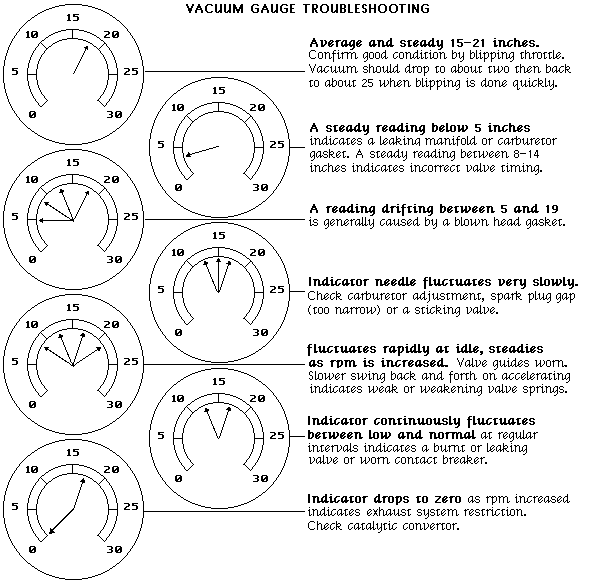
You can easily test an engines general condition with a vacuum gauge. It is a matter of bringing an engine to operating temperature and then installing the gauge.
Shut the warm engine off and then find a vacuum line attached to the intake manifold. You need one from the intake manifold, below the throttle plates, that can be teed into with a vacuum T.
Attach the gauge, place it in an area clear of moving parts and start the engine. With
the engine idling, read the gauge and compare it to the chart below.
After testing with a vacuum gauge, you may want to test further with a compression test. This is best done with a leakdown tester, but few people have these and compression gauges are readily available.
Also, testing the cylinders ability to generate/hold pressure involves removing the spark plugs. You can gain more information by examining the spark plugs at this time.
With the engine at operating temperature, remove all spark plugs and place them in order so you know which spark plug goes to which cylinder. Examine each plug as they are removed noting its color, and if it is wet looking allow it a few moments to see if it dries. If it is gas fouled, it will dry and emit a gasoline smell. If it is shiny and doesn't dry it is probably oil fouled.
To do a test with a compression gauge, ground the ignition coil or remove the distributor wire to stop the ignition from firing. Next block the throttle plates open to allow air to enter the engine. You will need a fully charged battery to complete the test.
Attach the compression gauge to the first cylinder and crank the engine through four compression strokes. You can hear the engine slow as the piston in the cylinder you are testing rises on the compression stroke. Write down the maximum pressure achieved for each cylinder in turn.
Compare the pressures with the specifications for your engine. Typical pressures are 140 PSI to 180 PSI for most automotive applications in good condition. Note the amount of difference between the highest and lowest numbers. They should be within 10 to 20 percent of each other, so an engine with a high of 150 PSI should have no cylinders lower than 120 PSI. Low adjacent cylinders may have a burned gasket between them.
Generally low numbers may be found on an engine with worn rings or poor valve condition. Squirt a small amount (1 tsp.) of light oil into a low cylinder and turn the engine a few revolutions to spread the oil. Repeat the test and compare it to the previous reading. If it raises substantially, it probably has worn rings which seal better in oil. If it doesn't raise more than a few pounds it either has leaking valves or other mechanical defect.