


Click here to read more....
|
|
|
|
|
|
|
|
|
|
|
|
|
|
|
|
|
|
|
|||||||||||||||||
|
|||||||||||||||||
|
MULTISTAGE | ||||||||||||||||
|
|||||||||||||||||
|
|||||||||||||||||
|
|||||||||||||||||
|
|||||||||||||||||
|
|||||||||||||||||
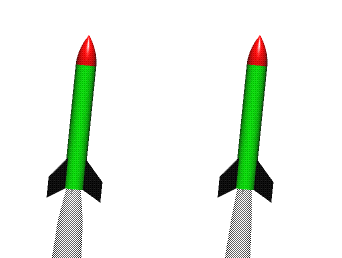
| Even the biggest, most powerful rocket could not lift itself into space. It would always be too heavy. So a rocket is always made up of several rockets joined together. This is called a multistage rockets because when the first, usually the largest, engine�s fuel runs out it just drops off, making the whole rocket much lighter. Then the second stage starts boosting the speed higher and higher until it drops off. Leaving the third and final stage which lifts what�s remaining into orbit. | |||||||||||||||||
|
|||||||||||||||||
| There are four different ways of constructing multistage rockets. The system hitherto most widely employed is that of tandem or series staging, in which the successive stages are arranged one above the other, the first stage to be ignited and jettisoned being at the bottom. In this way it is possible to combine different types of propulsion and rocket design in the various stages. A typical example of a giant multistage rocket is the Saturn 5, which took America�s first astronauts to the moon. It stood 263 ft. on the launching pad and weighed about 3000 tons. The first stage was of very heavy and powerful construction, with five F 1 motors powered by kerosene and liquid air, developing a thrust of 7.5 million pounds. The second stage was propelled by five T 2 motors, while the third stage, which contained the Apollo spacecraft, had one T 2 motor, while the third stage, which contained the Apollo spacecraft, had one T 2 motor. The optimum subdivision of a multistage rocket into its various stages depends to a great extent upon the chosen combination of propellants. A disadvantage of the series-type multistage rocket is that the propulsion systems of the various stages are ignited and operate consecutively, so that they cannot act simultaneously in accelerating the rocket. For this reason, the booster-rocket principle has been applied in the Atlas intercontinental ballistic missile. The main rocket is essentially a single-stage liquid-propellant vehicle powered by a sustainer motor. In addition there are two booster units, burning the same fuels and developing a very high thrust. The boosters are jettisoned at burnout, and the sustainer accelerates the missile to maximum velocity and is then shut off. In this method only one liquid-propellant supply system is required, whereas separate stages arranged in series each require their own supply system. A third possibility is the parallel-stage rocket comprising a main rocket and a number of jettisonable solid-propellant booster units for high lift-off thrust and initial acceleration. This arrangement is regarded as most suitable for future space-flight projects. Another possible combination is a small manned spacecraft is carried into orbit by a launching rocket to which it is attached �piggyback� fashion. Click here to read more.... |
|||||||||||||||||
|
|||||||||||||||||
| History | |||||||||||||||||
|
|||||||||||||||||
|
|||||||||||||||||
| Rocket Model | |||||||||||||||||
|
|||||||||||||||||
|
|||||||||||||||||
| Theory | |||||||||||||||||
|
|||||||||||||||||
|
|||||||||||||||||
| Safety | |||||||||||||||||
|
|||||||||||||||||
|
|||||||||||||||||
| Building | |||||||||||||||||
|
|||||||||||||||||
|
|||||||||||||||||
| Design | |||||||||||||||||
|
|||||||||||||||||
|
|||||||||||||||||
| MultiStage | |||||||||||||||||
|
|||||||||||||||||
|
|||||||||||||||||
| Model Codes | |||||||||||||||||
|
|||||||||||||||||
|
|||||||||||||||||
| Rocketry Terms | |||||||||||||||||
|
|||||||||||||||||
|
|||||||||||||||||
| Links/Bibliography | |||||||||||||||||
|
|||||||||||||||||