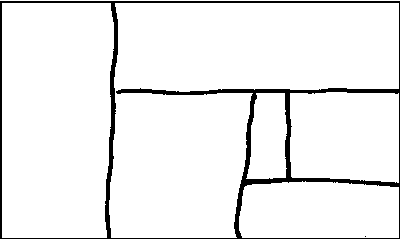

1. Line as Boundary. This is related to borders and territory. A line is an abstraction of an edge: it divides one side from the other. If it encloses a space, it separates the inside from the outside. Because it parses (define)and measures, it creates proportions, size and position relationships of areas. Mysteriously, these formal relationships may be more or less pleasing.
Do This:
Using pen and ink, divide fifty 5" x 8" plain (no lines) index card
into interesting areas.
If you wish to execute a classic design task, do it using three vertcal
and two horizontal lines. Let these lines terminate either in another (perpendicular)(define)line
or the edge of the card.
2. Line as Space. Because lines can connect points, and , as we investigated
in the previous excercise, these points may appear to occupy positions
in the depth of the paper, lines also may create an illusion of three dimensional
space in the pictorial volume represented by the paper. Perspective, overlap
and relative sizes are common principles for creating the illusion of depth
in the flat paper.
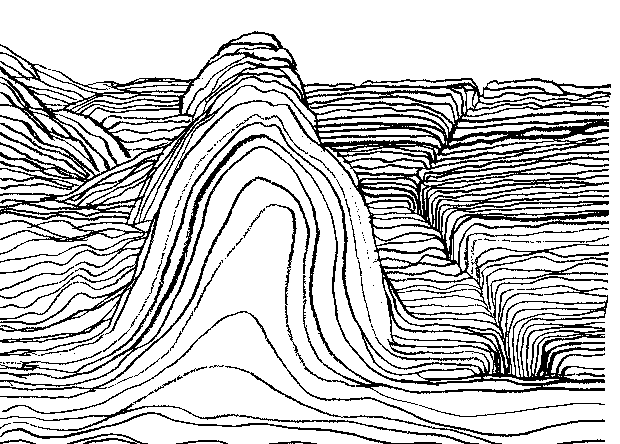
Do This:
Using any medium on paper of any size, draw lines that create the illusion of depth. Do not concern yourself with "correct" perspective: Anything that looks three dimensional is good. Experiment with overlap. Notice that thick dark lines tend to appear close while thin light lines look distant.
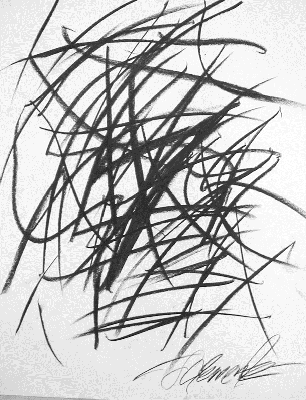
"Anger" S. Clemente. 2000
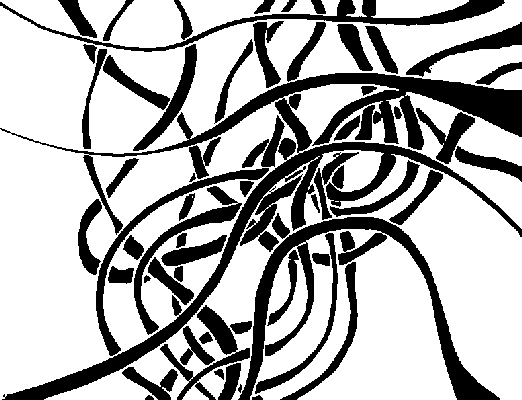
3. Line as Gestural Expression. Almost all artist make lines by moving a hand-held marker across a surface. The line is the record of that movement, it's pressure, speed and other, subtler dynamics(define). Traditional graphic tools are well suited to record the subtleties of that action. The hand's speed, pressure and direction of movement generally affect the look of the resultant line. In addition to facial expressions, quality of muscular movements instinctively communicates emotions. Thus line has the ability to convey emotional meaning. Furthermore, because lines are commonly "read" this way, Lines made by means other than the human hand are imbued (define)with emotional meaning related to their dynamic qualities.
Do This:
Use black crayon (Conte' is nice, but any kind will do.) on 18" x 24"
white paper for this exercise. In a room alone, tape the paper to a wall
or on a table. Close your eyes and think of something that makes you personally
very angry. When you are feeling the anger, open you eyes and scribble
in an angry manner. Do not draw a picture. Do not make a pattern. Keep
the scribble free and varied. Scribble for a minute at leas, but not more
than five. Label the paper "anger". Experiencing more intense feeling once
you start scribbling is normal. Should you stop experincing the strong
emotion, stop scribbling until it returns. Repeat this excercise with five
other emotions including joy.