Alexander Early is also in the Adv. Bio. class with me, and also like me, he did his paper on ants. His paper covered the topic of Polymorphism in ant colonies, where as mine dealt with the communication of ants via pheromones and a process called trophallaxis. If you would like to read my paper, click here. Anyway, from here on out the project was no longer individual, Alexander had become my partner in crime, so to speak. After careful consideration, we decided to collect a collony of Myrmecocyctus ants, more commonly known as "honey pot ants" the ones that create "repletes", which have grotesquely swollen gasters. We avoided the invading species of Argintine ants because we hate them.
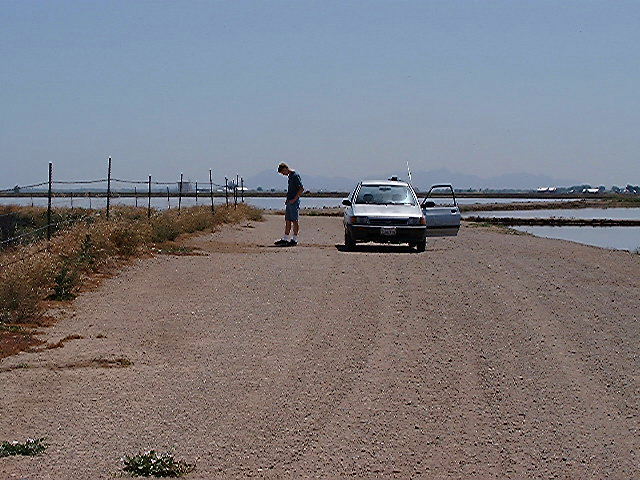
After digging up about 6 nests (all of which were Argintine ants, I hate them so much, they are evil), we finally discovered a nest of Myrmecocyctus ants on a dirt road next to a rice field about 1 1/2 miles away from Alexanders house.
So we set out dig up the nest and transport a portion of the colony, queen and all (or so we had hoped), into the nest.
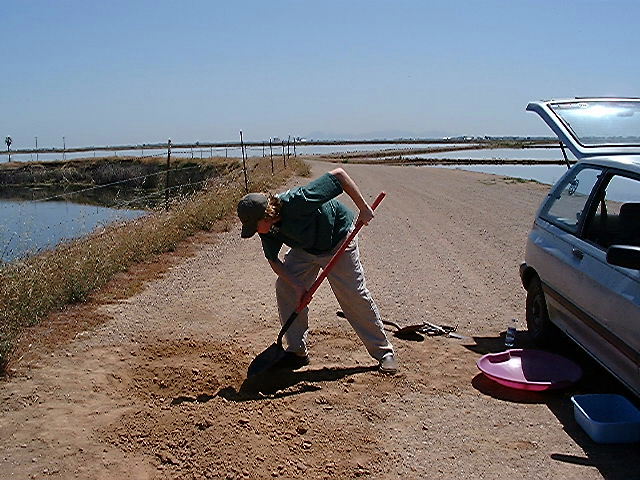
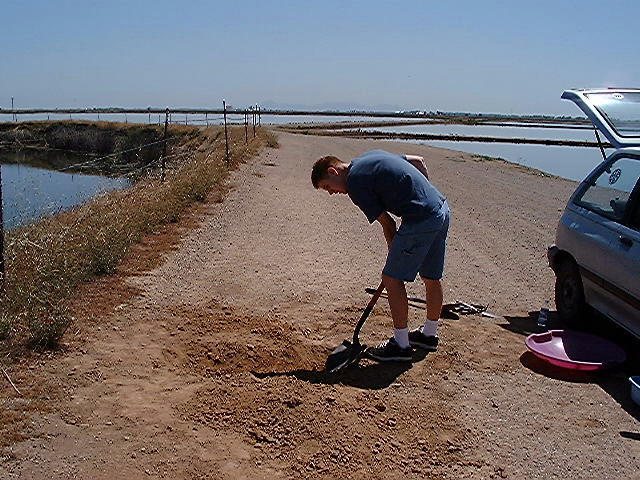
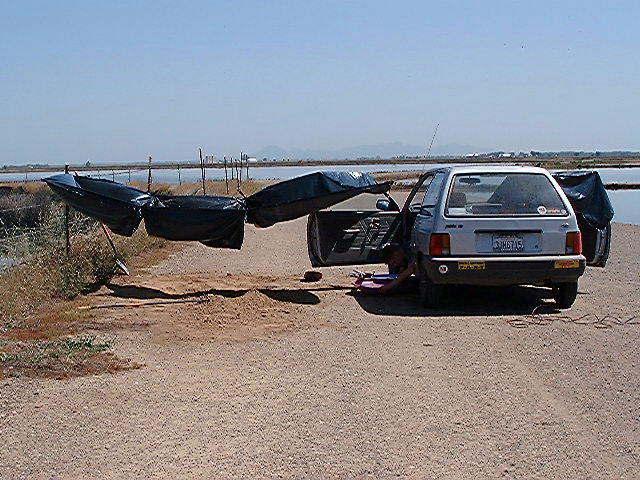
What followed was approximatly 5 1/2 hours of manual labor including: digging under the intense sun into rock hard soil, individually picking up ants and dropping the into the arena, and meticulously searching for the queen (see figures 4, 5, 6, and 7).
|