
|
|
Home | Our Position |Photo Gallery | eventsContact information: [email protected] VISIT THE CHAT ROOM: CLICK HERE
|
|
LINKS PORTMORE Community, History and Pictures


|
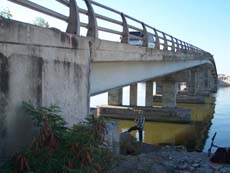
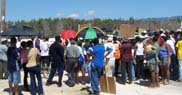
OUR POSITION: Over the past months, the media has been flooded with what seems to be the resistance of the citizens of Portmore to comply with the proposed tolling of the Causeway access to and from their community. According to a Jamaica Observer article dated July 28, 2004, Kingsley Thomas, Chairman of NROCC was quoted as saying "I am not in any fight with a handful of people who are negative about everything". Whilst various interest groups and individuals have stated their position and opinions as it relates to the community’s protest on the matter, we feel that the wide population is still unaware of the real issues facing the community. Let us take this opportunity to state the position of the community and seek to clear the air as to our motives behind this resistance. DEVELOPMENT SUPPORTED: Portmore as a community support the development of a better and improved alternative to the existing mode of travel to and from the community, We welcome the expansion of the Port of Jamaica and it's contribution the the economy as a whole. What we oppose is the manner in which this project is being imposed on the citizen of this community and the many lies and deceit that surrounds the projects. The government has advocated a road network that will bring the country into the 21st century, facilitating the smooth and easy movement of people and cargo from one location to the next. This vision and passion lead to the birth of Highway 2000. However, when we look closely at the terms and condition of the agreement between the Government and the developers, it speaks not to the core purpose of the venture, but to some sinister plot to make as much money as possible within the shortest possible time. This is the foundation of our protest, as the driving force has not been the citizen of the community but the revenue that can be derived from the venture. IMPORTANT FACTS: Here are some facts that have recently been made public. PORTMORE LEG NOT A PART OF ORIGINAL DESIGN. The Causeway expansion was proposed and designed long before the highway2000 project came to being, however, was sold out to the developers when they saw where they could make millions from this phase, based on the volume of traffic on a daily basis. NO PORTMORE, NO HIGHWAY: It is alleged that the entire contract would not have been signed if the government had not agreed to the inclusion of Portmore. NO ALTERNATIVE ROUTE: The contract between BOUYGUES and the Government, prevent the government from providing an adequate alternative route or to upgrade any existing road resulting in the loss of projected revenue. The contract states that if this happens, the Government will have to compensate the developers for loss of revenue. (section 25.8 – Toll agreement www.h2kjamaica.com/agreements). Also the The well talked about Train resurrection cannot take place to benefit the citizen of Portmore and any area that the Highway passes by without the citizen paying for loss of use of the highway. CAUSEWAY BRIDGE TO BE DEMOLISHED. Whilst Old Harbour and Spanish Town are given a choice whether to use the highway or not, Portmore has no real choice as the Causeway bridge will be destroyed and Mandela Highway is now overcrowded. PAY TO GET IN PAY TO GET OUT: Portmore is the only community required to pay for an entire leg of the highway. The other two legs, bypass communities without interfering with the existing road network. BLOCKING OF THE MANDELA ROUTE: Of the two routes to Kingston from Portmore, the developers have taken over the Causeway and have blocked the Mandela exit by erecting a roundabout which renders it impassable during peak hour traffic. In addition, the underpass was designed to prevent any future expansion. Mandela is currently overcrowded due to the high volume of traffic coming off the highway and Spanish Town. MANDELLA ROUND-ABOUT IS THE POINT OF ENTRY AND EXIT: The Mandela roundabout serves as an entry and exit point to the highway, in addition to traffic trying to get out of Portmore via Independence City, the Dyke road and Greater Portmore. MOST EXPENSIVE LEG: The Portmore leg of the highway will be the most expensive of the entire highway. This means that the Citizen of Portmore will be required to offset the cost of the rest of the highway. The proposed introductory rate is set at $65. NO PEDESTRIAN OR CYCLISTS ALLOWED: Pedestrian, Pedal cyclists and Motorcyclists will not be allowed to use the Causeway as only motor vehicles will be given access. There is currently a large portion of citizen who travel to Kingston via this means. RISE IN COST OF LIVING & LOWER PROPERTY VALUE: All goods and services provided to the residents of Portmore WILL be increased as there will be an additional cost to providing it also resulting in the fall in the value of property. As a result of the facts above, we realized that this proposed development, in no stretch of the imagination, has as it’s primary objective, the easy access of the citizen to and from the community and country on a whole. By observation, we discovered that approximately 20 to 30 percent of the road users actually use the already completed phase. This means that on a daily basis, the majority of drivers used the alternative road. The government, in a memo to it traveling officers, advised them to refrain from using the toll road as it is not in a position to refund the cost, it being too expensive, and strongly suggest that they use the Alternative. If this observation hold true, it means that the majority of the Portmore drivers will be trying to use the restricted and now over crowded Mandela highway. An impossible feet. Minister Paul Roberts in a radio talk show publicly stated that the Dyke road is being expanded to add to the alternative for Portmore and thus the concerns of the residents are unwarranted. What was deliberately withheld form his statements is that the Dyke road leads directly to the same Roundabout which restrict the free flow of traffic onto the Mandela highway. Also there are proposed plans to expand the I-95 to a four lane road, however, this road leads into the same roundabout and under the 2 lane over pass. So we as a community are boxed in without any real alternative and are resolute in our stand that we will not allow ourselves to be raped of our freedom of movement. We will not allow our children to be burdened with a debt that came about as a result of a sinister plot to make millions, because we their parents sat by and allowed it to happen.
THE CASE BROUGHT BY THE PCAC/PJCA AGAINST THE
GOVERNMENT JULY 19 & 20, 2005 ADVICE ON APPEAL IN THE SUPREME COURT OF JUDICATURE OF JAMAICA CLAIM NO. HCV 1085 OF 2005 BETWEEN PORTMORE CITIZENS ADVISORY COUNCIL FIRST APPLICANT
AND PORTMORE JOINT CITIZENS ASSOCIATION SECOND APPLICANT
AND MINISTRY OF TRANSPORT AND WORKS FIRST RESPONDENT AND ATTORNEY GENERAL OF JAMAICA SECOND RESPONDENT
3. If the case depended on this point alone, I would advise an appeal. Even so it would not be a clear cut argument. The judge in paragraph 22 has listed various circumstances which might make it impractical to comply strictly with the tents of the Act. The Court of Appeal might be tempted to follow her reasoning, and I would have more ith in the Privy Council to apply the law correctly.
4. The judge also fell into error in my opinion in paragraph 23 in finding that the Port Henderson road would not be a reasonable alternative, since it was not for the Claimants to prove what alternative should have been designated.
5. The real problem has always been that even if an appellate court could he persuaded to adopt our position with regard to the illegality of the alternative route, the arguments about delay and the passage of time would prevent us from getting the Orders that we seek. On this aspect of the case the research which we carried out showed that the courts in England tend to apply the law strictly, so that even if the Claimant had no means of knowing that a decision had been made, the passage of time, and the fact that people have acted on the basis that the Order was legal, prevented the Claimant from obtaining relief. Two of the English cases were in the House of Lords, and would therefore be followed by the Privy Council.
6. The cases also show that if the trial judge makes a reasonable judgment as to the extent of the prejudice caused by the delay, the higher courts will respect that judgment. In the present case Miss Justice Smith has weighed the competing factors in paragraph 29 and found that on balance the prejudice caused to the Government is the more severe, it will be impossible, in my opinion, to persuade either the Court of Appeal or the Privy Council to take a different view.
7. 1 therefore advise that an appeal would not succeed. However I do not consider that the proceedings have been in vain. There is a considerable amount of support for the Portmore citizens, which the case has brought to light. The time may be right to obtain from the Minister some significant concessions regarding the improvement of the access to Mandela Highway, and possibly the level of the toll. The best approach may therefore be to say that in the interests of unity, and in the light of the economic situation, the citizens will pursue their grievances through discussion. An early meeting should be demanded, and a list of items to be discussed should be put forward. Lord Anthony Gifford QC 29 July 2005 Candis Hamilton STATEMENT BY THE HON ROBERT PICKERSGILL, MINISTER OF TRANSPORT AND WORKS ON JUDICIAL REVIEW COURT’S RULING ON THE CASE BROUGHT BY THE PORTMORE CITIZENS ADVISORY COUNCIL ON THE CAUSEWAY’S DESIGNATION AS A TOLL ROAD. [SALUTATIONS AND INTRODUCTION OF TEAM AT HEAD TABLE.] We are pleased with today’s ruling, which upheld the designation of the Causeway as a toll road, as welt as the designation of Mandela Highway as an alternative route. Of course we respect the right of the plaintiffs to pursue the matter on appeal, but we are confident that our case wilt stand. I would Like to thank most sincerely Michael Hylton, the Solicitor General, along with his team; Dr. Wayne Reid from NROCC; Mr. Trevor Jackson of Trans Jamaican Highway Ltd; the staff of the National Works Agency and other individuals both Locally and overseas who provided information critical to the Government’s defense in the case. The case brought by five residents of Portmore is stilt to be decided. We are however hopeful that a similar decision in support of Highway 2000 wilt be made. The Ministry and NROCC remain eager to work with the community in order that all their concerns on Highway 2000 are sufficiently addressed. In March, the Portmore Municipal Council passed a resolution which has the full support of the Ministry, save on one point: the call for a structured benefit to be directed to the Portmore Municipality. As you are aware, Highway 2000 is substantially a private sector project with the developers Bouygues making a significant investment through both debt and equity. The loans of course must be repaid and the company expects a fair return on its investment. For Bouygues this is a business. For Jamaica this is major infrastructure development that will spur national growth. There is no room in the equation for the developers to pay a direct monetary benefit to any community. That said, we agree with the Portmore Municipal Council on the following points of the March resolution: • That the citizens of Portmore have a suitable alternative road • That the toll be reasonable and affordable • That Marcus Garvey Drive; the roundabout out of Portmore; and the Mandela Highway are all upgraded to facilitate the smooth flow of traffic. We are currently reviewing a study by Steer Davies Gleave, one of the world’s foremost authorities on traffic. This study looked at six corridors in Kingston, and in particular addressed several of the concerns put forward by the Municipality. The improvement measures span the short, medium and tong term. Some of these recommendations are fairly simple, others more complex but they work together to significantly improve traffic flow. Short term measures include:
• Refurbishing Lanes and pedestrian crossing markings Other significant recommendations include: For Hagley Park Road · The provision of right turning bays at unsignalled intersections; as well as improvements to the road surface and pedestrian sidewalks · A right turn ban from Spanish Town Road For Marcus Garvey Drive
• The addition of a third Lane along the corridor For Spanish Town Road · The realignment of the approach to Weymouth Drive
·
The widening of the bridge over Sandy Gully River to accommodate three lanes
in each direction · An additional Lane eastbound from upstream the Six Mites intersection to Duhaney Drive · The redesign of the northern approach to accommodate two Lanes at the stopline. For Dunrobin Avenue · The movement of stoptine for southern approach of Constant Spring Road to the north · On Constant Spring Road north of the intersection, formalisation of the merge of two Lanes into one. · The provision of a dedicated Left turn Lane from Dunrobin Avenue to Constant Spring Road. · The expansion of the intersection We are also exploring a suitable solution to the bottle neck on the Mandela Highway in the vicinity of the Hydel School.
It is important that I provide you with these details, even as these are
proposals, because I want it to be clear that Highway 2000 is part of a
comprehensive approach to improve traffic flows. The current project status is as follows: Dyke Road:
• Four kilometres of the existing Dyke Road were rehabilitated from Passage
Fort to Portmore Interchange and open to traffic in June 2005.
• Piling was completed in July 2005 (28 piLes - 16 of which are offshore).
Interchanges: · The main traffic diversion at Marcus Garvey to allow the construction the Interchange was opened to traffic in July 2005, and works started on the Interchange. · The Box Culvert Structure at Fort Augusta Interchange is complete, and the construction of the ramps wilt start in October 2005. · The Box Culvert Structure at Dawkins Drive Interchange is in progress and will be completed in August 2005 and the construction of the ramps will start in November 2005. Toll Plaza and Toll Building · The works started on the Toll Building in June 2005 · The works on the Toll Plaza will begin in August 2005 · Installation of Tolling Equipment is expected to start early next year. Soil Improvement: · The Concrete Modular Columns (CMCs) and the Vertical Drains were completed in July 2005. · The preloading process is in underway for all areas, and removal of surcharge started in June 2005 for the areas that reached the design targets. In order to achieve the completion in June 2006, the existing Causeway traffic will be temporarily diverted in three main phases on the newly constructed lanes.
The existing traffic will be maintained at all times during the construction
of the Highway. · From Hunt’s Bay Bridge to Toll Plaza Area by end of October 2005. This will include the relocation of the fishermen undertaken by NROCC. · From Toll Plaza to Fort Augusta by end of December 2005. · From Fort Augusta to Dawkins Drive by end of February 2006. I am compelled to restate the benefits Highway 2000 brings to Portmore, and indeed to Jamaica. On a personal Level, it will make it easier for the more than 170,000 residents of Portmore to commute, and in turn will impact how these citizens conduct their Lives. Current users of Highway 2000 will eagerly affirm how much the time saved has improved their own Lives, changing the way they work and play. As they have done in the case for commuters on the Spanish Town to Bushy Park corridor, the developers are considering commuter discounts for frequent users of the Portmore Bridge. From a national perspective, Highway 2000 represents the single Largest investment in our history. With the Highway we have a tremendous opportunity to stimulate growth by opening up markets and Lowering operating costs, Leading to improved efficiency and profitability. There is a single important fact that we cannot ignore: Highway 2000 is expected to generate more than $26 billion in nominal GDP. With the Legal issue initially and hopefully finally settled, we Look forward to resuming immediately our communications programme which will serve to engage the community of Portmore, dispel the myths about Highway 2000, and build the partnership necessary for its smooth operation.
You are invited to join me on a tour on Thursday July 28, beginning at
9:30 a.m. in order for you to see the high level of engineering work in
progress on the new six-lane bridge. END. |
|||
Contact information: [email protected] JOIN THE CHAT ROOM: CLICK HERE |
This site was last updated 10/07/06
