 |
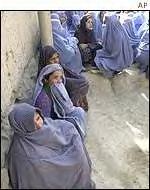
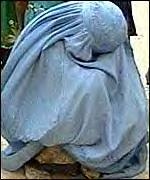
| As said in the previous page, the veil can have mutiple symbols. Oppression is the main controversial symbol dealing with the issue of the Islamic veils. Ed Royce, a Representative Republican for California discusses on how the Taliban considered themselves connected with "being in line with traditional practices", yet prior to the Soviet invasion of Afghanistan in 1979, Royce said, "women there had the right to vote, along with other liberties enjoyed by most people around the world." (La Rocque 1). Women are being segregated from things that many in Western societies consider as just ordinary freedom. Many of the women feel so oppressed by the veil that other horrific matters is not as comparable. The RAWA (Revolutionary Association of the Women of Afghanistan) explained that even though the Jehadis violently killed thier fellow people with man-made machines, the Taliban did the same, yet they were murderers on the account that they were enforcing these burqas or else there would be some major consequences such as whipping and stoning. The oppression is so fierce that in Iran, suicide rate among girls is the highest in the world (Hughes 2). Latifa, author of "My Forbidden Face", has also acquired a negative view on the aspects of the veil. She wrote on how the veil was a "representation of social oppression", and how much she had to risk to help women with having a better education and being the editor of an underground magazine in which she explains the torture and evils of the Taliban. Her portrayal of the veil is best described by her own words, "a moving prison". (Carter 173&174). A reasonable answer to why she described it as a moving prison is because of the fact that by wearing a veil you are subjected to not being able to move as much when you want to turn around to see behind you, you either have to move your whole body around or your whole head. This can be very dangerous, if a group of people were planning an attack against them and they would not see it coming. Oppression deals with denying rights and having personal freedom. Annabelle Sreberny from "The Power of the Veil: Reviews Editors' Introduction" identifies the veil to be hiding a woman's feminity and it denies a woman's individuality (Shirvani 268&271). Why would people support the enforcement of the veil? Well, since the veil is interwined with religion, that is the principal cause in why people support the veil. The Koran specifies "modesty" not the veil, but for the Islamic society, the veil is modesty. K. J. Harron Basha has an opinion from the concern of Westerners on Muslim women. Based on the ideology of the article, he explains on how they (Islamic societies) are just trying to follow religious ordains and that an honorable Muslim man will see to it that the women follow the rules that are instilled by the Islamic teachings. (Basha 1). Other people refute the ideas that it hides individuality. Many women explain that appearance is not all that matters and just because you are behind this garment, it doesn't mean that it is a barrier that prevents you to say whats on your mind. |
 |
 |