|
|
Pride of Hialeah Lodge
#610 P. H. A. F.& A.M.
|
|
|
PRINCE HALL HISTORY |
|
|
|
|
Message from the Master
|
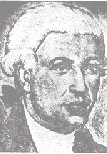
Prince
Hall is recognized as the Father of Black Masonry in the United States. He
made it possible for us to also be recognized and enjoy all privileges of
Free and Accepted Masonry. Many
rumors of the birth of Prince Hall have arisen. Few records and papers have
been found of him either in Barbados where it was rumored that he was born,
but no record of birth, by church or state, has been found there, and none in
Boston. All 11 countries of the day were searched and churches with baptismal
records were examined without a find of the name of Prince Hall. One
widely circulated rumor states that "Prince Hall was free born in
British West Indies. His father, Thomas Prince Hall, was an Englishman and
his mother a free colored woman of French extraction. In 1765 he worked his
passage on a ship to Boston, where he worked as a leather worker, a trade
learned from his father. Eight years later he had acquired real estate and
was qualified to vote. Religiously inclined, he later became a minister in
the African Methodist Episcopal Church with a charge in Cambridge." This
account, paraphrased from the generally discredited Grimshaw book of 1903, is
suspect in many areas. Black
Freemasonry began when Prince Hall and fourteen other free black men were
initiated into Lodge No. 441, Irish Constitution, attached to the 38th
Regiment of Foot, British Army Garrisoned at Castle William (now Fort
Independence) Boston Harbor on March 6, 1775. The Master of the Lodge
was Sergeant John Batt. Along with Prince Hall, the other newly made masons
were Cyrus Johnson, Bueston Slinger, Prince Rees, John Canton, Peter Freeman,
Benjamin Tiler, Duff Ruform, Thomas Santerson, Prince Rayden, Cato Speain,
Boston Smith, Peter Best, Forten Howard and Richard Titley. When
the British Army left Boston in 1776, this Lodge, No 441, granted Prince Hall
and his brethren authority to meet as African Lodge #1 (Under Dispensation),
to go in procession on St. John's Day, and as a Lodge to bury their dead; but
they could not confer degrees nor perform any other Masonic "work".
For nine years these brethren, together with others who had received their
degrees elsewhere, assembled and enjoyed their limited privileges as Masons.
Thirty-three masons were listed on the rolls of African Lodge #1 on January
14th, 1779. Finally on March 2, 1784, Prince Hall petitioned the Grand
Lodge of England, through a Worshipful Master of a subordinate Lodge in
London (William Moody of Brotherly Love Lodge No. 55) for a warrant or
charter. The
Warrant to African Lodge No. 459 of Boston is the most significant and highly
prized document known to the Prince Hall Mason Fraternity. Through it our
legitimacy is traced, and on it more than any other factor, our case rests.
It was granted on September 29, 1784, delivered in Boston on April 29, 1787
by Captain James Scott, brother-in-law of John Hancock and master of the
Neptune, under its authority African Lodge No. 459 was organized one week
later, May 6, 1787. Prince
Hall was appointed a Provincial Grand Master in 1791 by H.R.H., the
Prince of Wales. The question of extending Masonry arose when Absalom Jones
of Philadelphia, Pennsylvania appeared in Boston. He was an ordained
Episcopal priest and a mason who was interested in establishing a Masonic
lodge in Philadelphia. Under the authority of the charter of African Lodge
#459, Prince Hall established African Lodge #459 of Philadelphia on March 22,
1797 and Hiram Lodge #3 in Providence, Rhode Island on June 25, 1797.
African Lodge of Boston became the "Mother Lodge" of the
Prince Hall Family. It was typical for new lodges to be established in
this manner in those days. The African Grand Lodge was not organized
until 1808 when representatives of African Lodge #459 of Boston, African
Lodge #459 of Philadelphia and Hiram Lodge #3 of Providence met in New York City.
Upon
Prince Hall's death on December 4, 1807, Nero Prince became Master. When Nero
Prince sailed to Russia in 1808, George Middleton succeeded him. After
Middleton, Petrert Lew, Samuel H. Moody and then, John T. Hilton became Grand
Master. In 1827, Hilton recommended a Declaration of Independence from the
English Grand Lodge. In
1869 a fire destroyed Massachusetts' Grand Lodge headquarters and a number of
its priceless records. The charter in its metal tube was in the Grand Lodge
chest. The tube saved the charter from the flames, but the intense heat
charred the paper. It was at this time that Grand Master S.T. Kendall crawled
into the burning building and in peril of his life, saved the charter from
complete destruction. Thus a Grand Master's devotion and heroism further
consecrated this parchment to us, and added a further detail to its already
interesting history. The original Charter No. 459 has long since been made
secure between heavy plate glass and is kept in a fire-proof vault in a
downtown Boston bank. Today,
the Prince Hall fraternity has over 4,500 lodges worldwide, forming 45
independent jurisdictions with a membership of over 300,000 masons.
|