World Oil Demand:
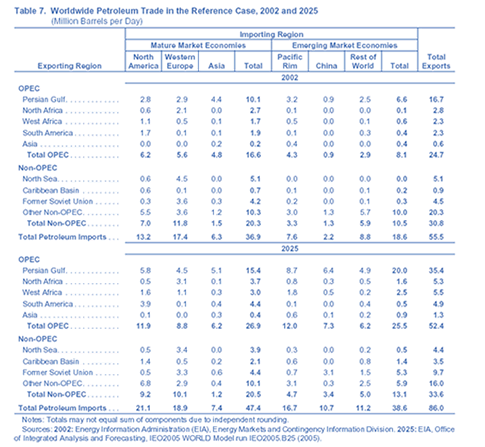
In 2002, the mature market economies imported 16.6 million barrels of oil per day from OPEC producers. Of that total, 10.1 million barrels per day came from the Persian Gulf region. Oil movements to mature market economies represented 67 percent of the total petroleum exported by OPEC member nations and 60 percent of all Persian Gulf exports (Table 7). By the end of the forecast period, OPEC exports to mature market economies in the reference case are estimated to be about 10.3 million barrels per day higher than their 2002 level, and more than one-half of the increase is expected to come from the Persian Gulf region. Despite such a substantial increase, the share of total petroleum exports that goes to the mature market economy nations in 2025 is projected to be almost 11 percentage points below their 2002 share, and the share of Persian Gulf exports going to the mature market economies is projected to fall by about 17 percent.
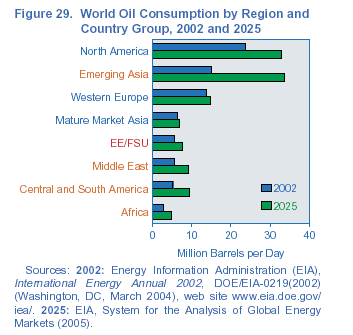
The significant shift expected in the balance of OPEC export shares between the mature market economies and emerging economies is a direct result of the economic growth anticipated for the economically developing nations of the world, especially those of Asia. OPEC petroleum exports to emerging economies are expected to increase by 17 million barrels per day over the forecast period, with more than 70 percent of the increase going to the emerging economies of Asia. China, alone, is likely to import about 7.3 million barrels per day from OPEC in 2025, virtually all of which is expected to come from Persian Gulf producers.
West African producers, including Nigeria and Angola, are also expected to increase their export volumes to North America. Caribbean Basin refiners are expected to account for most of the increase in North America’s imports of refined products. With a moderate decline in North Sea production, Western Europe is expected to import increasing amounts from Persian Gulf producers and from OPEC member nations in both northern and western Africa.
Worldwide crude oil distillation capacity was about 82 million barrels per day at the beginning of 2003. To meet the projected growth in international oil demand in the reference case, worldwide refining capacity would have to increase by more than 45 million barrels per day by 2025. Substantial growth in distillation capacity is expected in the Middle East, Central and South America, and especially in the Asia Pacific region.
Refiners in North America and Europe, while making only modest additions to their distillation capacity, are expected to continue improving product quality and enhancing the usefulness of the heavier portion of the barrel through investment in downstream capacity. Likewise, future investments by emerging economies are expected to include more advanced configurations designed to meet the anticipated increase in demand for lighter products, especially transportation fuels.