JOJO DE VEYRA: MGA TANGKANG SERYE NA PULOS SINIMULAN LAMANG
(12 mula sa 1989-90 na period)[JOJO DE VEYRA: VARIOUS SERIES ATTEMPTED
(12 from the 1989-90 na period)]
1989
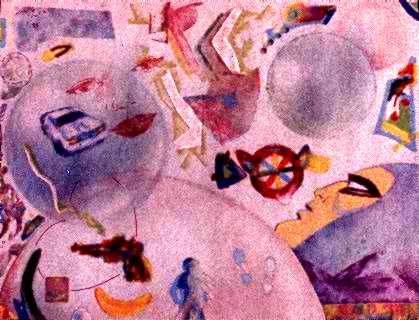
Fucking a Filipina. 1989. watercolor, pulang ballpoint pen, at oil pastel sa pelon. Dito, tingangka ni Veyra ang pagsasama-sama ng mga naglulutangang reyalistiko at abstraktong imahe para ipamalas ang isang nasyonalistang damdamin/dinaramdam. Isang resulta ng kanyang mga eksperimento sa juxtaposition o pagsasama-sama ng mga imahe.Fucking a Filipina. 1989. watercolor, red ballpoint pen, and oil pastel on rice paper. Here, Veyra attempts a juxtaposition of floating figurative and abstracted images to pursue a nationalistic visual statement/feeling. One result of his early experiments with juxtaposition or image acquisitions.
Abstraktong Pagkuwento (Abstract Narration)
Muro-ami. 1989. acrylic, poster paint, itim na ballpoint pen sa cardboard. Tinangka naman ni Veyra rito ang isang seryeng papalooban ng mga katotohanang panlipunan, nguni sa abstraktong pamamaraan ng biswal na pagpapahiwatig. Sa pagiging para bagang bintana ng tinutukoy na reyalistikong tanaw dito, masasabing hawig ito sa susunod na piyesa ni Veyra.
Muro-ami. 1989. acrylic, poster paint, black ballpoint pen on cardboard. Veyra attempts here, meanwhile, a series involving social truths, but in abstract terms of visual presentation. In what may seem a realistic depiction of a ship window, we can say this is somewhat of a precursor to Veyra's next thought-out series.
Nagkukuwentong Mga Bintana (Narrative Windows)
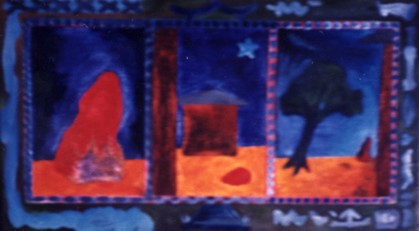
Aking Hong Kong at Dapitan [My Hong Kong, My Dapitan]. 1989. oil sa marine plywood.
Dating pinamagatang Kulungang Probinsiyal (Mula Dingding hanggang Matting hanggang Mga Larawan), ito'y alingawngaw ng lumalakas noong interes (at pagtiwala) ni Veyra sa pilosopiyang Taoist, kahit bilang suporta lamang sa kanyang uri ng perspektibang Kristiyano (si Kristo bilang rebolusyonaryong teolohiyano at di bilang "Ang Mesiya"). Subalit, ang nagigitnang bituin dito ay isang kontrang lakas, kung noo'y tila kontra man iyon, bilang simbolo ng hatak ng sosyalismo. Ito'y isang autobiographical na painting, na naglalarawan ng nagdaang alienation ng artist sa kanyang lalawigan, Leyte, kung saan walang masasabing elitistang kulturang may pagtingin sa seryosong painting bilang sining, at kung saan siya'y nakulong at na-exile ng isang financial incapacity na lumabas, at ito'y nagtagal ng ilang taon.
[Otherwise known as Provincial Prison (From Wall to Matting to Pictures), this one echoed the artist's growing interest (and reliance) on Taoist philosophy at the time, even as mere support for his own brand of Christian perspective (that looked at the Christ as a revolutionary theologian instead of as "The Messiah"). However, the middle star is also a contending force, if it seemed contending then, representing the lure of socialism. This is an autobiographical painting, illustrating the artist's past alienation in his own hometown province, Leyte, where there is no elite audience for serious painting, and where he felt imprisoned by a financial incapacity to get out, which lasted for many years.]
Mapanghating Ilaw; o, Ginawang Milagro [Dividing Light; or, Made A Miracle]. 1989. oil sa marine plywood.
Isang lumang erotikong komposisyon ni Veyra na dinaan sa paghati ng horizontal space sa dalawang magkapareho ang sukat na naratibong panels o bintana. Ang dalawang larawan sa section na ito ay mga anak ng kanyang mga konseptuwal na drowing at eksperimentasyon.[An old erotic composition by Veyra in dividing a horizontal space into two equal narrative panels or windows. The two pictures in this gallery section are offshoots of his conceptual drawings and experimentation.]
Nagkukuwentong Materyales (Material Narration)
Materiel. 1989. Kulay-rosang correction fluid at violet na stamp pad ink sa collage, at acrylic sa plastic-coated na cardboard.
Materiel ang tawag sa supplies ng militar. Dito, isang pares ng punk-ish na sunglasses ang nagmimistulang dalawang baliktad na helmet. Ito ang piyesa ni Veyra na tila tumutugis sa militarisasyon habang itinataas ang bandila ng art. Isang produkto ng eksperimentasyon ng mga drowing niya sa mixed media.
[Materiel is used to refer to military supplies. Here, a pair of punk-ish sunglasses appear like two inverted helmets. This is the Veyra piece that seems to target the issue of militarization while raising the flag of art. A product of his experimenting with drawings in the mixed media.]
1990
Pusang Sumalubong Sa Amin Sa Airstrip [Cat That Met Us At The Airstrip]. 1990. oil sa marine plywood.
Bagamat tila progreso mula sa mga tangkang seryeng bintana ng 1989, isang paulit-ulit na tendency ni Veyra noong 1990 ang unang lumabas dito -- ang gumawa ng komposisyong tila isang maskara. Dito, ang view mula sa cockpit ng isang pa-landing na eroplano ang nagmistulang mukha ng pusa.
[While seemingly a progress from the attempted windows series of 1989, a later recurring tendency in Veyra first became manifest here in 1990 -- compositions that mimicked the mask. Here, a view from a cockpit of a landing plane also comes out as a cat's face mask.]
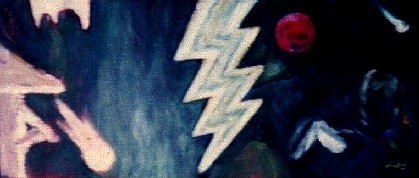
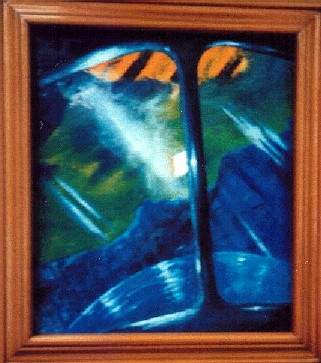
Bintana. 1990. oil sa marine plywood. Ito'y isang pagpapahiwatig ni Veyra ng interes na ipagpatuloy ang kanyang seryeng bintana. Ngunit ito naman ay gumamit ng biswal na malabo upang magkuwento ng isang "tila-malabo ring pagkuwento."
[Window. 1990. oil on marine plywood. Veyra here expressed an interest in continuing to pursue his early windows series. But here he uses a visual vagueness to also "vaguely narrate."]
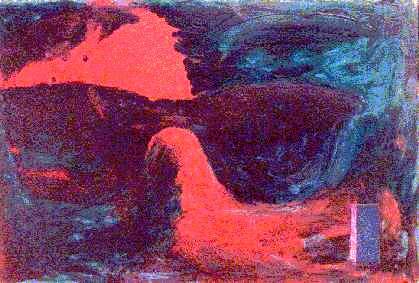
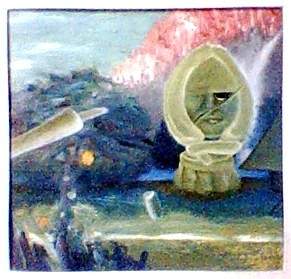
Trip ni Pilato. 1990. oil sa marine plywood. Bumalik si Veyra sa tinangka ng Muro-Ami ng nakaraang taon, ang gumawa ng tila-abstraktong komposisyon na may mabubuo pa ring reyalistikong larawan. Ito'y tila sa inisip niyang kapwa mapasaya ang naghahanap ng dekorasyonng abstrakto at dekorasyong makabuluhan.
[Pilate's Trip. 1990. oil on marine plywood. Veyra here goes back to what he attempted in Muro-Ami in the previous year, to create a semi-abstract composition that yet still leaves a tinge of visual realism. This seems a result of a desire to please both those looking for the decorative in the abstract and those expecting potential significations in the decorative art of painting.]
Go! 1990. oil sa luna. Hango sa Bintana (tingnan sa taas), ngunit ito'y mas reyalistikong bersyon ng exploration ni Veyra ng misteryosong mga naratibong mga imahe. Subalit, dito'y iniwasan na niya ang bintana motif at tila papunta sa isang tila-keyhole o siwang sa dingding na motif.
[Go! 1990. oil on canvas. From Bintana (above), but a more realistic version of his study of the mysteries of narration by figurative imagery. However, he here avoids the window motif and seems to move in the direction of the keyhole or wall gap as format motifs.]
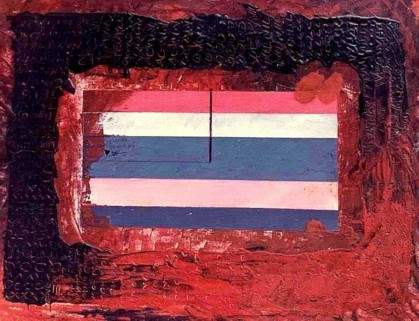
Pang-Kolektor; o, Zero [Collector's Item; or, Zero]. 1990. oil sa luna.
Walang nakaguhit dito kundi ang naka-impasto na pirma ng artist. Sukat na sukat ang mga brushstrokes nito na nakaangat sa ibabaw ng maninipis na mala-rosang mga layers ng oil sa luna. Isang ma-komedyang komento sa sining ng painting bilang komodidad para sa mga kolektor imbis na para sa mga nagmamahal nitong sining? O naging maka-painting na akto na rin ba ito, mismo sa pagpakita nito ng manipis na linya sa gitna ng art lovers at ng art collecotrs/investors? Ngunit sa pagguhit ng sukat na sukat na mga brushstrokes na lumalayo sa tunay na pirma, at sa modang impasto pa, sa kahulihulihan ba'y ang achievement nito ay isang simpleng eksaminasyon lamang sa arogansya noong intelektuwal na uri ng self-portrait, ang pagpirma ng pangalan?
[Featuring nothing but the artist's signature in impastoed, measured brushstrokes over thin pink layers on canvas, is this a tongue-in-cheek take on painting's being a fare for collectors as against art lovers? Or does this become a pro-painting act itself, in clarifying the thin line between art-loving and art-collecting/investing? But with measured brushstrokes eluding the real signature, and in an impastoed mode, does this finally achieve nothing more than an examination on the arrogance of that more mental kind of self-portrait, the signing of one's name?]
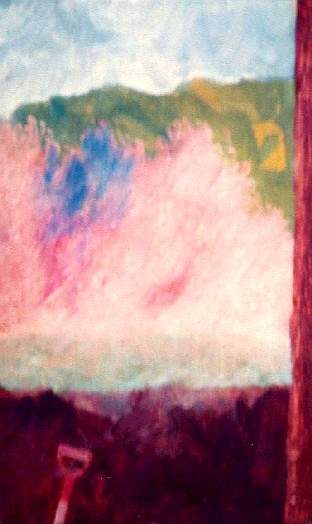
Monumento sa ating Pagbubulag-bulagan [Monument to Our Chosen Blindness]. 1990. oil on wood.
Inspired na uli ng kanyang mga drowing noong nakalipas na taon na mga portreyt na may nakapalibot na mga nakalutang na imahe, ito nama'y isang self-portrait na pastoral na komento ni Veyra sa isyu ng logging.[Again inspired by his drawings of the past year involving portraits with surrounding floating images, he here creates a pastoral self-portrait to comment on the logging social issue.
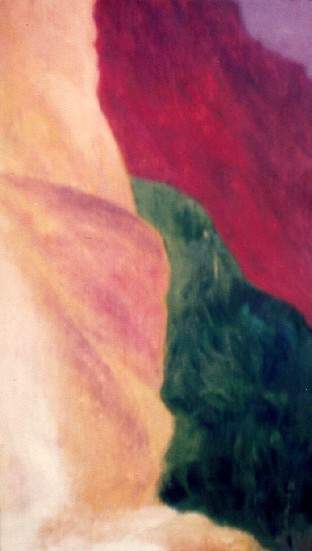
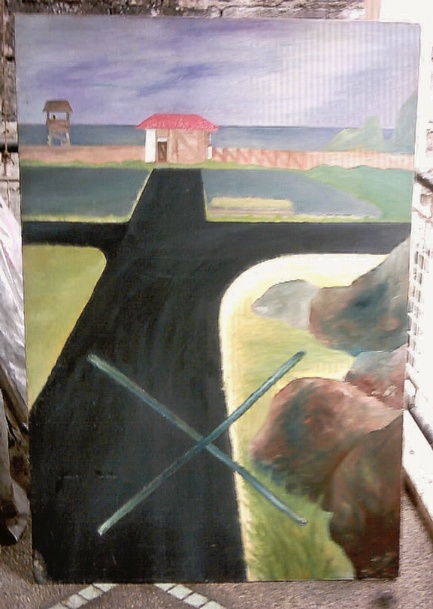
Altar Sa May Resort [Resort Altar]. 1990. oil on canvas.
The artist's homage to Christianity and Symbolist painting. The rocks are witness to a crucifixion while emulating the flow of Middle Eastern robes. The central X alludes both to the spear wound on a crucified figure and to the X on new glass windows rebelling against three dimensionality. What then does that connote? Snub-nosing realism, perhaps, in Gauguinist symbolism's favor. The island on the asphalt parking lot may signify a coffin, while the gatehouse reminds one of the INRI sign. The lifeguard tower? Ah, the centurion. The sea's horizon? Maybe a tribute to Hemingway's view of the sea as a picture of death and passage.
samples ng ilang lumang drowings
(some old drawings)lumang sculpture installation
(an old sculpture installation)
ano ba ang tinatawag na independenteng artist? (what's an independent artist?) |
tungkol sa artist (about the artist)
Mag-sign sa Studio Guestbook
(Sign the Studio Guestbook)I-email ang artist
(E-mail the artist)
Karapatang-ari © 2004 Vicente-Ignacio de Veyra. Reserbado lahat ng karapatan. Ang mga mambabasa/browsers ay maaaring tumingin, mag- save, mag- file at mag- print out ng tig-iisang kopya ng mga webpages sa website na ito, kasama ang mga artwork images na nakapaloob sa nasabing pages, para sa kanilang personal na gamit lamang. Walang reproduksyon, display, maramihang pagkopya, transmission, o distribusyon ng mga webpages na ito't ang indibidwal na mga artwork images na nakapaloob rito, o anumang bahagi, adaptation, abridgment o pagsalin ng mga textual o artwork na laman ng mga ito, ang maaaring gawin nang walang kasulatang pahintulot mula sa artist. Ang sinumang persona na gagawa ng anumang di-awtorisadong aksyon kaugnay sa mga trabahong ito ang liyable sa prosekusyong kriminal at civil claims for damages.
(Copyright © 2004 Vicente-Ignacio de Veyra. All rights reserved. Readers/browsers are welcome to view, save, file and print out single copies of the webpages in this website, inclusive of the artwork images contained therein, for their personal use only. No reproduction, display, multiple copy, transmission, or distribution of the webpages and the individual artwork images contained therein, or any excerpt, adaptation, abridgment or translation of the textual or artwork content herein, may be made without written permission from the artist. Any person who does any unauthorized act in relation to these works will be liable to criminal prosecution and civil claims for damages.)