| Self
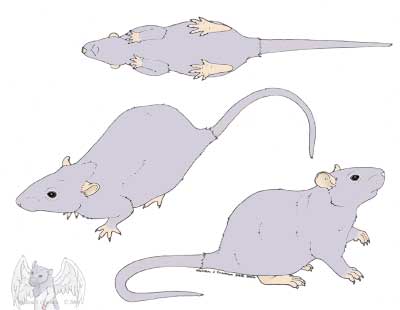
Self, or solid, rats
actually lack markings at all. An ideal self rat will have no
white on it at all, unless it is a white rat, with the color
including the nail. This applies to both agouti and non-agouti
type rats.
Genetics: H/H |
|
| American
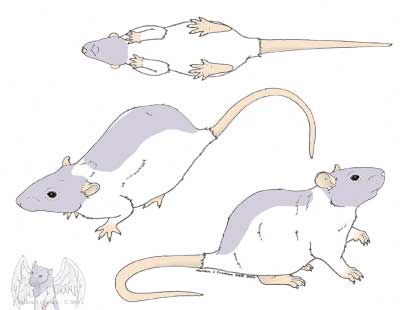
Berkshire
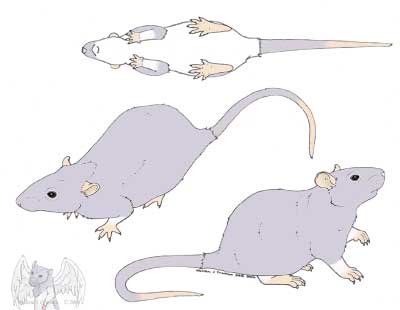
The american berkshire
marking is the preferred berkshire marking standard in most, if not
all clubs.
American berkshire marked rats should have an entirely white
stomach, white feet, and a colored back. The division between
color and white should be sharp and without ragged edges.
White can be seen on the tip of the tail, but should not exceed
halfway.
Genetics: H/h |
|
| English
Berkshire
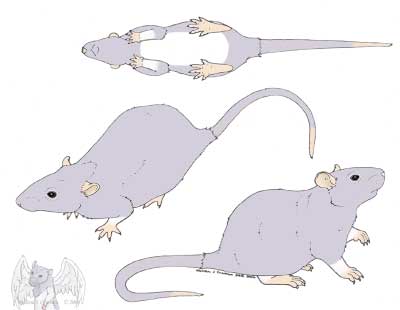
English, or classic, berkshire,
rats
are similar to american berkshire rats but have less white on their
stomachs and tail. The division between color and white should
be clean and sharp. The white found on the tip of the tail
should not exceed a quarter of the tail.
Genetics: H/h |
|
| American
Irish
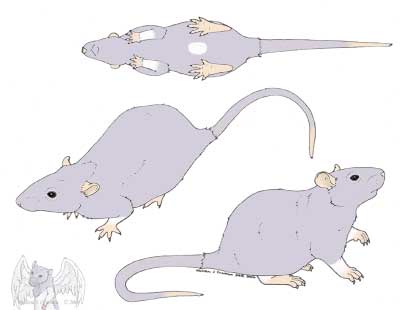
American irish rats have
a white marking, usually round, on the lower abdomen, white feet,
and a white tip on the tail. The marking should be as sharp
and even as possible, without extending onto the sides, chest, or
legs.
Genetics: H/h |
|
| English
Irish
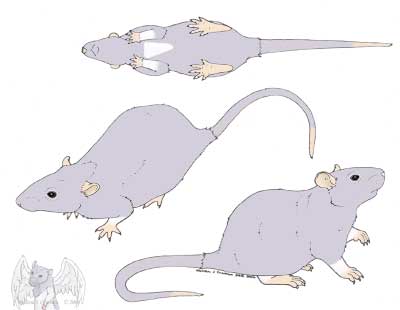
English irish rats should
have a equilateral triangle on the chest with possibly white on the
feet. The rest of the body should be colored The marking
should be sharp and without brindling. It is okay to have a
small white tip on the tail.
Genetics: H/h |
|
| Hooded
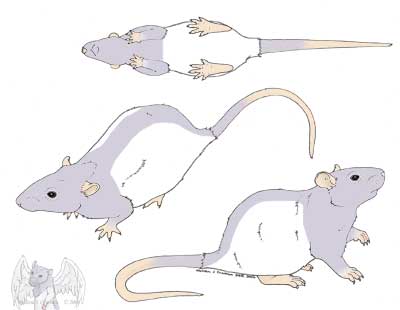
The ideal hooded rat is
colored on its head, neck, shoulders, and chest with a stripe going
down the spine all the way to the base of the tail. The hood
should cover the entire head without white on the chin, chest, or
throat. The saddle should be an even, unbroken line with color
extending partially down the tail.
Genetics: h/h |
|
| Bareback
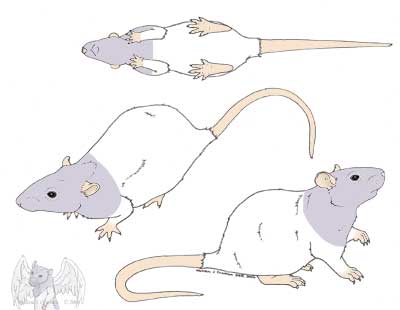
The bareback rat is very
similar to the hooded rat, but without the saddle down the
spine. A bareback rat should have no spotting on its back with
a clean distinction between the colored head and the white body.
Genetics: h/h
|
|
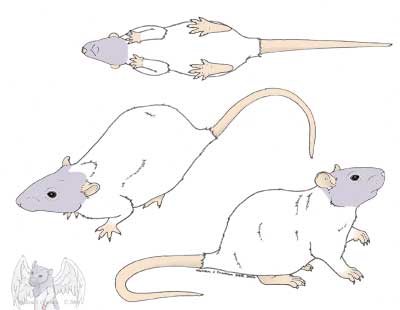
| Capped
Capped rats have a
colored face with the coloring not extending passed the ears or
throat.
Genetics: h/h + modifiers
|
|
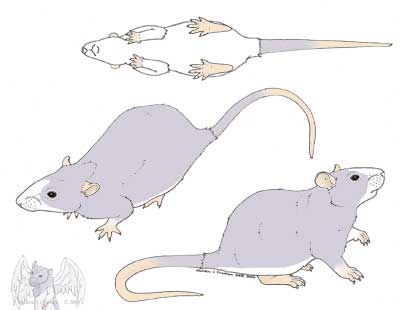
| Badger
Badger is the UK standard
for the blazed american berkshire. Blazed berkshire rats have
an increased incidence of the disease megacolon due to dominant
blazes being associated with high white genes. The blaze
should be as symmetrical as possible and coloring should extend
partway down the tail.
Genetics: H/h + modifiers
|
|
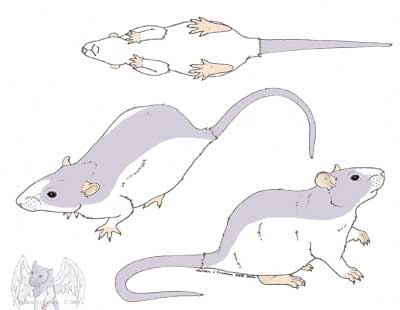
| Banded
Banded rats have a
colored head with a thick, shoulder length band of color down the
spine and throughout the tail. The underside of the rat is
white, including the chin. A blaze is preferred. This
marking can be associated with megacolon.
Genetics: H/h + modifiers
|
|
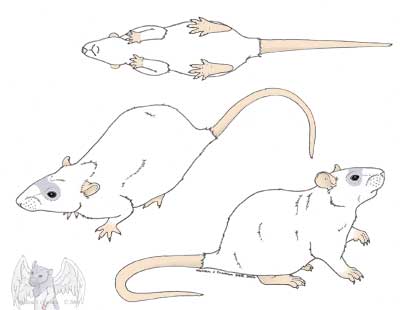
| Masked
The masked marking should
cover the face, around the eyes and above the nose. It should
not extend down the face or under the chin.
Genetics: Believed to be
a variation of BEW or the patched marking.
Know more? Let me
know!
|
|
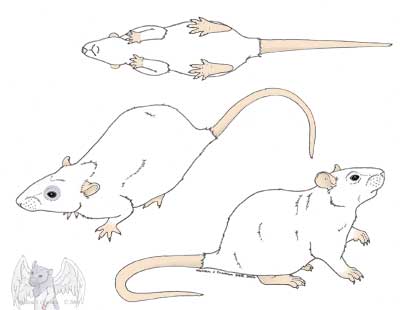
| Patched
Patched rats will have a
small blotch of color on the face. This marking may be
associated with megacolon.
Know more? Let me
know!
|
|
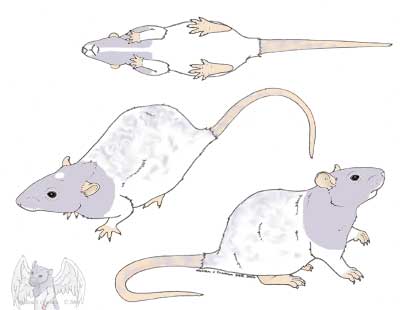
| Variegated
The classic variegated
marking consists of a colored head and shoulders and numerous small
blotches of color on the back. The abdomen should be white and
a head spot or blaze should be present. Some rats may have
white lips and/or a white line extending from the chin to the
abdomen.
Genetics: H/h + modifiers
|
|
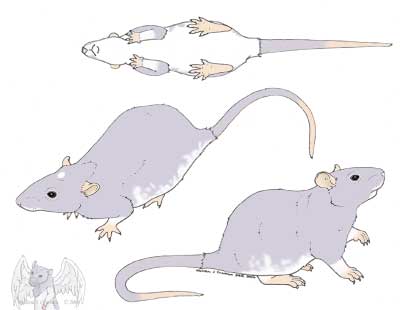
| Variegated
Berkshire (Veriberk)
Related to the classic
variegated, veriberks are berkshire rats with mottled edges between
the colored back and the white stomach. A blaze or head spot should
be present, and the rat may have white lips or a white line
extending from the chin to the stomach.
Genetics: H/h + modifiers
|
|
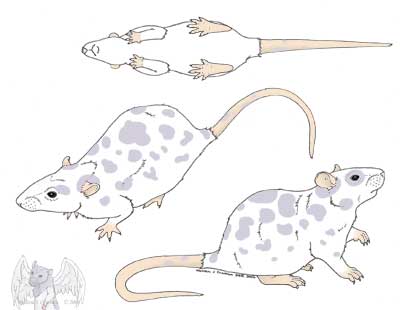
| Dalmatian
The dalmatian marking is
related to the variegated marking. This marking consists of a
white rat with various non-symmetrical marks of color on the back
and the head. This marking normally does not have a
hood. Spots of color should be seen on the tail as well.
Genetics: H/h
|
|
| Cap-Stripe
Cap-stripe marked rats
have a cap, which may or may not have a blaze, and an unconnected
uniform line down the spine that does not touch the tail.
This, like other high-white markings has an increased incidence of
megacolon.
|
|