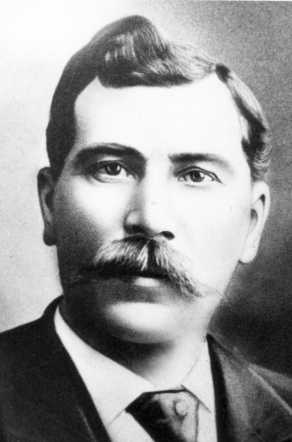
PARLEY CHRISTIANSEN
| Birth | 07 December 1857 | Salt Lake City, Salt Lake County, Utah | |||||
| Christened | 1858 | Bishop Hill, 2nd Ward | |||||
| Baptism | 27 October 1867 | N.L. Christensen | |||||
| Re-baptized | 24 October 1875 | Niels C. Christiansen | |||||
| Marriage | 21 April 1881 | Salt Lake City, Salt Lake County, Utah | Dorthea Jensen Skow | ||||
| Endowment | 21 April 1881 | Manti Temple | |||||
| Sealed to Parents | BIC | ||||||
| Death | 13 May 1930 | Logan, Cache County, Utah | |||||
| Buried | Mayfield, Sanpete County, Utah | ||||||
| Children | Parents | ||||||
| 1. Dorthea Geneva Christiansen | 13 October 1882 | Ephraim, Sanpete Co., Utah | |||||
| 2. Mette Eulalia Christiansen | 16 February 1885 | Ephraim, Sanpete Co., Utah | -- Niels Christiansen | ||||
| 3. Aaron Parley Christiansen | 17 July 1889 | Ephraim, Sanpete Co., Utah | Parley Christiansen -- | | | |||
| 4. Edna Merline Christiansen | 30 March 1891 | Mayfield, Sanpete Co., Utah | -- Dorthe Dahl | ||||
| 5. Nels Woodruff Christiansen | 21 May 1893 | Mayfield, Sanpete Co., Utah | |||||
| 6. Daughter Christiansen | 10 May 1895 | Mayfield, Sanpete Co., Utah | |||||
| 7. El Ray LaVar Christiansen | 13 July 1897 | Mayfield, Sanpete Co., Utah | |||||
| 8. Junius C. Christiansen | 10 June 1900 | Mayfield, Sanpete Co., Utah |
Parley Christiansen
Bishop of Mayfield, Sanpete county, is the son of Niels C. and Dorthea C. Christiansen, and was born Dec. 7, 1857, in Salt Lake City, Utah. He removed with his parents to Ephraim, Sanpete county, in 1858, where he was baptized Oct. 27, 1867. In 1876 he went to Arizona as a missionary settler. After returning to Utah he was ordained an Elder April 21, 1881, and married Dorthea C. Jensen. He served the people of Ephraim as policeman, constable and city marshal for several years. Jan. 2, 1885, he was ordained a Seventy by John F. F. Dorius, and during 1887-88 he labored as a missionary in the Northwestern States. In 1890 he moved with his family to Mayfield, as he had been ordained a Bishop May 18, 1890, by Apostle Heber J. Grant and called to preside over the Mayfield Ward. Elder Christiansen served as a member of the State constitutional convention in 1895, and was a member of the Utah legislature in 1899.
[Andrew Jensen. Latter-day Saint Biographical Encyclopedia: A Compilation of Biographical Sketches of Prominent Men and Women in the Church of Jesus Christ of Latter-day Saints. 4 vols. A. Jenson History Company and Deseret News, 1901-36., V. II, p.817-18]
| HISTORY OF PARLEY CHRISTIANSEN |
|
Written by Lily C. Larson in 1968 |
|
Edited by Floyd L. Larson |
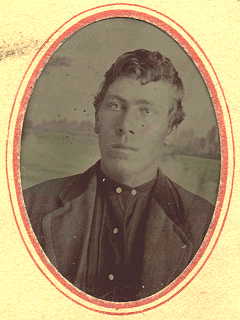
Parley Christiansen was born in Salt Lake City on December 7, 1857. His parents were Niels Christian Christiansen and Dorothy Kirstine Clemensen Dahl. She was his second wife. He was christened in 1858 in the 2nd Ward by a Bishop Hill. He was baptized on October 27, 1867, by N. L. Christensen. He was rebaptized October 24, 1875, by A. C. Nelson and reconfirmed the same day by Niels C. Christiansen.
When he was about four months old his parents moved to Pleasant Grove or Spanish Fork. Two years later he and his mother moved to Ephraim, Utah. Later two sisters were added to the family. Mary was born on the 6th of April, 1861, and on the 2nd of February, 1865 Elizabeth was born.
I suppose their early years were spent as most children's are--playing, etc., until they became old enough to help their mother who had found it necessary to work to help support her family. She knit stockings for 10 and 15 cents a pair. She also went out in the fields and gleaned wheat after the farmers had harvested their crops. She gleaned enough so that when it was thrashed there was enough for the seed her husband needed to sow in the spring.
Her husband had charge of the commissary during the Black Hawk War and she even killed and dressed sheep for the men who were fighting the war. She also sheared sheep and washed and carded the wool and spun it to weave into cloth for their clothes and yarn to knit their stockings.
She lived alone with her children and during the time the Indians were molesting the people, she would sit up nearly all night to guard her children and then work hard in the daytime to take care of her responsibilities.
We have been told that Father began working when he was quite young to help support the family. He was too young to fight in the Black Hawk War, but he and his half-brothers would go into the mountains for wood and to herd horses. Following are a couple of interesting stories told about some of his experiences about this time in his life:
One day Father and his uncle Peter Isaacson, the husband of his mother's sister and the grandfather of Thorpe B. Isaacson (Counselor in the First Presidency during the time of President David O. McKay) were in the mountains east of Ephraim getting a load of wood. During the day a band of Indians made a raid on the group of five men, a woman and a baby boy and a young girl who were out south of Ephraim. They were out there either planting or harvesting potatoes. The Indians killed all of the men, the woman and the girl. The boy was found by his mother where he had been left for dead by the Indians. The Indians passed quite close to where Father and his uncle were getting wood, but they escaped and reached the fort to safety, although they had been near the place where the massacre took place.
At another time, he and some other boys about eleven or twelve years of age were out north of Ephraim herding some horses. All of a sudden Father heard someone say, "You had better get out of here because there are Indians near by and you are in danger." He turned to the other boys and asked them if they heard someone talking to them and they said no, they hadn't heard anything. In a little while he heard the voice again so the boys headed for home. We children never tired of hearing him tell this story. He always told us he was sure it was his Guardian Angel who warned them.
 During
his early life he learned to handle and to work with ox teams. Once when I was at a family reunion, Brother Willberg,
a distant relative who had been acquainted with my father Parley, told me that he had never seen anyone who could
handle oxen like he could. He said he was very patient with them and that he never heard him swear or treat them
unkindly.
During
his early life he learned to handle and to work with ox teams. Once when I was at a family reunion, Brother Willberg,
a distant relative who had been acquainted with my father Parley, told me that he had never seen anyone who could
handle oxen like he could. He said he was very patient with them and that he never heard him swear or treat them
unkindly.
In 1876 he was called to go to Arizona to help build a town called Brigham City, which has since been abandoned. He helped to build a fort there. On his return he helped to take a saw mill to St. George and to cut lumber used to build the St. George Temple. He also did work with ox teams on the Manti and Salt Lake Temples.
His education in a formal situation was very limited. He only had an opportunity to go to school for a period of three months. He might well be called a self-educated man. He learned to read and to write. He also learned to use a typewriter, even though he used only the forefinger of each hand. He had a very practical education, gained largely through the experiences he had during his lifetime. It was sufficient for him to undertake responsibilities in many church, community, county and state positions, all of which he fulfilled successfully. In the obituary published at the time of his death it said, "Mr. Christiansen was an active worker in the up building of Utah, particularly the section embracing Sanpete County."
I am sorry we didn't have Mother tell us more about their courtship and marriage. Her history of her early life which has been told us by her relatives and friends makes us feel like she was a wonderful girl and woman. She did tell us that when they decided to get married that they had to drive to Salt Lake City in a covered wagon. Aunt Lizzie as we all called her (possibly Parley's sister Elizabeth, who was 16 years old at the time), went with them as a chaperon. They were married in the Endowment House on the 21st of April, 1881. It took them a week to travel up to Salt Lake City and back to Ephraim.
Mother and Uncle John Scow had been orphans since he was seven years old and Mother was four. Their parents had died of measles about one year apart. Their history is being included in another one I am writing so I am not including it here. Mother and Uncle John were taken care of by their father's sister, Mary Peterson and her husband Niels, as well as other relatives who helped until they were old enough to take care of themselves. They were living in a rock house which had been built for them and when Mother and Father were married, he moved in with them. They lived here until Father was called to be Bishop of the Mayfield Ward in May of 1890.
Father had held many responsible positions during the time he lived in Ephraim. He had been a constable during the years 1884-1886. He was ordained an Elder in 1881, a Seventy by John F. F. Dorius in 1885, and ordained a High Priest and Bishop by Heber J. Grant on May 18, 1890. He also served as a Sunday School teacher while they were living in Ephraim.
Father was called to serve a mission to the Northwestern States in 1887 and 1888. He labored in the midwestern states which evidently were a part of the Northwestern States Mission at that time. He practically performed this mission without purse which was a rule of the church at that time. He did get a little help from relatives and friends besides what was sent to him by Mother. She really had a difficult time in taking care of her small family and also trying to get a little money to help Father on his mission.
When Father was called on his mission his family consisted of his mother, Kirstine Dorothy, his father, Niels Christian, his wife, Dorothy Christena (Stena), two small daughters, Dorothea Geneva (Dora) and Mettie Eulalia (Lily). He wrote in his diary he kept that he didn't know just how he was going to be able to go because of lack of money, but with the help of donations from his family and friends he accepted the call and fulfilled an honorable mission.
I don't know what became of the diary he kept of his missionary experiences, but I remember reading about how he made the trip to Salt Lake City. I believe some of his friends took him up there. One other experience I remember. He said they were bothered with head and body lice and the only way they could get rid of them was by washing their clothes in the creek or river. I suppose they stayed with people in different homes and picked them up this way. They had a hurricane occasionally and to keep from being hurt they would take refuge in cellars the people had dug outside of their homes for protection. Some of the time they were warned by a large black cloud appearing in the sky and a bad wind.
Following are copies of a couple of letters Mother (Stena Christiansen) wrote to Father while he was on his mission:
Ephraim - March 20, 1888
Dear Husband,
I sit down with great pleasure to answer your kind and welcome letter which I received last Saturday and was very glad to hear from you and to hear you were well, which I can also say that we are, which we can be very thankful for, being there has been so much sickness, but it has almost left again.
Erastus Willardson's are burying a young baby today. I think John and Chris Frandsen is putting in our wheat today. Chris sends his best regards to you and also Sophia Anderson. She says she has a brother in Kansas she would like very much if you could get to see him. She would give me his address, so if you happened around that way she would like it very much.
I had a letter from my uncle in the States. He writes that you and him had a good deal of talk on religion and there was none of you that wanted any more rights than what belonged to you. He wrote a long letter and he said that you promised to send him an advertized list of the Brighamites (LDS Church) church books. He also wanted us to invite some of the Josephite (RLDS Church) ministers to come and see us if they come up here and that would be all he would ask for maintaining a Brighamite missionary. He also sent me one of his papers and he thought it would be good to send it to you. He said he thought you did too and he said he was interested in finding you so well instructed, so well posted, so well practiced in presenting a firm and defending the Brighamite church, so I don't think you have turned him much. He must be a very strong Josephite by what I can see. I was in hopes you could have turned him so he would have got the notion of moving up here.
Chris Torum was just here and gave me a ticket for the theater tonight. He is boss of it and does pretty well. It is for the benefit of the South Ward Sunday School. I will now send you $20.00 and then you will have $12.50 left. There was not only $20.00 left over after you left, that is all that I could make out. I may have spent about $1.50 all together, but I hope when the money is all gone that there will be some way of getting some more some way.
Well, I must close.
Dear Pa, your baby is crying because I won't let her write to you and tell you she is well -- from Eulalie xxxx.
Hoping this finds you well and I hope the mobs won't get after you -- from your family at home. Write soon and as often as you can and I will do the same. Your loved ones at home. Stena Christiansen. If it goes to the dead letter office, then they will know my name.
July 26, 1888
Dear Husband,
I can say that it is a great pleasure to me to receive a letter from you. Yesterday we were to have had great doings, but there was nothing. Only a meeting, then horse-back riding, buggy riding and then the bottles, but there were none arrested but the greatest pleasure to me was when I received your kind and welcome letter of the 19th because I did not hardly expect any, being I got one Saturday, but they do not come too often. When I can hear from you and hear that you are well and feeling first rate, then it makes me feel the same. Also folks are busy here hauling hay, but Erastus has not commenced yet. If he don't get at it soon, I will try and get someone to get it up because if he don't get it done soon I am afraid they can't get on the island and if we don't get that I am afraid we would not have much hay. Andrew Thompson, Jr., was here today and wanted to know if he could not get it and haul it on shares and I expect there is plenty that would like to get it up. I do not know anything about John, whether he is coming home or not because he has not written a word to me and I don't know what I will do with him until he comes home.
Your father seemed to feel so much better this time after he got your letter than he did the first. Maybe but he told me a little about the last one. I guess you have hard work to make out the way I scribble. I am sitting on John's manure pile writing and I am watching the calves at the same time because they have jumped into Friday's lot several times and he is about to go up about it and I haven't got a straw to feed them so I am obliged to herd them. I used to complain about your scribbling, but mine isn't any better and the children give my arm a knock once in a while.
You must not forget to write Henry Beal and to Toot Peterson. He has asked me for your address, but I haven't seen him lately and he said he would write to you if you did not to him. You wanted to know if there was anything I wanted to ask about. We get lonesome once in a while, so we can't blame you for feeling the same way where you are among strangers. I hope that you will find many friends there so you won't keep on feeling lonesome. How do you like your partner?
Well, I guess I will have to quit and do my chores, but when I start I don't know when to quit, but if you had Eulalie riding on your back, you would be mad enough to quit.
Charlie Whitlock started to write a letter to you, but I don't believe he got it finished. I forgot to tell you we are all well. Write again. From your true love, Stena Christiansen. Love from all xxxx
One of Father's converts, a man named Charles Lundgren and his family came to Utah and made their home in Mayfield. He was a real large man and he had a very strong voice which he made good use of when he spoke in the meetings. He also had a reddish beard, so he really made an impression on us children.
Father spent about a year and a half in the mission field. He came home sometime in the summer of 1888. He had grown a beard while he was away from home and when I saw him, I said that that man was not my Father or probably I said, "He isn't my Pa" because that was what we called him then. Anyway, I went outside and wouldn't come in the house until it was so dark I was afraid to stay outside any longer. I remember he had his beard cut off after we moved to Mayfield. "Daddy" Niels Anderson cut it off for him.
Father spent his time working on the farm after he came home from his mission. Their first son, Aaron, was born on the 17th day of July 1889. During the winter after he was born there was an epidemic of diphtheria. Dora was going to school at the time and she contracted the disease. Because Aaron was so young, they decided that Mother, Aaron, and I should stay in the kitchen and Father should stay in the front room with Dora.
She was very ill and we have been told that Father carried her in his arms and paced the floor, pleading with the Lord to spare her life. His prayers were answered and she became better, but for quite a long time she was very weak. If she sat on the floor she wasn't able to get up without help. She was about 7 years old at the time. Of course they tried to clean everything up to prevent Aaron and myself from getting the disease. They even burned several articles of clothing and washed everything in a strong lye water, but their efforts were in vain because I came down with the same disease.
They said my tonsils were swollen so large there wasn't more than an opening about the size of a pin head. Finally I recovered and then they had to do the same job of cleaning that they did after Dora recovered. Aaron was fortunate because he didn't get the disease.
 Father
was called to be bishop of the Mayfield Ward in May 1890. He was ordained a high priest and a bishop and set apart
by Heber J. Grant. So now they had to dispose of their farm and home in Ephraim and move to Mayfield. There wasn't
any moving vans available at that time like there is today. They just loaded their belongings in wagons which were
pulled by horses and made the trip to Mayfield. I am sure that this trip took a whole day. Arthur Anderson was
helping us move. He told me that I was very tired and cross and when he said, "Now we are in Mayfield",
I said, "Well, why don't we stop then?"
Father
was called to be bishop of the Mayfield Ward in May 1890. He was ordained a high priest and a bishop and set apart
by Heber J. Grant. So now they had to dispose of their farm and home in Ephraim and move to Mayfield. There wasn't
any moving vans available at that time like there is today. They just loaded their belongings in wagons which were
pulled by horses and made the trip to Mayfield. I am sure that this trip took a whole day. Arthur Anderson was
helping us move. He told me that I was very tired and cross and when he said, "Now we are in Mayfield",
I said, "Well, why don't we stop then?"
We had to cross a place called the "Indian Farm". We then went to a house just across the road from the Relief Society Hall which was used for all of the meetings in the ward. Later a chapel was built and this hall became the home of Jesse Bartholomew and his family. The house we lived in first was made of adobes. It had one large front room and a large kitchen on the back. I don't remember how long we lived there before we moved to another house which was two blocks west and one block north of where we lived. This is about the same kind of house that we moved out of.
We lived in these two houses for several years. I think they must have rented them because later Father bought a house on the corner just east of the house in which we were living. We were still living in the house we were renting when Edna Merline (pronounced Mer'-ln) was born on the 30th of March, 1891. Niels Woodruff was born on the 21st day of May 1893.
The new home was a log house facing south. It had two large front rooms and two rooms in the back. There was a large fireplace in the east part of the east room. We used coal oil lamps in all of these houses. There was also quite a large adobe room in back and to the north a few feet with one window in the north wall and another one in the east wall, a door in the southeast corner and a door in the west wall. There was a cellar underneath with a door and steps on the south part of the adobe room. I forgot to say there was a straight board mantle above the fireplace in the big house.
ElRay LaVar was born in the west room of the log house on the 13th day of July 1897 (on Mother's birthday). He weighed 12 pounds and really looked like he was a month old. Mother had expected him a month earlier, but I guess he wasn't anxious to leave the spirit world. I should have mentioned that Mother gave birth to a stillborn baby in May, 1895. They didn't let us children see the baby.
Father and Mother now decided they needed a bigger home. I think Father started to build the new adobe house in 1898 or 1899. They moved the log house down toward the middle of the lot and it became a granary and storage place. Junius was born in the new house June 10th, 1900.
In the new home there was a kitchen, pantry, a large living room, a hallway with steps going upstairs to a small bedroom and a larger bedroom. There was a closet underneath the steps and a cellar going down from the kitchen. We surely thought we had something with a pantry with a sink to wash dishes in and a lot of shelves for the dishes and other things. We had another fixture in the cellar. It was made with a pole that went from the floor to the ceiling and there it had round board shelves about 8 inches apart. We used to put our pans of milk in to cool. We kept our butter, etc., there too.
I am not sure of the above dates because Father was away most of the time Brother Bent Danielssen was building the new house. He was either to the constitutional convention or serving in the legislature in Salt Lake City. I remember how excited we were when he had bought some new bedsteads, one wooden and a couple of iron or brass ones, a new rug and some carpets. He also bought a dresser with a large looking glass on it. We could hardly wait until it arrived. We surely thought we had it nice after we put all of these things in the house. He had a writing desk in the front room which he used to do all of his notary work and church work on. Of course we had new curtains and blinds all through the house.
The front of the house was toward the east and there was a porch with a railing around it all the way along the front of the house. We had an old lounge on the porch we used to sit on. The windows in the front room had eight large panes of glass in them. We were very proud to have such large windows and such a nice home.
There was a very large rock barn where Father stored the hay in an upper loft and he had mangers and stalls on the ground floor for the horses and cows. We really had a lot of fun in the hay in the loft. There was also a shed, chicken coop and pens for the hogs and an outhouse (or privy). These buildings were all there when Father bought the place. There was a pole fence all around the place and this was the corner where all of the young people met. I am sure Father and Mother didn't enjoy all of the noise they made, but I don't remember a time they were called down. Aaron and I planted several pine trees on the front and south side of the house. Dora and Johnny Anderson had a dinner there when they were married on the 19th of December, 1900, and Ray and I had a dinner there too when we were married on the 16th of October 1907.
Father and Mother were always interested in the education of the children. However, we who were the older ones just attended the school in Mayfield. When Merline, Woodruff and ElRay were old enough to go to high school, Father and Mother decided to rent a home in Ephraim and that Mother would live there during the winter while they were going to school. There were several years when they had a home in both places. This was while Merline was clerking in the store for John Mortenson and just before she was married to Henry Terry.
When Father and Mother moved to Mayfield they sold their farm in Ephraim and bought a farm west of town in Mayfield. This farm was purchased from Rasmus Anderson. It reached all the way from the hills on the south side of the farm land across to the creek and what was called the Red Hill on the north side of the creek. They also owned a little piece of ground just west of town called the Little Pasture. This is where they took the cows and horses to put them out to pasture. Today the road runs right through this piece of ground.
Father must have bought Uncle John's part of the farm in Ephraim because even though Uncle John was living with them most of the time they were in Mayfield, Father had full charge of running the farm. I can remember Father working on the farm for several years and then later he had hired help to take care of it. When the boys were old enough to assume the responsibility they took care of the farm. Part of the time the farm was rented on shares.
It seems that Uncle John would be away from our home at different times but if he went away to work or not, I don't know. I know he was there at thrashing time for several years when they used horses to run the thrashing machine. He and Father stood on the platform on the front of the thrashing machine and the men on the stack would throw the bundles down on a kind of table in from of them. Uncle John would cut the twine that was around the bundles with a knife with a curved blade. They would tie it to the wrist in some way, hold the handle in the palm of the hand and cut the twine with the curved blade. Father would push it into the thrashing machine. Ray's father, Lars C. Larson, sat on the center of the horse power and drove the horses. They had ten or twelve horses on the horse power. We children used to have fun running around barefooted in the dust the horses made.
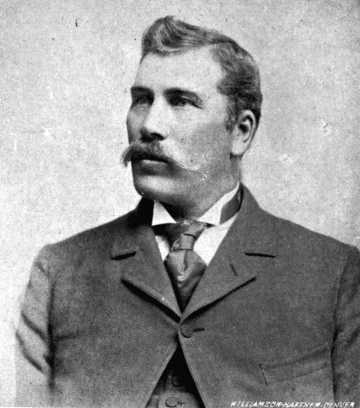
The main reason that Father and Mother had moved to Mayfield was because he had received a call to serve as bishop of the ward. He assumed this responsibility in May of 1890 and served for a period of sixteen years. I have been told by many that he was the best bishop Mayfield every had. He seemed to be blessed with the power to heal the sick through administration and the help of the Lord. Many times he was called out in the middle of the night to administer to women who were having a difficult time delivering a baby.
This was before the time of having a doctor to call in. Sister Carlson, a lady who had been converted to the Church and emigrated to Utah, was the midwife. She had been trained for this work in Denmark. She delivered many babies in Mayfield and I am sure the Lord must have been with her because I don't believe she ever lost a case. She was with me when Raymond was born. Aunt Sena Larson, Lars C. Larson's first wife was her assistant. They, with the blessings of the priesthood, helped save many who were sick or coming into this world. Sister Annie Willardson has told us many times that her life was spared because of Father administering to her. Her son who had been very ill with rheumatic fever got better after Father had administered to him.
Not only was he willing to give blessings through administering to those who were ill, but he had great faith in being administered to by the elders. Before he was operated on for prostate trouble he asked the elders to administer to him. At home he would call in the elders to administer to him when we were sick. I heard him say many times that we should live so that we could call on our Heavenly Father for help when we needed it. He had a strong testimony of the Gospel and I have heard him bear his testimony many times.
He had the gift of speaking in public and to large audiences. Several people have told me how they enjoyed listening to him speak. He was called upon to speak in many of the funerals and upon other occasions. He was always willing to do what he could in fulfilling these requests and always seemed able to bring comfort and consolation to those who were mourning for loved ones who had passed away. He was also able to encourage others and enthuse them to be faithful or more diligent in pursuing the good things of this life.
Because of his knowledge and understanding, many people would come and consult with him concerning their problems. He was also asked by many young couples to perform the marriage ceremony for them.
Brother C. R. Nielsen was one of Father's counselors in the bishopric and Brother Frederick J. Christiansen, Jr. was the other counselor. They served with him in these positions until the time Father was released.
Not only was Father the bishop of the ward, but he was a leader in many other community affairs and had many other responsibilities. He was commissioned as a notary public on the 24th of March in 1894. I don't know how many years he served in this position, but it was for quite a few years. He used to have my sister, Dora, and me proof read hundreds of the deeds he made for people when they bought or sold land as well as all the other papers which he made out during this time. He must have had a good book which could give him the information he had to have to be able to do all of the different kinds of business he did.
When the Mayfield Irrigation Co. was incorporated March 19, 1892 with a capital stock of $50,000, Father was elected president of the corporation. In his capacity as president of the company as well as his position as bishop, he advised the people to improve the sanitary condition of their drinking water. Accordingly, a second ditch was made through the center of town carrying water to be used in the homes.
In the fall of the year all division gates were removed so the falling leaves and debris would not collect and prevent the water from running free. No livestock was allowed to drink from this stream until wells were dug to supply culinary needs. I don't know for sure, but I believe they began to dig wells about 1897.
I do remember we went to Uncle Chris Christiansen's who lived one block west of us to get water from his well. We would usually take two buckets each time we needed water. I think we used the ditch water for our laundry.
I remember we had a large wooden barrel we would fill the night before wash day and we would put the ashes from our cook stove in to settle the water, and I think it made the water softer. If I am not mistaken, they used the barrels first to haul molasses to the different towns. I am not sure where the molasses came from, but I think it was from the southern part of the state where they raised sugar cane. The peddlers who brought the molasses brought dried fruits of different kinds, too. One peddler brought home made wine, too and he and some of his men friends would celebrate. We didn't have fresh fruit to bottle like we do now.
Father was elected as a member of the constitutional convention of the State of Utah. In this capacity he helped to write the constitution of the State of Utah. Father was elected a representative to the State Legislature in 1896 and served one or more terms in this legislative capacity. Following is a copy of an article written by him concerning his candidacy for this position:
Secretary of State
State of Utah
County of Sanpete
I, Parley Christiansen of Mayfield, Sanpete County and State of Utah to be a candidate and having been voted for at the general election held on the 3rd of November 1896 for the office of Representative to the House of the State Legislature in and for the 14th district State of Utah, do hereby render an itemized statement of all moneys contributed by me directly or indirectly in aid of my candidacy for election to the above named office, to whit., to Swen O. Nielsen, County Chairman, Party assessments on candidates $15.00
State of Utah SS
County of Sanpete
Parley Christiansen being first duly sworn says that the above itemized statement is in all respects true and that the same is a full detailed statement of all moneys contributed or expended by him in aid of his own candidacy by himself or through any other person.
Signed: Parley Christiansen
Subscribed and sworn to before me this 11th day of December, 1896.
J. P. Madsen
County Clerk
Father also served on the school board and as assistant postmaster in Mayfield. Father must have worked for the Department of the Interior during the month of June 1904. I have a paper which says, "This department is sending him a check for $75.00 in payment of his account rendered the Land Office for June salary." This was dated the 29th of July 1904 and was signed by George W. Evans - disbursing clerk.
I have another paper from the United States Department of Agriculture dated 1st February 1905 which says the following:
Mr. Parley Christiansen of the State of Utah is hereby appointed a Ranger in the Department of Agriculture at a salary of $75.00 per month to be paid from the fund appropriated for the protection of the Forest Reserves 1905 under the Department of the Interior in, an act, making appropriations for sundry civil expenses of the government for the fiscal year ending 30th June 1905 and for other purposes approved 28 April 1904, and according to the provisions of "An act for the transfer of forest reserves from the Department of the Interior to the Department of Agriculture approved February 1, 1905". The above named appointee is hereby assigned to take the Oath of Office immediately and file the same, together with a statement of legal and city residence and personal record with the appointment clerk in the Department of Agriculture and report for duty in writing to the Forester, Chief of the Bureau of Forestry of the Department of Agriculture, and be subject to the rules and orders of the Secretary of Agriculture. This appointment shall take effect on February 1, 1905 and is by transfer from the Forest Service of the Department of the Interior.
James Wilson
Secretary of Agriculture
Father made a note that he answered the above the same day. I am sure he was very happy to be appointed a Forest Ranger on the Manti National Forest, later changed to the Manti LaSalle National Forest.
He enjoyed nature, especially the mountains. He learned to know every grove of trees, stream of water, lakes and valleys in the Twelve Mile District. A ranger station and barn was built while he was ranger. This was located at the head of the left hand fork of Twelve Mile Creek at the north and east of Mt. Baldy. Mother used to spend quite a lot of time there during the summer months. We used to go up there to hold picnics and to camp out as a family during the summer months.
One time Aaron went in the canyon to get a load of lumber, so Linda Larson (Ray's sister) and I went with him. We stayed in the cabin or house I should say. We spent a few days there and we rode some of Father's horses around in the canyon while we were there. Father had a team of horses and a buggy which he used to drive around in the canyon. I am sure he made many trails and roads while driving around the mountains and valleys. Many of these are still being used.
Uncle Charlie Whitlock was the rider for the Gunnison and Mayfield Cattlemen's Association. He was married to Mother's cousin, Annie Peterson. She was the daughter of Niels Peterson and his wife and they were with them when their parents died. Father and Mother, Uncle Charlie and Aunt Annie Whitlock were always very good friends. Sometimes Uncle Charlie would bring Aunt Annie up to the ranger station to stay with Mother for a few days while he was riding for the Association.
Father had several other visitors while he was forest ranger. One of these was Adolph W. Jensen of Ephraim. He was the supervisor of the Reserve during the time Father was the ranger. He would visit him on business matters quite often. These two men became good friends and remained so all the rest of their lives. Several other government officials visited him too at this time.
I know Father had many different problems with deciding where the cattlemen should graze on the range and with the sheep men about what part of the range they should run their sheep on. He was also responsible to see that the range was not over-grazed and that the stock were kept moving around in different places to use all of the feed. This also was the beginning of conservation and flood control in the mountain.
Another problem concerned the location and operation of saw mills. Prior to this time, people had cut timber wherever they wanted to, but now according to Forest Service regulations, the rangers were given the responsibility of marking the trees that were to be cut down and sawed into lumber. In spite of having these problems Father really enjoyed the years he spent on the Manti National forest very much and he made a great contribution on the preservation of that beautiful mountain range. I have never gone up in the canyon without thinking and wondering about the places he had been during those years he spent traveling around in the mountains.
He held this job for 14 years. At this time he became ill and had to go to Salt Lake City for an operation for prostate gland trouble. Even though he fully recovered his health, he was unable to continue his work as forest ranger. He never received a pension from the government because he had to resign a short time before he would have been eligible to receive one.
In 1920 Father and Mother decided to sell their home and farm in Mayfield and move to Gunnison. One reason for this move was the difference in the Mayfield and Gunnison drinking water. That in Gunnison was much softer and the doctor had suggested this move because it would be better for his health.
During the years they lived in Gunnison, Father continued his church and civic work. When the Gunnison Stake was organized, he became a member of the high council and served in this capacity for several years. He also served two or more terms as mayor of Gunnison City. He served one term as Sanpete County commissioner and also served as commissioner for roads. In this capacity he supervised the building or repairing of many of the county roads.
While they were still living in Mayfield and about the time they first became available, they purchased an automobile. Father and Mother would take trips to visit their children and their families. At this time Merline and Henry were living in Mt. Pleasant, Aaron and Alice in Nephi, June and Edith in Provo, ElRay and Luella in Draper and Woodruff and Lucy in Hyrum.
Father loved to drive an automobile, but sometimes he made those who were riding with him nervous because no matter where he went, he drove with one hand and with the other hand he would point out all the interesting places along the way and tell us all about them. Every once in a while he would raise up and straighten the cushion he was sitting on.
Mother and Father loved to do temple work. During the years they lived in Gunnison they drove to Manti and did a lot of work for the dead. ElRay lived with them when he was teaching school in Gunnison until he and Luella were married, when they rented a home and moved to themselves. Luella was teaching school also and they fell in love and decided to get married. They were married in the Manti Temple, June, 1922. They were called on a mission to the Central States in 1924.
In September of 1927 Father and Mother went to Logan to live. They had decided to do this because they would be closer to the temple than they were to the temple in Manti. Woodruff and Lucy had moved to Logan where he was to teach in the Logan High School. They were building themselves a new home there. Darwin and Raymond went with Father and Mother to Logan so they could go to school there. The first winter they lived in the basement of a house located on the west side of 2nd East. Early in the spring they moved into the basement of Wood and Lucy's home.
They began working in the temple shortly after going to Logan. Their ability was soon recognized and they were set apart as officiators in the Logan Temple on the 2nd of March, 1928. They enjoyed this work very much, but Father's health gradually failed and he passed away on May 14, 1930. He told us many times how he hoped he could get well and spend more time in the temple. However, his wish was not to be granted, for his heart had just worn out. Just before he stopped breathing, a sweet smile came over his face and it looked as though he saw someone he knew. I have always felt like some one came from the other side to meet him.
I don't remember for sure just who was with Mother at that time, but it seems to me that Aaron, Junius, Merline, Henry, Ray, and I were there. Dora and ElRay had been there before, but had to go back to take care of something important that needed attention. ElRay was teaching school in Draper at that time and needed to be there to take care of the school. Dora was needed at home to be with her husband whose health wasn't very good and Darwin had just gotten home from his mission.
I will never forget how calm Mother was. About the first words she said after he was gone were, "Now I am going to bathe him before we send for the undertaker." She said that he had asked her to promise to do this and she kept her promise to him. Ray was the one who helped her give him his bath.
One day when Dora was there beside his bed, he said, "If I should die I wonder where I should be buried?" He didn't say any more for a few minutes and then he said, "I guess I want to be buried in Mayfield so I will be with the people I worked with so long. When we are resurrected we will all be together."
We asked the Lindquist Mortuary to take care of him and they did a nice job. President Shepherd of the Logan Temple suggested that we let the workers from the temple come and view him at the mortuary so we did that.
We brought him home on the train. Junius was with him. Ray, Mother, and I came home in our car. They brought him to our home in Mayfield. Many people came to see him from Ephraim, Manti, and other places and especially those from Mayfield, Gunnison, and Centerfield. Woodruff and Lucy were in Germany going to school at the time of Father's death. We received a telegram from them saying how sorry they were they could not be to the services.
Father's funeral was held in Mayfield on Saturday, May 17, 1930. It was a large and impressive service. Lester Hansen was bishop of the ward at this time so he took charge of the services. Bishop Hansen spoke a few words and Hyrum Olsen from Mayfield and Adolph W. Jensen from Ephraim were the other speakers. Both of these men had been life-long friends of Father's. Aaron asked a lady from Nephi to sing "Going Home." That was the first time I had heard that song. There were other musical numbers, probably a choir. I don't remember who gave the opening or closing prayers. Maybe Clyde Whitlock or Hans Bogh or Edward Bunderson--I don't remember. I don't remember who dedicated the grave either unless it was Aaron or Dora's husband, John M. Anderson.
There was a very large profusion of flowers given by temple groups, church organization, government workers, friends, family and others. I remember now that Father had asked ElRay and made him promise to play a musical number on his cello in the funeral service and he kept his promise. I don't remember if anyone accompanied him on the piano or not. The pall bearers were grandsons who were old enough to take part at that time.
We invited the people from out of town, the family and relatives who attended the funeral services to come over to our place for lunch. The relief society serving committee who worked with me when I was relief society president helped serve the lunch. They also took care of the flowers.
I remember now that Merrill Whitlock sang a solo in the funeral. He told me once that Father had asked him to sing a certain song. I said, "What if we hadn't asked you?" and he said, "I would have told you that he had asked me to sing."
02/10/00