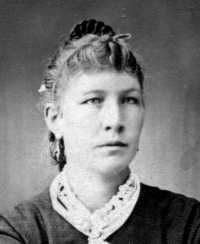
DORTHEA CHRISTENA JENSEN SKOW
| Birth | 13 July 1861 | Ephraim, Sanpete Co., Utah | ||||||
| Christened | ||||||||
| Baptism | 31 July 1870 | |||||||
| Marriage | 21 April 1881 | Salt Lake City, Salt Lake Co., Utah | Parley Christiansen | |||||
| Endowment | 21 April 1881 | Endowment House | ||||||
| Sealed to Parents | 07 June 1916 | |||||||
| Death | 13 April 1946 | Springville, Utah Co., Utah | ||||||
| Buried | Mayfield, Sanpete Co., Utah |
| Children | Parents | ||||||
| 1. Dorthea Geneva Christiansen | 13 October 1882 | Ephraim, Sanpete Co., Utah | |||||
| 2. Mette Eulalia Christiansen | 16 February 1885 | Ephraim, Sanpete Co., Utah | -- Niels Jensen Skow | ||||
| 3. Aaron Parley Christiansen | 17 July 1889 | Ephraim, Sanpete Co., Utah | Dorthea Jensen Skow | | | |||
| 4. Edna Merline Christiansen | 30 March 1891 | Mayfield, Sanpete Co., Utah | -- Dorthe Christensen | ||||
| 5. Nels Woodruff Christiansen | 21 May 1893 | Mayfield, Sanpete Co., Utah | |||||
| 6. Daughter Christiansen | 10 May 1895 | Mayfield, Sanpete Co., Utah | |||||
| 7. El Ray LaVar Christiansen | 13 July 1897 | Mayfield, Sanpete Co., Utah | |||||
| 8. Junius C. Christiansen | 10 June 1900 | Mayfield, Sanpete Co., Utah |
| A HISTORY OF DORTHEA CHRISTENA JENSEN SCOW |
| Written by Lily C. Larson, Edited by Floyd L. Larson |
Dorthea Christena Jensen Scow was born in Ephraim, Sanpete County, Utah on July 13, 1861. Her father was Niels Jensen Scow and her mother was Dorthea Christensen. They were married in 1856 or 1857. She had a brother, John Jensen Scow who was born December 4, 1857.
Mother (Dorthea Christena) always seemed to feel proud of being born that year because it was quite an important year in the history of America. It was the year the Civil War began. Many men from both the North and the South gave their lives for freedom from oppression but not in vain because it brought about "a United States of America".
Her father was very industrious. He had, like all the rest of the men in the community, drawn lots, not only for a building site which should be his, but he also drew lots for pasture and farming land as well.
He must have worked this land to good advantage, for in the next four seasons he had been able to store up 500 bushels of wheat. He and his father owned a tannery where they tanned hides to make leather for harnesses, shoes, etc. They learned this trade in Denmark.
At this time Niels and his wife Dorthea were quite well off and they were preparing to build a new rock house just east of where his sister, Maren (or Mary, as she was called), and her husband Niels Peterson lived. The 500 bushels of grain he had stored was to be sold for this purpose. At that time wheat was worth $5.00 per bushel, giving them ample funds for its construction. But his untimely death from an attack of black measles stopped this from being accomplished. He died on April 25, 1864.
We can imagine what a shock it must have been for this young wife to lose her husband at such an early age and to have to face raising two young children alone--one seven and one three years old--and to care for a large farm and livestock.
I have heard that President Brigham Young at that time advised the men to marry widows to help protect them and their children from the Black Hawk Indians who were giving the people a lot of trouble, and probably since she was a young woman who was quite well off financially, there may have been men who were willing to take this advice.
And there did happen to be a man by the name of Chris Madsen who did take that advice and was fortunate enough to gain her consent to marry him, even if he did have a wife and family already, which didn't disbar him from having more than one wife because it was a rule of the church at that time that the men were allowed to have more than one wife.
So she did marry him a short time after her husband's death. Hazel has told me that he took his first wife and Mother's mother to Salt Lake City and went to the Endowment House and had his first wife sealed to him for time and all eternity and married Mother's mother, Dorthea Jensen Scow, for time and then had her sealed to her husband Niels Jensen Scow for time and all eternity. So I feel like we will have to give him a little credit for not having her sealed to him, and he did build a house for her too.
She turned all of her holdings over to him. Mother and others have told me that his first wife was a selfish over-bearing person and from the things that happened later it looks like what they said may have been true.
I am sure the short time Dorthea was married to Mr. Madsen could not have been very happy. Some months after she became his wife, she became pregnant. Later she came down with the same disease her first husband had and was very ill. She died February 17, 1865, but before her death she gave birth to a premature baby boy. She was a wife, a widow, a bride, a mother, and a corpse in less than one year.
Now there were three young orphans left without anyone to care for them. Madsen and his wife must not have been willing to accept the responsibility of raising them, so the sister of their father, Mary and her husband Niels Peterson, took them into their hearts and home.
The small premature baby boy was quite weak, but he grew stronger under the good care of Grandma Peterson (as we always called her), so when his father saw how he had improved and grown, he decided he wanted him, so what could Grandma Peterson do by to let Madsen have him.
He probably thought he would have a better chance of keeping the property his young wife had given him possession of. But Grandpa Niels Peterson had a different idea, I think, because he took the problem to court and was successful in getting it back for the two children, John and Dorthea.
The baby boy was named Niels Christian Madsen. Mother has told us that he never was very strong and just lived until he was 16 years old. She also said his step mother wasn't very good to him. She always seemed very sad when she spoke of him.
Uncle John did live with his mother's parents in Mr. Pleasant some of the time while he was growing up. Their names were Hans Christensen and the mother's name was Johanna Jensen. I don't know how long Uncle John stayed with them, but when John and Mother were old enough to take care of themselves, they moved into the house Mr. Madsen built for their mother.
I am sorry I never asked Mother about the boyfriends she had or when and how she got acquainted with Father. But in Aunt Marie Thompson's history she says they had dances in the old Co-op building which were held upstairs. Later they went to Swallbey's Hall. The dances in the Social Hall could only be attended by people in church favor. Some young persons were not allowed to the dances in the Co-op. But Aunt Merle went to both church and non-church sponsored dances (She would!) and maybe Mother did, too.
I know both she and Father could dance because I have danced wantres several times with Father. I think he paid me a compliment once when he told me the boys danced with me because I was a good dancer and with Dora because she was such a good talker. I am sure she was as good or better dancer than I was though.
I will have to tell about an experience Mother had one day in school. The pupils were all standing up in a row and were repeating the times tables. When Mother came to 12 times 12, she looked out of the door and saw three little pigs standing there, and so she finished by saying, "12 times 12 is 144--three little pigs out by the door!", and the children all laughed.
We children used to think she was pretty smart, of course. She was a very good speller. When Father would be making out deeds and doing other kinds of work by his desk in the living room as we used to call it, if he came to a word he didn't know how to spell he would yell, "Ma!" (who would be out in the kitchen) "How do you spell __?" Then he would mention the word and I don't think she ever misspelled a word.
Father went to school about three months. In those days they paid the teachers by produce, vegetables, etc. They furnished their own books and slates. They did not have any paper or note books. The room was heated by a wood burning stove, and they sat on long plank benches. Arithmetic, spelling, writing and reading were taught. There was a long high desk to use when they had to do any writing.
Their winter clothes were made from home grown wool. It was woven at home into a form of flannel. It was sometimes woven into checks, black and red, etc. Different things were used for coloring. A certain brush for yellow coloring. A kind of bug was ground up for a kind of dye. Indigo was used for blue dye, copper was used for orange. Woolen stockings were knitted for inter wear.
In the summer they went bare footed. Their shoes were hand made. Their summer dresses and underwear were of calico and factory. Their hats were hand braided out of straw. Mother became an expert at weaving hats out of oat straw. They soaked it first before they used it. In the winter they used hand knit or crocheted facinators and mittens.
For food they raised plenty of potatoes. Wheat was taken to a roller mill at Nephi. Later a mill was built at Manti, before there was a mill at Ephraim. They had plenty of chickens, hogs, cows, sheep and beef. We raised currants, apples and plums. Peddlers from Dixie would peddle molasses. Much meat was cured and smoked. Cheese was made from the plentiful supply of milk. We always had plenty of butter. Vegetables raised in their gardens were squash, cabbage, lettuce, radishes, beets and rutabagas, turnips and corn. We had stoves to bake our bread in. We did not use much pastry, but used buns and sister cake, a form of sweet bread. Squash, plums, and apples were dried to be used the year around. As no bottles were available for canning until I was grown up, fruit was preserved in stone crocks for jam and jelly. The crocks were made in a kiln, a large stove furnace or the like for hardening, burning, or drying anything as brick or lime.
Now to get back to where John and Mother moved to themselves. I am sure that young folks continued to visit with them after they got settled in their new home. The house they moved into is still there. One day Milton and Erma took Ray and me in there and we took a couple of pictures of it. I remember it very well and I hadn't seen it for several years. There were people living in it and they let us go through the inside and it brought back many pleasant memories of when we lived there.
The Golden Apple tree wasn't there which used to have such good golden sweet apples on that were so delicious. I don't think I have seen apples like them since we lived there. Of course there were swings on it too when we lived there which we used to love to swing in. I didn't go in the back yard, so I didn't get to see the kind of buildings they had there. They hadn't done much to the house, but the picket fence and the gate the Marshal hung the ugly red flag on when I got diphtheria wasn't there, either. The houses on each side of the fence on the east and west sides were gone too, but new homes had been built to take the place of the old houses that were there when I lived there.
I never heard anyone say if someone lived there while John and Mother were growing up. Mother said the floors were of lumber and that she used sand instead of soap to make them clean and white. She had a pet lamb that she bathed and brushed the wool which made it look real nice. I suppose she clipped the wool on the lamb once in a while so it wouldn't get too long to brush.
All I ever heard Mother say about when they got married was that they went to Salt Lake City and were married in the Endowment House. They drove up there in a covered wagon. Aunt Lizzie, Father's sister, went with them as a chaperon. It took them a week to drive up there and back again. They were married on the 13th of April 1881.
I suppose Father moved in with Mother and Uncle John. I never heard what they did about the farm--if both Uncle John and Father took care of it together or not. John did live with them until they moved to Mayfield and many years after that.
Their first child was born in Ephraim October 13, 1882. They named her Dorthea Geneva, but they always called her Dora. Their second child was born on the 16th of February, 1885 and they named her Mettie Eulalia, but she was called Lily. They said it was hard for Father's mother (Dorthea Grandma to say Eulalia, but she would say Eulily, so I have always been called Lily.
It tells in Father's history that he began working hard when he was very young to help his mother support her little family. In 1876 he went to Arizona to help build a town called Brigham City which was later abandoned. He helped to build a fort there and on his return he helped to take a new mill to St. George to cut lumber for the temple there. He also worked on the Manti and Salt Lake Temples.
He was constable of Ephraim during 1884-1886. In 1886 he was called on a mission to the North Western States and was away for almost two years. At that time he wrote in his diary that he didn't know where the money would come from, but he consented to go. Of course at that time the Church had a rule that they should go without purse or scrip. His neighbors and friends came to his aid, some gave 50 cents, some 25 cents, some $1.00, and one woman gave $2.85. The donations came to $51.58--not much to go on a mission, but he went and performed an honorable mission.
Mother told him in the letters she wrote to him how she obtained the money she sent to him. Dorthea Grandma was very good to help Mother with the children while he was gone. Especially when they were ill. While he was away both of us girls had a spell of whooping cough. When we began coughing, Dora would run to Mother and I would run to Grandma to be held until the coughing spells and vomiting were over.
John must not have stayed home all of the time, because we have been told it was quite a responsibility for Mother to get help to run the farm. It was difficult at times for her to sell the crops after they were harvested. They had a colt she was planning on selling to get money to send to Father. It was up in the canyon and was about old enough to sell when a bear attacked it and killed it. Mother milked cows, made butter, raised chickens and sold eggs to help keep Father on his mission.
I remember when Father came home. He had a beard and when I saw him, I said that wasn't my Pa and I stayed outside until it was dark. I was afraid of the dark but I had to go in, finally. He kept his beard until after we had lived in Mayfield a few years. I remember when he had Daddy Niels Anderson cut it off. He kept his moustache for several years. I can remember how odd he looked without it.
I suppose he took over taking care of their farm and the responsibilities of a father. I heard Mother say though many times that he had found out while he was on his mission that he could get along without working so hard, (just a joke, I suppose) because I remember he did work hard taking care of the farm they had in Mayfield.
He was very good to let us children ride with him on the go devil roller and other farm machinery. Maybe I should tell about when Aaron was born and then come back here.
Their son Aaron Parley was born on the 17th of July, 1889. I remember that very well. I was about four and ½ years old at that time. They took me and my sister Dora up to Aunt Mary's, Father's sister, while this event was happening. I remember how happy we were when Father told us we had a little brother. We had a neighbor lady named Stena Williams who had two daughters about mine and Dora's age. Their names were Delia and Ella. Dora found out before we got home that Delia had seen the baby before Dora had, and she became so angry about it she wouldn't go in to see him for several hours.
Not very long after he was born there was an epidemic of diphtheria broke out and spread among the children very rapidly. Several families lost as many as three children and buried them in the same grave. Dora caught it and almost lost her life. Father took care of her in the front room and Mother took care of Aaron and me in the kitchen. They have told us she became so ill that Father took her in his arms and walked the floor pleading with the Lord to spare her life. His prayers were answered, but she was very weak. She was about 7 years old, but if she was sitting on the floor and wanted to get up, she had to have help.
A Dr. Olsten was our doctor and he painted our throats with a brush and some terribly strong medicine. They had to fumigate and wash everything in a strong solution of lye and water. They even burned some things. But in spite of them doing all this cleaning, I came down with the same disease. They said when I saw the marshal hanging that ugly red flag on the gate I said I would like to get the axe and chop his head off. Of course they had to go through the same process of cleaning up when I became well. They say my tonsils were so swollen there wasn't a hole any larger than a pin head and I had such difficulty breathing, Father had to stay close to me all the time.
I remember the day the doctor came and said I was well. I was sitting in a rocking chair by the window eating rice pudding. I jumped to my feet and danced around the room. I was very happy to see the marshal take the ugly flag down. Aaron was fortunate to escape getting the disease.
It must not have been long after this that Father was called to be bishop of the Mayfield Ward. He was ordained a high priest and set apart as bishop on May 18, 1890, by Heber J. Grant. I don't know just why they went out of the Mayfield Ward to get a new bishop.
At that time a man named Ole C. Olsen was the bishop and Joseph Christiansen and Henry Jensen were his counselors. Joseph Christiansen was Father's brother. From a few things I have heard about him, he must have been quite a tyrant. Father must have been about 33 years old at that time. Mother about 29. Dora 8, I was 5 and Aaron about 1 year old. I never heard Mother or Father say how they felt about leaving Ephraim to make a home in Mayfield. I suppose they thought it must have been a call from the Lord and felt it was their duty the same as they did when Father was called to go on a mission.
So I suppose they had to sell their home and farm and move to Mayfield. I wonder if we weren't a sight to behold, especially me. Anyway we must have made quite an impression on Amelia C. Larson who became my sister-in-law later. She told me several times about how white mine and Dora's hair was. I know mine was cut just like a boy's. I don't remember if Dora's was cut or not.
I remember well the trip we made from Ephraim to Mayfield. They didn't have moving vans in those days like they have now, so they just piled their possessions in a wagon and set out for their new home. I rode in the wagon that Arthur Anderson drove. He has told me I got quite cross and restless before we arrived.
When we got quite close to what we called the Order he said, "Now we are there." Well, we still had to cross what is known as the Indian Farm--a strip of land where the Indians had lived and this is what they called it. We drove most of the way through town before we came to the house where we were going to live.
This house was just across the road south of what was the meeting house which had been built by the relief society members and where all of the meetings and all of the dances and entertainments were held until a new chapel was built down further in town about the years 1932 and 1944.
There was a school house of four rooms--two downstairs and two upstairs, a hallway and office which they tore down or demolished before building the chapel. A new larger school house had been built one block south of where the above school building was. The new school house was built on the same ground that the first school house was which was just a one-room building. The larger school house at the present time is being used for a rest home because the school children are being transported to Gunnison.
We did not live in the first house very long until we moved into a house across the road (east) of where Ray's folks lived. This one just had two large rooms, a kitchen and a bedroom. Merline was born here on the 30th of March, 1891. Woodruff was also born in this house May 21, 1893.
I don't remember if I told you of this incident in Father's history or not, but I have never forgotten it. There was a young man named Louis Gregerson that was working for Father, who slept on the floor in the kitchen. Some nights he and other boys would go to an old man and his son's home to spend the evenings playing cards and I suppose telling ghost stories. He came home quite late one night and went to bed. It had rained that day and all the men's clothes were wet, so Mother had hung them up behind the cook stove to dry. The cook stove was in the east part of the room and Louis' bed was in the west end of the room. He went to sleep but must have had a nightmare which woke him up. The moon must have been shining by then or he couldn't have seen the clothes hiding behind the stove. He thought he saw a man with a large knife in his hand and he thought he was going to kill him. He got out of bed and rushed through the door into the bedroom which woke all of us up. Father sat up in bed and Louis threw his arms around Father sobbing and shaking badly. I have never seen anyone so frightened in my life. It took Father quite a long time to get him quieted down. He told us the old man had been telling them ghost stories. It took all of us quite a while to get settled back down too.
I don't remember just how long we had lived in this house until Father bought a house just east of the one we were living in. This was a log house facing the south. There were two large rooms in the east part with a mantle piece all across the top of it. We really enjoyed this fireplace when the pine logs which they had hauled out of the canyon were cut and ready to use.
I can tell you a story about that, too. There was a little house just north of the log house which we called the "Doby House". Dorthea Grandma--Father's mother--lived there when she came out from Ephraim to stay with us. There was a bed and a large couch, a table and chairs, a cupboard for her dishes, a cook stove where she could make her some coffee or cook a meal if she wanted to.
We children loved to go in to see her and she always had something to give us to eat. She loved to talk to me about the Gospel and her home in Denmark and her trip on the ship that brought her to the United States and across the plains. She walked all the way and helped pull a handcart. I will say more about that in her history.
Well, to get back to the story about Dora. Aunt Lizzie and Uncle John Whitlock came out from Ephraim to visit us and it seems to me it was when ElRay was born. Of course that made a lot of work for Dora because she was the oldest. I think she must have been extra tired from working hard during the day.
Some of the children had to sleep out in the doby house. In the morning when we should get up and get dressed, Dora couldn't find her clothes. We looked everywhere in the doby house but didn't find her clothes so we went over to tell Mother about it and began looking around in the log house. Finally we found Dora's clothes on the mantlepiece. Dora must have gotten up in her sleep and took them in there. They have told us that she did have a habit of walking in her sleep occasionally.
Well, ElRay was born in the log house on the 13th of July, 1897. He weighed 12 pounds. Mother said he had gone a month over time and he really looked like a month old baby. Of course we were very happy to have a new baby brother. I believe Mother had a miscarriage between Woodruff and ElRay.
I remember very well the night ElRay was born. Sister Carlsen was the midwife who took care of Mother when he was born. There was a large rock barn back in the yard. It had a loft upstairs where Father used to store his hay. We used to have a lot of fun playing there. Then there were stalls downstairs--some in the west side for the horses and stalls on the east side for the cows.
I can tell a story about Mother and Sister Scow, our neighbor across the road from us. Mother or us girls always did the milking. I don't remember if Father or the boys ever milked a cow. One of the cows had a new calf, so of course Mother had to take Sister Scow out to show her the new calf. The cow and calf were in the east side of the barn. They went in but they didn't stay in there very long. First Sister Scow came running out of the door, then Mother came out behind her and after Mother came the cow. I was between the house and the chicken coop with a bucket of ashes I had taken out of the cookstove. It was such a comical sight I couldn't keep from laughing. As soon as they were out of the barn, the cow went back to her calf. No one was hurt.
West of the barn there was a large shed and south of the shed was the pig pen. The chicken coop was southeast of the barn. The outhouse was east of the barn and north of the chicken coop. There was a fence from the east corner of the barn out south to the sidewalk. There was a fence on the south and east side of the lot. A large gate in the south fence going into the corral, a small gate in the fence in front of the log house and they had a gate in the front of the new doby house when they built that (which faced the east) and a fence on the north side of the lot from the sidewalk down north of the barn to a neighbor's fence to the west.
When they harvested the hay they would drive through the south gate to the south side of the barn to unload the hay in the barn loft. They used a hay fork which they could put into the hay and pull up to an opening in the barn which was pulled into the barn along a ramp in the top of the barn and then pull on the rope to drop it. The man on the hay wagon would call "ready" to the person behind the barn who was leading the horse that pulled the hay up into the barn and then the person who was leading the horse would back it back and wait until he heard the call "ready" again and most of the time it was easier to get the horse to pull the hay up than it was to get it to go back and wait to hear the call "ready" again.
We had to almost push the horse backwards. It seems to me that Dora and I had the job of leading the horse back and forth. I don't remember if ElRay and June were old enough to do it while we were home or not. We used to tromp the hay and help shock up the grain when it was ready for harvest. We herded the cows too after the harvesting was done.
I think Father did the stacking of the wheat, oats and barley until he got the forest ranger job. He did a nice job of it too. When the stacks were about one half as high as they wanted them, they would put long poles or boards on the stack and leave them sticking out of the stack far enough to lay or put boards on them to make a platform for a man to stand on. He would stand on the platform and the one on the wagon would pitch the bundles of grain up to the man on the platform and he would pitch them up to the man on the stacks and when he couldn't pitch them to the man on the stack, we girls would get the bundles and throw them to the man across the stack.
I remember how frightened we would be when we had to get down off the stack when it was finished. Mother and us children used to help plant the potatoes in the spring and help harvest them in the fall.
I remember Aaron was herding the cows once, I don't know just what time of the year it was, but he was supposed to keep them off from the alfalfa. It doesn't seem to me he was very old. Another fellow or boy who was herding cows around there someplace got Aaron to come over to play with him, I suppose, and the cows got on the lucern patch and the one cow got bloated and died. When Aaron brought the rest of the cows home, you can imagine how he felt. He told Father, "Old Reddy got fat and died, but we can milk her anyway." I suppose he must have tried to milk her and got some milk. Of course he was crying and felt bad about it, but Father gave him a good licking anyway. I know I was crying and I imagine some of the others were crying too. And I wouldn't be surprised if Father was shedding a few tears too.
I don't remember being whipped by either Father or Mother, but I remember what strong hands Father had when he put them on the back of our necks and squeezed our necks when we had done something we shouldn't have done.
I remember Mother would sass us when we broke dishes, until once she broke a bowl or some other kind of a dish and she said, "Oh, that could happen to anyone." So after that if we broke any dishes that is what we would say to her.
I remember once I went over to Bishop Olsen's who lived just across the road east of us and they had a large elderberry tree that had some ripe elderberries on and I picked some and when I got home Father asked me where I got them and I said I got them over to Bishop Olsen's. He asked me if they gave them to me and I said, "No. I just picked them." Well, he told me to go over and tell them about what I had done and then ask them to forgive me for stealing them. It was at night and it was dark and I was afraid, but I went over and did what he told me to do. So that was how I learned it was wrong to steal, I suppose. I remember how sour they were, so I don't think I ate very many of them.
Before I tell about building the new doby house, I should tell what might have turned out to be a tragedy, but thank the Lord it didn't. Uncle Jim Stevensen and his wife, Aunt Mary, who was Father's sister, were out from Ephraim visiting us. Mabel Whitlock, Aunt Lizzie's daughter came with them. People used to have more time to visit in those days. Sometimes they would stay several days. Well, one evening while they were there, Father was over on the Order to a meeting in the little meeting house they had over there. They used to hold a meeting there every Thursday evening. The older folks and some of the younger children were in the east room in the old log house where the large fireplace was.
Dora, Mabel, me and Claude Michaelsen and Clyde Willardsen, who I suppose had come to see Dora, and Mabel were out in the kitchen. We were just talking back and forth and one of us mentioned we had a cat we didn't like very well and we wished we could get rid of it. Well, Claude pulled a pistol out of his pocket and said he could get rid of it for us and he just sat there putting bullets in and out of it and it made Mabel nervous so she went into the room where the other folks were and told Mother Claude was fooling around with the pistol, so Mother came to the door and kind of leaned out in the kitchen and said maybe they shouldn't be playing with the pistol and before anyone could say a word, Dora grabbed the pistol out of Claude's hand and pointed it toward Mother, pulled the trigger and said, "Oh pooh, look--it isn't even loaded." But it was and Mother said she felt the bullet go right past her forehead and it lodged in a wall just beside her head.
Dora did it so quickly that Claude didn't have a chance to say he had put a bullet in the pistol. He really felt bad about it. Of course we were all so stunned we didn't say a word for a while. We forgot all about the cat too, and after the excitement was over we talked about how thankful we were that Mother was still with us. This happened while we were living in the old log house.
There was quite a large one-roomed house just a few feet north of the log house which we called the doby room. It had one door in the east corner of the south wall, and a cellar underneath where they kept potatoes and other vegetables. This room was used by our Dorthea Grandma whenever she came out from Ephraim to stay with us. They had made it as comfortable as possible for her. There was carpet on the floor, a small cook stove, a cupboard for her dishes and cooking utensils, etc.
She ate most of her meals with us, but she could cook a meal for herself if she wanted to, which wasn't very often, but we saw that she had food on hand and so she could make her a cup of coffee if a friend came to see her. She always had a treat for us children whenever we went in to visit her which we loved to do because she loved to talk about her home in Denmark and her trip over the ocean in a sailing ship.
They were on the ocean about twelve weeks and sometimes the weather was very bad. She told us that the captain of the ship said he was never afraid, even when the weather was bad, if there was a company of LDS people aboard. He told them he had never lost a ship when there were emigrants on the ship.
She had quite a sense of humor and the stories she told us were full of humor. She also told us stories about the Indians, who caused them so much trouble. How she would sit up all night to guard her children when they were on one of their rampages. I have written more about these incidents in her history.
I think they built the new doby house soon after ElRay was born, about the year 1888. I know Father was up to Salt Lake City most of the time attending the legislature sessions while the house was being built. A man named Bengt Danialson built it.
We hadn't been living in it very long when Mother almost lost her life again. That was just a year before June was born in 1900. She had another miscarriage and had hemorrhaged until the doctor said she didn't have more than a pint of blood left in her body. Dr. West from Salina was the doctor who took care of her. I can remember how she would go from one sinking spell into another one and she was as white as snow. We were very frightened and very afraid we were going to lose our Mother. But she rallied, but she was very pale for a long time.
Then on June the 10th Junius was born and he weighed 10 pounds. Probably what brought the other trouble on was working too hard moving from the old log house into the new one. We really thought we were moving into a mansion.
I don't remember who our hired girls were when Merline and Wood were born, but I think it must have been Ray's sister Stena Larson. I think Stena Christiansen was the hired girl when ElRay was born. She was Albert Julius' sister. I remember another lady by the name of Sarah Ann Hugertubler who did some washings when we were living in the log house.
Dora and I were old enough to take care of things when Junius was born. I was 15 and Dora was about 18 years old. I think we used a wash board to wash the clothes then and after we had scrubbed them. We used home-made soap--we would boil them in a large boiler. We may have had a boughten wringer then because I remember when Dora went out to do washings for people she would take this wringer with her.
I was luckier than she was because when I worked for other people most of them had new washers, although I remember just washing on the wash board some of the time too. I have wondered lots of times why Dora and I didn't get to go to school like the rest of the family. We started to work for other people when we were quite young and worked until we got married. I suppose that is another story that I may say something about later when I write something about the children. (This is Mother's history I am trying to write and I am afraid I am not going a very good job.)
If I remember right the house was built while Father was away. The dobies must have been made during warm weather so they would get dry before they could start to build the walls. But I can remember when they plastered the walls inside they had to keep fires in stoves so the plaster wouldn't freeze. I think Uncle John Scow was home with us at that time. He probably kept the fires going all night.
I think he had company during the early part of night, but I don't remember just who they were--I suppose people or friends about his age. It seems to me that I remember Uncle Charley and Curly Erastus Anderson being there. I believe they hung wagon covers up by the windows to help keep the cold out.
When the house was ready to move into, Father, who was still in Salt Lake, bought some new furniture for the parlor as the front room was called and we were really excited about getting new furniture. He bought a pretty flowered carpet for that room. We probably had new homemade carpet upstairs and linoleum for the floor in the hallway, kitchen and pantry. I believe we had some kind of carpet on the steps that went upstairs. New blinds, curtains, etc. One of the beds was wooden and one was a single iron bed for the small north room upstairs and two other iron beds. A new rocking chair, a new dresser with a large looking glass, some wooden chairs and a center table for the front room. I think he bought a new heater stove for the front room. I guess it was considered to be an extra nice stove because it had an opening in the front with a tin or iron loose which we could take off and it would be like a fire place. I believe it was about a foot and one-half wide and a foot and one-fourth high. Of course there was heavier iron all around it and it had a place for an ash can and stood on four feet. It was a very poor heater.
I don't remember if they ever bought another one. I do know they took it with them when they moved to Gunnison, because they were using it in the living room when DeOn was born the 2nd of January 1933. Milton and Erma were living there then.
I think they must have taken the cook stove they already had in the old log house into the new house. It had four holes on top with lids on that you could take off with a gadget they used for that purpose, a hearth in the front and a door on each side of the oven. It stood on four legs and was all iron. We would clean it at least once a week with some black material using a brush to put it on and then polish it until it really shined.
I remember one day I put my shoes in the oven to dry because they were wet from being out in the snow and I forgot about them and when I took them out of the oven they were all crinkled up and about as stiff as a board. They were button shoes and we had to have a button hook to button them with. The buttons were on each side of our shoes. Later we used shoe laces to lace them up. The opening was in the front of the shoes and there was a narrow strip of leather under the place they used the shoe laces. I don't remember how old I was when I got my first slippers but I am sure I was very proud of them.
I think they put wall paper on the walls of the parlor, hallway and the upstairs rooms. I believe they painted the woodwork doors around the windows a light green and painted the walls in the kitchen a dark rose color. They put shelves in the pantry for dishes, etc. They put a sink in for us to wash dishes in. We really thought we had something wonderful when we had that to wash the dishes in. It was in the north end of the wall in the pantry and there was a pipe for the dishwater to run to the outside of the house. There were doors on the front of the sink and a place under the sink for the pots and pans. They had dug a cellar under the kitchen and there were steps for us to get down there where they had made some shelves for the milk, butter, etc.
The shelves were round. There was a pole right in the center of the shelves which went from the floor up to the ceiling and we could turn the shelves around. The cellar was quite deep so it was really cool. Sometimes we would let the milk pans stand until it would turn into clabber milk. The cream would rise up on the milk and we would sprinkle sugar on the top and eat it. We really liked it--anyway most of us did.
There was one small window in the north wall and one in the west wall so it always smelled fresh in the cellar. They were made so we could open them to let the fresh air in.
When I told about the sink in the pantry I didn't tell you that we had to heat the water we used to wash the dishes in large tea kettles. When Dorthea Grandma was living with us, she used to wash the dishes and most of the time I would wipe. She could use the water real hot. When she grew older and we thought it was a shame for her to keep washing dishes, we told her and she got real insulted and thought the reason we didn't want her to keep on doing it was because she wasn't able to see if they were clean or not.
Dora usually took care of the parlor and upstairs and I suppose Mother was out milking the cows and tending the chickens. I suppose the boys who were old enough fed the horses and cows and let them out to the ditch to have a drink of water.
Father had bought a small pasture below town right next to the road that went to Gunnison. And when they weren't in the town herd, some of us had to take the cows down to this pasture in the morning and bring them home in the late afternoon. Whenever I took them I would ride a stick horse and imagine I was a princess or a queen. There was a large patch of sagebrush just below the cow pasture. One day Dora, Aaron and I were going down to the farm to pick some peas from a patch Father had planted there and we thought we would go through this patch of sage brush and get to the field quicker. Well, the brush was quite high and we got lost and couldn't find a way out, so finally we decided to pray to our Heavenly Father to help us find a way out of there. So each one of us took our turn to pray and it wasn't long until we found a way out.
I remember another time Dora, Kate (our cousin) and I went out to the first point--a hill just south of Mayfield--to go swimming in the new field ditch which went around the hill among the cedar trees and we heard a noise and decided it must be a wild animal. We were really frightened so we decided to ask the Lord to keep us from getting hurt. So that shows that our parents were doing what they had been told to do which was to teach their children to pray. And I am sure those of us who are alive still believe in prayer.
Well, to get back to when we moved into the new doby house. When I told about Mother taking care of the chickens I should have mentioned that we had a peacock and some peahens. The peacock was a beautiful bird, but he had a bad habit of making a noise quite often that wasn't very beautiful at all and it annoyed one of our neighbor's son. So to get rid of the noise the peacock made, he decided to kill him. The peacock had some pretty tail feathers which he would spread out like a fan several times a day and prance around the yard to impress the peahens who were not as beautiful as he was. He would shed these feathers once a year and so nearly every family in Mayfield got some of his feathers and kept them for years in vases. We really missed him and the noise he made. The fellow who killed the peacock is still alive and living in Mayfield.
The log house is still in the south-west corner of the corral. DeOn Jensen tells us she went with Uncle ElRay up to Mayfield to see the town and when they came to where we used to live and saw the old log house he said to her, "Well, President Abraham Lincoln didn't have anything over me."
Some of the rock walls of the barn are still standing, but most of them have fallen down. Every time I see it I wish someone would tear the rest of it down; part of the roof has fallen off too. Clinton Christensen bought part of the north end of the lot from Mrs. Daisy Christiansen who owns the place, but Clinton is gone and another man owns it now, one who came in and bought one of the fields south of Mayfield.
Daisy has spent the last few years with her daughter in California because she isn't very well, but she has come home once in a while during the summer. The house was getting pretty dilapidated but a couple of years ago her son, Horace, had the people who did work on the outside of Milton and Erma's home do the same kind of work on the outside of Daisy's home and it really looks nice now. The old pole fence has been torn down and the lawn and trees that Aaron and I planted are still looking nice.
Before we planted the lawn and trees, we used to sweep and clean the door yard at least once a week. We would put the dirt and rocks we swept up in the round tub we used to bathe in and dump it down in the corral. When Dorothea Grandma was there in the little doby room she would get the hose and sprinkle around every evening.
Horace, Daisy's son, has fixed a bathroom some place. I think it must be where the steps went down in the cellar and has put in a stoker-matt heater in the parlor and I think she has an electric stove in her kitchen so it is much more convenient than when we lived there. I have just been there once since Father and Mother moved to Gunnison and that was before anyone else had moved in the house.
During the sixteen years Father was bishop of the Mayfield Ward, Mother was a very busy woman. Four children were born to them during that time, which with the three they brought with them from Ephraim and Dorthea Grandma and Uncle John living with us at different times, made quite a large family to care for.
Quite often the stake presidency who consisted of President Canute Petersen, Brother John B. Maiben and Henry Beal, his counselors would come out to attend to church duties and Mother always would see that they were fed and made comfortable while they were there. I remember other men who were church authorities who came to our home occasionally. Apostle Richard R. Lyman was there.
There were men who came on government business too. Adolph Jensen, who was in charge of the forest service while Father was ranger on the forest reserve came several times. An Indian called Indian Jim from Moroni or Fairview came every fall and stayed with us overnight when he went down to spend the winter in the southern part of the state because it was warmer.
He traveled in a one-horse buggy. He was very neat and clean. He wore a dark suit, a white shirt and I remember the celluloid collar (white) he wore and a duffy hat. He was very polite at all times. And there were many others who would stay there overnight on their way south or north on business. Mother was always a very gracious lady.
During the summer months that Father was forest ranger, we spent quite a lot of time with Father in the mountains. Uncle Charley, who was the rider for the cattle association and Aunt Annie, his wife and Mother's dear cousin would spend some time up there too. I remember one summer there were several families who spent a week up by the house the forest service had built for Father to live in. There was Lute Larson and his family; John Larson and his family; Uncle Johnnie and Aunt Dora and their children; Ray and I and our family and others. We really had an enjoyable time. Woodruff was going to the University that summer and he had invited Professor Paul who was interested in birds (so was Woodruff). Wood stayed down home until the professor got there and then he brought him up to the ranger station.
I think this outing was held in 1910. Woodruff and the professor spent their time going around among the trees to see how many different kinds of birds they could see. The women spent their time cooking and taking care of the children. I don't remember what the men did, maybe they watched that the older children wouldn't wander away and get lost. I imagine they helped them ride the horses. The children loved to watch the squirrels and chipmunks that ran around and climb the trees.
A man named John Anderson who owned a farm just east of Mayfield had several milk cows and ran a kind of dairy just east of the ranger station. His wife and family lived there that summer and they helped milk the cows and they sold milk and butter, etc. There was still some snow there, not far from the ranger station, so we bought milk and cream and made ice cream about every day. At night we would make a large bonfire and sing songs and play games. We really had a lot of fun.
There isn't any ranger station there any more. The government had it burned down because they were afraid someone might go there and be careless about putting out the fires they might use and it might burn trees, etc. and cause a forest fire. I don't know whether I think it was a good excuse or not.
I don't know what year it was when Father bought their first automobile. Wasn't it a one-seated one? I know they really got a lot of enjoyment with the automobiles they had. He was good to take us different places with them. I remember he took Dora and me out to see ElRay and Lewella when ElRay was teaching in Hinckly and we had such a nice visit with them. Sometimes some of us got quite nervous riding with him because he would be pointing and talking about the countryside along the road. Once in a while he would let go of the wheel to straighten out the cushion he was sitting on.
In 1920 Father and Mother decided to sell their home and farm in Mayfield and move to Gunnison. One reason for this was because the Gunnison drinking water was so much softer than the Mayfield water and Dr. Hagen thought it would be better for Father's health. He was having a little trouble with his kidneys and heart. He got so he would pass out once in a while and his blood pressure was quite high, too.
It didn't stop him from being active because during the years they lived in Gunnison he became a member of the high council. He also served as mayor of Gunnison two or more terms. He served one term as county commissioner and was a commissioner for roads. In this capacity he supervised the building of many of the county roads. He really enjoyed having something to do. They did some temple work too in the Manti Temple.
I believe ElRay lived with them when he taught school in Gunnison where he met Lewella who was teaching there too. They fell in love and were married on the 14th of June 1922 in the Manti Temple. I don't know how many years they stayed in Gunnison.
Mother became president of the relief society and did a lot of work caring for the sick and preparing the dead for burial. Several have said how they loved her. Ruby Fjeldsted and her sister have told me how good she was to their mother when she was ill and passed away. I think Lillie Metcalf was one of her counselors and she wrote the following poem when they moved to Logan.
| "A Sister Fair" | |||||
| With soft gray hair | |||||
| And eyes of tender blue | |||||
| With years not few | |||||
| And works so true | |||||
| Is here to guide us through | |||||
| Her words so kind and dear | |||||
| Always bring good cheer | |||||
| To the sick and well together | |||||
| Her kind deeds will live forever. | |||||
| She has the joy of work | |||||
| Was never known to shirk | |||||
| Wherever there's death or grief | |||||
| She comes to bring relief. | |||||
| A cheerful smile lights up her face | |||||
| She shant be always in this place. | |||||
| Because some distant day | |||||
| A greater work will come her way. | |||||
| When all her finest deeds are done | |||||
| And all her splendor's in the past | |||||
| If there's no other battle to be won | |||||
| Great shall be her reward at the last. | |||||
| In appreciation sincere | |||||
| For associations with a President most dear | |||||
| Let us give thanks to Sister Christiansen | |||||
| May God's blessings on her shower. | |||||
| My thoughts of you, Sister Christiansen from Lillie M. Metcalf, Gunnison, Utah. |
I have some letters President Shepherd sent to them while they were working in the Logan Temple. Dora and I went to the Logan Temple a few times while Mother worked in the temple and everyone told us what a wonderful person she was and how much they loved her.
She served on the Gunnison Stake Relief Society Board while she lived in Gunnison and was an active member of the Utah Daughters of the Pioneers. She attended the meetings of the group that were held in Logan and also attended the meetings while she was living with her daughter Lily C. Larson in Springville.
On her 80th birthday she was honored with an open house social in Gunnison and also at one of her sons, Aaron Christiansen's home in Logan. Scores of relatives and friends called in at both places to congratulate her and to wish her many more years of happiness. She was also a member of the Genealogical Society.
An article in the paper said that she was a pleasant and gracious hostess to all visitors at her home. And it also mentioned that after her husband's death she continued to work or officiate in the ordinance work of the temple for eight years and in addition has done the work for 1300 people who have passed away.
In 1927 Father and Mother moved to Logan to live. I think Woodruff encouraged them to try it, anyway. They had decided they would be closer to the temple in Logan than they were to the Manti Temple.
I think there may have been other reasons too. A man named Park was President of the Gunnison Stake and Father was Mayor of Gunnison and President Park and Father didn't look at things the same way sometimes. President Park wanted to be both the President of the Stake and also dictate to the mayor what he thought he should do. One thing led to another and President Park made it so miserable for Father he just couldn't take it so I think that was one of the reasons Father thought for peace of mind he would get out of the way. Father never did get over the incident though. I suppose President Park's conscience must have bothered him some because when Father died he asked Dora if she thought the family would feel alright if he came to Father's funeral. Dora told him she didn't think we would object to having him come if he felt like it. So I suppose he was there. I don't remember.
Wood and Lucy had moved from Hyrum to Logan and were building a new home there. The first winter Father and Mother lived in the basement of a house located on the west side of 2nd East. Raymond and Darwin lived with them so they could go to school at the college. Early in the spring Father and Mother moved into Wood and Lucy's basement. And I suppose they lived there until Father died the 13th of May, 1930.
I believe that Raymond and Milton lived with them in the fall of 1928 until Erma and Milton got married. Erma was teaching school in Smithfield, so Raymond lived with them when they settled down.
Mother and Father began to work in the temple after they got to Logan. Their ability was soon recognized and they were asked to be officiators on the 2nd of March, 1928. They enjoyed their work there very much. But Father's health began to fail, but he went as long as he possibly could. He would go up there and when he felt well enough he would sit in the chair by the baptismal font and be a witness to the baptisms. He was an officiator for about two years when he became too weak to continue. I don't know just how long he was bedfast, but he passed away on the 14th of May, 1930. His heart just stopped beating.
I will never forget the expression that came over his face. He opened his eyes and looked toward the ceiling and he smiled just like he saw someone there to meet him.
I am not sure just who was there when he passed away, but Ray and I had been with Mother for a few days. I think Aaron, June, Merline and Henry were there. ElRay was teaching school in Draper and wasn't able to be present. Dora wasn't there because Uncle Johnnie wasn't well and Darwin had just come home from his mission. Mother was very calm. I know she must have been almost worn out after having to take care of him night and day for quite a long time. But after a few minutes she said, "Now I will do what he made me promise him I would do." And that was to give him a bath and put clean garments on him before we sent for the mortician. Aaron and June didn't seem to feel like they could help her, so Ray helped her do it. Then we called the Lindquist Mortuary to come and take care of him and they did a very nice job. He looked very natural.
President Shepherd of the Logan Temple came to see Mother during the day and he suggested that we let the workers from the temple come and view him at the mortuary and we did that. Many people came to see him, but we didn't get their names.
After we got everything straightened up I think we went over to Merline's. Junius stayed a day or so and then came home on the train with Father. It was kind of hard on him to have to be alone, but Aaron and ElRay weren't able to be with him. Father died on Tuesday, I believe and we had his funeral on Saturday. Eva Michaelsen Jacobsen invited us to her home for dinner. Her husband was teaching there at that time. Our cousin Lareen Whitlock was living in Logan at that time and she invited us to lunch at her home too, which we appreciated very much.
Ray, Mother and I went home in our car. We drove all night. I knew I needed to get home, or thought I did, but Erma had got Daisy Christiansen, a good friend of ours, to help her get the house ready. We brought Father to our house until the day of the funeral which was held on Saturday the 17th. Wood and Lucy were in Germany so they weren't able to be with us, but they sent us a telegram telling us how sorry they were not to be with us.
I have told about Father's funeral in his history so I won't repeat it here. It was very impressive and the speakers told how active he had been during his lifetime. Father would have liked to have lived longer, but his wishes weren't granted. And about all we can say when our loved ones are taken away is that "The Lord giveth and He taketh away. Blessed be the name of the Lord."
Mother took it all very calmly as she took all of the troubles and sorrows she had to take all of her life. She was the stabilizing force in the family and an inspiration to all who knew her. She was highly intelligent and talented and went quietly about her labors with dignity and dedication.
I don't remember just how long after Father died that she decided to go back to Logan and continue to work in the temple, but it wasn't very long. She stayed with Merline and Woodruff alternately for about eight years when her health began to fail and she became too weak to continue in the temple.
She became bedfast. She was staying at Merline's then so they had Dr. B come to see her and he said her heart was bad and she should rest. She did this for quite a while and got so she could be up around again. It was about the time they were going to celebrate the 50th year of the dedication of the Manti Temple. She thought she would like to come down to that because she had been there when they dedicated it in 1888.
That was when Father was on his mission. I don't know if she enjoyed being there because she took me with her and probably had Dora with her too. But she told me I was restless and she had to take me out of the meeting. I was about five years old.
So they brought her down, but the day of the celebration she wasn't feeling well enough to go. We had Dr. Rees come up to Mayfield to see her and the first thing he did after he had examined her was to ask for a sample of urine. When he examined that he told us she was full of sugar and we would have to put her on a diet and give her insulin shots. I suppose Dr. Burgess hadn't even tested her urine when he was her doctor.
Well, we did that and she seemed to get better. We took her down to see him every few days. I think the reason she was staying with me was because Johnnie and Dora were about to lose their farm and sheep. It was the time of the depression when several people were having trouble and losing their farms, etc. They finally decided it was impossible for them to meet their obligations and they would have to leave their home. It was a sad time for a lot of folks. I don't remember who was living in Mother's home at the time, but they decided to have them move out and move in and take care of Mother which they did.
Uncle Johnnie wasn't very well--his heart gave him a lot of trouble. I suppose it was brought on by the worry they had been having about losing everything they had. I thought everything was going along all right, but one day I received a letter from Dora that they were moving out and had decided to go to Salt Lake City to see if they could find a way of making a living. I think she wrote a letter to the boys and Aunt Merline too.
Mother thought she could get along alone so we thought it wouldn't hurt to see if she could get along alone. We went down to see her quite often, but it wasn't very long before her toes became sore, I suppose because she went off her diet and ate too much sweets.
Dr. Rees was in the war at that time and one of his brothers who was a doctor was taking Dr. Rees' place. We took Mother to him to find out what we could do about getting her toes well. I asked him if I couldn't take her with me home and he said absolutely not. He wanted her where he could see her every day. So I stayed with her for a week and did what he told me to do to treat her toes. They seemed to get better after getting her back on the right diet and doing what he told me to do for her toes.
When I asked him again if I couldn't take her home with me because it wasn't too easy for Ray to be there alone. I think he was taking care of the farm and working on the pea viner too. So the doctor said, "Well, it looks like you can do what is necessary to help your mother get better, so she can go with you if you will bring her down as often as I think she should come." I said I would. Finally her toes got better and she stayed with us. I felt like it was easier for me to take care of her in my own home than to have Ray trying to get along alone with all the work he had to do.
Mother seemed to feel all right about it too. Another thing, we were having about the same trouble as Dora and Johnnie at the time of the depression. We had been able to meet our payments each year until this year it looked like we wouldn't be able to do it, so the Federal Land Bank decided to foreclose, so it became necessary for us to move out and try to make a living some other way.
Mother offered to let us come to Gunnison and live in her home until we could plan just what to do. Ray sold our livestock and paid as much as he could on the debts we owed. We kept our chickens and a couple of ewes and I think one cow and moved in with Mother and lived with her for three years.
We paid her taxes each year and from that time until she died she did not pay any living expenses. She had enough money to pay for her medicine and doctor bills. Ray worked in the turkey plant and in 1941 he fed turkeys for Ira Overfelt for a month and boarded himself. In 1942 he went up north and herded sheep for Claude Michaelsen. He worked in the CC Camp for awhile that same year.
Then he decided to go to Springville to see if he could find work, and he was fortunate enough to get a job with the Pacific States Cast Iron Pipe Company. He worked there for five years. I worked for Dr. and Mrs. Rees in their home and when they turned part of their home into a hospital I worked as a night nurse for awhile.
When it looked like Ray would have a steady job at the pipe plant, we decided to move to Springville. Mother was willing to go with us and she seemed quite contented. We never left her alone but once I had to go downtown for something we needed badly and when I got back home the radio was tipped over and a lamp was tipped over too. I asked her what in the world happened and she said she believed the devil had been there.
We took her with us wherever we went--church, DUP meetings and Old Folks parties and when we went to Gunnison or up to Walter's, Raymond's, and Maurice's she always went with us. I stayed with Raymond's wife, Ann, for three weeks when she lost a baby and I stayed with Walter's wife a couple of times when they got new babies. Mother stayed with Dora at those times.
And when I stayed with Merline for a month before she died, Mother was with me there. I think she went to Logan and stayed a week while ElRay was president of the temple.
I am thankful we could do what we did for her. I never heard Ray say a cross word to her or complain about having her with us. I have always hoped I could keep her from getting any sores on her body which happens so often when anyone has diabetes, but was able to do this.
For quite some time before she became bedfast she didn't have any control of her urine, especially at night. I would get up and change her garments and nightgowns and sheets and I don't know if having that trouble could have caused her to get sores on the upper parts of her legs, or if I could have gotten a bad bottle of insulin.
I had also thought when she did get right down that we could take her to the hospital, but when I asked Dr. Orton about it he said they didn't like to take patients that had that kind of trouble in the hospital and even if we could get her in she wouldn't get the care that I gave her. So I did the best I could for her.
Her heart trouble got worse, too. It wasn't very easy for any of the girls to come and help either, so finally we got a neighbor lady to come in each morning to help bathe her and change the bedding. She was very good. She did the washings too, which helped me a lot. Mother was right down for two or three weeks.
The doctor gave me some pills to give her when she became too restless. I fed her every day and she would eat until the Thursday before she died on Saturday morning, the 13th of April, 1946. Erma came up on Friday and Dora, June and Edith came that day too and I believe they stayed all night.
I went to bed and when I got up quite early in the morning I could tell she was almost gone. I think she died about six or seven o'clock. She just slept peacefully away.
It is hard to part with loved ones, but when they live as long as she did and it didn't look like she had a chance of getting well, it was probably a blessing she could go. She was very proud of her body and had mentioned she had never had to be operated on for anything.
We bathed her and put clean garments on and then we called the mortician from Provo and he came right away and took her over to the Berg Mortuary to prepare her for burial. They were very nice to us. Later that same day we went over to pick out a casket and to make arrangements with them to bring her to Mayfield for her funeral services, etc. We also went to the florist and picked out a flower to put on the casket.
Mrs. Ed Williams, our landlady, happened to be the lady who made the burial clothes for the relief society. She had some lovely material to make the robe out of and also the apron, dress, petticoat, veil, hose and slippers and she did it all without letting us pay her a penny. Mother looked very nice in her casket.
Erma went with us and stayed with us until it was time to go home on the bus to Gunnison. She and Milton made the arrangements with the bishop about when the funeral could be held and also for the man to dig the grave, the ladies who took care of the flowers, etc. and the singers and some of the speakers.
Her funeral services were held in the Mayfield Chapel at 2 p.m. Udel Christiansen officiated. The opening prayer was given by Hans Olsen who was Mother's cousin. Prelude and postlude music was played by Dorothy Jeppsen, violin, and Erma L. Christiansen, piano. The Gunnison Singing Mothers sang two songs, "Abide with Me", and "O Morn of Beauty." The speakers were Hyrum Olsen of Mayfield, Gunner Rasmussen of Logan and Bishop Edward V. Bunderson of Mayfield. Dorothy Jeppsen played a violin solo accompanied by Mrs. N. W. (Lucy) Christiansen, a daughter-in-law of Mother's. The funeral services were very impressive. Juna Christiansen Jorgensen played a flute solo accompanied by Erma L. Christiansen. Brother A. W. Jensen from Ephraim gave the closing prayer.
We then proceeded to go to the cemetery where Aaron P. Christiansen, her son, dedicated her grave. The pall bearers were Glen Terry, grandson, Robert Terry, grandson, Jack Watts, great-grandson, Jack Jeppsen, great-grandson, Keith Larson, great-grandson, MacRay Christiansen, great-grandson. 157 called to see her. I didn't get the names of those who gave flowers.
Mrs. Herdis Whitlock, Mrs. Annie Anderson, Mrs. Ruth Jensen and other members of the Mayfield Ward took care of the flowers. There was a profusion of flowers given by her relatives and friends from Logan, Ephraim, Manti, Gunnison, Centerfield and Mayfield. It was a beautiful spring day.
After the burial services we were invited down to Aunt Vivian's for lunch. Several of the ladies from Mayfield donated food. Several people from Ephraim, Nephi, Logan, Hyrum, Gunnison, Provo, and Springville were served.
The following was written by Erma L. Christiansen, a granddaughter:
I will add to this history of our grandparents, Parley and Dorthea Christena Christiansen a few little incidents--memories of my childhood in Mayfield. I am Erma Larson Christiansen (another family). I was the third grandchild born into the Parley Christiansen family in Mayfield, Utah to Lily and Ray Larson.
ElRay is proud and touched by his experiences of actually standing on the land in Denmark from whence our people came. I have literally stood on the land, Sanpete County--Sanpete Valley--specifically Mayfield and Gunnison, pioneered and developed by our people all of my life and I am proud and reverent before the work of their hands--our heritage.
I was ten years old when the grandparents moved from Mayfield to Gunnison. Both of our grandparents were held in high esteem in the communities in which they lived. Grandfather Parley was a man of decision. He was forthright and self-confident. He was industrious and net the challenge of his time with vigor and determination.
They were both very spiritual and revealed both attributes of spirituality--Grandmother--with gentle persuasion and a life of purity, service, and devotion and support--Grandfather--deeply involved in all affairs of the church, community, and national interests--a man of action, sought after for counsel and advice in temporal and spiritual affairs.
A typical childhood visit to the home which stood on a central corner of town, surrounded by beautiful pine trees brought from the forest where Grandfather was ranger. If it were summer--red climbing roses would be blooming on the east porch with its gingerbread trimming. Grandmother would probably be working in her garden.
I would hear the raucous cry of the pet peacock--and see its gorgeous plumage. ElRay and June would be somewhere around and perhaps Merline too, and some of the other grandchildren. As I skip up the walk I would smell something delicious cooking. I probably went first into the little adobe house behind the big house, built for our Great Grandmother Dorthea, where she sat contentedly rocking, knitting, sewing and visiting. Everyone took care of their old folks. I felt her tender love for me and enjoyed little treats she had hidden away for the grandchildren.
If it were mealtime, someone at the big house would signal (pound on the door jamb) for Great-Grandma to come to dinner. Her little house was kept very neat and tidy. I have her handmade rocking chair and the handmade table she used in her little house. Grandma didn't have a tooth in her head, but could eat quite well. Her face was a map of wrinkles--hills and valleys--and she had earned every wrinkle. She was a lady of quality. She always greeted us with a smiling, loving face.
Grandpa Parley would probably be pecking away with one finger of each hand at his typewriter, for he was always involved in public affairs in church and community. Grandmother and Grandfather were both self-educated people and very well informed. You would hear him call Christena, "Ma, how do you spell 'consecrate'?", or "How do you spell 'convention'?", or some other word he had difficulty spelling. She would know. Their house was a cultural center--meetings of all kinds--singing groups, etc.--USAC canning information, I remember.
In winter I often ran to Grandmother's to get a bit of lunch at noon from school. I remember the feeling of her large warm hands rubbing my frosty hands and cheeks. I remember the new bread and newly cooked chili sauce, hot chocolate, etc.
Aunt Dora's house was only a block away. We visited there often, too. One day Aunt Dora (a talented seamstress) and my mother were sewing together at our house on the farm in the north part of town. The screen door suddenly flew open and in sailed two big red chickens with their heads cut off. Darwin and Raymond had helpfully chopped off their heads. So the sewing was postponed while feathers were picked and chickens dressed.
I remember all the aunts and uncles with tender affection. They were so much a part of my life. They continued to visit at my house through the years because of my nearness to my own mother. They came mainly to see her. They were all people of distinction. They rendered outstanding service wherever they went and their descendants are continuing the pattern.
I remember a hi-light of one little birthday party. Uncle Aaron came through the gate, reached in his pocket and handed me a nickel or a dime for my present. Many decoration days he and Aunt Alice visited at my house throughout the years.
When I graduated from 8th Grade, Uncle ElRay presented me with a whole silver dollar. Aunt Merline's family visited us for their summer vacation for years--riding horses, etc. on the farm.
June was at home more than any during my childhood. He and Edith were so good to me while I was attending BYU. They also called at my house often through the years.
Wood and Lucy were regular visitors and stayed at my house often, even after her second marriage. Lucy and her husband continued to stop here on their way to California.
We have been proud of ElRay and Lewella and shared vicariously in their wonderful experiences and service to the church. So many people tell us of their love for them. They have touched so many lives personally.
Getting back to our Grandparents, Parley and Dorthea Christena, Grandfather often called in at the farm--went out in the garden to pull a fresh tender carrot, or enjoy a sandwich of dried beef or venison which he especially enjoyed.
They were very much a part of my life until their death--because they moved to Gunnison, which is also our home. While Milton and Raymond were in Logan they boarded with Grandma in the basement of Uncle Wood's house. They were working in the temple. Milton enjoyed the home cooking and had great respect and love for Grandmother.
We lived one year in their home in Gunnison, DeOn was born there. And Grandmother was with Mother the last five years of her life. She spent many holidays at our home and we always enjoyed her and loved having her with us. We were grateful our children had the opportunity to get well acquainted with her.
COMMENTS ON THE LIFE OF DORTHEA CHRISTENA JENSEN SCOW
Marie Peterson Thomson, a cousin of Christena and mother of Effie Thompson tells this about her sister Annie Peterson Whitlock who was the mother of Clyde, Vivian, Pearl, Merrill and Kenneth Whitlock. Her husband was Charley Whitlock, who was a good friend to Christena and Parley Christiansen.
Dorthea Christena's father was Niels Jensen Scow and her mother was Dorthea Christensen Jensen Scow. They died of measles within one year of each other when Christena was about three years of age, leaving her to be cared for by her father's sister, Mary Jensen Scow Peterson and her husband Niels Peterson.
Christena and Annie were about the same age and were inseparable companions. One of their best pals was Lavinia Nielsen who later moved to Chester, Utah. They went to school in the second ward. L. M. Olsen was their teacher and was an exceptionally good teacher. Tuition was paid by the quarter and the teacher sometimes took produce for pay. It was sort of a private school.
The young people went to Thursday night ward meeting with the Third Ward. Christena and Annie were no exception. It was the social as well as the religious event of the week.
The Young Ladies Retrenchment Society, known now as YWMIA, was first organized in Ephraim, April 18, 1873, a monthly meeting being held there. There were 40 members enrolled. But later, August 18, 1879, these meetings were held weekly with 100 members enrolled.
Brigham Young had asked that a Retrenchment Society be organized all over the church to encourage the young ladies to retrench their dress, his own daughters being the first ones he asked to cover their bodies and cease wearing their fancy silks and satins to cover their bare necks and arms and do away with all frivolity.
The need for retrenchment, however, was not necessary among the young ladies of Ephraim because all of them wore plain calico or home spun dresses, being very fortunate if they had two new dresses in one year--one for Christmas and one for the 4th of July. They also wore homemade hats. Christena became an expert at making hats using the longest straw of oats and barley, soaking them and then weaving them to fit the person who wore them.
Since these young people did not need to retrench in dress, they met determined to improve in their religion. These young ladies were required to live exemplary lives and were not to accept the company of the young men unless they abstained from tobacco and liquor. During the time that they were in their teens and active in this society during a six year period, records in the History of Ephraim's One Hundred Years (1873-1879) show that they were not only interested in improving themselves but their neighbors also.
Their organization contributed the following: Three quilts valued at $6.00 apiece; 56 pounds of cheese, $8.10; donations to the poor, $33.00; Chandeliers for the tabernacle, $10.00; Cash on hand for the temple, $8.00; wheat stored from gleaning, 65 bushels. The donations for the temple were obtained by a donation of ten cents per month from each member.
Christena's foster parents lived in the Second Ward Teaching District. The school house of rock construction stood on the corner of which now is the south (west or east?) corner of Main Street and 2nd North Streets. Classes were taught at regular hours, successive courses followed. Teachers were appointed and paid perhaps not always in money, but with hams, wheat, potatoes, etc. were accepted as well. Her teachers, L. M. Olsen and others, were fine men and were interested in their pupils' welfare. So they were happy in their school life.
The following story is one Christena used to tell her children. One day they were repeating their times tables. When it came her turn she got to 12 times 12. When she looked out of the door and saw three little pigs so she said, "12 times 12 is 144, three little pigs out by the door." Her children never forgot what 12 times 12 was. She was also an excellent speller.
These early pioneers were dauntless in their determination to live the gospel to the fullest and since the gospel teaches that man cannot be saved in ignorance, it is not surprising that this sweet little orphan girl grasped this opportunity for schooling and passed on to her own children the determination that, come what may, her own children should have every opportunity possible to obtain an education.
There is a description of one of the early Ephraim schools and probably is true of all of them. It contained a large fireplace for heat, and for lights they used a piece of flannel dipped in a pan of oil. Benches were made of slabs with pegs for legs. There were very few textbooks, but pupils used any available. Many of them used a Book of Mormon or a Bible. There were no slates then. For pencils a soft yellow rock found near the stone quarry was used. It was sawed or cut into desired shapes and sometimes burned to make the writing black.
She attended Sunday School each Sunday and also Sacrament meetings. There was no organ in the ward house. This family was self sustaining. There were dances and a few home dramatics for entertainment.
She went horseback riding. Grandpa Peterson had some swings and a whirligig in the barn and many of the young folks came to the home to share in the recreation. There was a well dug (early) so the family had water handy in the home and for the animals.
She helped milk cows. There was a good barn. She also helped in the fields. All of the children were trained to work. The parents always insisted that hands be kept busy so the girls became expert knitters when they were young and in the evening many pairs of stockings and mittens were made. They sheared, washed, and spun the wool from their own sheep.
Grandpa Peterson allowed some card playing in his home, but never during the hours when church was being held. So they would troop to church, then hurry home to enjoy a game of cards. Grandpa loved to play with them.
COMMENTS ON THE LIFE OF DORTHEA CHRISTENA JENSEN SCOW
Marie Peterson Thompson, a cousin of Christena and mother of Effie Thompson tells this about her sister Annie Elizabeth Peterson Whitlock who was the mother of Clyde, Pearl, Vivian, Merril and Kenneth:
Dorthea Christena's father and mother died when she was about 4 years old leaving her to be cared for in the home of her father's sister Mary Jensen Scow Peterson and her husband, Niels Peterson.. Christena and Annie were about the same age and were inseparable companions. One of their best pals was Lavinia Nielsen who later moved to Chester, Utah.
They went to school in the second ward. L. M. Olsen was their teacher and was an exceptionally good teacher. Tuition was paid by the quarter and the teachers sometimes took produce for pay. It was a sort of private school.
All of the young people went to Thursday night ward meeting in the Third Ward. Christena and Annie were no exception. It was the social as well as the religious event of the week. The Young Ladies Retrenchment Society, known now as the Y.W.M.I.A. was first organized in Ephraim on April 18, 1873, a monthly meeting being held. There were 40 members enrolled. But later after August 18, 1879 these meetings were held weekly with 100 members enrolled.
President Brigham Young had asked that a Retrenchment Society be organized all over the Church to encourage the young ladies to retrench in their dress. His own daughters were the first ones he asked to cover their bodies and to cease wearing their fancy silks and satins to cover their bare necks and arms and to do away with all frivolity. The need for retrenchment, however, was not necessary among the young ladies of Ephraim because all of them wore plain calico or home spun dresses, being very fortunate if they had two new ones in one year, one for Christmas and one for the 4th of July.
They also wore homemade hats. Christena became an expert at hat making using the longest straws of oats and barley, soaking them and then weaving them to fit the person who wore them. Since these young people did not need to retrench in dress, they met determined to improve themselves in their religion. These young ladies were required to live exemplary lives and were not to accept the company of the young men unless they abstained from the use of tobacco and liquor.
During the time they were in their teens and so active in this society, during a six year period recorded in the "History of Ephraim's First 100 Years" 1873-1879 they were interested not only in improving themselves but their neighbors also. Their organization contributed the following:
| Three quilts valued at $6.00 | |||||
| 56 pounds of cheese 8.10 | |||||
| Donations for the poor 33.00 | |||||
| Chandeliers for the Tabernacle 10.00 | |||||
| Cash on hand for the Temple 8.00 | |||||
| Wheat stored from gleaning - 65 bushels |
The donations for the Temple were obtained by a $.10 donation a month for each member.
Grandma Christena's foster parents lived in the 2nd ward teaching district. The school house of rock construction stood on the corner which is now the south east (west?) corner of Main and 2nd North Streets. Classes were taught at regular hours, successive courses followed. Teachers were appointed and paid, perhaps not always in money, but with hams, wheat, potatoes, etc. as well. Her teachers, L. M. Olsen and others were fine men and were interested in their pupils welfare. So they were happy in their school life.
The following story is one Christena used to tell her children: One day they were all repeating the times tables. When it came her turn she said, " 12 times 12 is " she looked out of the door and saw three little pigs, so she said, "12 times 12 is 144, three little pigs out by the door." Her children never forgot what 12 times 12 was. She was an excellent speller.
These early pioneers were dauntless in their determination to live the Gospel to the fullest and since the Gospel teaches that man cannot be saved in ignorance, it is not surprising that this sweet little orphan grasped this opportunity for schooling and passed on to her own children the determination that comes what may her own children should have every opportunity possible to obtain an education.
There is a description of one of the early Ephraim schools and probably is true of all of them. It contained a large fireplace for heat and for lights they used a piece of flannel dipped in a pan of oil. Benches were made of slabs with pegs for legs. There were very few text books, but pupils used any available. Many of them used a Book of Mormon or a Bible. There were no slates then. For pencils, a soft yellow rock was found near the stone quarry. It was sawed or cut into the desired shapes and sometimes burned to make it write black.
Christena attended Sunday School each Sunday and also her Sacrament meetings. There was no organ in the Ward House. This family was self sustaining. There were dances and a few home dramatics. She went horse back riding. Grandpa Peterson had some swings and a whirligig in the barn and many of the young folks came to the home to share in the recreation.
There was a well dug (early) so the family had water handy to use in the home and for the animals. She helped milk cows. There was a good barn. She also helped in the fields. All of the children were trained to work. The parents always insisted that hands be kept busy so the girls became expert knitters when they were young and in the evening many pairs of stockings and mittens were made. They sheared, washed and spun the wool from their own sheep.
Grandpa Peterson allowed some card playing in his home. But never during the hours when church was being held. So they would troop to church, then hurry home to enjoy a game of cards. Grandpa loved to play with them.
10/09/99