| Site de Língu@ Ingles@ |
|
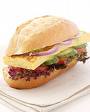
History maintains that the originator of the name ‘sandwich’ is Mr. John Montague himself, the fourth Earl of Sandwich (1718 – 1792). He was an Englishman. Rumor has it that among other unmentionable habits that gained him the unofficial title of “the most universally disliked man in England”, the Earl was obsessed with gambling. He would gamble for hours at a time, refusing to leave the table even for meals. Servants brought food to him. One day they brought him some meat tucked between two pieces of bread – the perfect way to curb his appetite and most importantly, to keep his fingers from getting grease on the cards. Soon fellow gambling addicts picked up on the idea, and would shout out their order as “the same as Sandwich” which was shortened over time to “a Sandwich”. So, the word sandwich is actually an eponym – a word or phrase whose origin is a person or historical figure. So can the Earl of Sandwich really be called its inventor? Probably not, but we must give him some credit as being the man behind the word. We may criticize the idea of consuming a sandwich as sustenance at the gambling table as silly, we must admit a striking resemblance to the way we enjoy our sandwich lunch at our desk while continuing to compute with the other hand! Now that we have explored the history of this lunchtime staple, how might it affect us? In our world of post-modern values, the beauty is that a sandwich is whatever you want it to be: a simple trip to your grocery’s deli department, or a simple piece of bread and cheese. So get creative – your sandwich is what you make it. (Source<http://www.jugojuice.com> acessado em 22/05/2008 - 20h 30 min.)
|
|
Now, tell us... how is your favourite sandwich? Go to the Class Blog and post it.
|
|
Text comprehension: Choose the one right answer: |
| 1. De acordo com o texto a palavra Sandwich origina-se: |
| a) do nome de uma ilha. |
| b) do nome de uma pessoa. |
| c) de um jogo de cartas.
|
| 2. O texto diz que um dos jogadores colocou um pedaço de carne entre dois pedaços de pão para |
| a) não desperdiçar carne. |
| b) comer algo diferente. |
| c) poder continuar jogando. |
| d) não comer muito. |
| 3.Segundo o texto o Conde de Sandwich |
| a) deixava a mesa de jogo só para comer. |
| b) parava de jogar para descansar. |
| c) não interrompia o almoço nem para jogar. |
| d) não deixava a mesa de jogo nem mesmo para comer. |
| 4. A palavra they na frase "One day they brought him some meat..." refere-se aos |
| a) sanduíches. |
| b) empregados. |
| c) jogadores. |
| d) ingleses. |
| 5. A palavra servants na frase "Servants brought food to him." Pode ser substituída, sem prejuízo do sentido, por |
| a) They. |
| b) It. |
| c) She. |
| d) We. |
| 6. What prepositions complete correctly the sentence bellow |
| "I don't eat bread ......... the morning but I have two toasts ..........night." |
| a) at - in. |
| b) in - at. |
| c) on - in. |
| d) on - in. |