12/28/08
It’s again the time of the year when we look back on successes and failures of the last year, learn some lessons from them, and make a forecast for the next year.
A year ago (http://www.geocities.com/petegersb/mk071230.html
) I wrote “For 2008, I expect a recession
driven primarily by more downside in home prices, more increases in oil prices,
and a consumer that can no longer borrow cheaply and easily enough to maintain
the orgy of spending in excess of income. A recession should prevent much of a
rebound in earnings of the Financial and Consumer Discretionary sectors, and
cause the earnings slump to spread to most other sectors. A continuing decline
in the dollar is likely to continue driving gold, inflation, and long-term
interest rates higher. If the Fed is not stymied by the international money
markets, the economy may hit bottom late in the year, but that is a very big
“if”. “
The economic forecast was on the mark, but there is not yet any indication that it has hit bottom. The dollar, gold, inflation and interest rate forecasts worked well during the first half, but all reversed course to varying degrees after mid-year. I did not foresee the reversal primarily due to a lapse in judgment regarding the sensitivity of oil consumption to economic and price conditions. I assumed that continuing demand increases in the developing world would more than offset consumption declines in the developed world. It’s now clear that wasn’t the case.
While I expected oil to continue rising, as it did during the first half, I did not expect such a torrid pace. Nor did I expect the combination of the high price and worldwide recession to lead to such significant demand destruction that the price would end the year at a quarter of its peak and drop 60% for the year. As a consequence, inflation, longer-term interest rates, and gold rose during the first half while the dollar continued to decline as expected. But oil reached the tipping point in July, and all of those related items reversed course along with it. I believe their trajectories will continue to be correlated with the price of oil, but perhaps less so than last year. Oil will continue to be important, but massive government spending will eventually have a comparable or even larger impact. The recession will probably continue to have a major depressive impact on inflation, interest rates and gold, but when it ends look out above. The lesson to be taken from the 2008 experience is that bursting bubbles tend to over-correct, and oil, real estate, and credit card debt are now undergoing that process. Going forward, that lesson should be applied to the obvious bubble in government bonds.
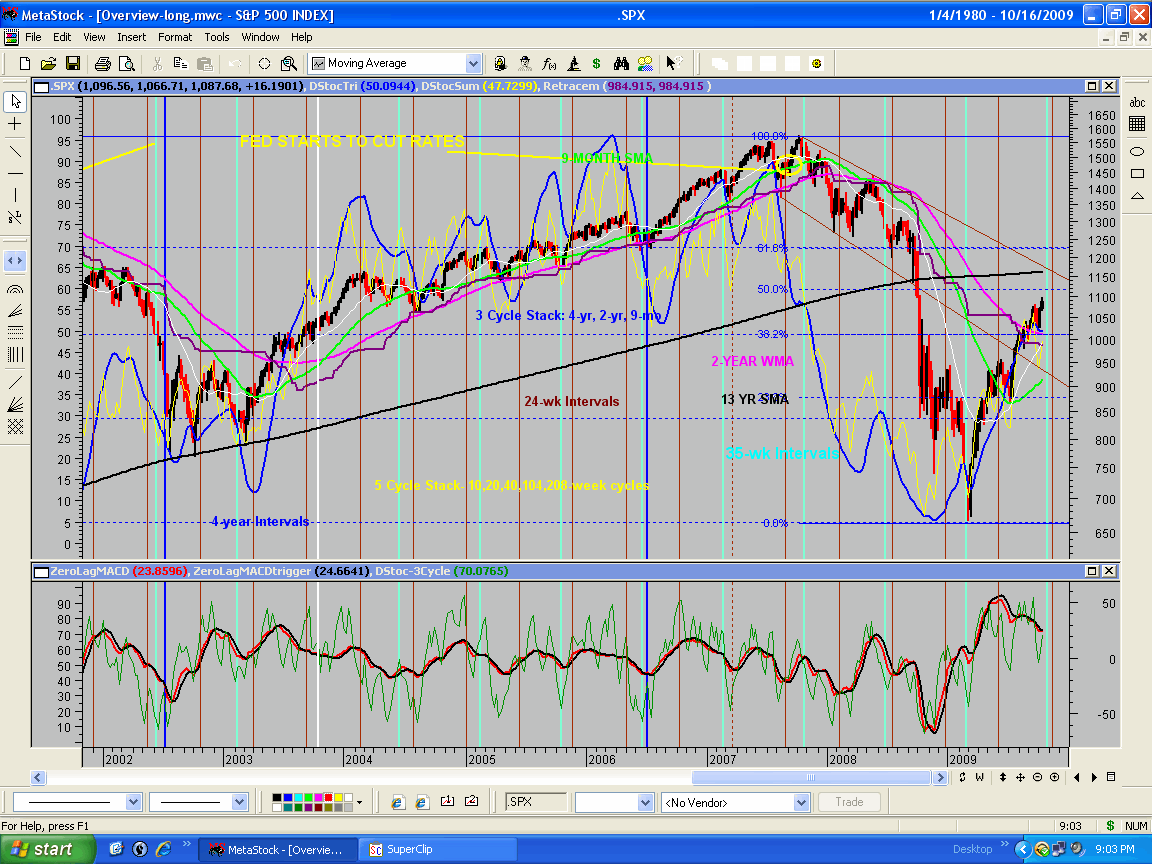
With respect to my 2008 stock market forcast, the jury is still out to some degree. Here is what I said: “………Either way, the DStocs on the long-term overview chart (http://www.geocities.com/petegersb/Overview-long.GIF) strongly suggest that the SPX established a 4-year cycle peak in October of 2007. The question then becomes: “will we see its bottom in 2008 or 2010?” I would guess the first half of 2008 for several reasons: ……” My assessment that stocks had established a 4-year cycle peak in October of 2007 was clearly correct, but as I have been telling you for several months, I now believe that the last 4-yr bottom arrived on schedule in 2006, and the next one won’t arrive until 2010. My past opinion may yet be proved right and my current opinion wrong, but we won’t know for sure until we break below the November 08 low.
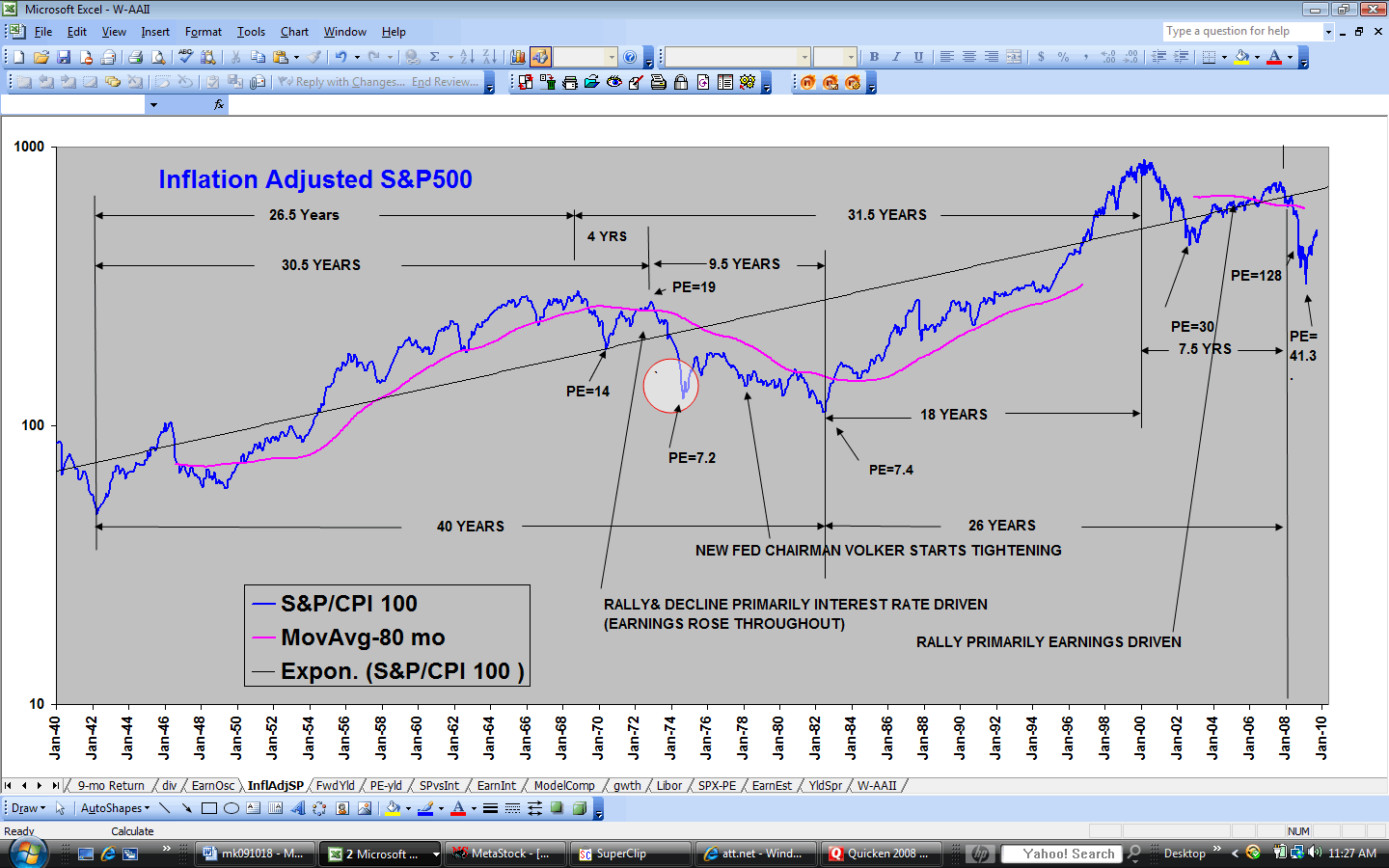
My shorter term assessment turns out to have been on target for the first half. But, while I expected lower stock prices in first half, I clearly didn’t anticipate the depths reached in the fourth quarter. Here’s what I wrote “ …So it looks to me that only the 20-week cycle will be supporting stock prices during this short week, the 10-week cycle will drive prices lower during January and the longer cycles will drive prices still lower during at least the first quarter, perhaps the first half. Based on normal Fibonacci retracements, the SPX should bottom somewhere between 1175 and 1325.” As we are now painfully aware, the SPX reached 1270 in January, 1257 in March, and 1200 in mid-July – all within my target window for the 1st half. But after a weak late summer rally, the market proved those projections to be wildly optimistic for a longer time frame. Stocks plunged to a new 10-year low of 741 in November. In inflation adjusted terms (http://www.geocities.com/petegersb/SPX-InflationAdjusted.GIF ), it was a 13-year low.
The lesson here is that market forecasting is far from an exact science, and it’s important to adjust your outlook as the market gives you new information. I tend to do that (although not quickly enough in the case of oil), and I did make a midcourse correction in late June (http://www.geocities.com/petegersb/mk080629.htm ). Here’s what I wrote at that time: “I’m now compelled to take a more pessimistic view of the second half. The evidence now indicates that the 9-month cycle bottomed in March, suggesting December rather than July for the next bottom. Most 9-month cycle indicators suggest that it is already in a premature downtrend with a good deal further to go (http://www.geocities.com/petegersb/Overview-long.GIF ). And it’s hard to imagine what would bring the economy out of its funk to produce an earnings recovery any time this year. No doubt we will see some worthwhile rallies in the second half, but they likely will be bucking downtrends in the long cycles.“ The lesson: Believe the cycle indicators.
In some respects, 2009 will be more difficult to forecast than 2008. The government’s response to the deteriorating economy is in uncharted territory, and so are a good number of market indicators. While helicopter Ben’s record monetary stimulus was fairly predictable from his past statements, Paulson’s fiscal stimulus was not. I think no one, certainly not I, expected that a Republican Administration dedicated to the proposition that tax cuts are the only medicine for any economic problem would resort to the massive fiscal stimulus that we are now seeing. Whether or not the combination will be more effective than the ineffective tax cuts of Bush’s early years remains to be seen. I’m reasonably confident that eventually they will, but they will also lead to a new problem that the stock and bond markets will have difficulty dealing with – inflation.
Inflation probably won’t be a major problem in 2009 – certainly not if the Obama administration doesn’t find a way to stem the rate of home foreclosures and the implosion of financial derivatives. That will be extremely difficult with unemployment rising and investors in mortgage backed securities not yet willing to reduce principal, but two factors already in place will help. The Fed holding short-term rates at near zero will prevent a good many of the adjustable rate mortgages still in the pipeline from resetting to significantly higher levels. That will stem the tide for those variable rate borrowers that can keep their job. It will also put more money in the pockets of those creditworthy homeowners that can refinance into lower rate mortgages. Of course, there are two sides to every coin, and the retirees who rely on interest income to support their lifestyle now have less to spend. And that is becoming increasingly common as the population ages and traditional pensions disappear. We haven’t seen anything comparable in the post-depression era. Our engine of growth, consumer borrowing and spending is clearly in decline, and it appears that the rate of decline is accelerating. I think it’s more likely than not that the economy will not recover during the next two years, and probably will sink lower during that time.
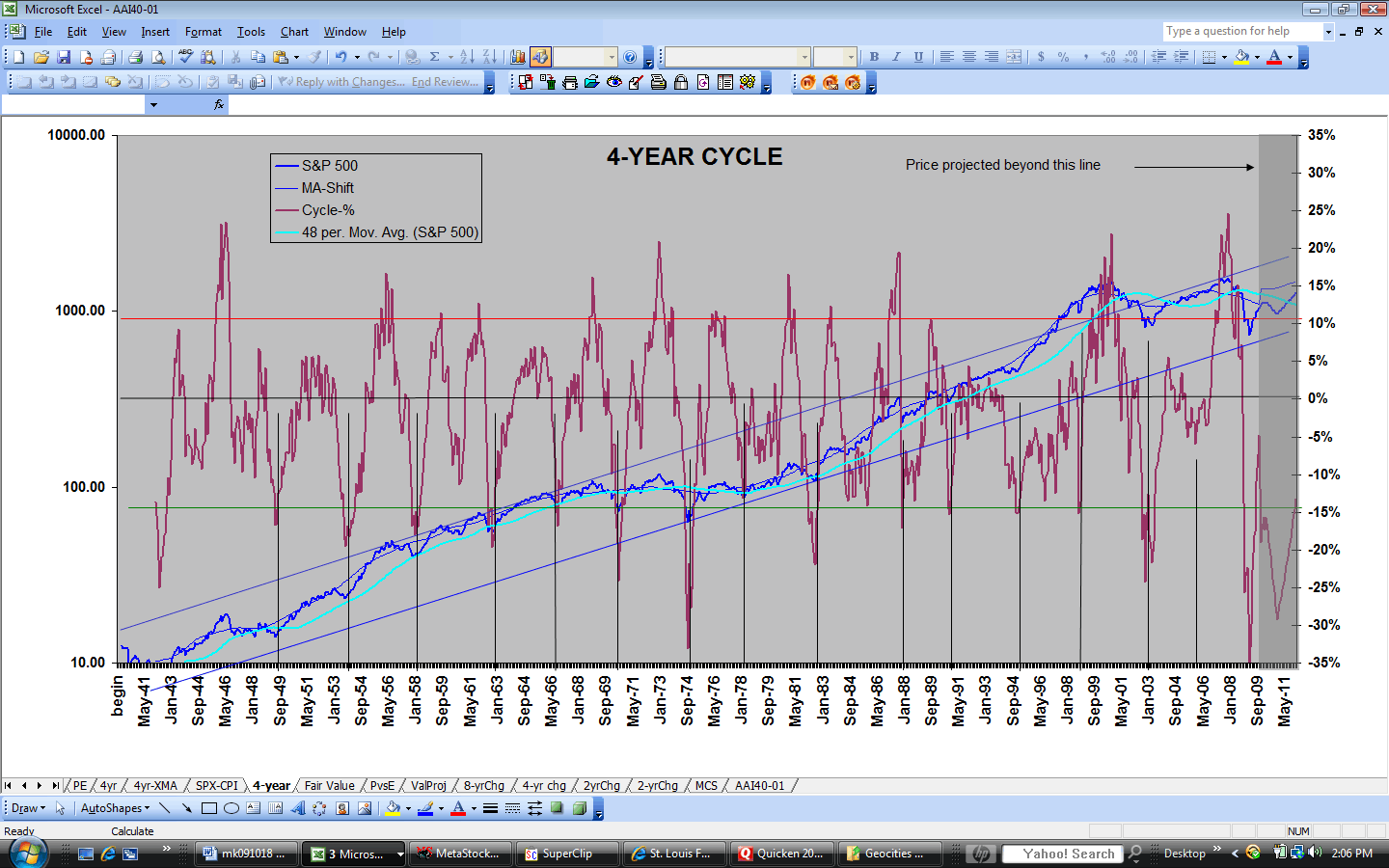
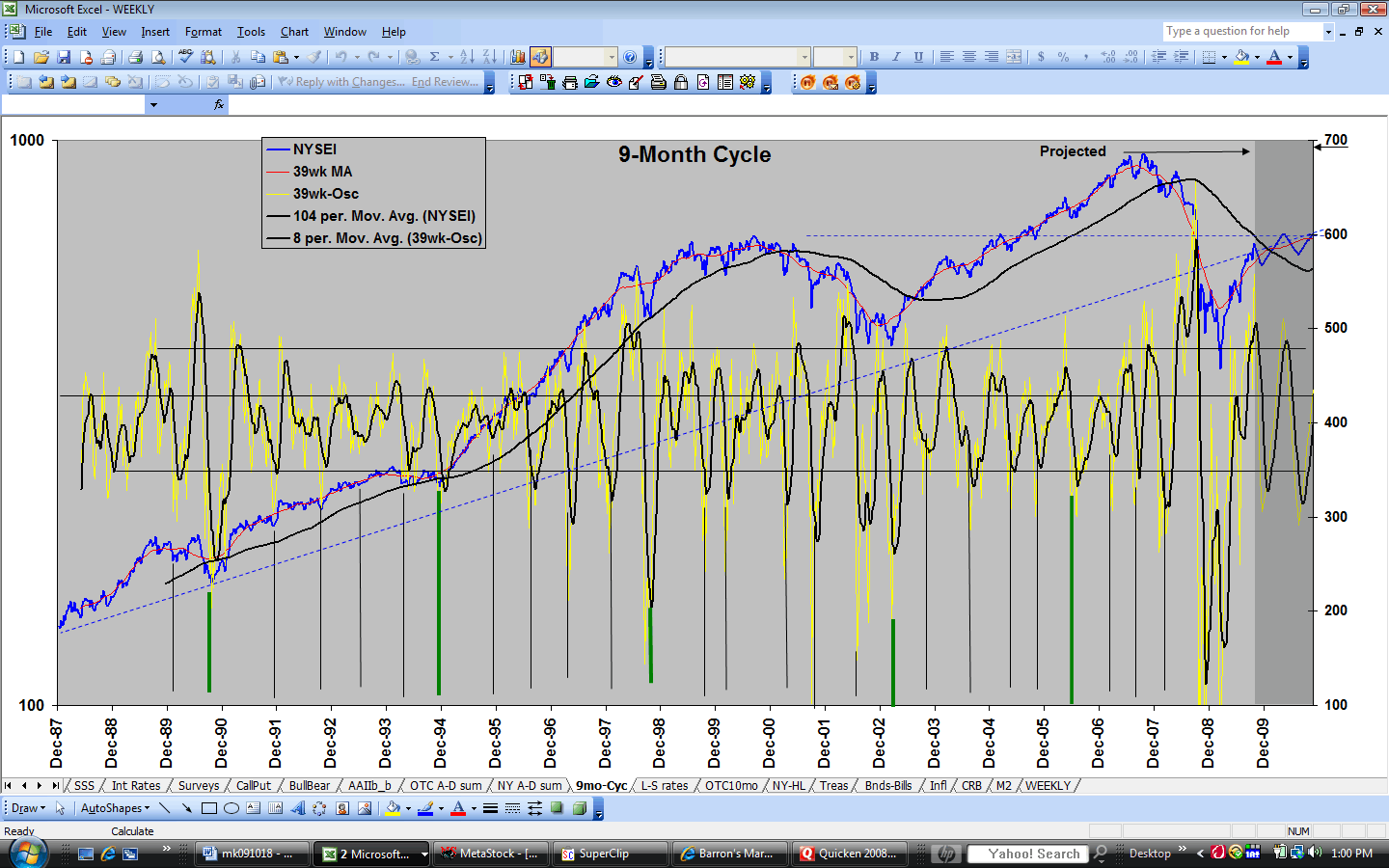
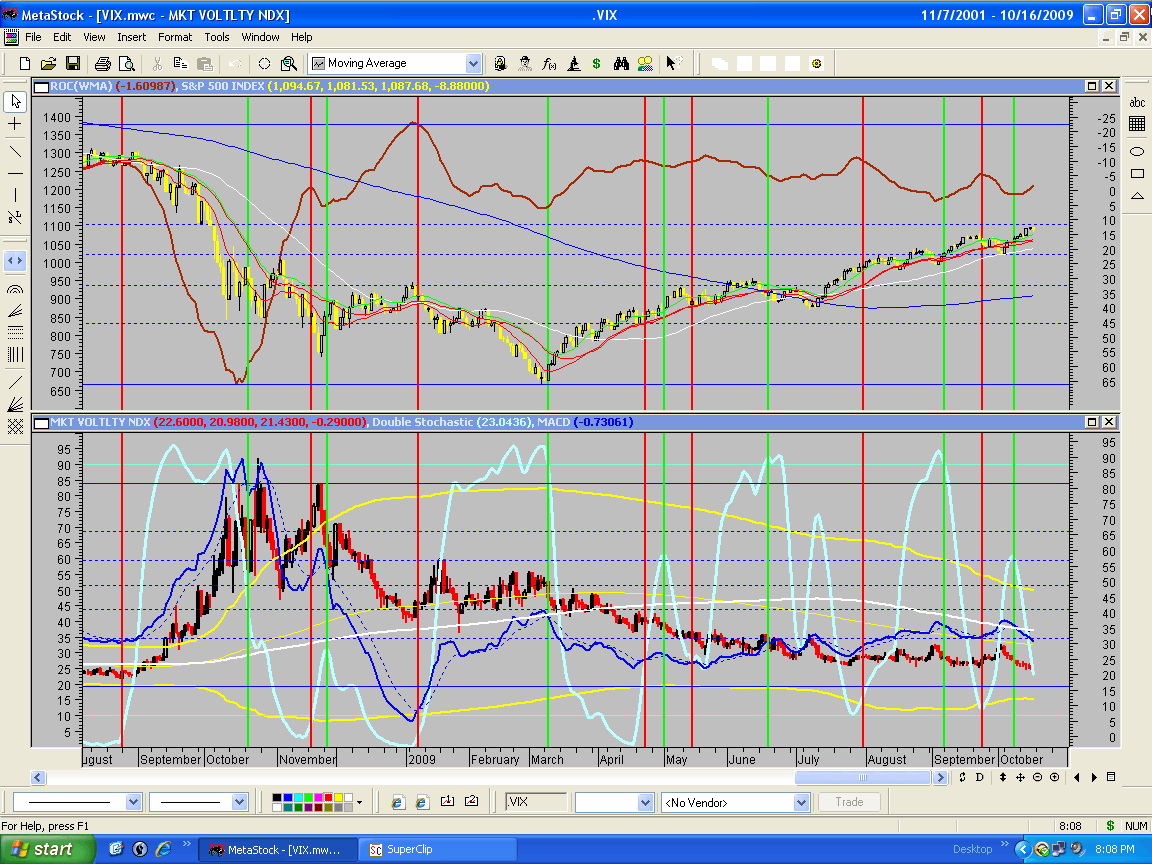
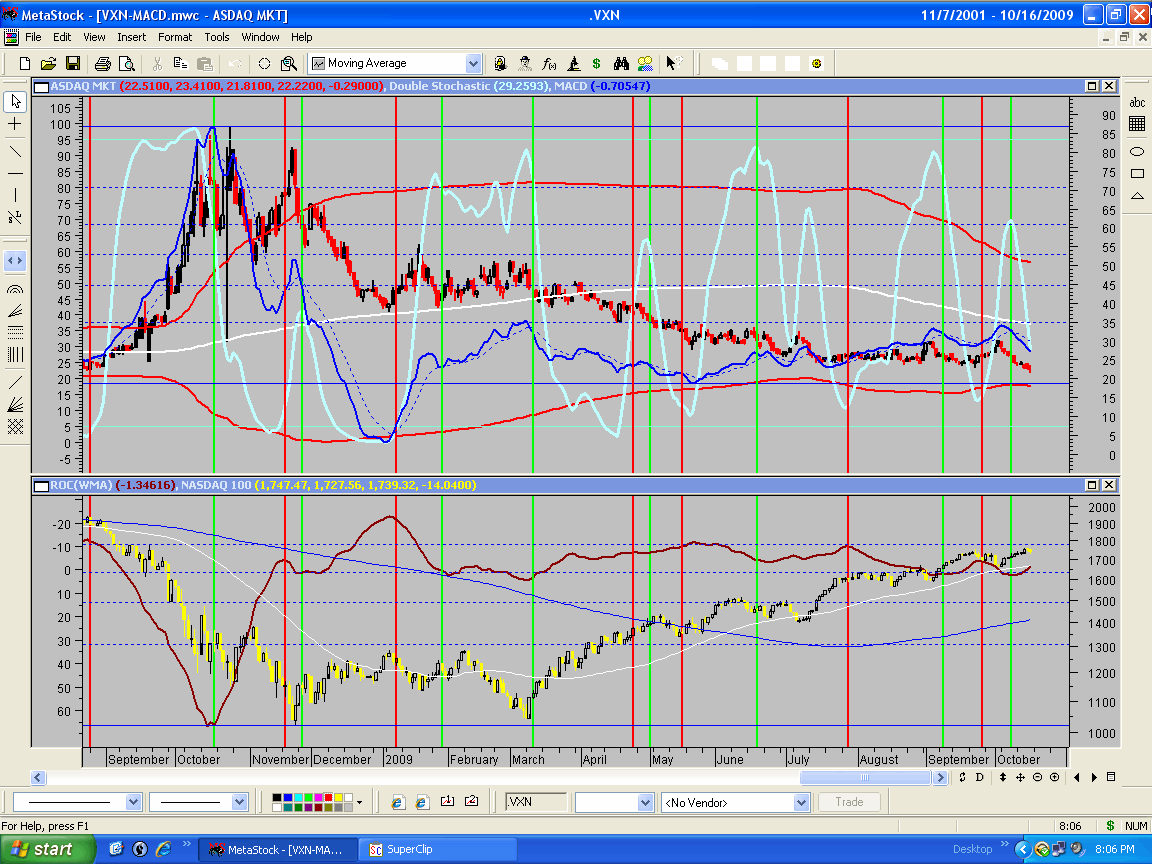
With regard to the market cycles, there now three major differences from a year ago. First, a year ago, it was not yet entirely clear that the bull market that began in early 2003 had ended. Now it’s abundantly clear that the market is in a secular bear market that took only a year to accomplish what the first Bush bear market took two years to accomplish (http://www.geocities.com/petegersb/Overview-long.GIF). Secondly, there is no longer any reasonable hope that stocks are near a 4-year cycle low (http://www.geocities.com/petegersb/4YearCycle.GIF ). Expect the next one to arrive in 1 to 3 years - most likely two. Third, and on the positive side, a year ago it was pretty clear that the market had recently made a 9-month cycle peak. Now it’s about equally clear that the market recently (November) made a 9-month cycle low (http://www.geocities.com/petegersb/9moNYA.GIF ). So I expect a test of the November low either in February when the 10-wk cycle should bottom or in the May time frame when both 10 and 20-wk cycles should bottom. A break of the low on either attempt would again confirm the secular bear market. The optimistic scenario would have both tests hold, and new lows deferred to late summer when the 9-month cycle is due to bottom. In January, both 9-mo and 20-wk cycles can be expected to support stock prices, but the 10-wk cycle is middle aged and extremely overbought (http://www.geocities.com/petegersb/Overview-med.GIF ), and the DStocs on the daily VIX (http://www.geocities.com/petegersb/VIX.GIF) and VXN (http://www.geocities.com/petegersb/VXN.GIF) are extremely oversold. Both appear ready to roll over from a slightly left-translated peak, and that is not encouraging. The 10-week cycle shouldn’t win the January battle, but if it does, we can expect a nasty winter. If the longer cycles win the short-term battle, the worst of the nastiness should be postponed until summer.
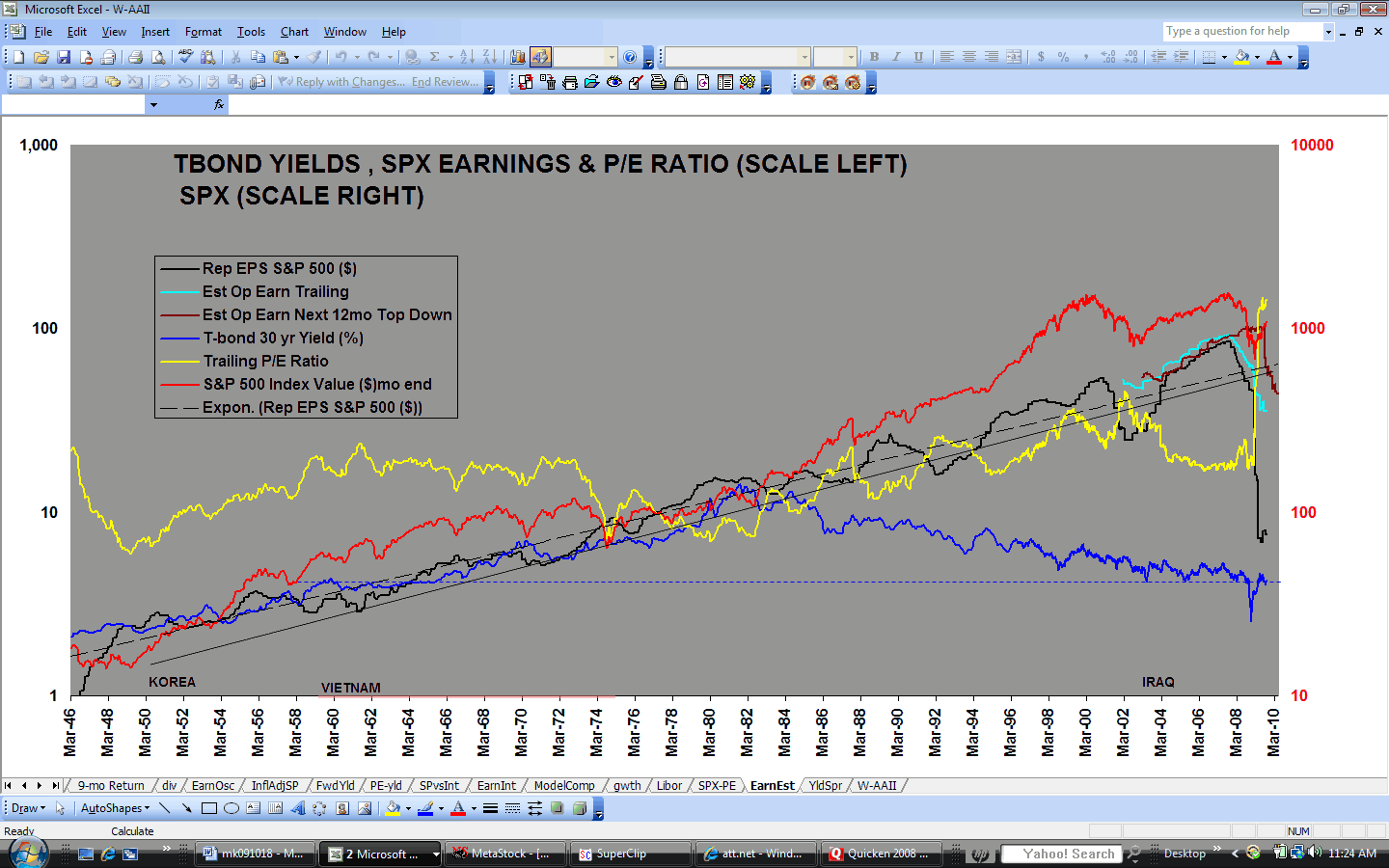
How low will prices dip into the summer? If the 740 level is broken, I can’t see any chart support above 660. Put a 12 multiple on S&P’s trailing 12 month earnings operating earnings estimate of $56 (http://www.geocities.com/petegersb/EarningsEstimates.GIF ), and you come up with 672 for the SPX at mid-year. Put today’s high multiple of 19 on their reported earnings estimate of $40.72 for the 12 months ending in June and you come up with 770 So I’ll guess that we will see something near the bottom of the 660 to 770 range at the next 9-month cycle low late next summer, and that the SPX will close 2009 well below the consensus 1045 estimate of Barron’s current 12 member panel of “experts”.
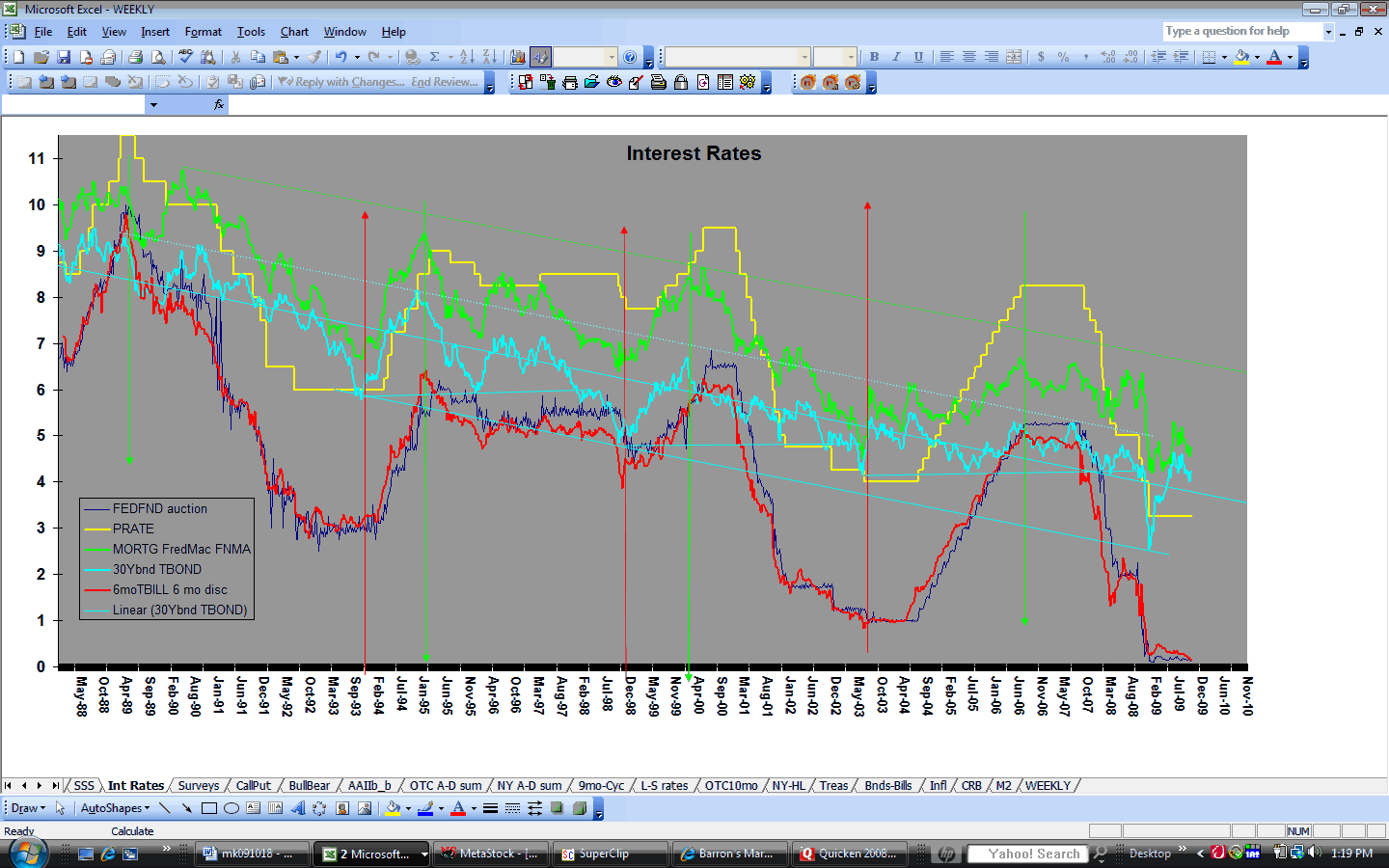
Their estimates range from 950 to 1250. To put their predictions in perspective, a similar panel last year (with 5 returnees this year) expected a 10% gain for 2008 with a range of 3% to 18%. Once again, none of them expect a decline for 2009, so it’s likely we’ll have one. Last year at least they were somewhat consistent in that none expected a recession in 2008 (even as it was already beginning) and their expectations for corporate profit growth ranged from a -7.3% to a 12.4% gain. It looks like 2008 will actually end with an operating earnings drop of about 25% and an SPX drop of about 40%. Last year’s panel was right in their expectation that the Fed would continue to cut rates (http://www.geocities.com/petegersb/InterestRates.GIF ), but very wrong in expecting that Fed funds would end the year in the 3% to 4.75% range. This year 10 of the 12 expect a small decline in GDP (-1.2% average with a range of -2.9% to +1.1%) and corporate profits ($60.2 average with a range of $50 to $71). That would put the year end P/E at about 17 on trailing earnings if their average predictions are near the mark. A 17 multiple is not unreasonable if earnings could be expected to grow at a reasonable rate going forward and if interest rates remain low. But this group on average expects earnings to decline about another 12% to $55 in 2009 (in line with Standard & Poor’s top down operating earnings estimate of $57.97 for 2009), and 10 of 12 expect higher treasury interest rates as well. Obviously the financial crowd that predicted a stock market disaster if Obama were elected has changed its collective mind and now expects him to produce better-than-average stock market returns during a continuing recession while interest rates rise. Obviously they are expecting a strong economy in 2010.
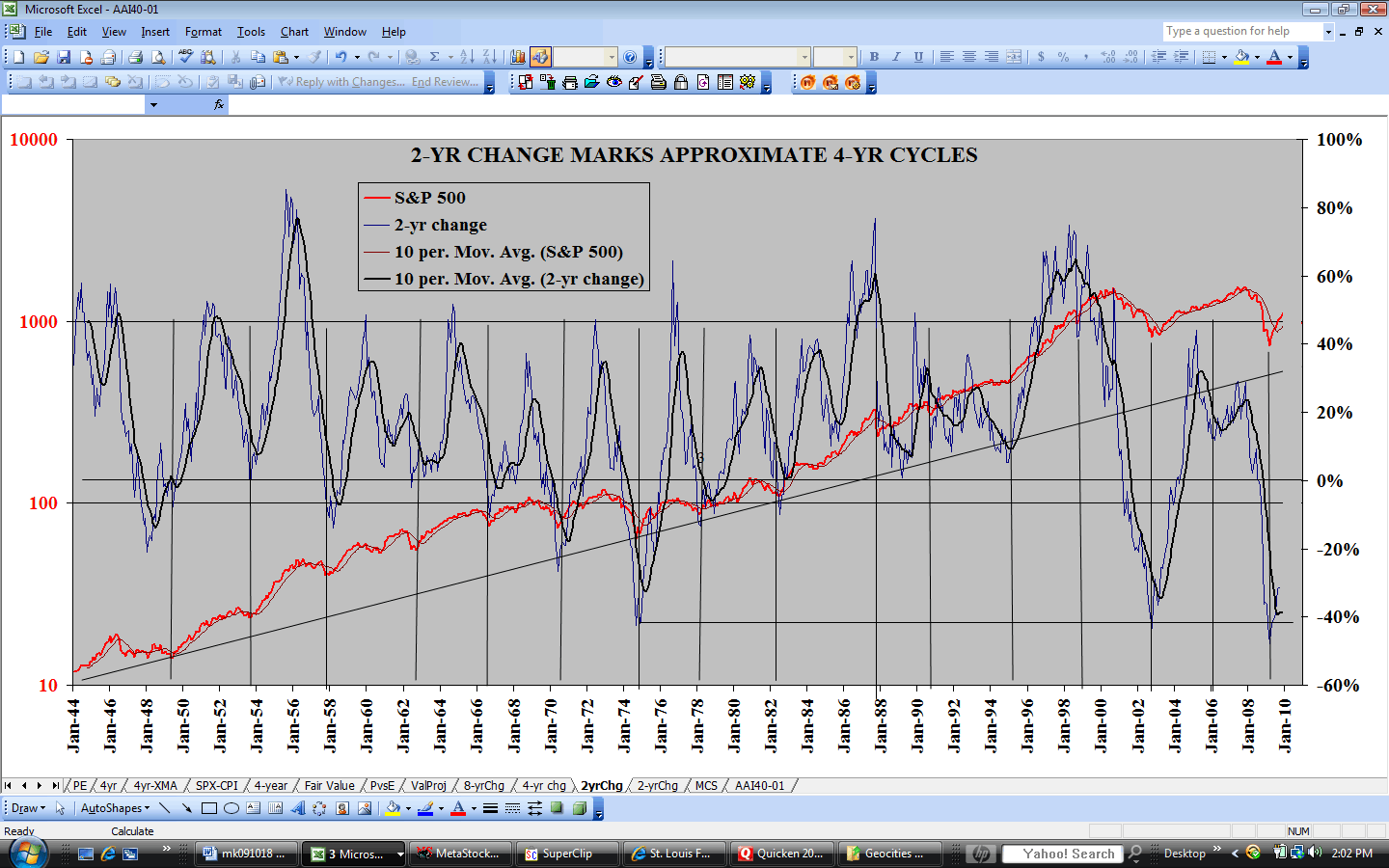
As happy as I am to again have an intelligent human being in the White House after an eight year absence, it will take a minor miracle to right this nearly sunken ship in less than a couple years. Historically, the market is relatively weak during the first couple years of a new term in any case (http://www.geocities.com/petegersb/2-YrChange.GIF ), and this President will be facing unprecedented economic challenges. So I expect the market to be weaker than normal going into the mid-term elections in 2010. A double digit first year gain in stocks wouldn’t be uncommon for a Democratic administration, but it’s rare for a new administration to take over in the midst of a severe recession as Obama will. So any gain at all in 2009 would exceed my expectations. Moreover, based on the 9-month cycle (http://www.geocities.com/petegersb/9moNYA.GIF ), I expect stocks to be lower at mid-year than at year end. So I think a target near 700 is appropriate for the first 6 months, with a further decline into late summer before a 4th quarter recovery. Let’s hope I’m not too optimistic again this year.
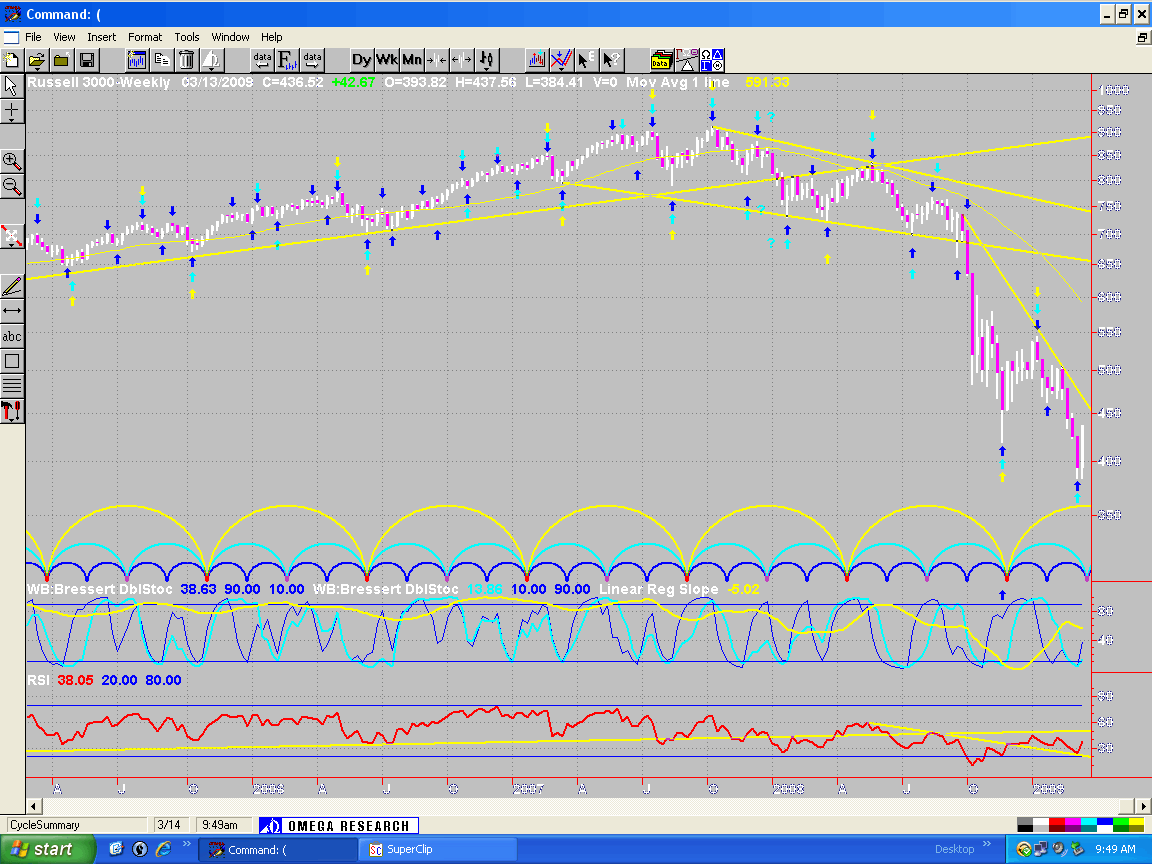
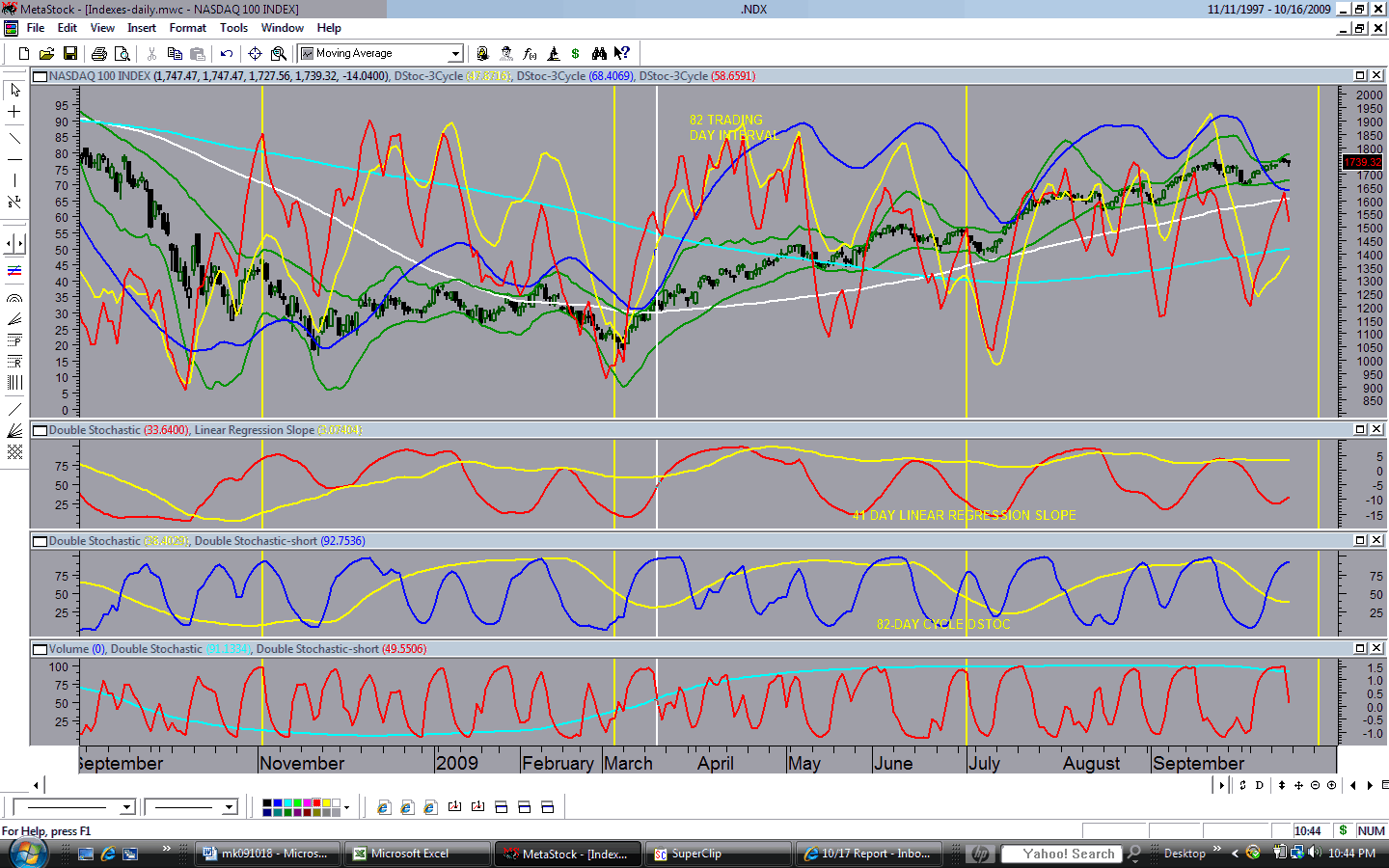
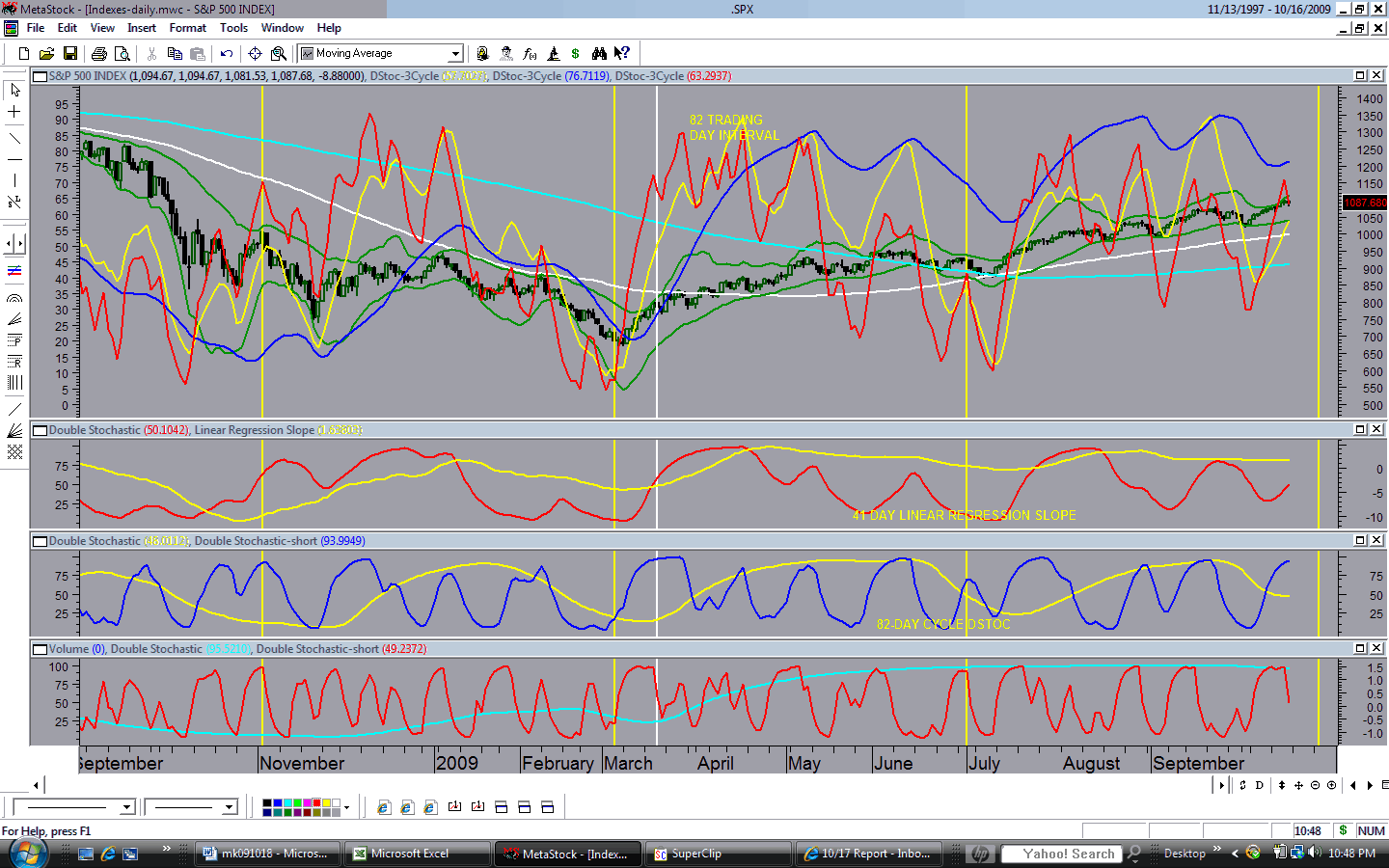
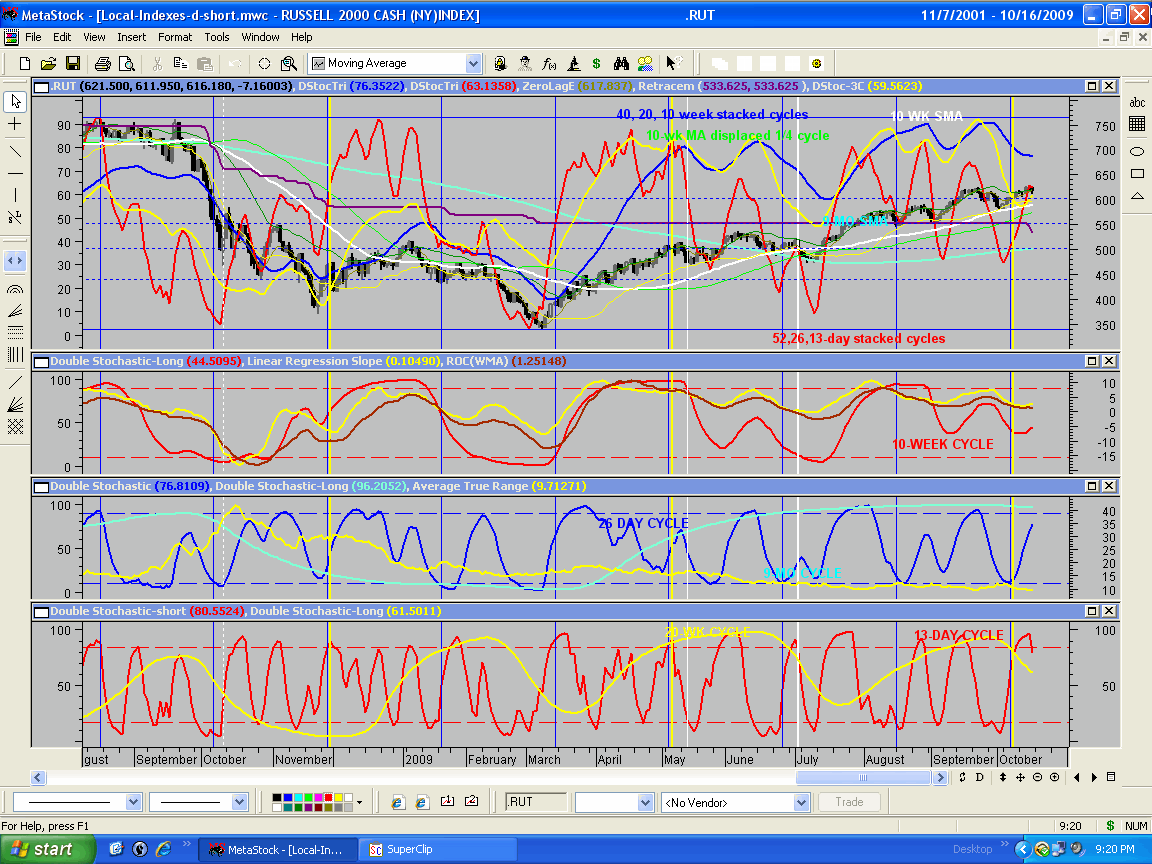
We are ending the year with the secular market downtrend intact, but also during the early rising phase of the 9-month and 20-week cycles, near the peak of the 10-week cycle, and near the bottom of the 26-day and 13-day cycles. (NDX (http://www.geocities.com/petegersb/NDX.GIF), SPX (http://www.geocities.com/petegersb/SP500.GIF), Russell small cap index (http://www.geocities.com/petegersb/Russell2000.GIF )). The alignment of cycles is remarkably similar to the one we saw in mid-April when stocks were about a month short of the last 9-month cycle peak. The calendar should be helpful in January. It’s normally the strongest month of the year. So stocks may be able to work their way a little higher over the next few weeks despite the adverse 10-week cycle and secular downtrend. But if prices can’t breach the December high during January, another lower left translated 10-week cycle peak would be established. Even if it succeeds in breaching the November and December peaks, a lower 20-week cycle peak appears to be a virtual certainty. January will probably be the best opportunity of the first to half to make money if you are long stocks, but don’t push your luck. The long cycles (http://www.geocities.com/petegersb/Overview-long.GIF) show a strong similarity to late 2001, a year short of the 4-year bottom. And don’t forget the similarity to the early 70’s (http://www.geocities.com/petegersb/SPX-InflationAdjusted.GIF ), a decade short of the ultimate bottom.
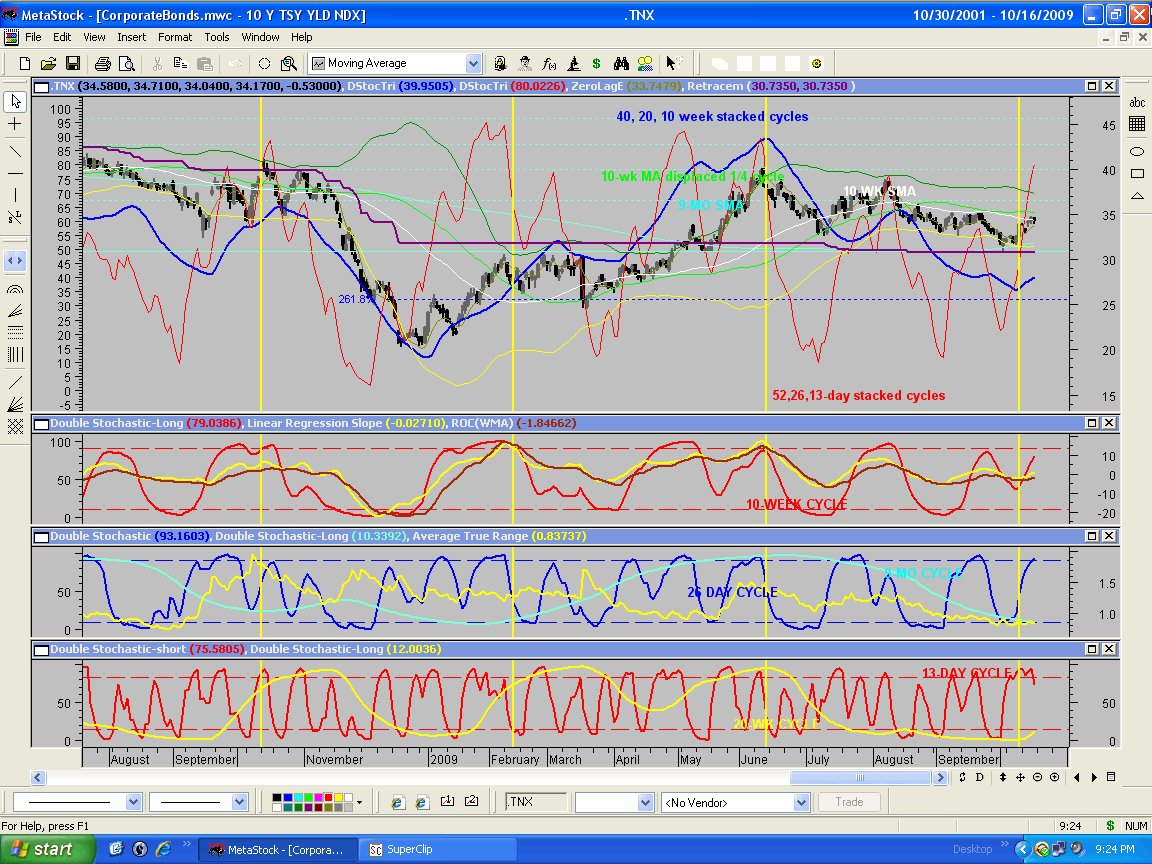
Treasury rates (http://www.geocities.com/petegersb/TreasuryYield-10yr.GIF)
appear to have established at least a short-term bottom last week, and bonds of
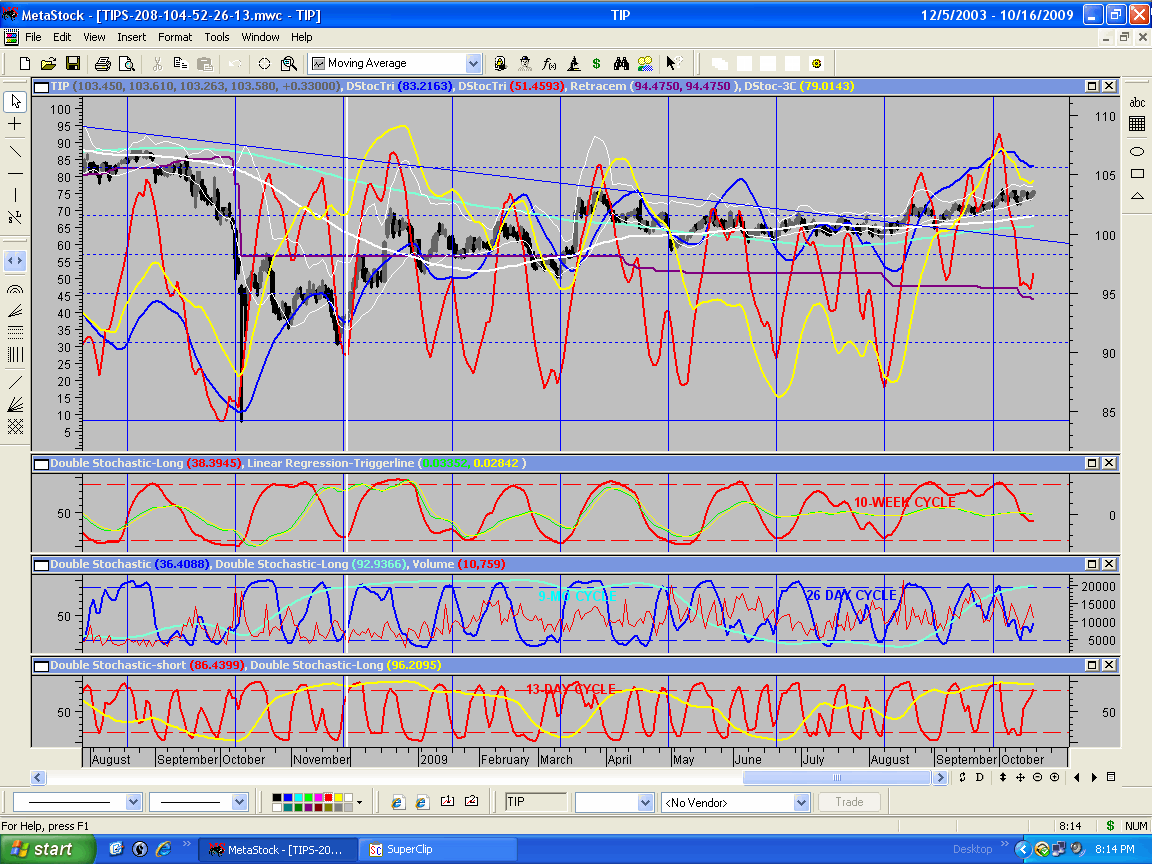
all types (Inflation Protected
Treasuries (http://www.geocities.com/petegersb/TIPs.GIF),
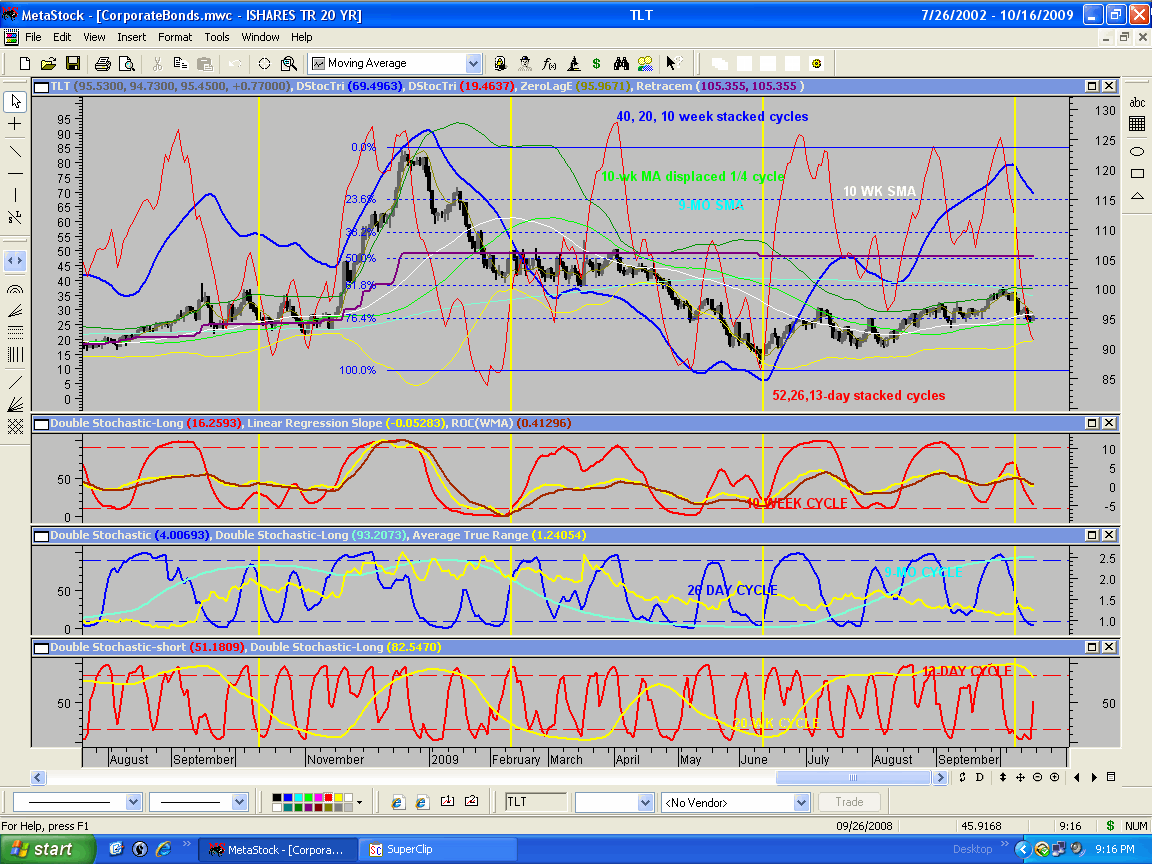
Treasury bonds (http://www.geocities.com/petegersb/Treasury-20yr.GIF
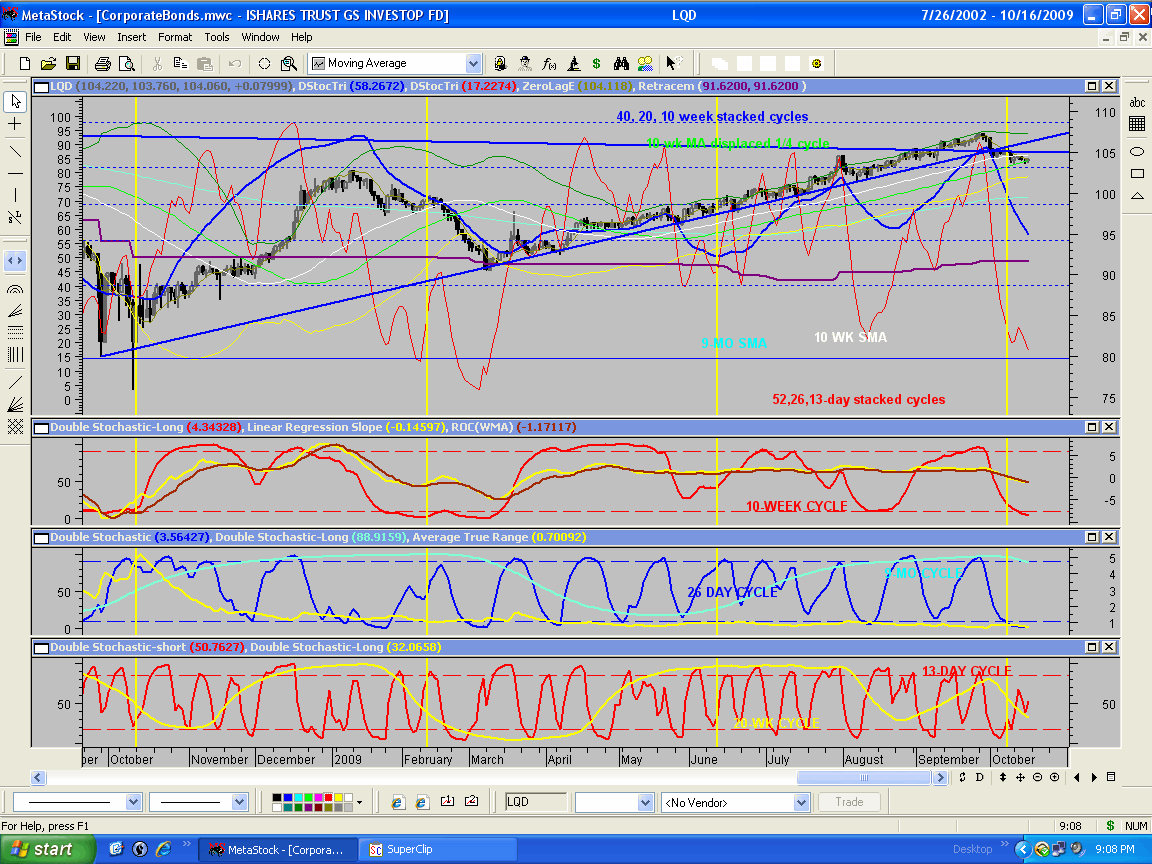
), Corporate bonds (http://www.geocities.com/petegersb/CorporateBonds.GIF))
seem to have established their corresponding peaks. The intermediate cycles are
extremely overbought, so it’s quite likely that the very minor correction to
this point will turn into something considerably more significant. 2009 is
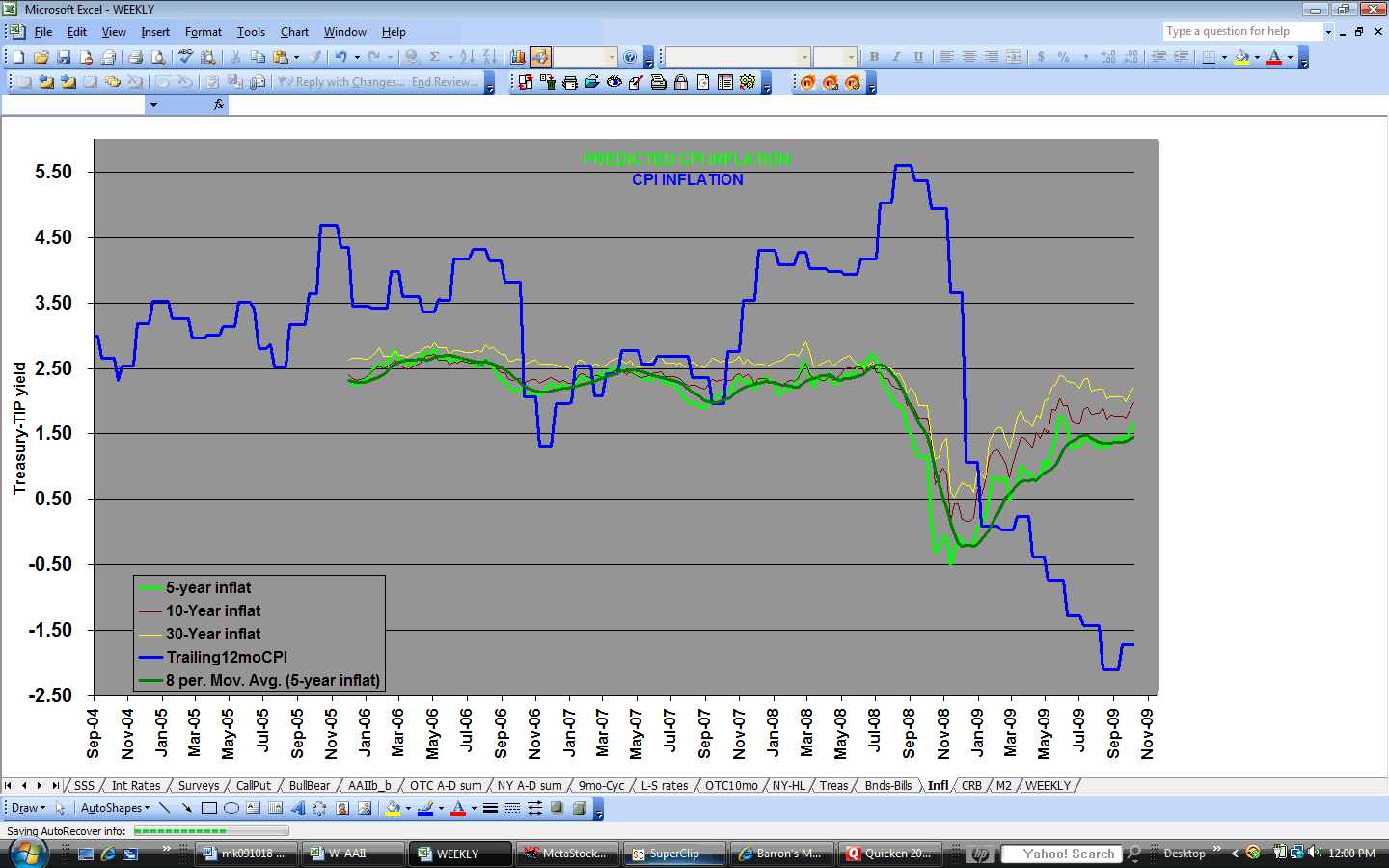
likely to be a year of rising inflation expectations (http://www.geocities.com/petegersb/CPI.GIF
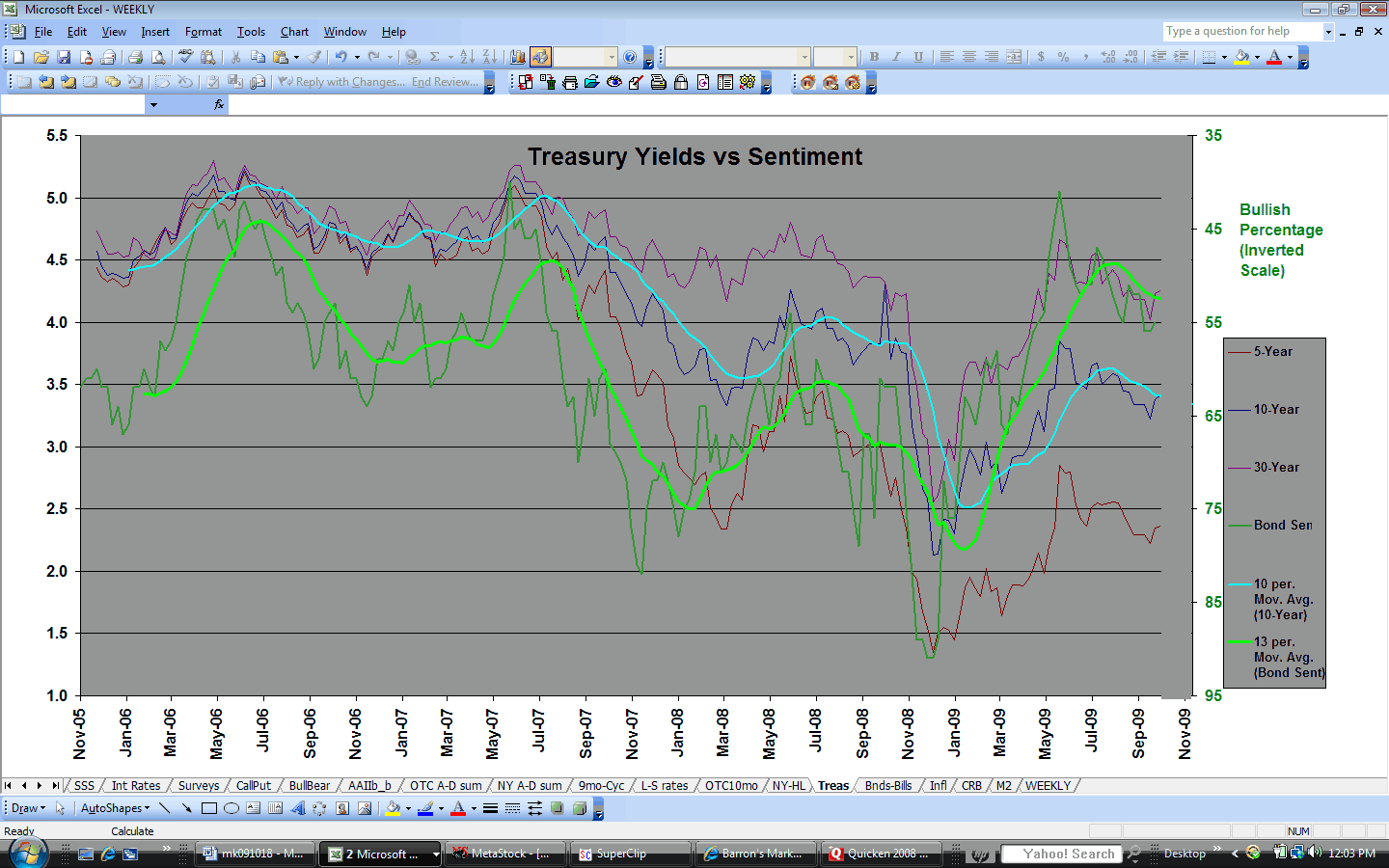
) that will drive interest rates up and bond prices down. Bond optimism (http://www.geocities.com/petegersb/BondSentiment.GIF
) remains at an extreme 91%, lending credence to the possibility of a major top
in bonds. If there is an exception, it’s likely to be in municipal bonds where
rates are abnormally high compared to Treasury rates. They could benefit from a
Federal bailout of the states, many of which have been almost as irresponsible
as
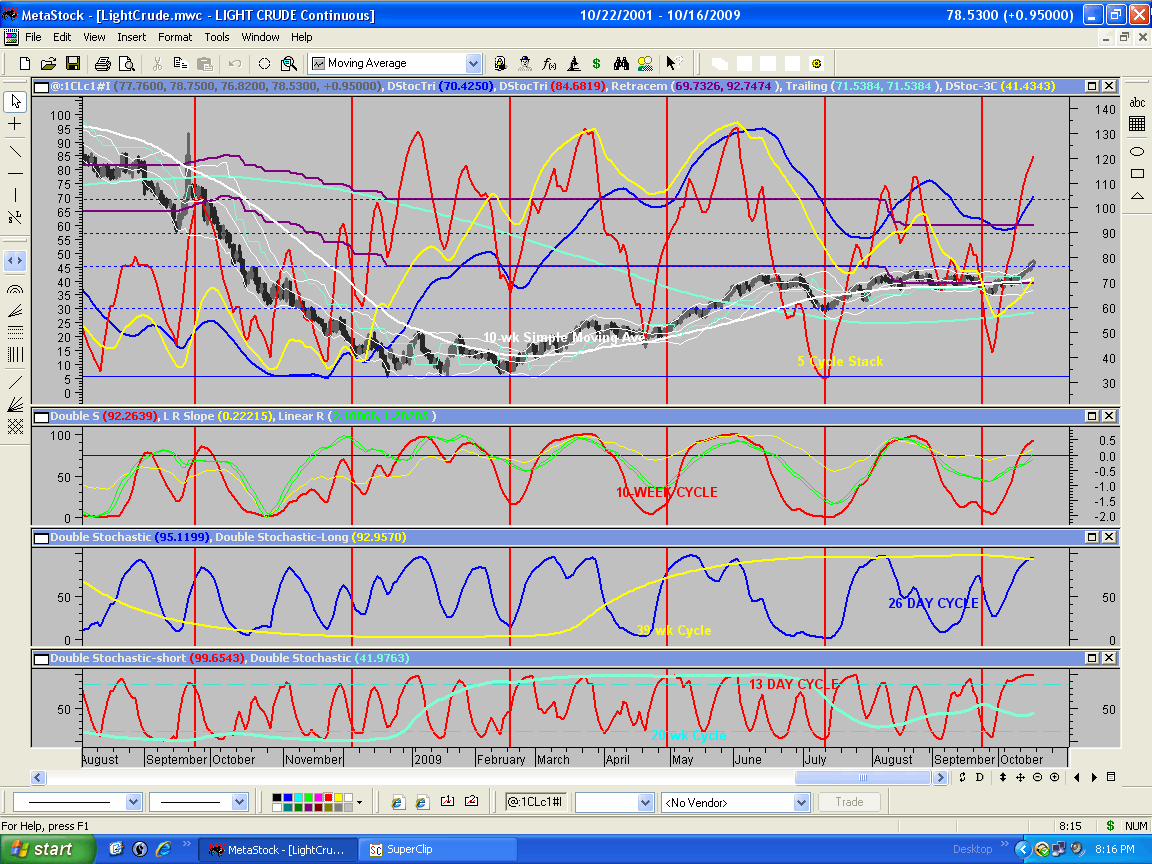
Crude oil (http://www.geocities.com/petegersb/CrudeOil.GIF ) surged on Monday before resuming its decline, but it was probably just a contract rollover phenomenon. Nevertheless, both short and intermediate composites are rising and showing a strong positive divergence with the price level. The opposite pattern was evident last spring as oil was marching steadily upward. After such a steep plunge, and with continuing pressures from recession induced demand destruction, a lengthy bottoming process will be required. But with the price now well below the cost of developing replacement sources as old fields decline, we can expect upward price pressure in the long run. If the stimulus stabilizes the world’s economies soon, perhaps not so long. Based on Fibonacci support and resistance levels, I’ll venture a guess that we’ll see $60 oil sometime during the first half.
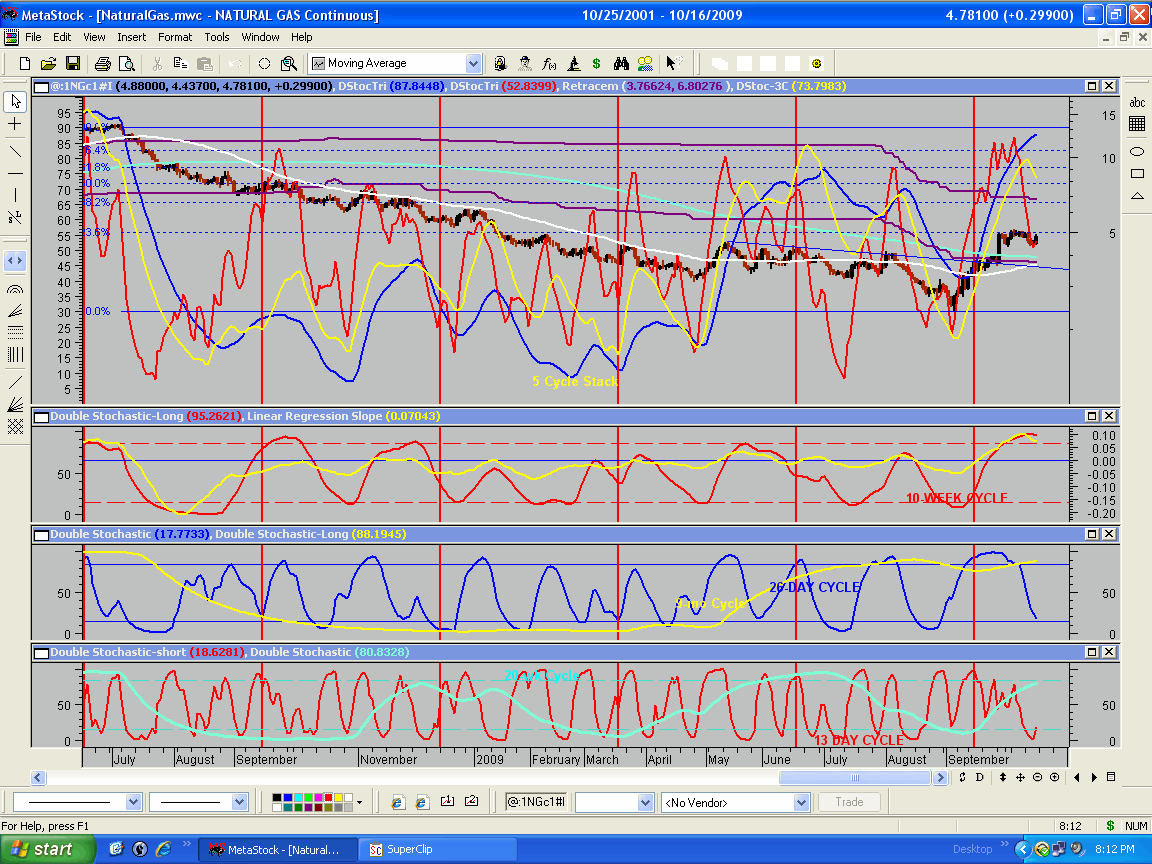
Natural gas (http://www.geocities.com/petegersb/NaturalGas.GIF ) bounced off of its lows of August 2007 last week. The short-term composite turned up and the intermediate composite is on the verge of following. The price should rise at least the 10-week moving average on the short-term rally. We’ll see how it fares at that level, before making any longer term predictions. This bounce may merely be cold weather related.
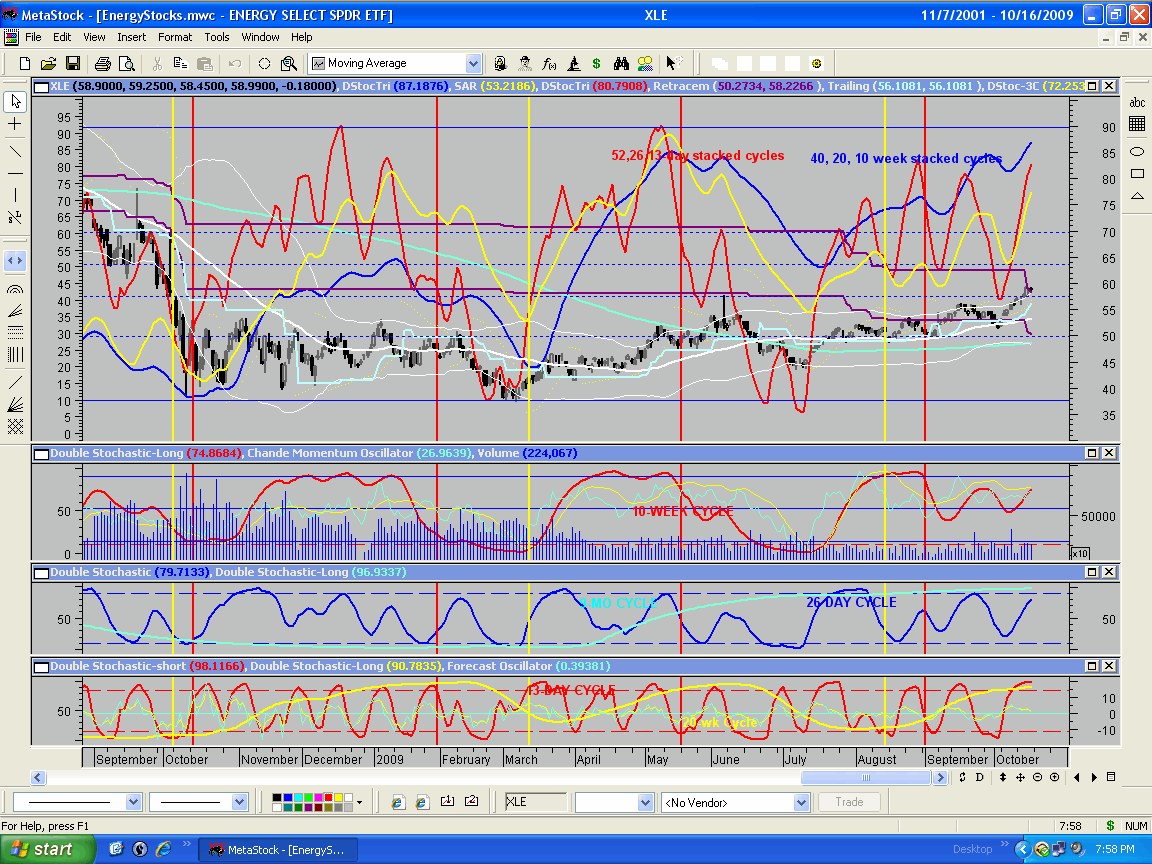
Energy stocks (http://www.geocities.com/petegersb/EnergySPDR.GIF) underperformed the underlying commodities last week as all the short cycles continued downward. The 13-day cycle is 15-days old and oversold, but the XLE probably needs one more iteration of that cycle before the 10-week and 26-day cycles find bottom. If those cycles hold the 4th quarter lows, it could complete the bottoming process.
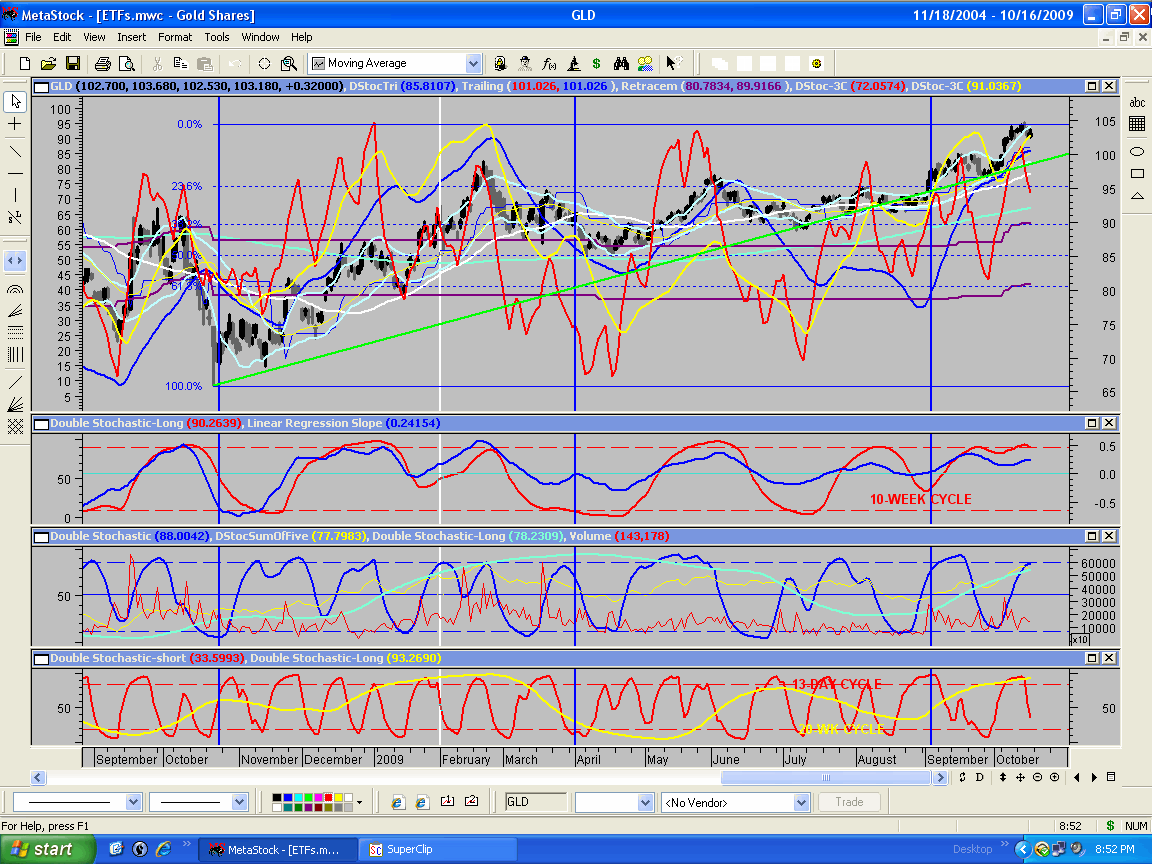
Gold (http://www.geocities.com/petegersb/GoldBullion.GIF) established its first 13-day cycle low within a
short-term downtrend that probably has a couple weeks of life left. Unless that
13-day cycle, which is again challenging the 9-month moving average, is strong
enough to push the price above the September high, another lower 10-week cycle
peak looks highly likely. However, it looks like this one may be right
translated. If so a subsequent higher 10-week cycle low looks promising. Its
correction may be the dip to buy. Gold
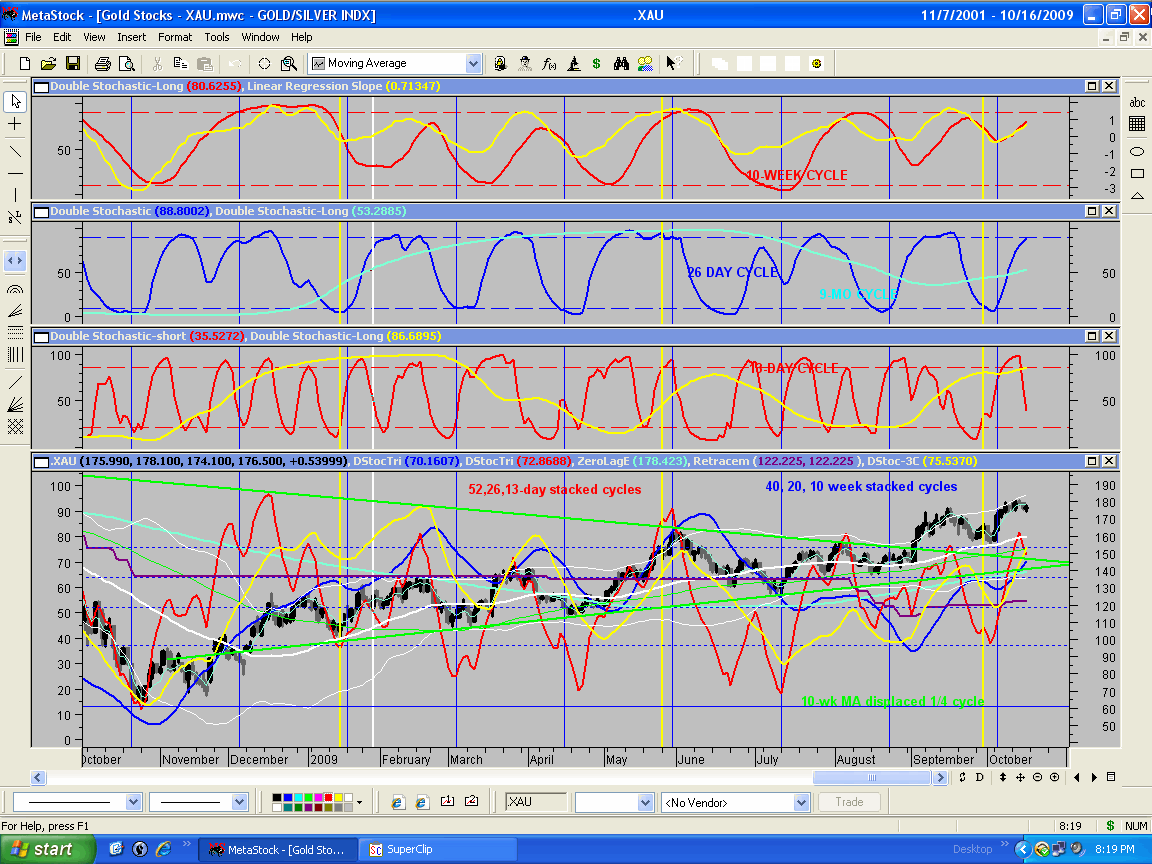
Stocks (http://www.geocities.com/petegersb/GoldStocks.GIF
) also established a 13-day cycle low. The XAU is midway between the 9-mo and
10-wk moving averages, and looks likely to challenge 50% retracement of its 2nd
half decline, where it will likely form a lower intermediate peak.
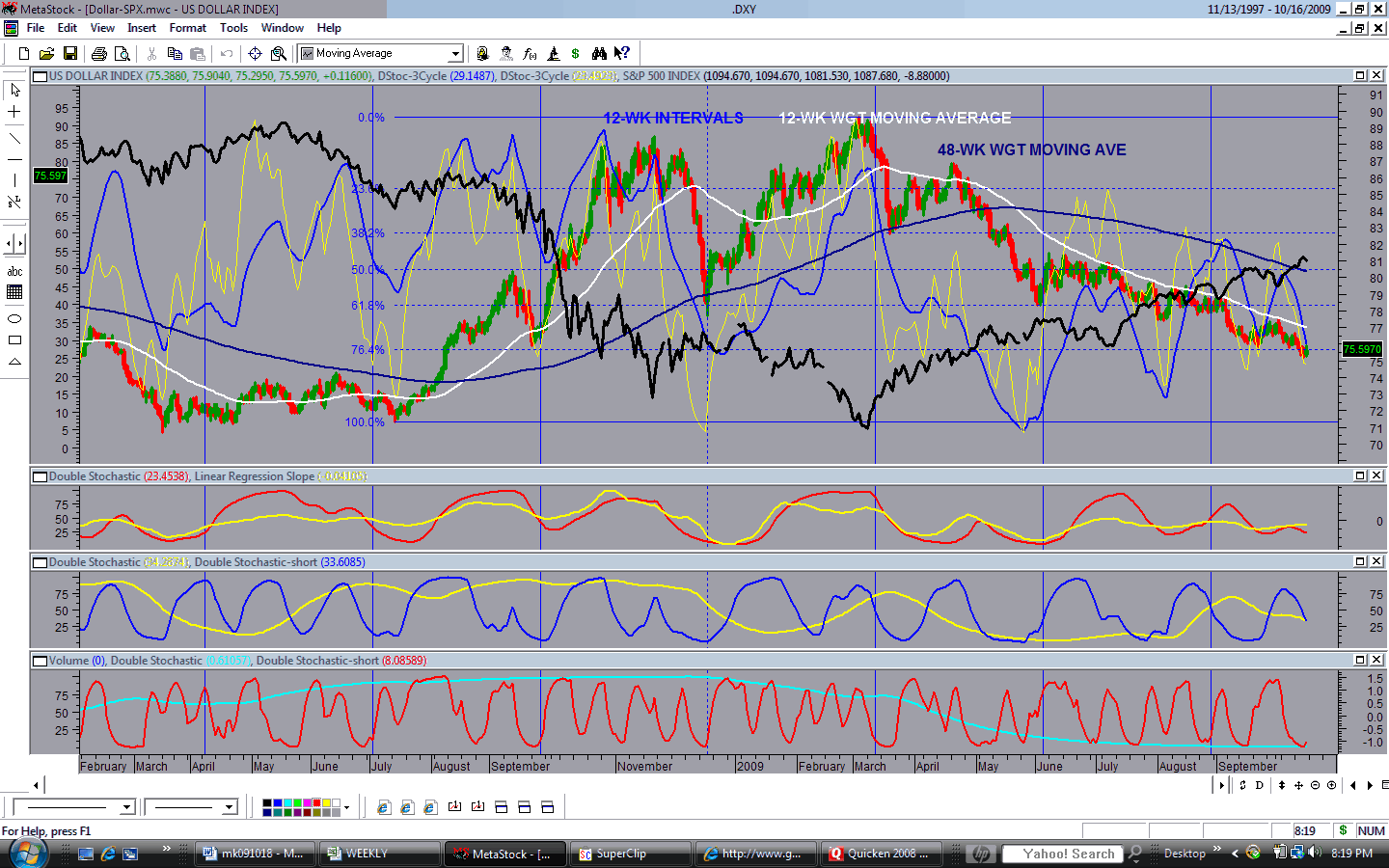
The dollar (http://www.geocities.com/petegersb/Dollar.GIF) maintained its inverse relationship with gold by establishing a 13-day cycle peak last week. It will probably correct more this week, but the short-term uptrend should survive until the next 13-day cycle peak.