12/30/07
HAPPY NEW YEAR!
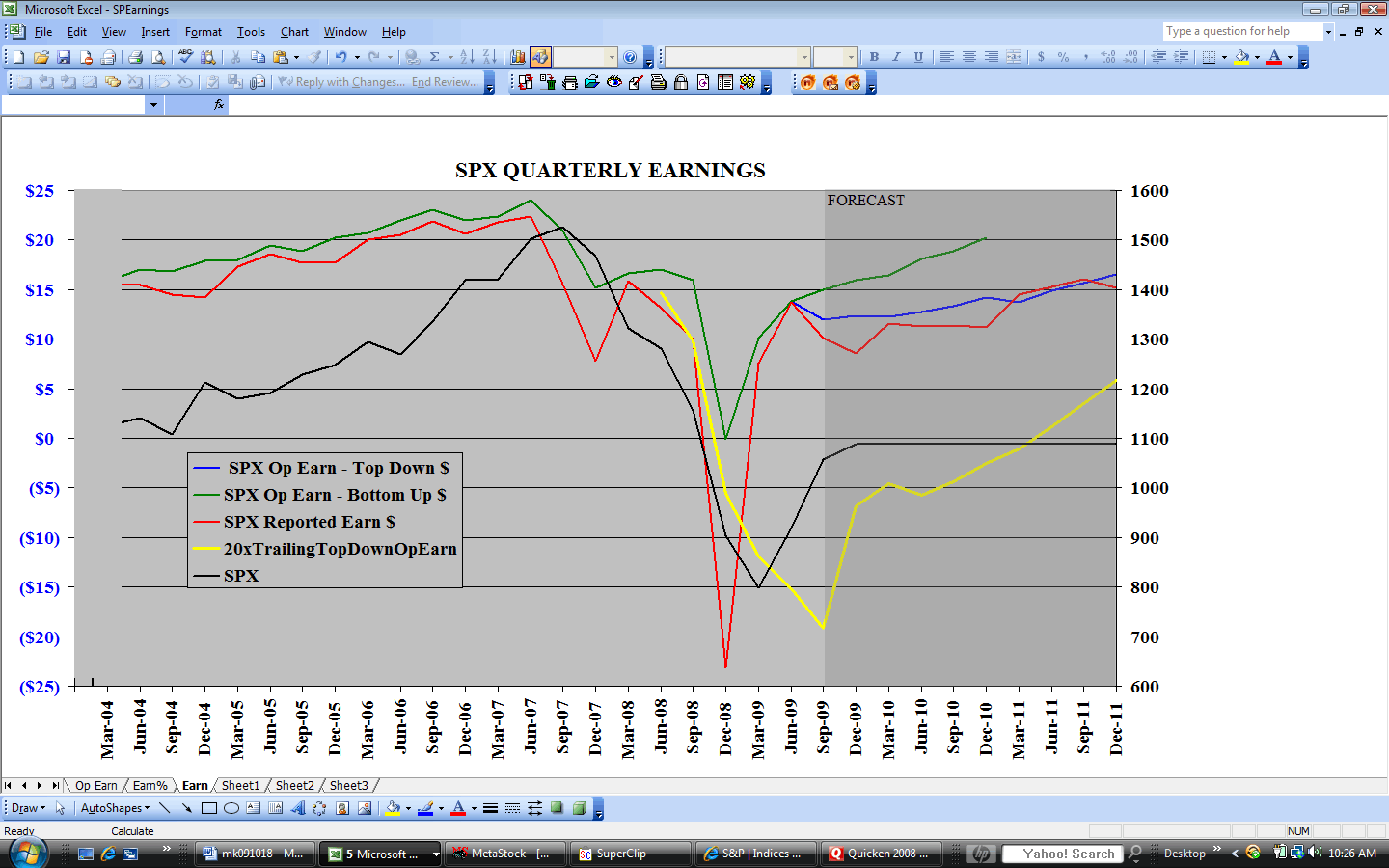
It’s that time of the year when predictions for the new year make their appearance regardless of how bad they were in prior years. Last year, predictions were generally very bullish based on expectations of continued double-digit earnings gains and the election cycle pattern, which is normally strongest in the 3rd year of a presidential term. Neither popular expectation worked out. Standard & Poors is now expecting an 8.2% decline in 4th quarter operating earnings for the SPX (http://www.geocities.com/petegersb/EarnY-Y.GIF) on the heels of a 9.4% decline for the 3rd quarter, and a 0.2% decline for the year. Those numbers will probably worsen when the actual 4th quarter reports are compiled. Thompson Financial is expecting another 9.4% decline for the 4th quarter. As to stock prices, the year has been below average, and hugely sub-par for the 3rd year of the Presidential cycle. The SPX has gained 4.3% compared to 7.7% in an average year since 1928 and 15.5% in a typical 3rd year, according to Mike Burk (http://alphaim.net/signup.html).
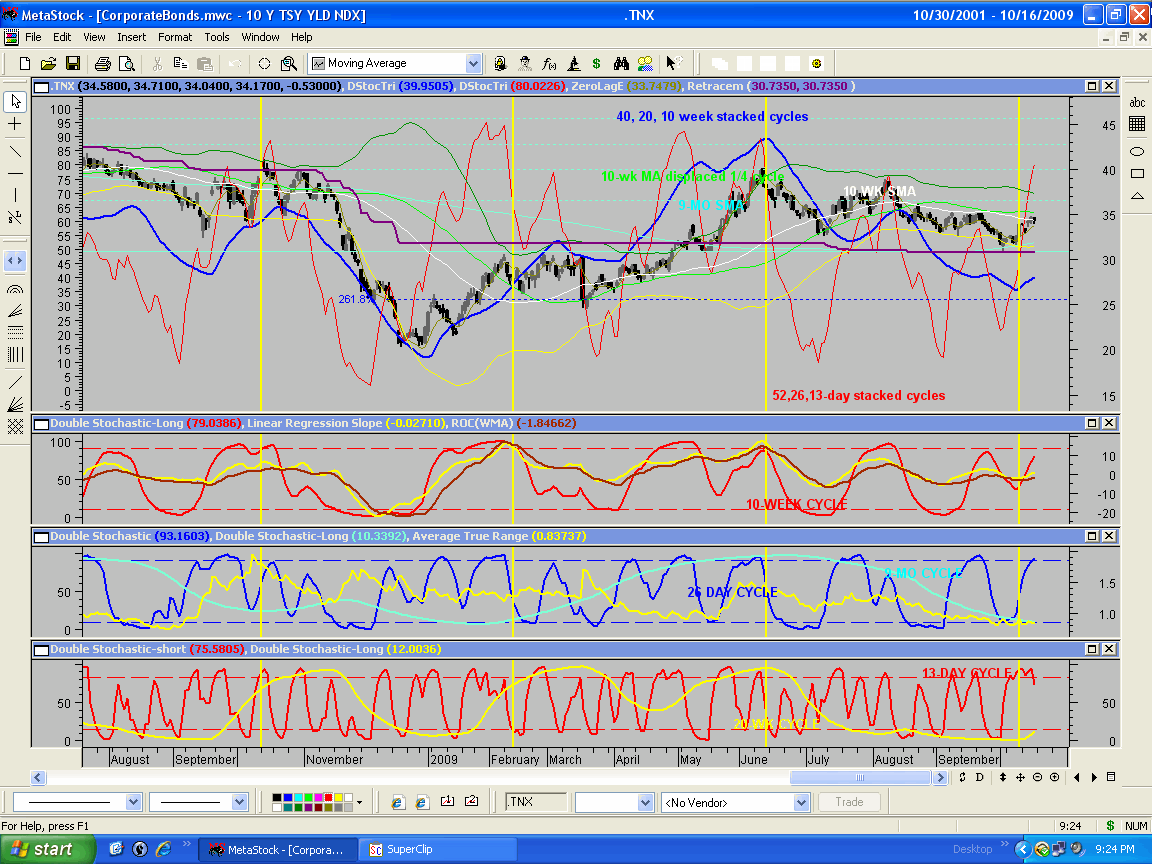
Looking back at my own year ago forecast (http://www.geocities.com/petegersb/mk061231.html), I find I didn’t make a full-year forecast, but I did expect a “relatively weak first quarter” and concluded that any pleasant surprises wouldn’t “materialize in the first half”. After the predicted short-term rally was completed, stocks moved lower into mid-March, and tested that low in mid-August and again in late November. I had expected “foreclosures being dumped on the market to further depress home prices” and that “the consumer piggy bank will run dry and depress consumer spending”. I was right on housing but wrong on the consumer. Unfortunately, I have to make both those predictions again for 2008. I was right on the dollar and gold (“The US dollar will resume its plunge putting upward pressure on import prices and motivating foreigners to increasingly put their reserves in gold and foreign alternatives to US treasury securities”), but partially wrong on interest rates (“Rising inflation will prevent the Fed from cutting short-term interest rates. Steady short-term rates and rising longer term rates will depress the economy – especially the housing sector”) The Fed held steady until September, but then started cutting short-term rates fairly aggressively. Corporate bond rates rose as predicted, but Treasury bond and note rates (http://www.geocities.com/petegersb/TreasuryYield-10yr.GIF) rose only until mid-June before dropping steeply into December. I was right on energy (“The lull in energy price increases is probably temporary”) if you consider only oil and not natural gas.
For 2008, I expect a recession driven primarily by more downside in home prices, more increases in oil prices, and a consumer that can no longer borrow cheaply and easily enough to maintain the orgy of spending in excess of income. A recession should prevent much of a rebound in earnings of the Financial and Consumer Discretionary sectors, and cause the earnings slump to spread to most other sectors. A continuing decline in the dollar is likely to continue driving gold, inflation, and long-term interest rates higher. If the Fed is not stymied by the international money markets, the economy may hit bottom late in the year, but that is a very big “if”.
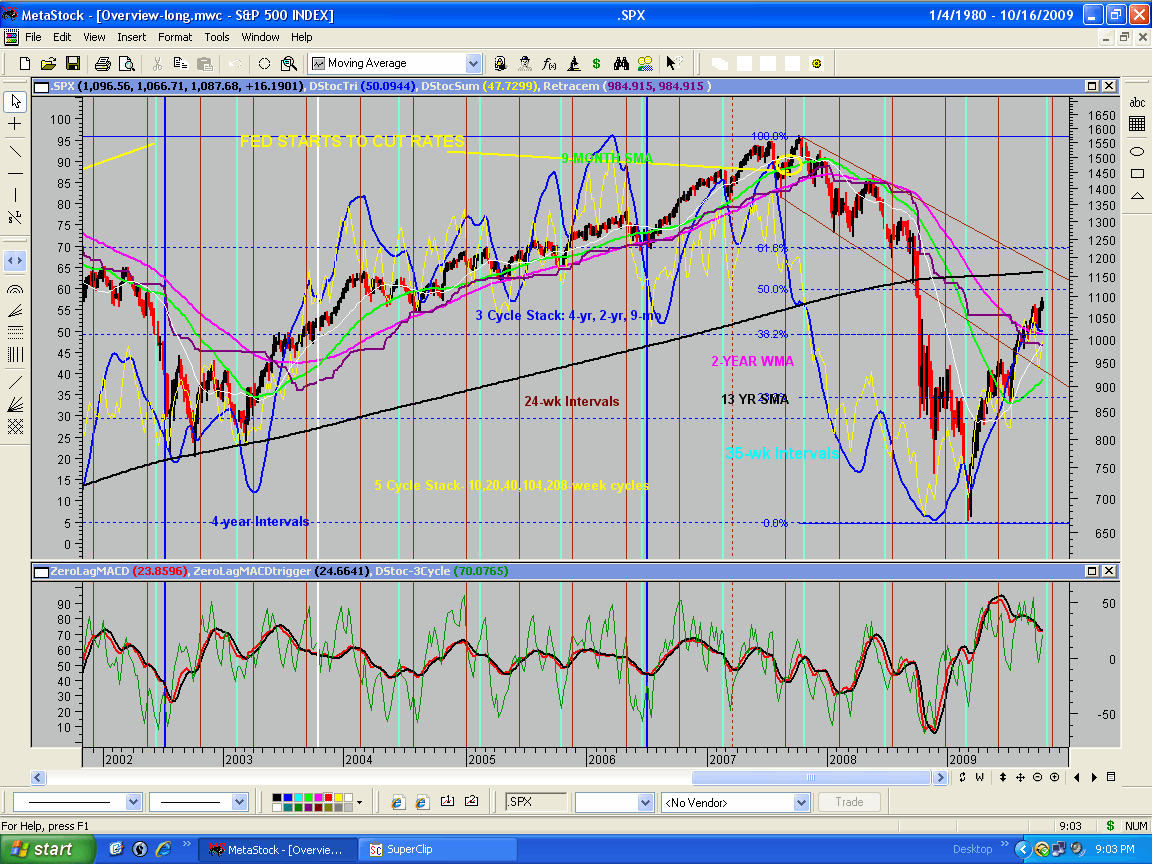
If stocks follow their usual pattern, they should bottom ahead of the economy, and that brings us to the subject of the 4-year cycle. We have seen nothing since March of 2003 that looks very much like a 4-year cycle low. Either there was a very uncharacteristic one in the summer of 2006 or it still lies ahead. The extreme of a cycle variance tends to be plus or minus one third of the nominal cycle length – a maximum of 64 months in the case of the 4-year cycle. If the last bottom occurred in October of 2002, 62 months have elapsed in this cycle. If it occurred on the retest in March of 2003, 56 months have elapsed. Both are in the same ballpark as the 8/82-10/87 duration – a span of 62 months. If July of 2006 constituted a well-camouflaged 4-year cycle low, only 17 months have elapsed. Either way, the DStocs on the long-term overview chart (http://www.geocities.com/petegersb/Overview-long.GIF) strongly suggest that the SPX established a 4-year cycle peak in October of 2007. The question then becomes: “will we see its bottom in 2008 or 2010?” I would guess the first half of 2008 for several reasons:
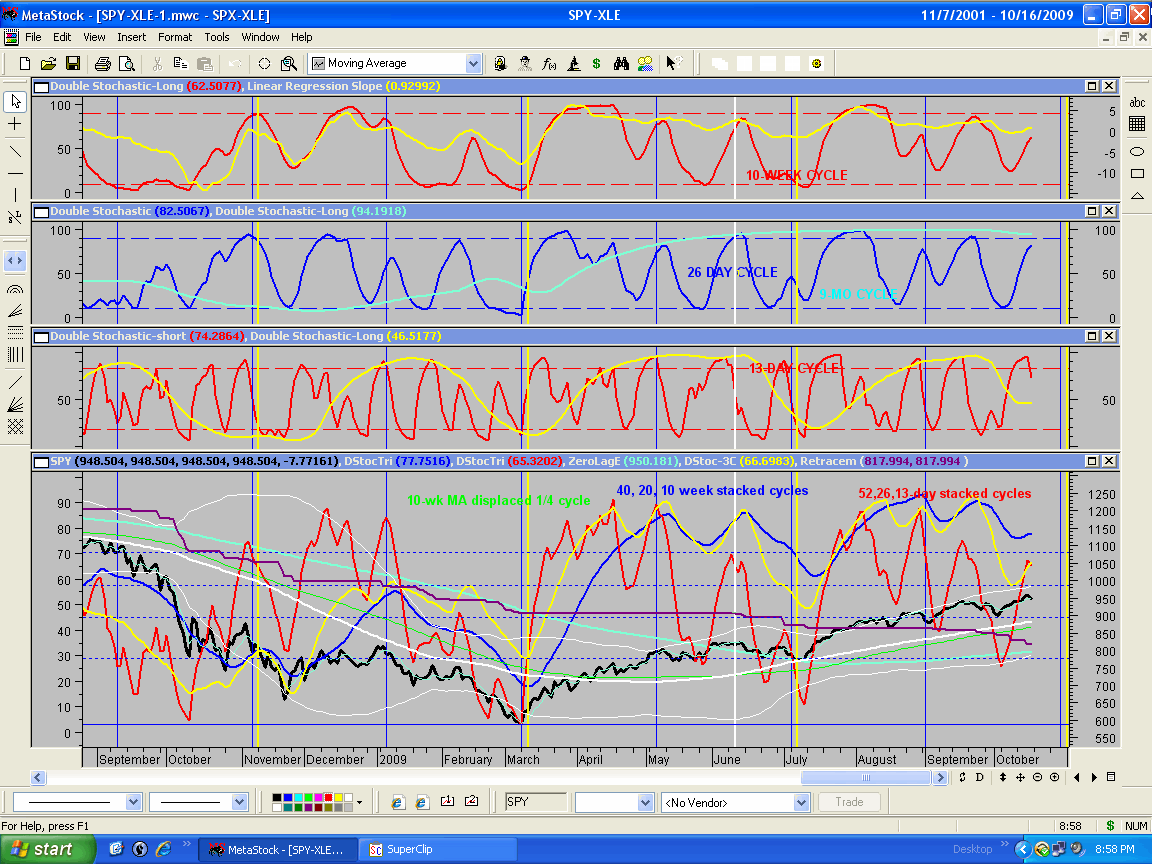
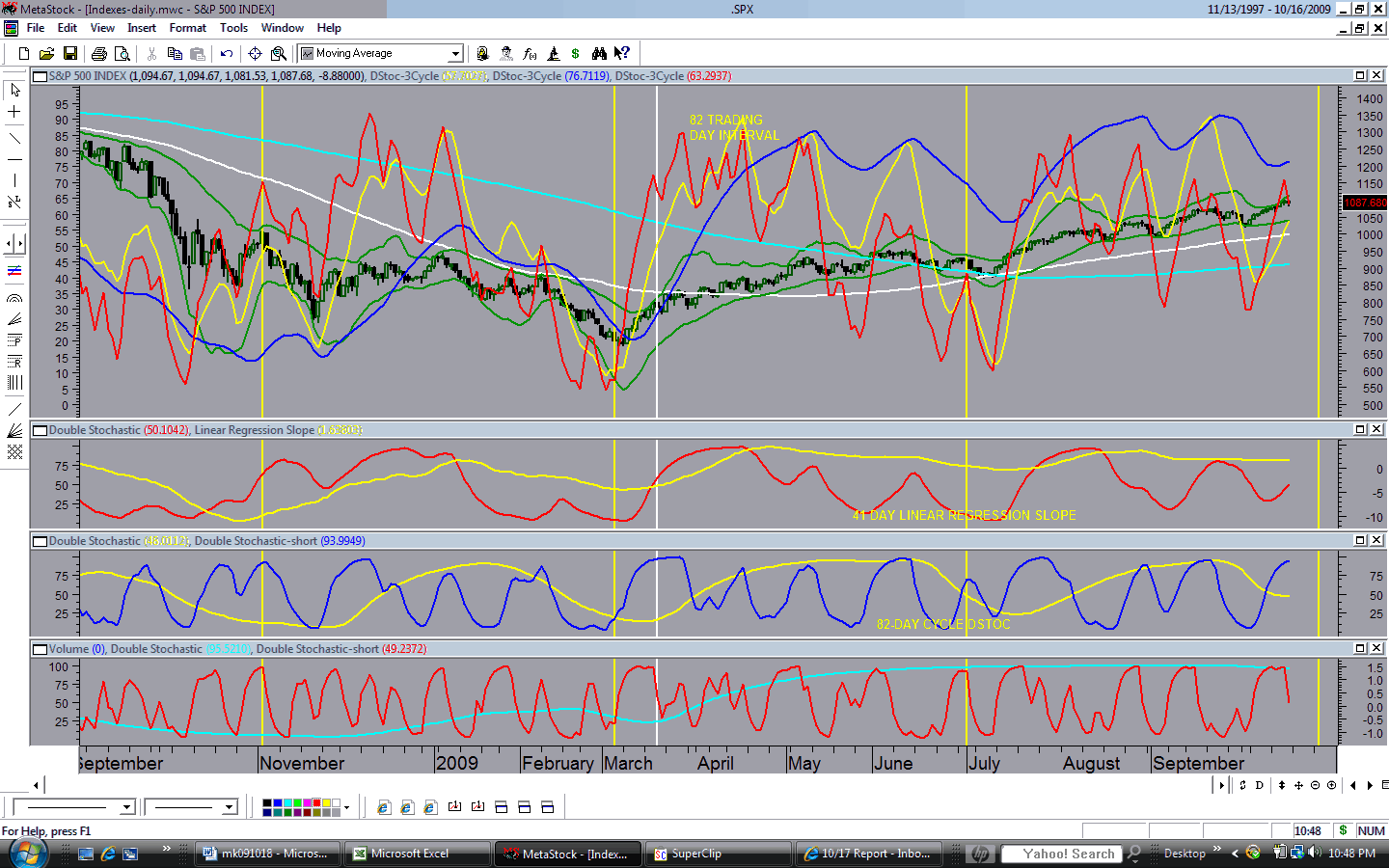
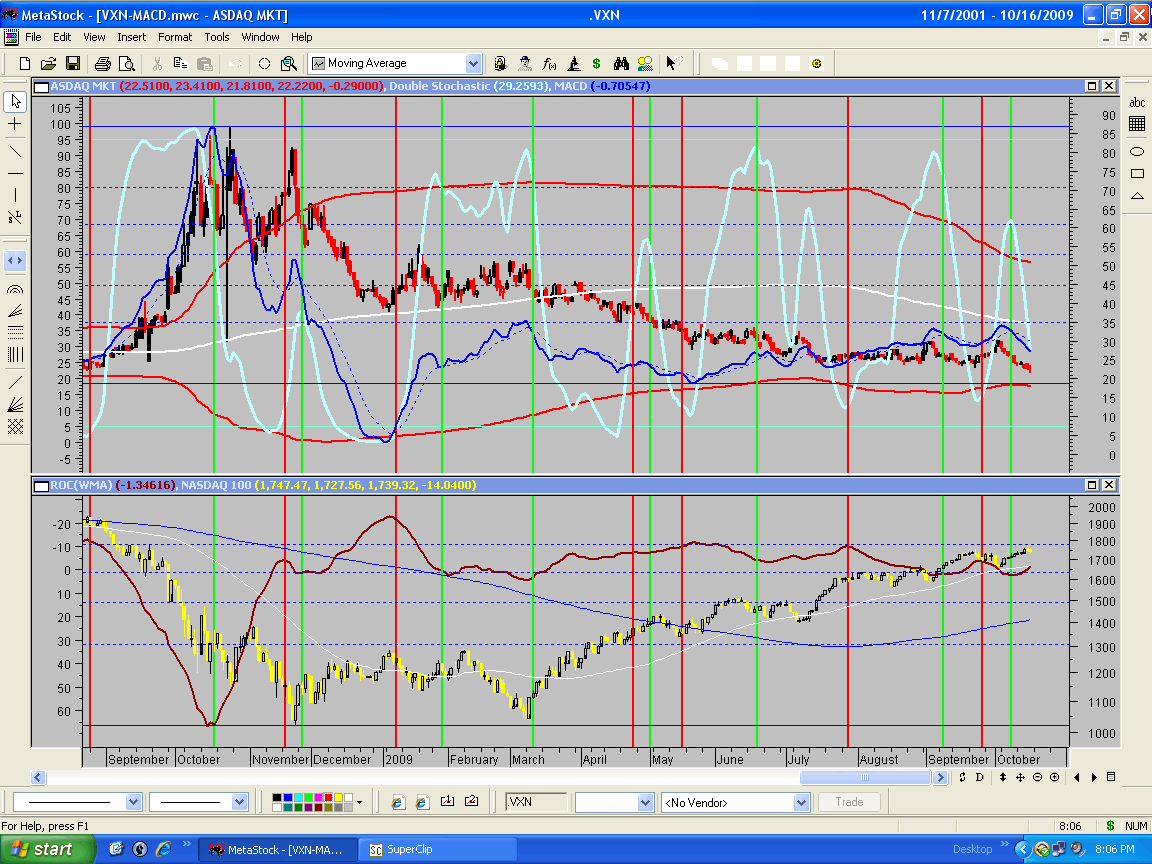
So much for the next half year. How about the next month? The S&P 500 excluding its energy sector (http://www.geocities.com/petegersb/SPY-XLE.GIF) turned down right at its downtrending 10-week moving average, and its short-term composite turned down at the same time. With energy stocks included, the SPX price edged a little above its downtrending 10-week MA before turning down with the 13-day cycle (http://www.geocities.com/petegersb/SP500.GIF). This lower left-translated peak in the second 13-day cycle of the 23-day-old 26-day cycle suggests that the 26-day cycle also established a left-translated peak on 12/11 – just 11 trading days into the cycle. Considering the overbought condition of the 5-week-old 10-week cycle, this very negative pattern in the shorter cycles suggests the likelihood that the 10-week cycle made a left translated peak at the same time. While all indicators, including the weekly VIX and VXN (http://www.geocities.com/petegersb/VIX-weekly.GIF, http://www.geocities.com/petegersb/VXN-weekly.GIF), still suggest a rising 20-week cycle, the weak pattern of the shorter cycles is consistent with the downtrending 9-month cycle suggested by most of the indicators.
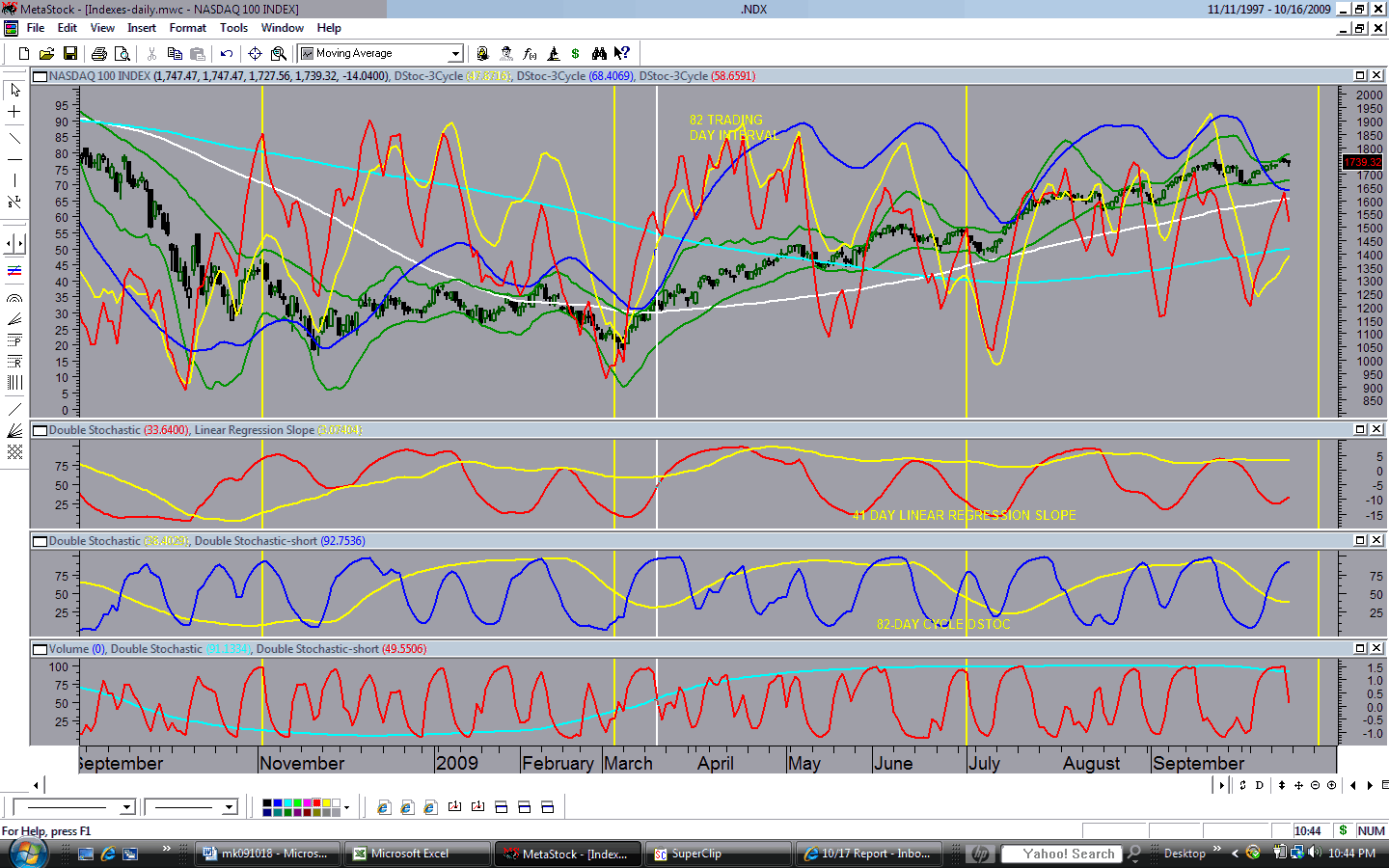
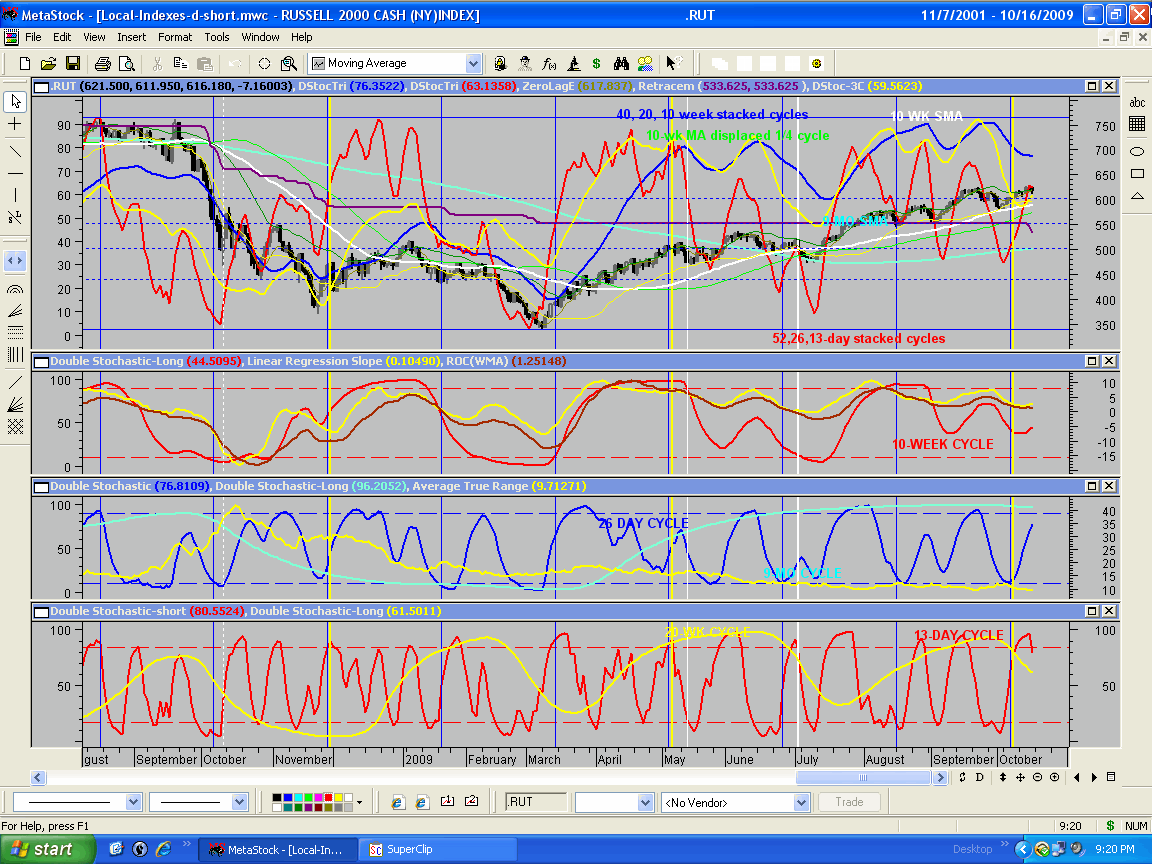
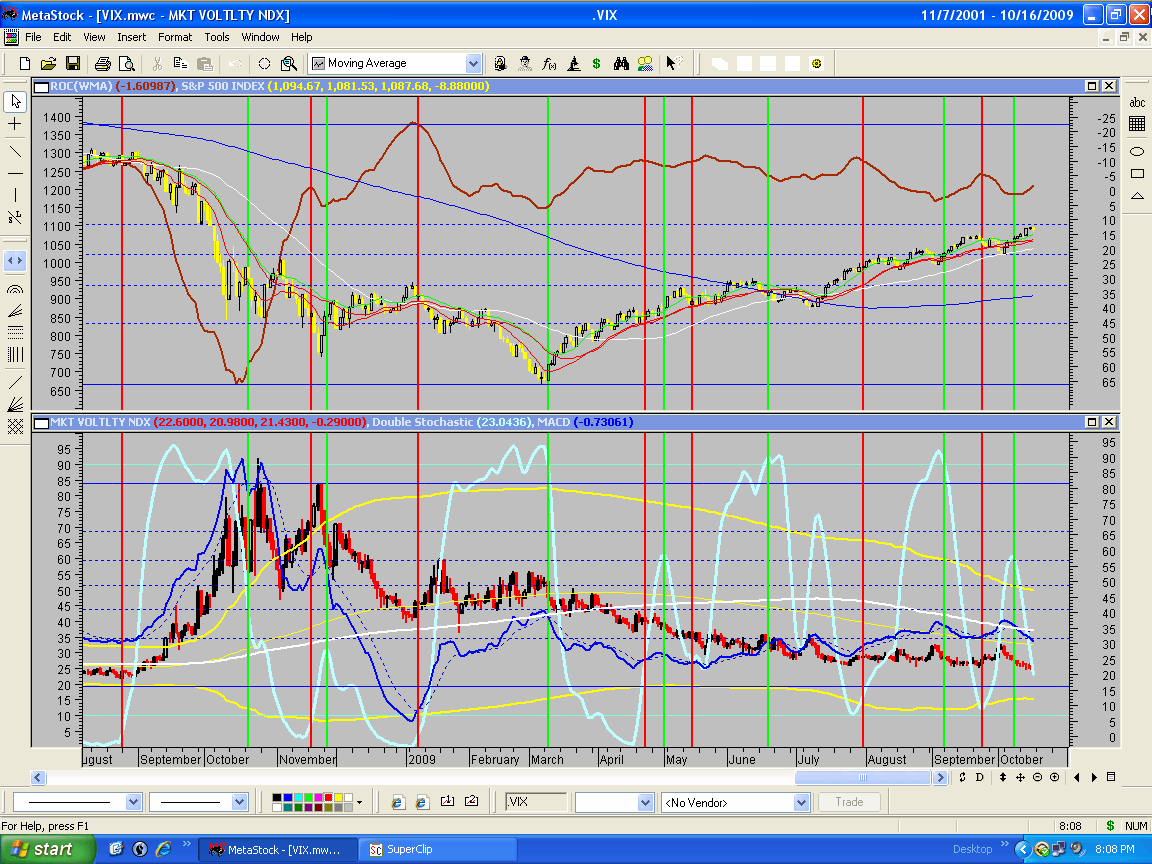
The same is generally true of the Nasdaq and Nasdaq 100 (http://www.geocities.com/petegersb/NDX.GIF) and the Russell 2000 small-cap index (http://www.geocities.com/petegersb/Russell2000.GIF), except that the latter made a marginally higher 13-day cycle peak before turning down. The low level bottoming of the DStocs on the daily VIX and VXN (http://www.geocities.com/petegersb/VIX.GIF, http://www.geocities.com/petegersb/VXN.GIF) serve to bolster the theory that the 10-week cycle has peaked prematurely, but the MACDs on these charts haven’t yet confirmed that conclusion. The composite DStocs on the weekly chart ((http://www.geocities.com/petegersb/Overview-long.GIF)) strongly suggest that the 10-week cycle has peaked within a long-term downtrend that began on October 12.
So it looks to me that only the 20-week cycle will be supporting stock prices during this short week, the 10-week cycle will drive prices lower during January and the longer cycles will drive prices still lower during at least the first quarter, perhaps the first half. Based on normal Fibonacci retracements, the SPX should bottom somewhere between 1175 and 1325.
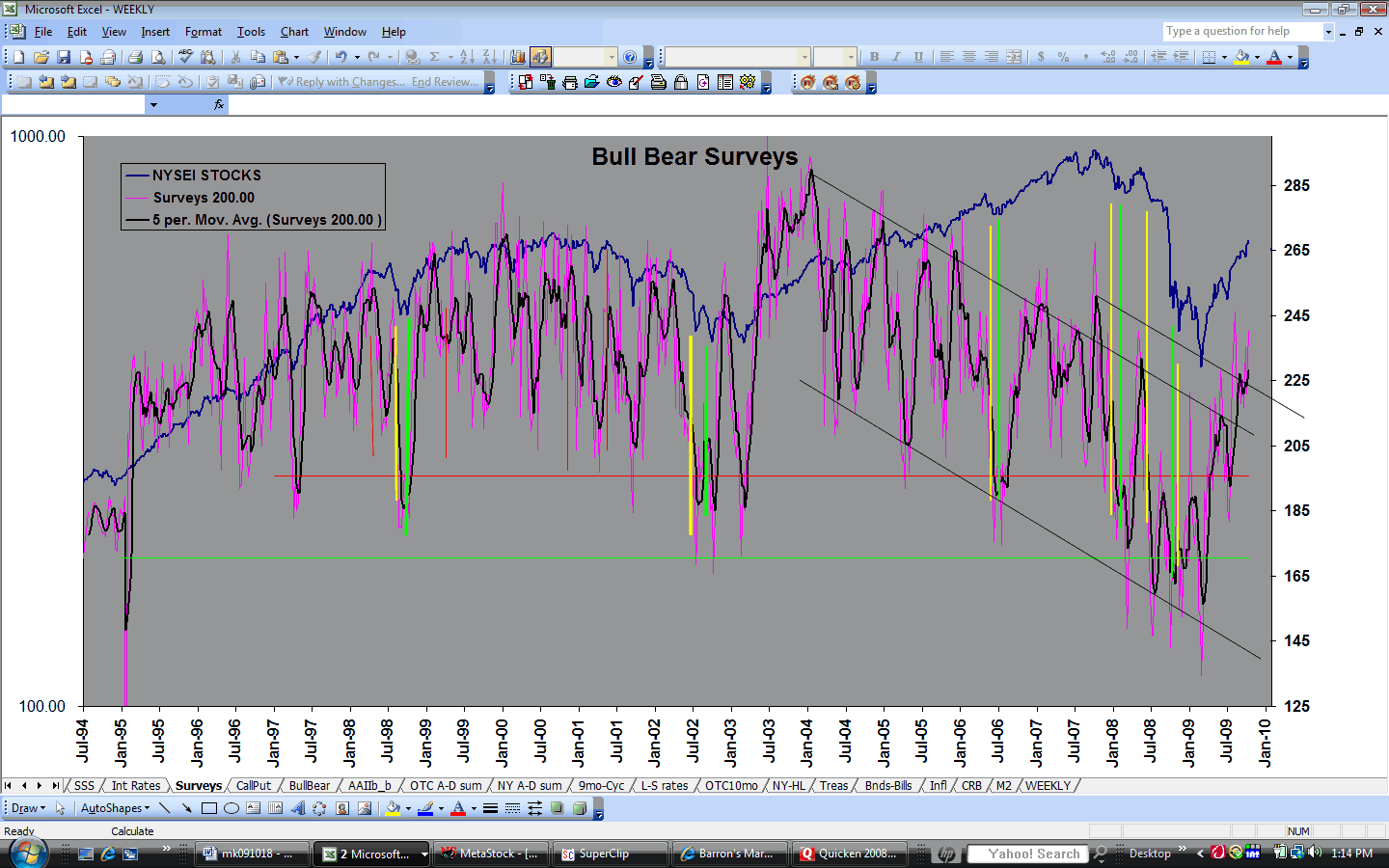
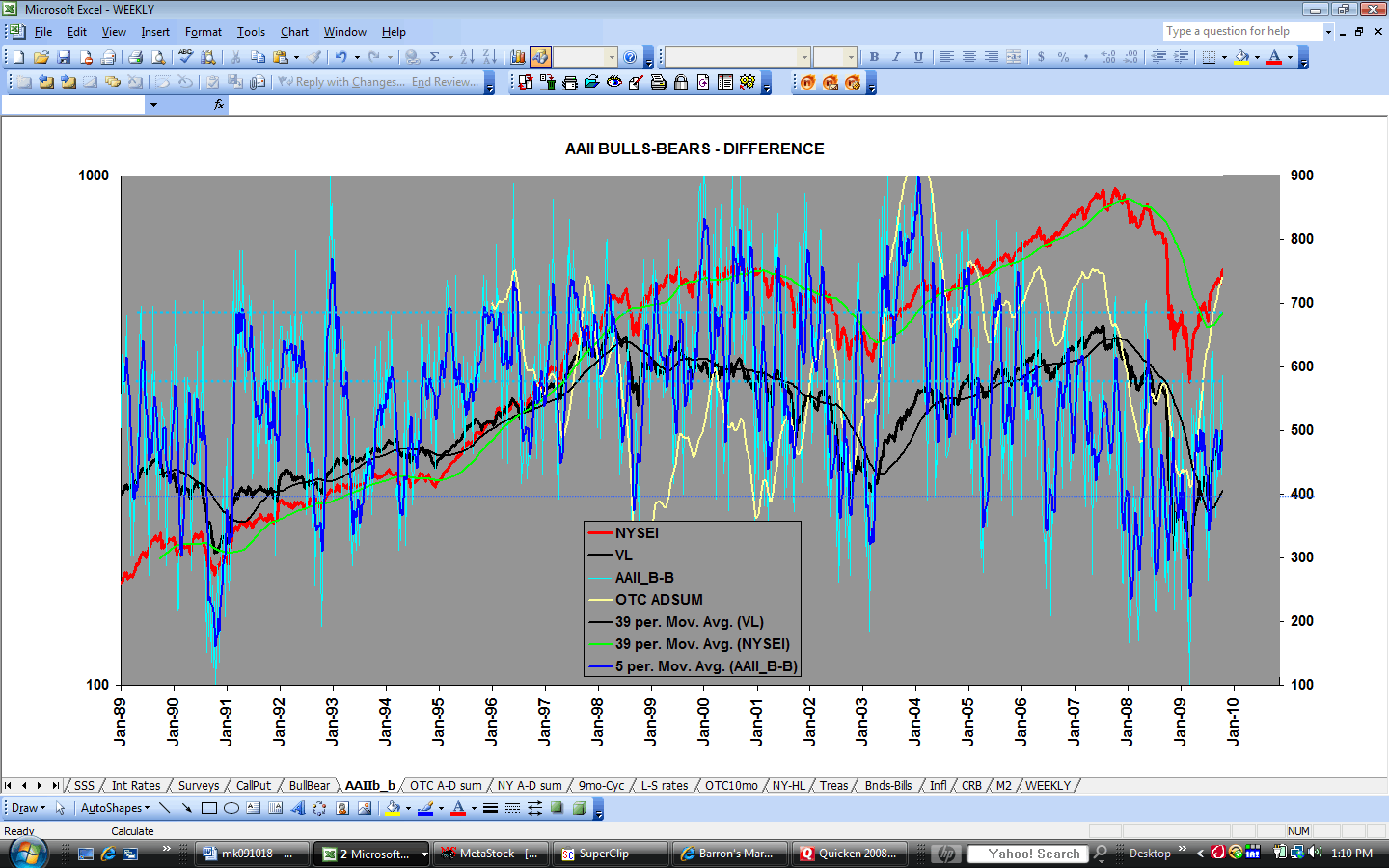
Sentiment indicators remain on buy signals, but they will be at risk if the market declines this week, as I expect. Advisory service optimism declined a little in the latest survey and it remains disturbingly high, but the 5-week moving average is still increasing (http://www.geocities.com/petegersb/InvestorsIntelligence.GIF). AAII members turned more bearish in the latest survey, but they are still not sufficiently pessimistic to reverse the uptrend in the 5-week MA (http://www.geocities.com/petegersb/AAIIsentiment.GIF).
Bonds
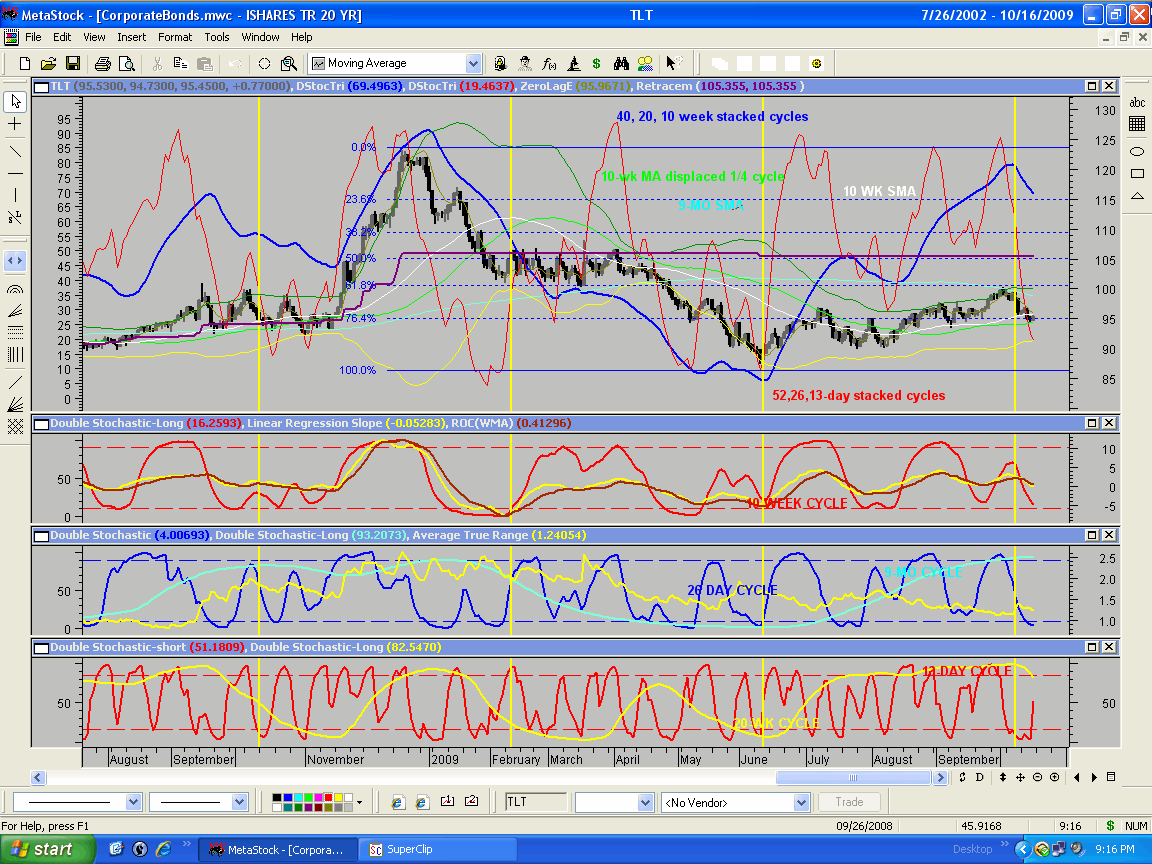
(government bonds (http://www.geocities.com/petegersb/Treasury-20yr.GIF),
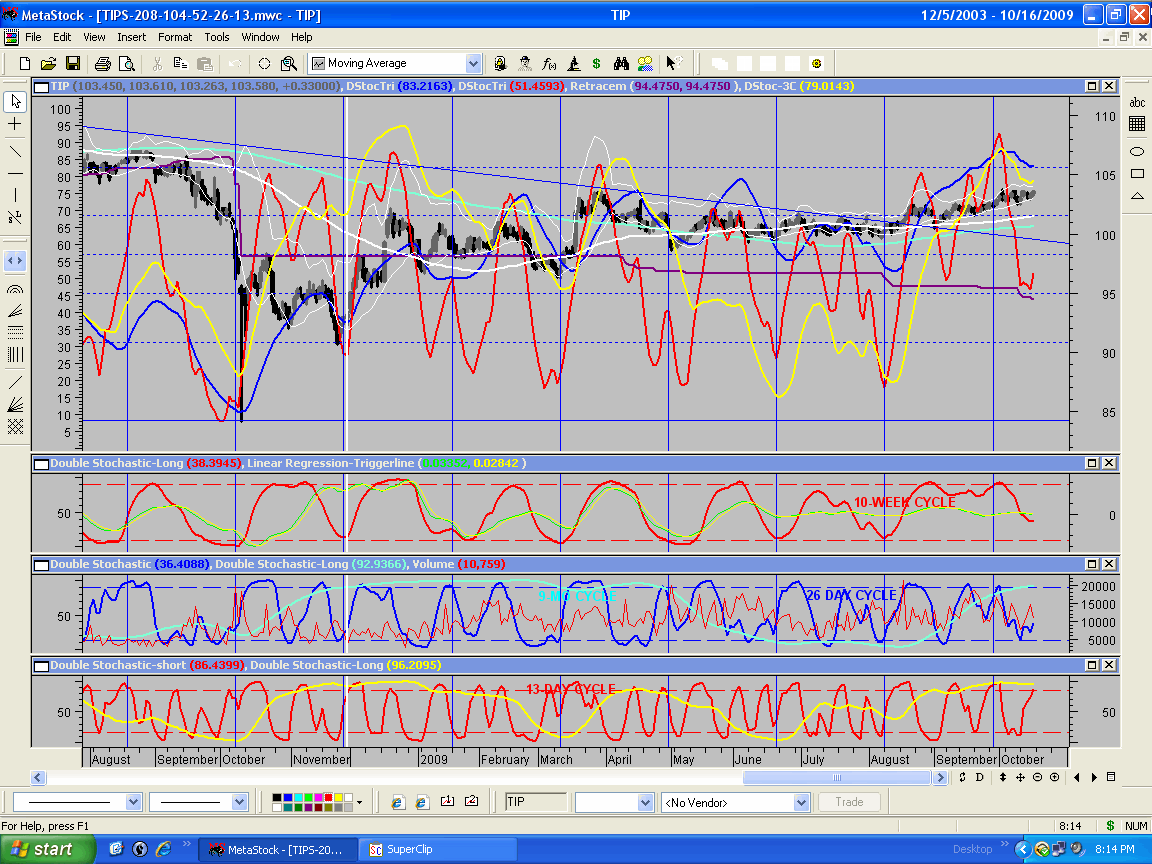
TIPs (http://www.geocities.com/petegersb/TIPs.GIF)
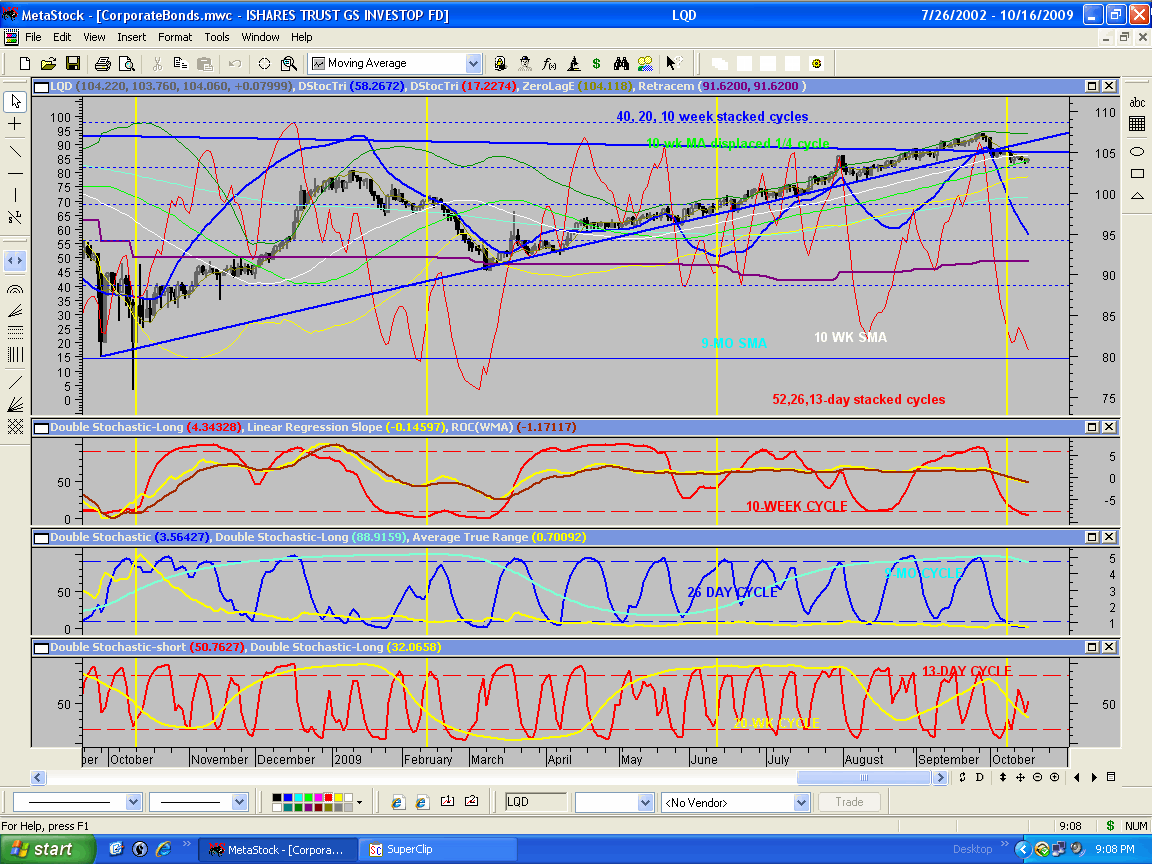
and Corporate bonds (http://www.geocities.com/petegersb/CorporateBonds.GIF)) completed their short-term
correction on Wednesday, and Treasuries launched a strong rally in response to
more dismal economic news. So far the rally hasn’t been able to reverse the
intermediate downtrend, but the cycle indicators are in position to signal an
intermediate uptrend on any continuation of the rally this week. Short-term
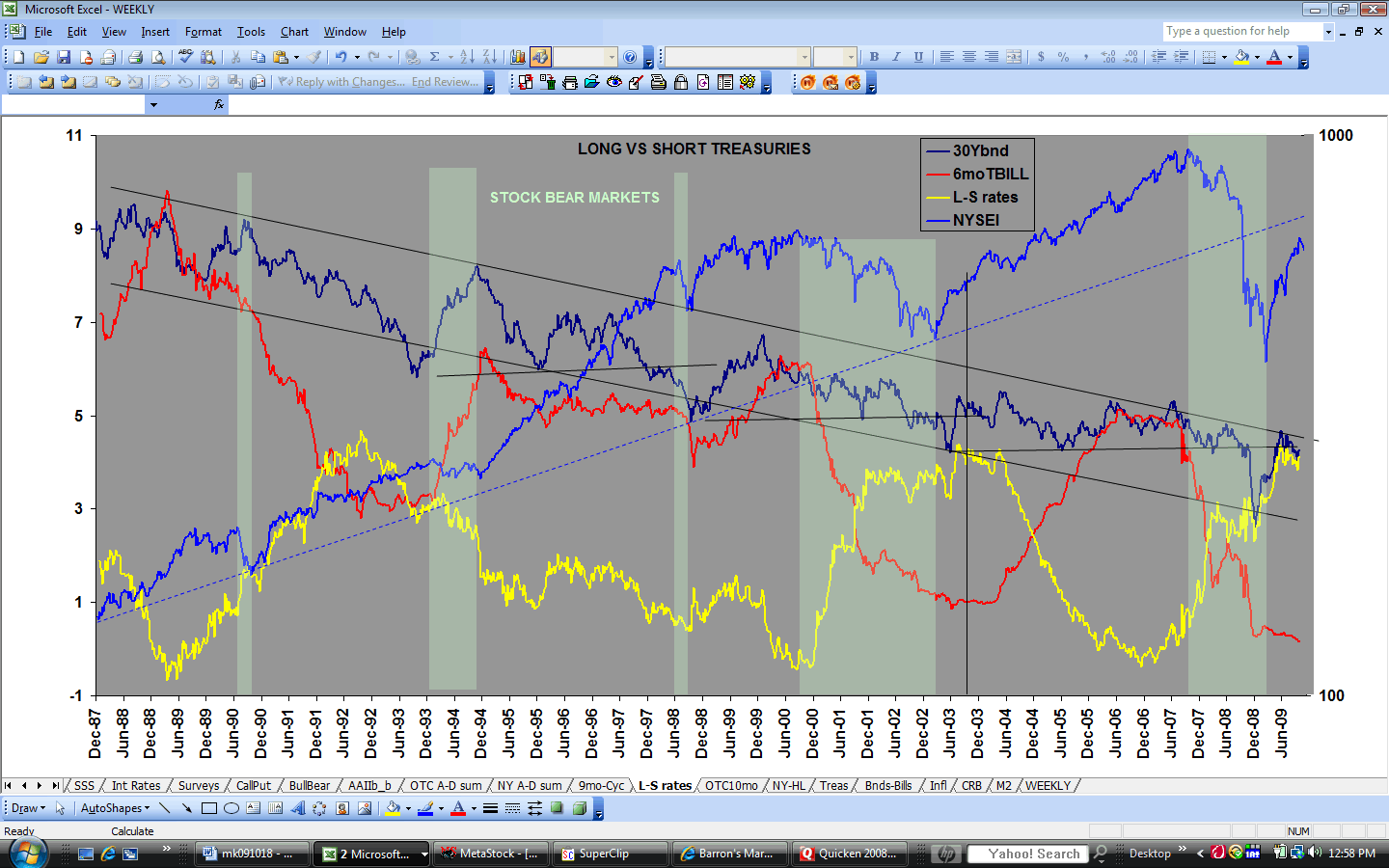
rates rose last week while long-term rates dropped, giving the trend towards yield
curve normalization (http://www.geocities.com/petegersb/Long-ShortYields.GIF) a setback. It’s likely to be
temporary because continued weak economic news will probably prompt the Fed to
cut again, and probable worsening inflation news will likely continue to put
upward pressure on long-term rates.
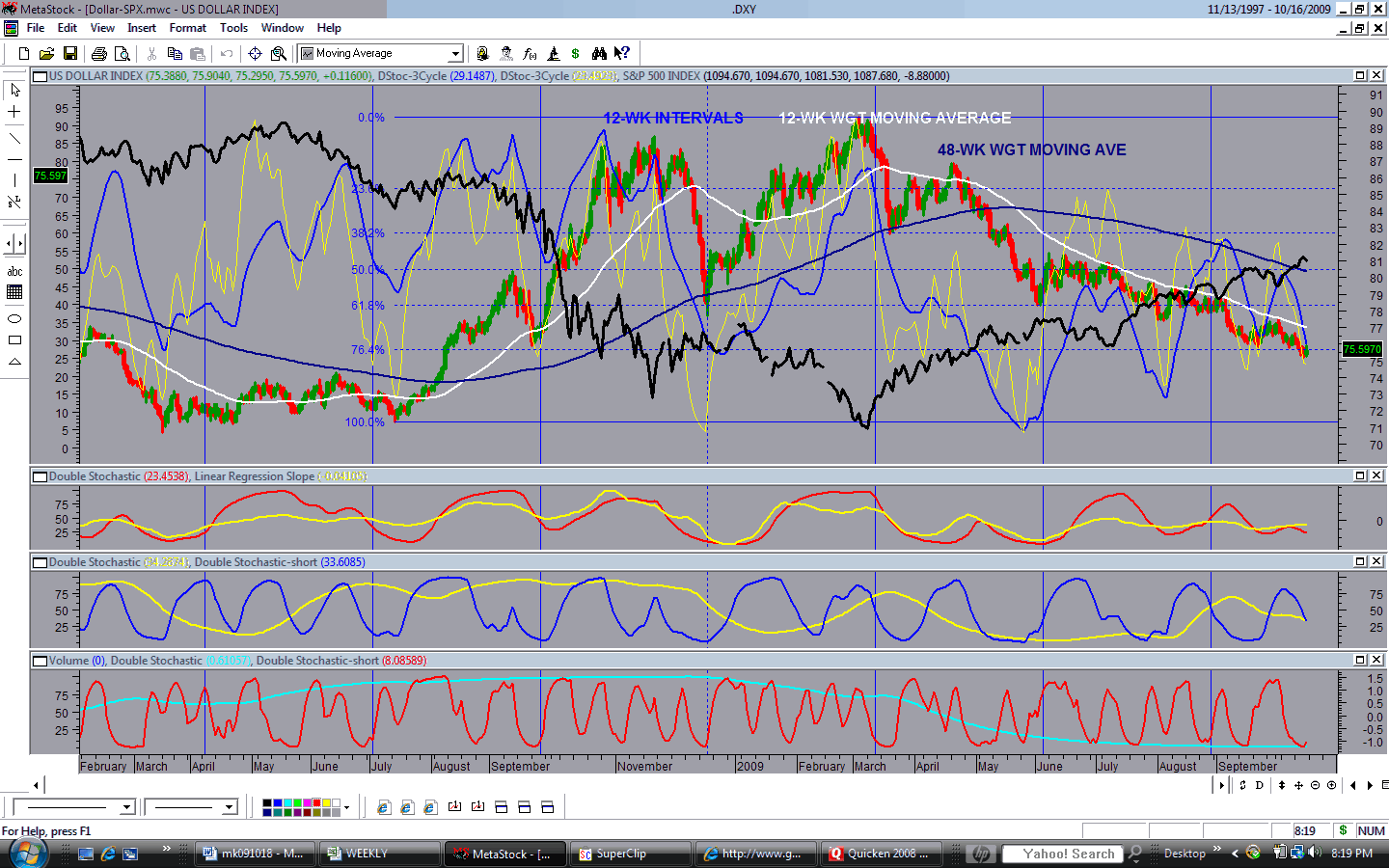
The dollar (http://www.geocities.com/petegersb/Dollar.GIF) began a new freefall
last week as the 10-week cycle turned down. There was a time when foreign
unrest such as the Bhuto assassination would trigger a flight to the dollar. No
longer. This time it appeared to trigger a flight away from the dollar, but it
may have just been the normal response to more weak economic news. The 13-day
cycle is 13 days old and oversold, so a brief rally attempt appears likely this
week, but the November lows will probably be tested in January as the 10-week
cycle declines.
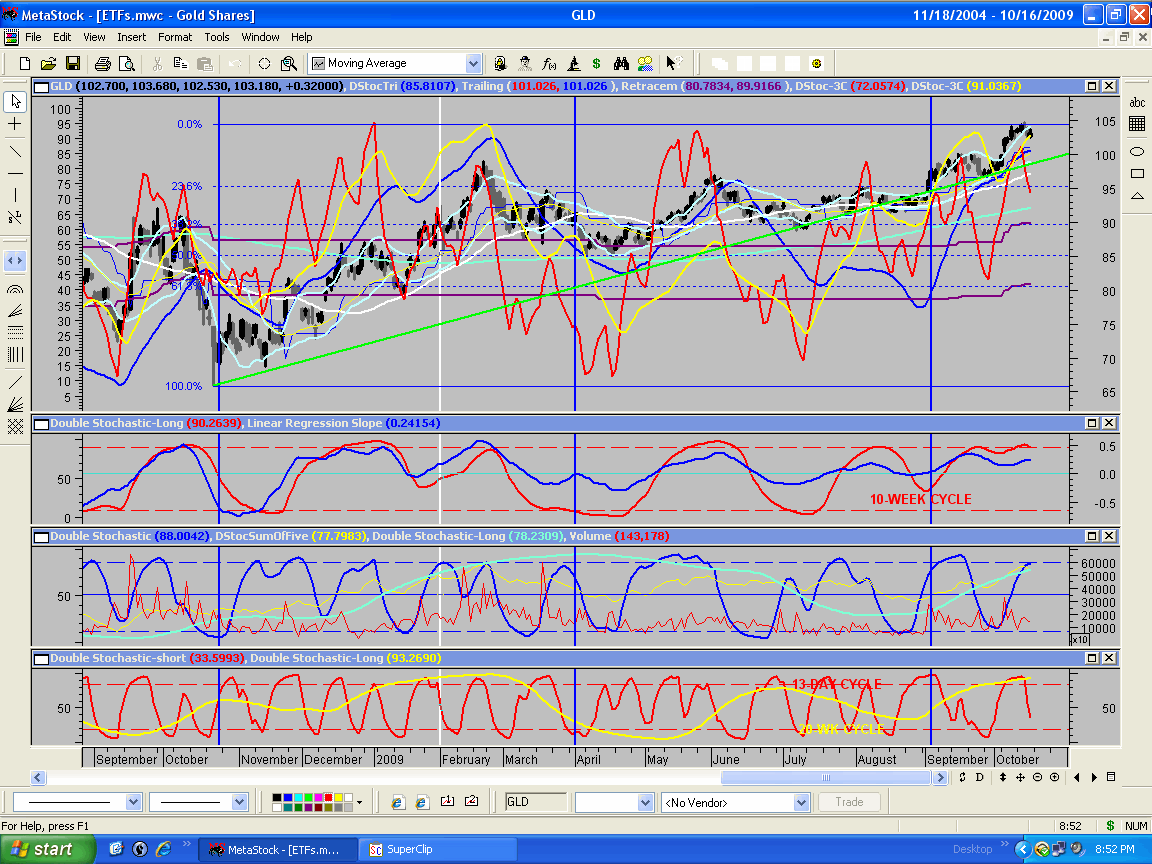
Gold (http://www.geocities.com/petegersb/GoldBullion.GIF) surged last week after establishing poorly defined 10 and
20-week cycle lows in early December. It
is now threatening a new high, but the 8 day old 13-day cycle and the 19 day
old 26-day cycle are overbought and due for a pullback. I suspect the GLD rally
will stall this week at the early November high, but it should easily move to a
new high after a mild pullback. Gold
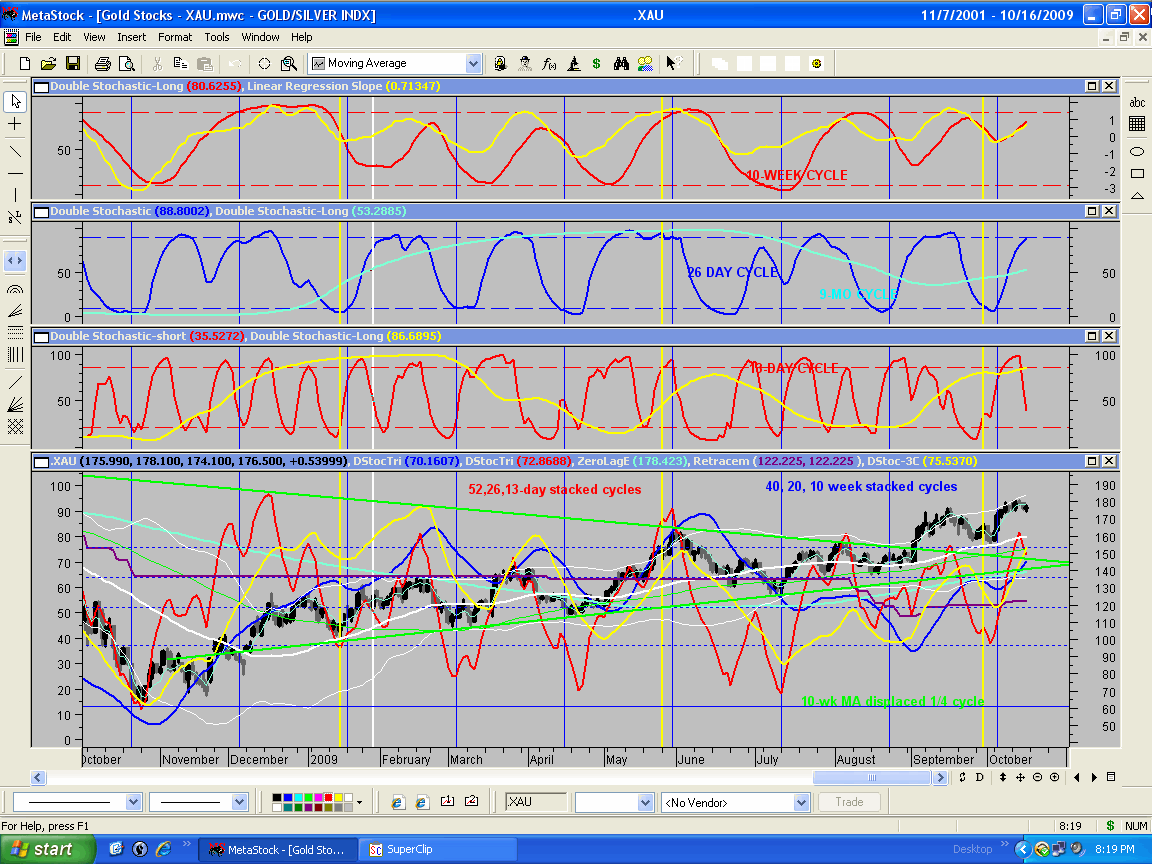
stocks (http://www.geocities.com/petegersb/GoldStocks.GIF)
also surged last week, but the XAU remains far below the
November high and hasn’t even surpassed the early December peak. GLD
continues to appear to have better intermediate-term prospects than the XAU.
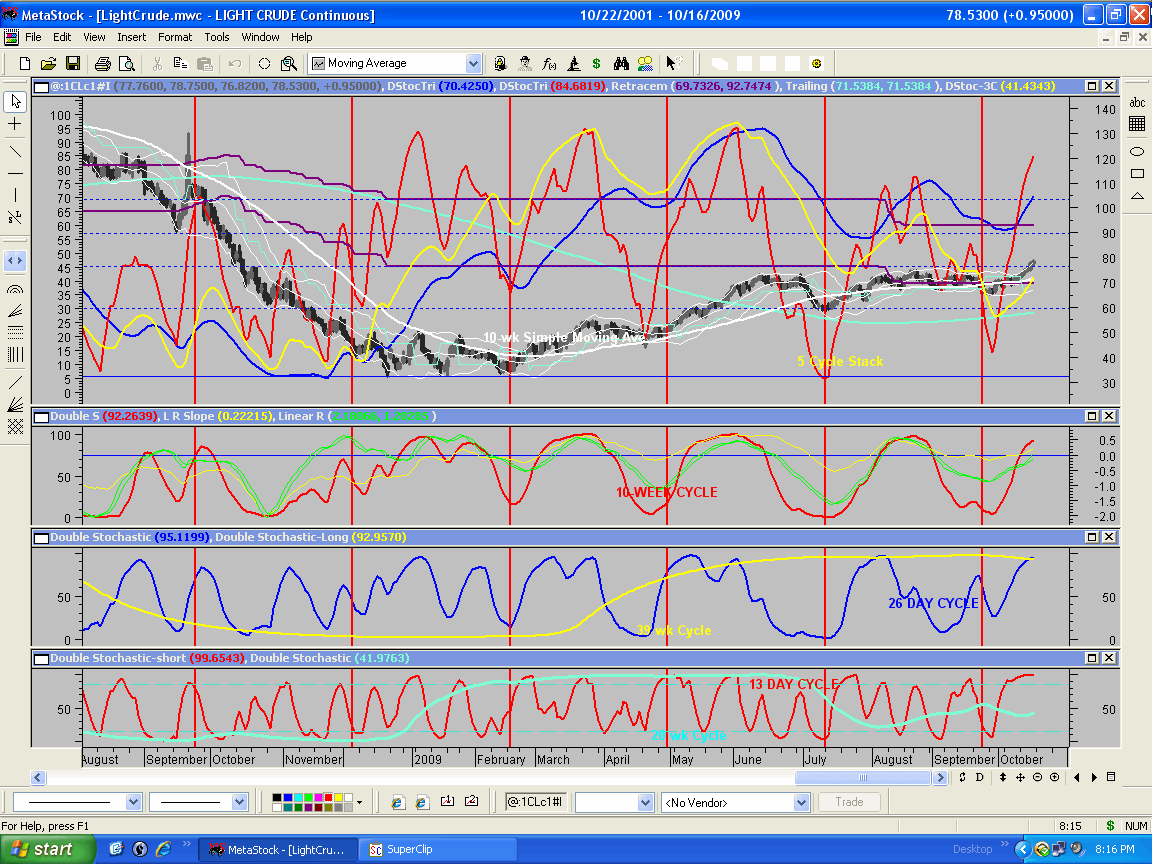
Crude oil (http://www.geocities.com/petegersb/CrudeOil.GIF) is also threatening a new high. The 20-week cycle
indicator has turned up as expected after the cycle bottomed on 12/6. The 13 and
26-day cycles are overbought, but the short-term composite is not, and the intermediate
composite is just starting to turn up. After a brief and mild correction in the
short cycles, crude should do well in January and move above $100 as the 10 and
20-week cycles continue to rally.
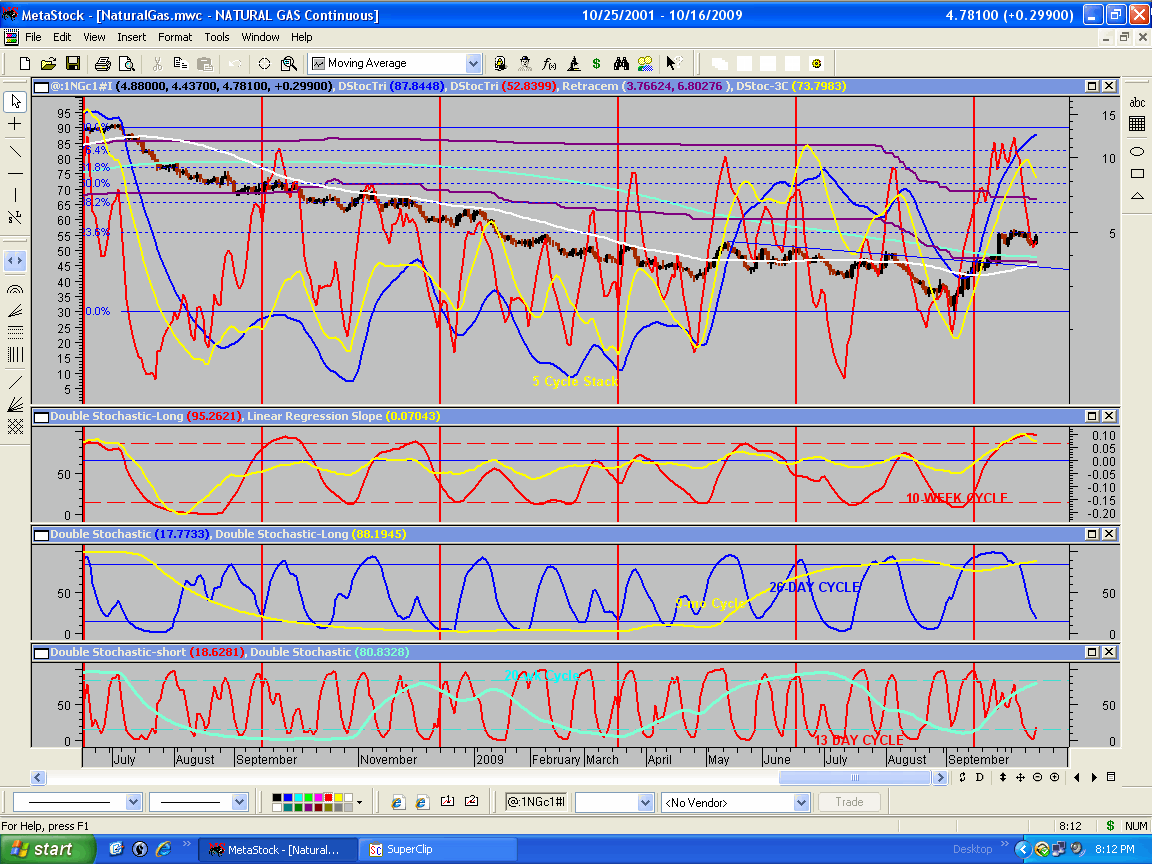
Natural gas (http://www.geocities.com/petegersb/NaturalGas.GIF) showed indications of a possible 10-week cycle low on
Thursday. If so, it was a slightly higher low than the 10/23 low, and that
would be bullish. But the 13 and 26-day cycles are overbought, so they may have
to correct before the real low. Whether it arrived last week or arrives in
January, the low should prove to be a low for the 18-week-old 20-week cycle as
well. The cost per BTU of natural gas is so much cheaper than that for oil, at
some point prices should begin to catch up as those able to convert fuels do so.
Perhaps that will happen in 2008, but that’s what I thought at the end of 2006 when
the price of oil was $61.05 and gas closed at $6.30. Since then oil has risen 57%
to $96, while gas has risen “only” 17% to $7.38, so the disparity is greater
now than it was year ago. Except for
the huge spike to $15 during the 2005 hurricane season, Natural Gas has ranged
between about $4.50 and $8.75 for the last 5 years. It’s a pretty good bet that
any breakout from this range will be to the upside.
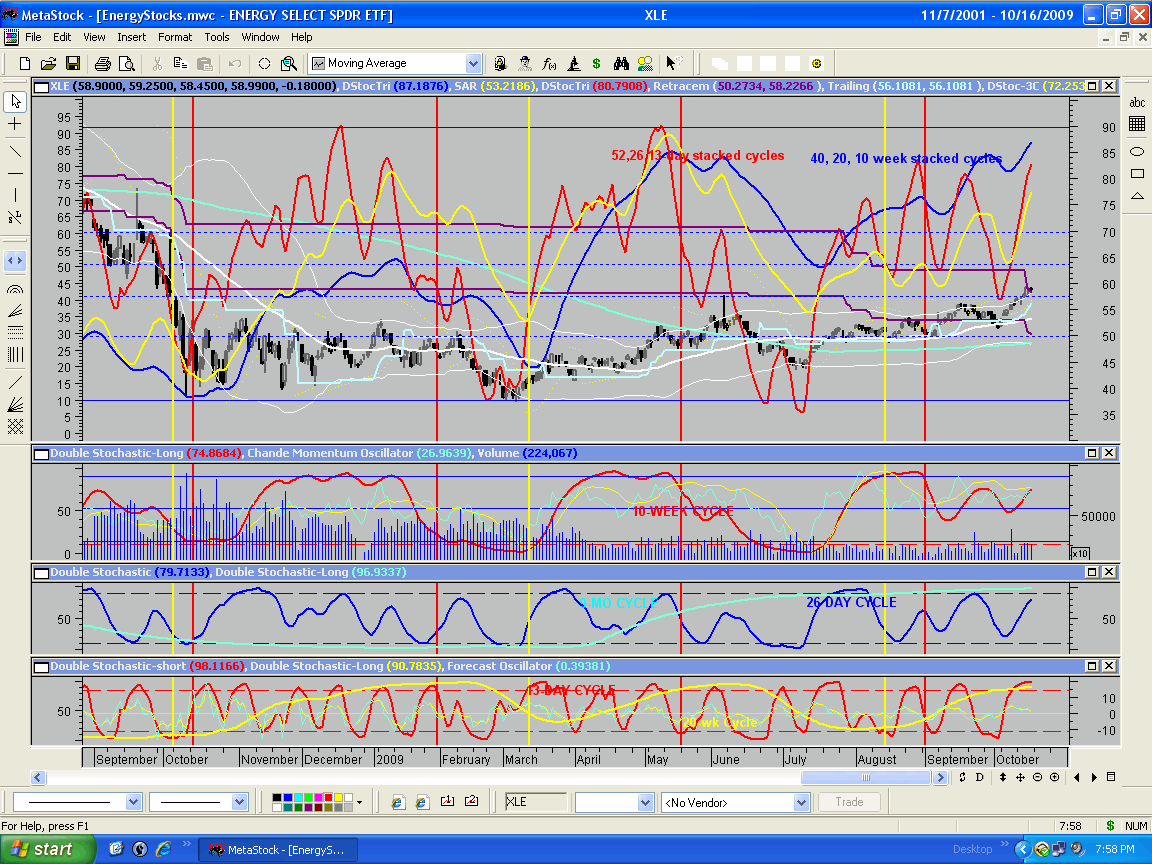
Energy stocks (http://www.geocities.com/petegersb/EnergySPDR.GIF) were again the best performing sector last week as the XLE
moved to another high. While the
intermediate uptrend remains young and healthy, the short-term composite is now
very overbought. A short-term pullback probably began on Wednesday, but after it’s
completed, more new highs should follow.
.