12/31/06
HAPPY NEW YEAR
No update will be published next week.
Publication will resume on the second weekend.
Looking back on the last
year, the economy performed better than I (and most observers) expected largely
because most of the expected problems didn’t appear. None of the multitude of
potential energy supply disruptions materialized, and mild weather limited the
growth in demand, so energy prices dropped. That helped enable the consumer to
sustain the negative savings rate and keep GDP growing, albeit at a more
subdued rate in the second half. Interest rates, which rose as expected during
the first half, reversed course in the second half to help sustain the consumer
borrowing/spending spree, and give the aging bull market new life.
The stock market spent
the first half of the year pretty much following the normal 4-year cycle
pattern that would have made 2006 the weakest year of the cycle. It rose
modestly in the first quarter, following the usual seasonal pattern, but by
June it was down for the year as interest rates were hitting 4-year highs and
oil was steadily making new all time highs. In June the interest rate trend reversed,
and that was followed in July by a reversal of the oil-price trend. Stocks made
their 9-month cycle low on schedule in June-July, and launch a steady rally
that ignored the usually weak 3rd quarter seasonal pattern. There are signs that stocks will again
override the usual seasonal pattern in the first quarter. Crude Oil is showing
signs of a broad bottoming pattern in the $55-$65 range, interest rates rose
sharply in December and show no indication of an intermediate peak, and the
9-month cycle in stocks appears to have turned down as it passed middle age.
Consequently, it appears likely that the usually seasonally strong first
quarter will be relatively weak in 2007. How weak will depend upon whether
stocks are near the end of an extended 4-year cycle, or just ready to make
their first 9-month cycle correction in a fresh 4-year cycle that began last
summer. We won’t know that until we see how the first quarter actually unfolds,
but I think the odds favor late four-year cycle action – hopefully not as
severe as that 20 years ago in 1987.
Why do I come to that
conclusion? Primarily for the following reasons:
1.
Although home sales may be bottoming, I doubt if home prices are near a
bottom. The bulk of the adjustable rate mortgage adjustments lay ahead. Those
payment adjustments will lead to foreclosures being dumped on the market to
further depress home prices. The consumer piggy bank will run dry and depress
consumer spending despite their current optimism. The Contrary Investor (http://www.contraryinvestor.com/mo.htm
) make a pretty good case, based on past housing cycles, that this decline is
perhaps only about half finished.
2.
The US dollar will resume its plunge putting upward pressure on import
prices and motivating foreigners to increasingly put their reserves in gold and
foreign alternatives to US treasury securities. Rising inflation and reduced
demand for treasuries (also increased supply if the economy falters) will drive
interest rates higher. Rising inflation will prevent the Fed from cutting
short-term interest rates. Steady short-term rates and rising longer term rates
will depress the economy – especially the housing sector.
3.
The threats to energy supply disruptions that did not materialize in
2006 are still with us. If they materialize in 2007, say good-bye to the
prospects for a soft landing in the economy. On the demand side, global warming
seems to be giving wintertime demand a reprieve, but it will probably extract a
payback in the summertime. The lull in energy price increases is probably
temporary.
4.
Optimism is high, speculation is rampant, and leverage is extreme as
indicated by the likely new high in margin debt, extremely high bullishness
among advisory services, ever expanding leverage through derivatives, new highs
in the ratio of mortgage debt to home equity, and frenzied merger and buyout
activity, etc. The only pessimists seem to be corporate insiders who have been
dumping their own stocks with a vengeance during the last few weeks while using
their corporations’ overpriced stock to buy other companies. These are things
that happen in the late stages of a 4-year cycle, not near the beginning.
Of course those are
all the things that constitute the wall of worry that stocks have been
climbing, but I think it’s noteworthy that the worry seems to be evaporating
rapidly as it tends to do near the top. A bottom in housing is already being
heralded by the media. The threat of continued commodity inflation is largely
being dismissed. Everybody seems to have come to the conclusion that any
unpleasant surprises in the economy or the securities industry can and will be
fixed with minimal damage by Fed action – hence all the talk of a Goldilocks
economy or, for the relative pessimists, a soft landing. I suppose some pleasant surprises could
materialize in 2007; I’m just not sufficiently imaginative to come up with any
candidates. Whatever they may be, the cycles (http://www.geocities.com/petegersb/Overview-med.GIF)
suggest that they won’t materialize in the first half.
During the last week
of trading in 2006, stock indexes tried to move above their mid-December peaks,
but with support only from the 13-day cycle, most failed. Of the major indexes,
only the headline grabbing Dow and the NYA succeeded. The SPX and Russell 2000
came close. The Nasdaq failed by a wide margin. Those that failed may yet prove
my call of a 9-month cycle top premature, but the intermediate term indicators
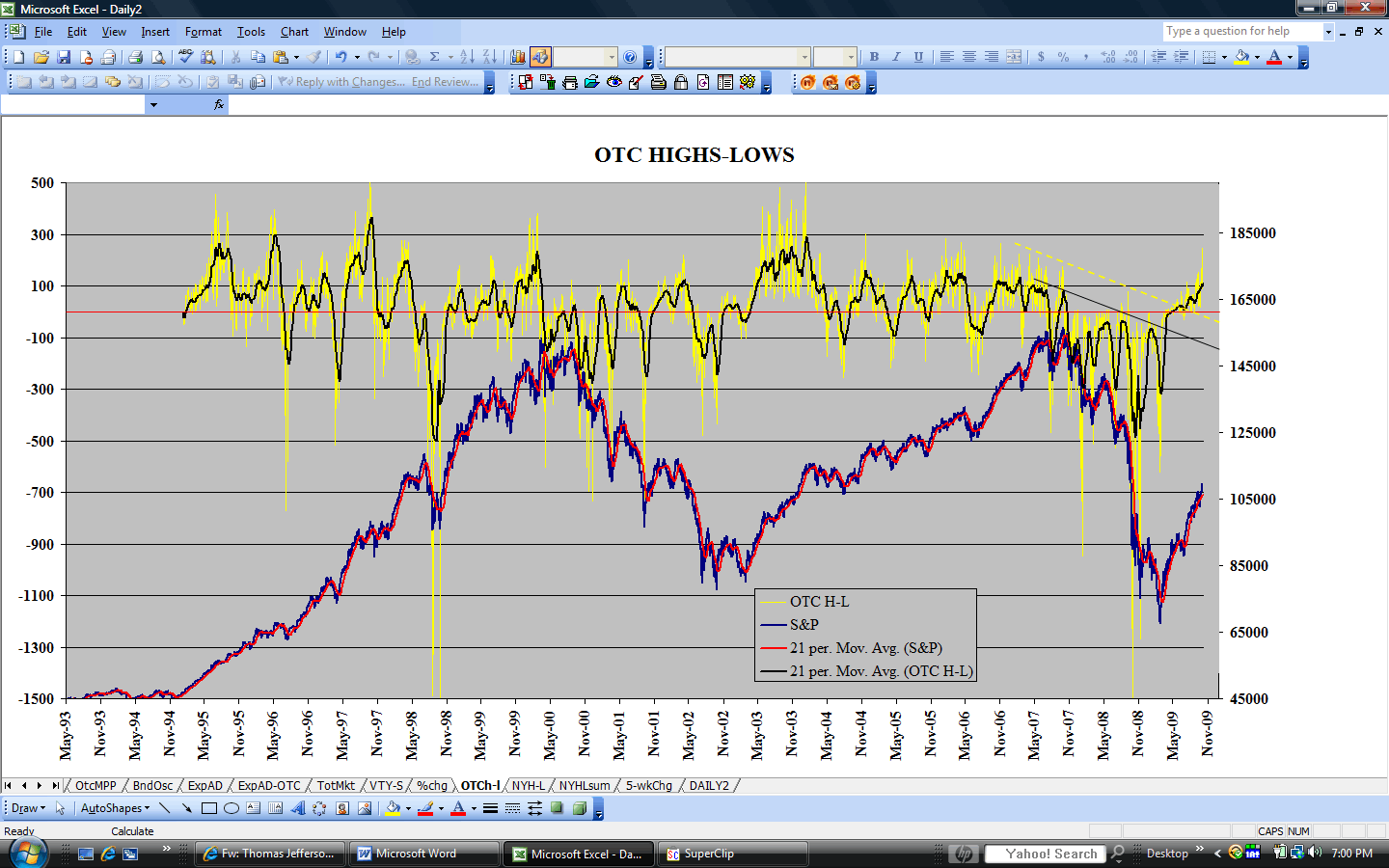
are telling the same story this week. Breadth indicators including the
McClellan Summation Indexes (http://www.geocities.com/petegersb/A-Dsummation-NYSE.GIF
, http://www.geocities.com/petegersb/A-Dsummation-OTC.GIF
) and the High-Low ratios (http://www.geocities.com/petegersb/HighLowNYSE.GIF
, http://www.geocities.com/petegersb/HighLowOTC.GIF
) are indicating a 9-month cycle top. The trip to the bottom has likely begun –
at least for the Nasdaq. However, according to Mike Burke, on average January
of the 3rd year of the presidential cycle is the strongest month in
the entire 4-year cycle, and the short-term composite has turned up on 3 of 4
indexes. So the odds seem to favor another short-term rally ahead while the
market completes its topping process.
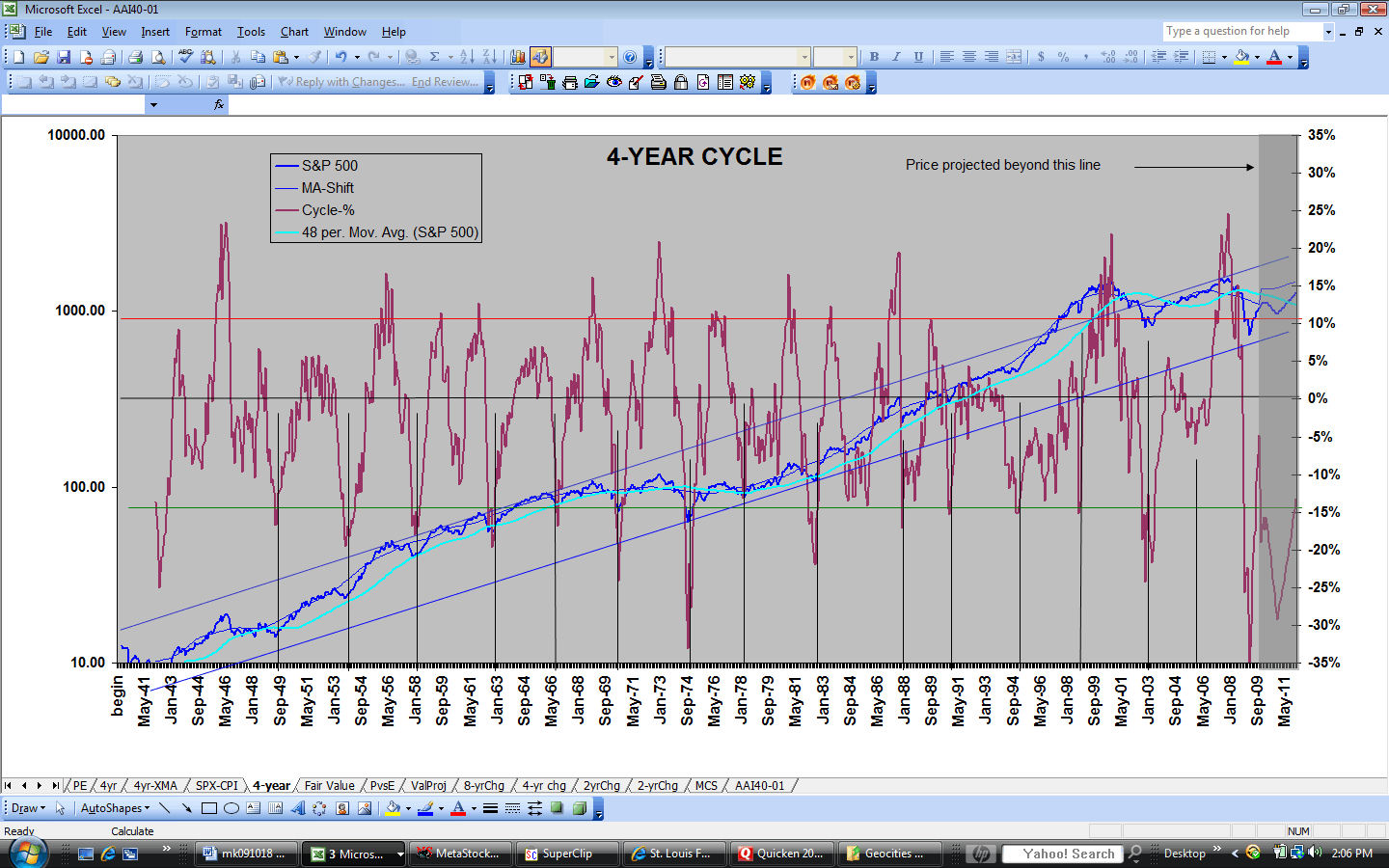
LONG TERM INVESTORS (4-year cycle players - http://www.geocities.com/petegersb/4YearCycle.GIF
)
There are usually 5 or 6 nine-month cycles contained within a four-year cycle. The 5th such cycle was completed in July, but the July low did not have the usual 4-year cycle low characteristics. Consequently, I concluded that a 6th cycle was likely. However, the current 9-month cycle, which probably peaked in mid-December, has so far exhibited the unique characteristic of first 9-month cycles in a four-year cycle – lack of meaningful corrections in the shorter cycles. Consequently, the odds shifted somewhat to the likelihood that the July low was the bottom of the last 4-year cycle, and that stocks are in the early stages of a new 4-year cycle. If so, the coming 9-month cycle correction into the springtime should also be mild; if not, it could be pretty nasty. It’s probably prudent for 4-year cycle players to wait until the 9-month cycle bottoms to get in. If this is a new 4-year cycle, prices should be a little lower. If it’s still an extension of the cycle that began in late 2002 or early 2003, prices could be a lot lower.
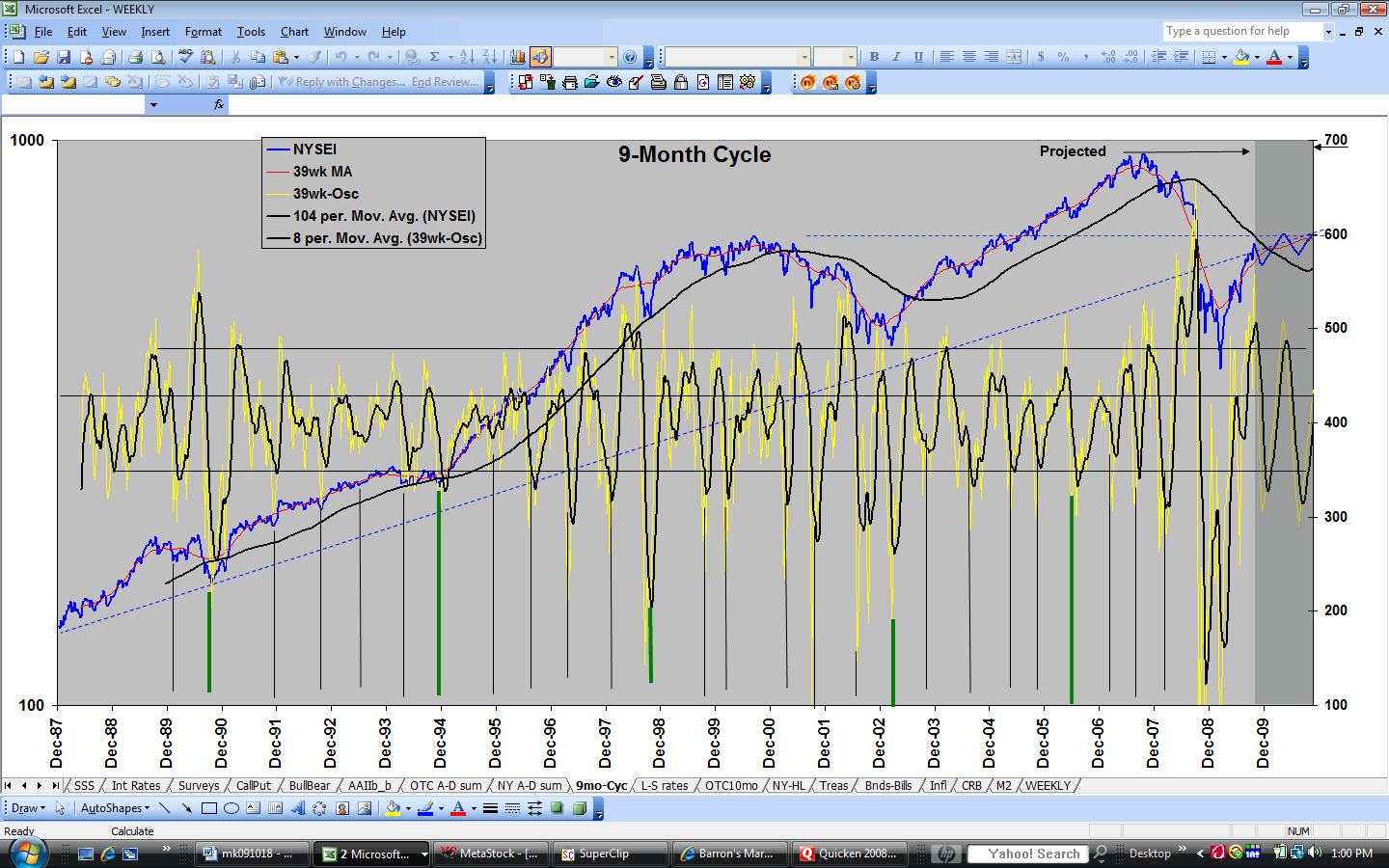
INTERMEDIATE-TERM INVESTORS (9-month cycle players - http://www.geocities.com/petegersb/9moNYA.GIF
)
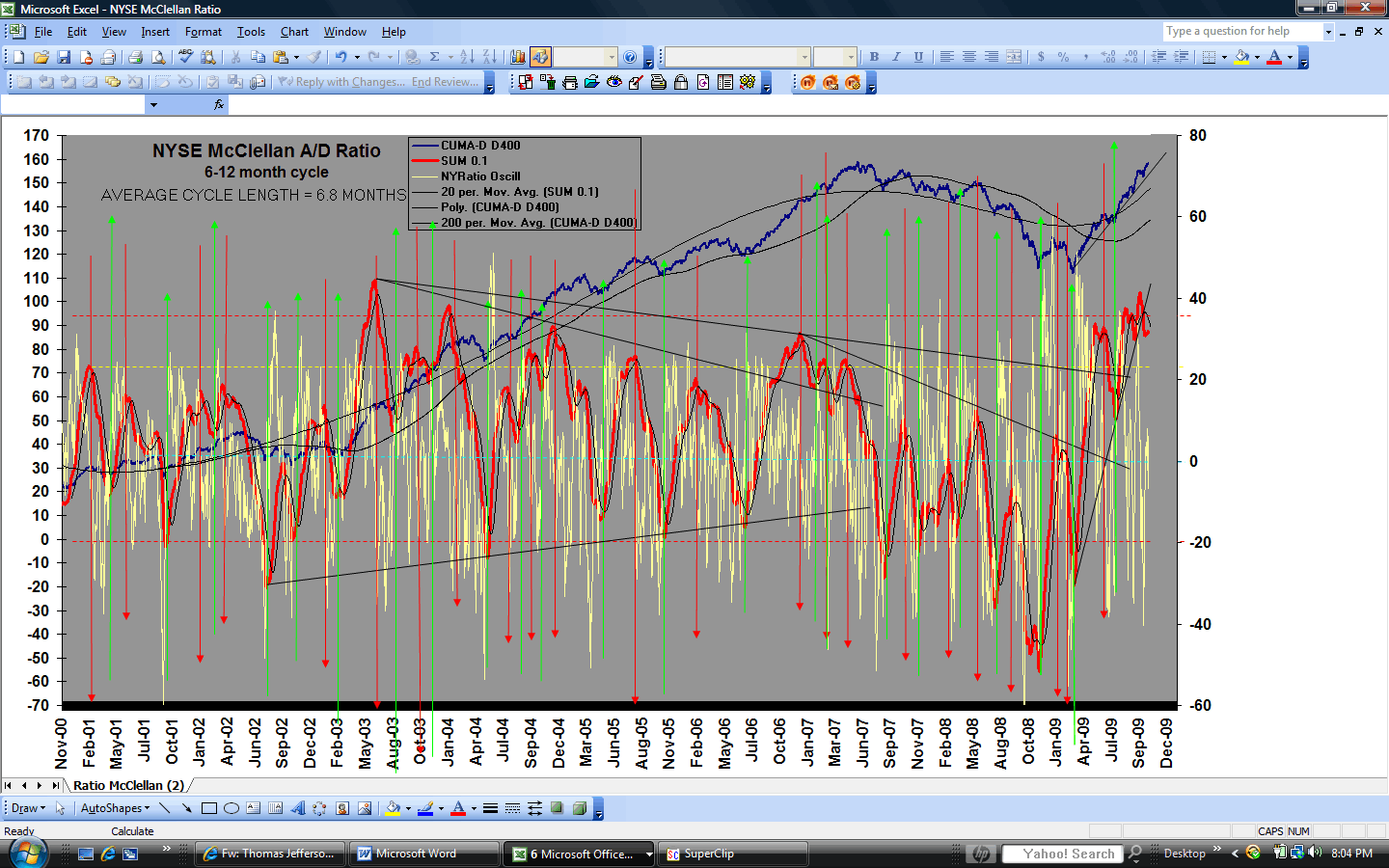
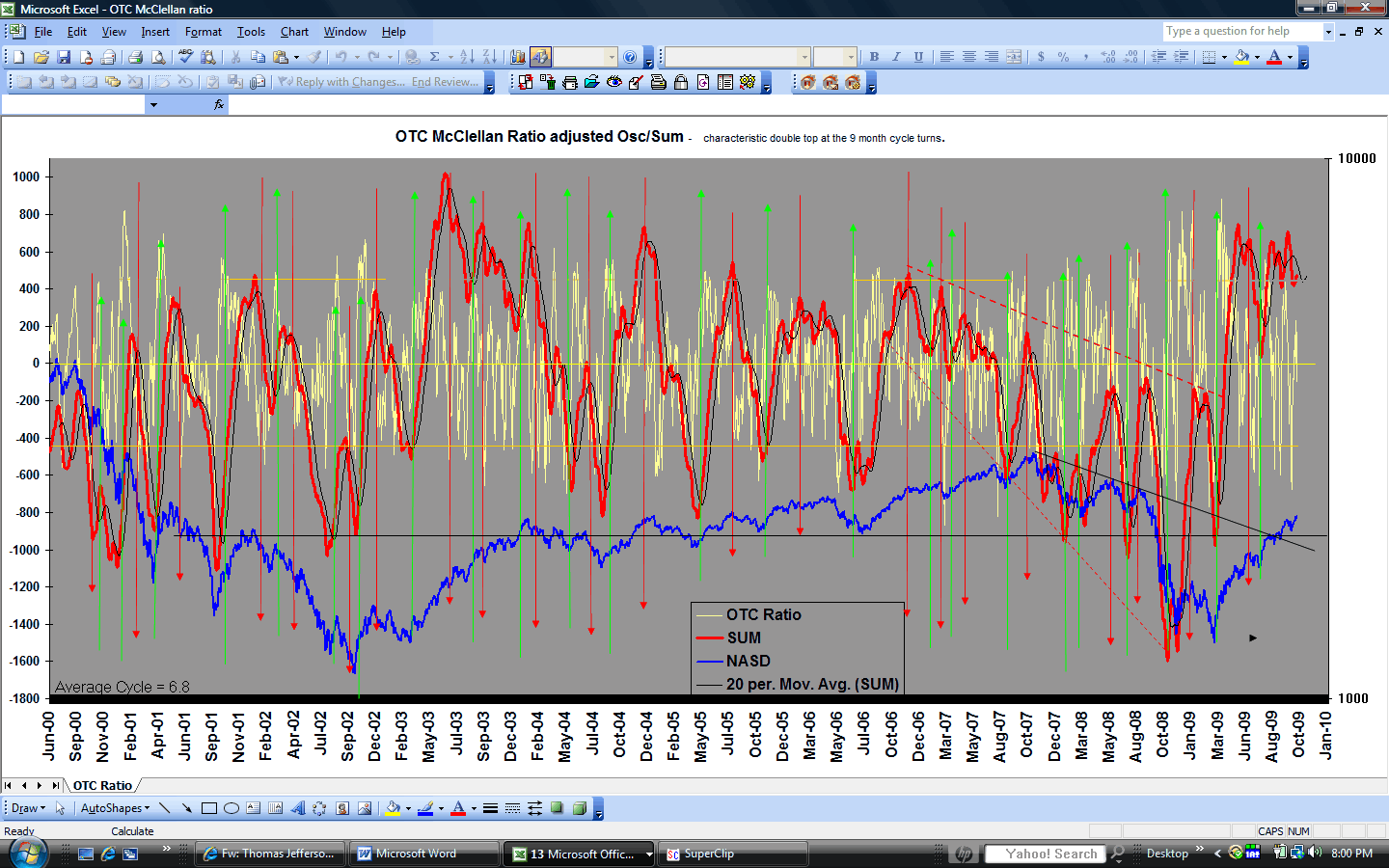
The NYSE McClellan
Summation Index (http://www.geocities.com/petegersb/A-Dsummation-NYSE.GIF
) has now joined the Nasdaq McClellan Summation Index (http://www.geocities.com/petegersb/A-Dsummation-OTC.GIF
) in completing a high-level double top and moving below the bottom of the dip
between the two peaks. Although a third peak is still possible, the pattern is
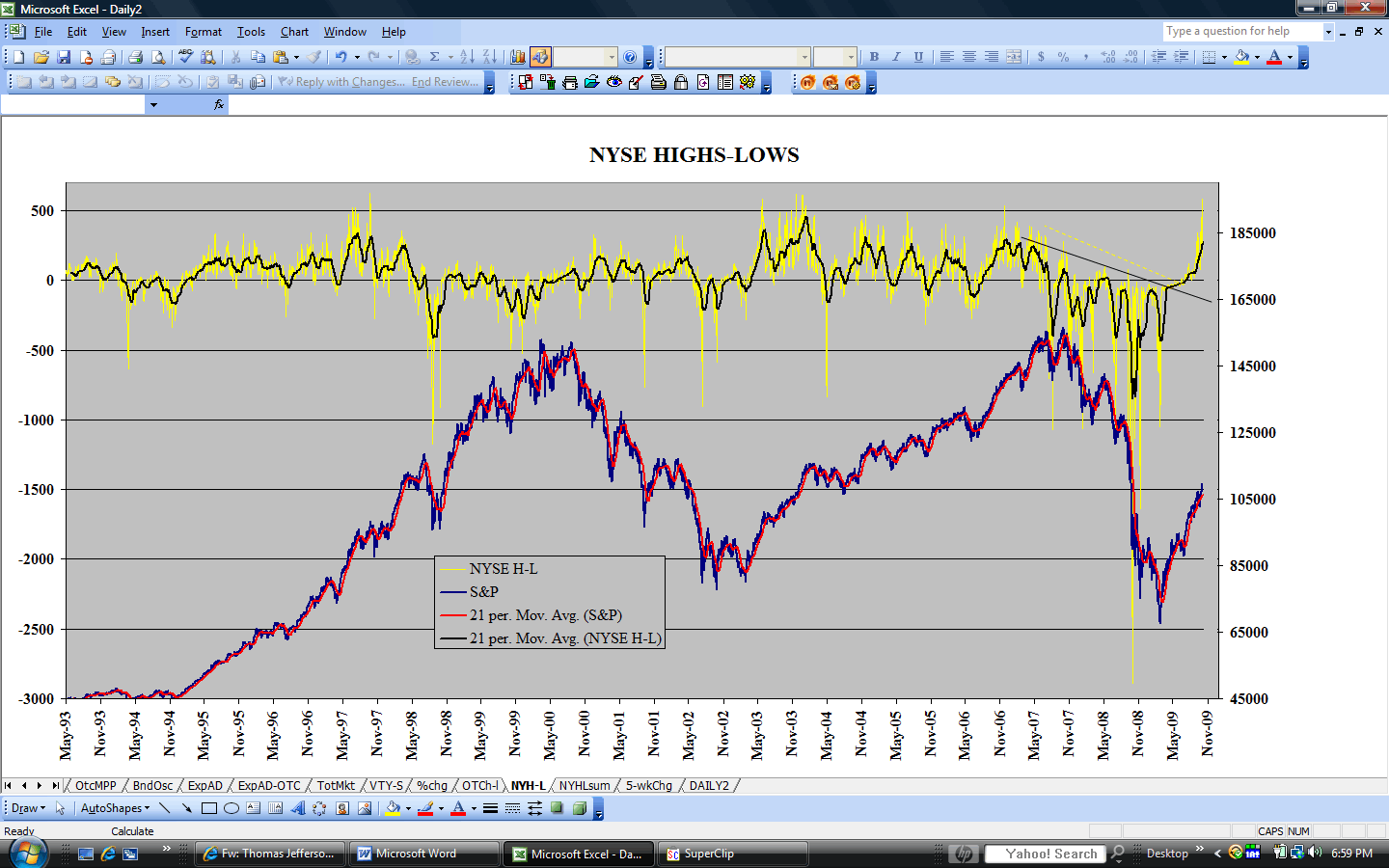
strongly suggestive of a 9-month cycle peak. The High-Low Indexes (http://www.geocities.com/petegersb/HighLowNYSE.GIF
) and (http://www.geocities.com/petegersb/HighLowOTC.GIF
) have now also broken down from their
high-level oscillations, further indicating a 9-month cycle peak. Finally the
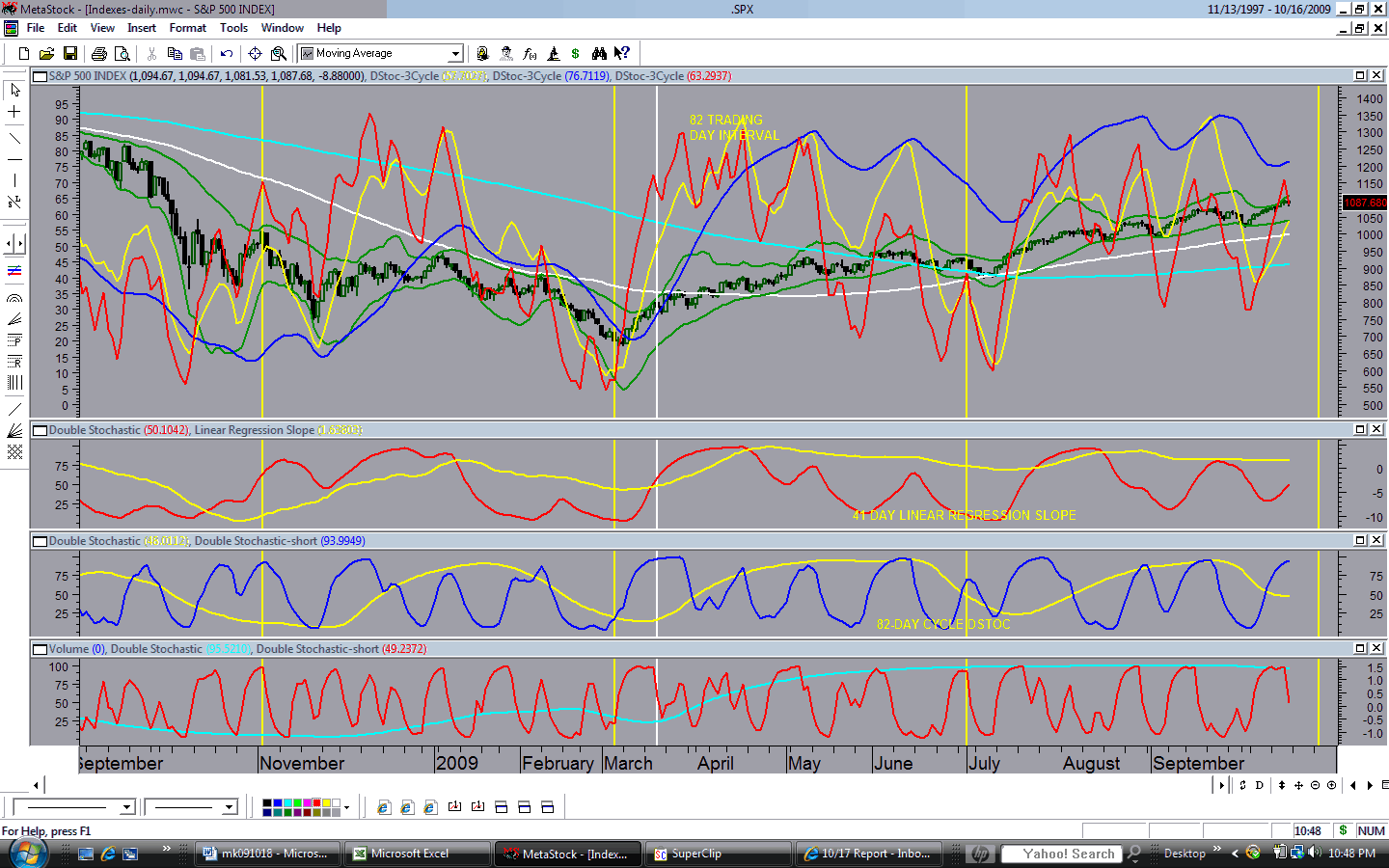
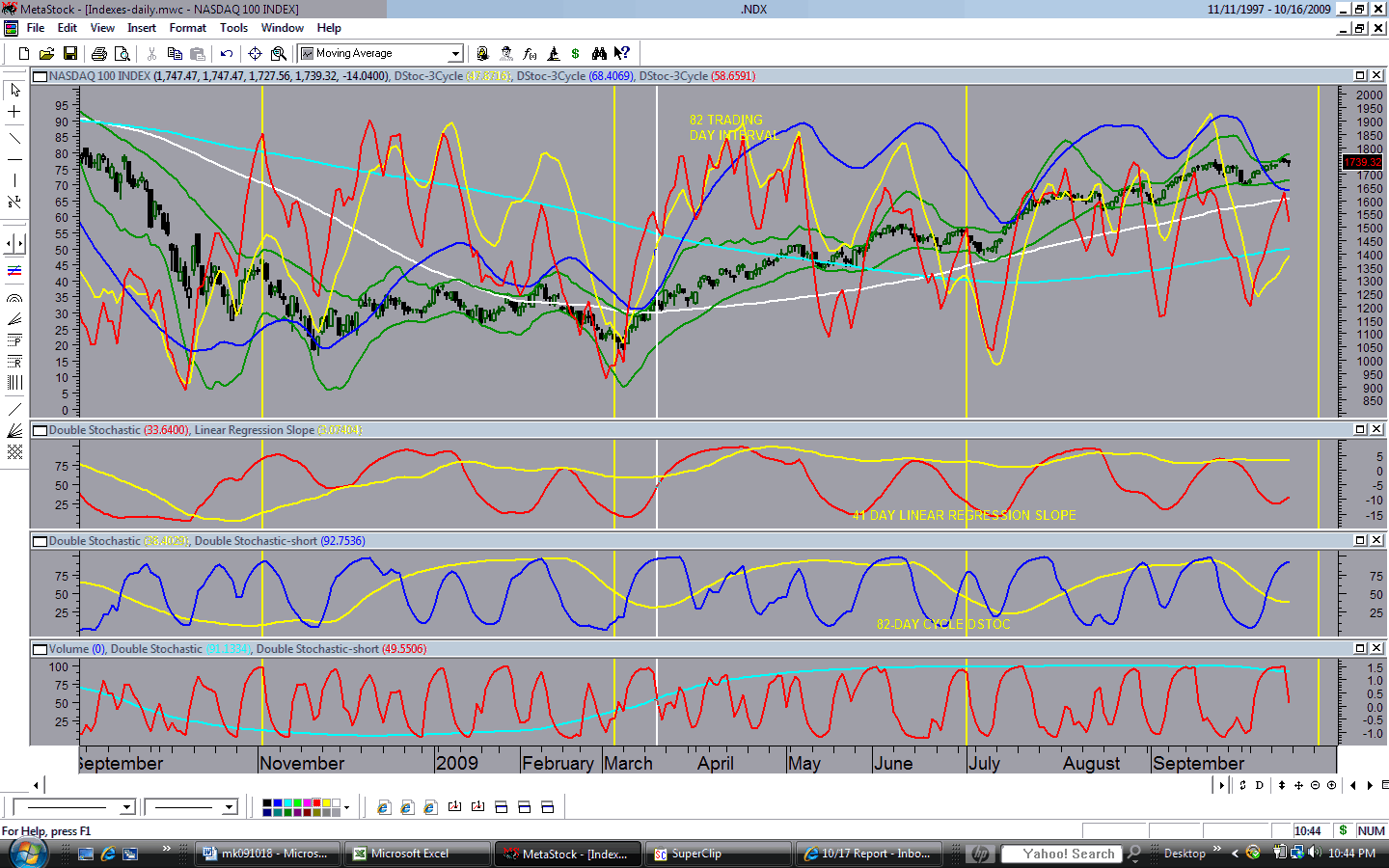
9-month cycle DStocs have turned down for both the SPX (http://www.geocities.com/petegersb/SP500.GIF) and the NDX (http://www.geocities.com/petegersb/NDX.GIF),
and the others are extremely overbought. Nine-month cycle players who are
confident that the 4-year cycle is in its late stages can sell short.
SHORT-TERM INVESTORS (10 or 20-week cycle players)
The 10 and 20-week cycle indicators continued their downtrends last week despite the rally in the indexes. The daily VIX and VXN also maintained their uptrends (contrary indicators) to conform to the other indicators, while the weekly VIX and VXN both indicate continuing 20-week cycle declines for stocks. Breadth indicators have turned down on both the NYSE and the Nasdaq, indicating a 9-month cycle downtrend. Ten and Twenty week cycle players can sell short, using the usual protective stops.
CYCLE STATUS:
The following summary of the current cycle status for stocks is based mostly on the indicators, but partly on my judgment. Currently, the indicators are in agreement only with respect to the 20-week cycle (down), the 13-day cycle (up), and the intermediate composite (down).
4-year cycle: ????? Bottomed on 10/10/02 or 7/18/06. Age 50 or 5 months. If 50 months old, the next bottom is not likely to arrive until the first half of 2007.
9-month cycle: Down Bottomed on 7/18. Age 5.5 months. Next bottom due 3/07 +/-3 months (4 years after the March 2003 bottom)
20-week cycle: Down Probably bottomed on 11/28 (SPX & NYA). Age 4 weeks. Next bottom due 4/26 +/-6 weeks
10-week cycle: Down Probably bottomed on 11/28 (SPX & NYA). Age 4 weeks. Next bottom due 2/13 +/- 3 wks
26-day cycle: Down Most indexes bottomed on 11/28. Age 22 days. Next bottom due 1/8 +/-8 days
13-day cycle: Up Most indexes bottomed on 12/22. Age 4 days. Next bottom due 1/15 +/-4 days
A
color-coded matrix showing the status of each cycle and three combinations of
cycles for a variety of major stock indexes and for four other markets follows.
This matrix is based strictly on the level and trend of the improved Double Stochastic
You want to buy when the numbers are low (oversold) and the color changes from
cyan to green (trend changes to up). You want to sell or sell short when the
numbers are high (overbought) and the color changes from yellow to gray (the
trend changes to down).
|
CYCLE
LENGTH |
|
9-MO |
20-WEEK |
10-WEEK |
26-DAY |
13-DAY |
|
39+20+10
WEEK |
52+26+13
DAY |
5-CYCLE |
|
|
|
|
|
|
|
|
|
(INTERMEDIATE) |
(SHORT) |
COMBINATION |
|
S&P500 |
|
99 |
30 |
38 |
26 |
44 |
|
63 |
36 |
56 |
|
NASDAQ
100 |
|
97 |
5 |
3 |
5 |
21 |
|
53 |
8 |
44 |
NYSE COMPOSITE |
|
99 |
59 |
59 |
39 |
68 |
|
80 |
55 |
73 |
|
RUSSELL
2000 |
|
98 |
28 |
15 |
39 |
73 |
|
63 |
36 |
61 |
|
GOLD
STOCKS (XAU) |
|
66 |
78 |
40 |
13 |
82 |
|
64 |
40 |
45 |
|
INTEREST
RATES (TNX) |
|
73 |
84 |
97 |
95 |
94 |
|
62 |
95 |
69 |
|
US
DOLLAR |
|
14 |
21 |
87 |
92 |
78 |
|
42 |
85 |
50 |
|
CRUDE
OIL |
|
18 |
95 |
62 |
9 |
11 |
|
52 |
42 |
44 |
|
|
UPTREND |
|
|
|
|
|
|
|
|
|
|
|
DOWNTREND |
|
|
|
|
|
|
|
||
|
|
OVERBOUGHT (>85) |
|
|
|
|
OVERBOUGHT (>80) |
|
|
||
|
|
OVERSOLD (<15) |
|
|
|
|
OVERSOLD (<20) |
|
|
||
|
|
TRENDLESS |
|
|
|
|
|
|
|
|
|
|
Numbers in the matrix indicate the level of each cycle
within a possible range of 0-100, with zero representing extreme oversold and
100 representing extreme overbought. |
||||||||||
The charts that illustrate
these cycles are provided in: (http://www.geocities.com/petegersb/SP500.GIF,
http://www.geocities.com/petegersb/NDX.GIF,
http://www.geocities.com/petegersb/NYSE.GIF,
http://www.geocities.com/petegersb/Russell2000.GIF,
http://www.geocities.com/petegersb/GoldStocks.GIF
, http://www.geocities.com/petegersb/TreasuryYield-10yr.GIF
, http://www.geocities.com/petegersb/Dollar.GIF,
http://www.geocities.com/petegersb/CrudeOil.GIF)
These charts include, in the price panel, a stack of the shorter cycles, a stack of the longer cycles and a stack of all five cycles (yellow plot). The 5-cycle stack retains the turning point precision of the shorter stack and the better indication of the overbought/oversold condition of the market provided by the longer stack.
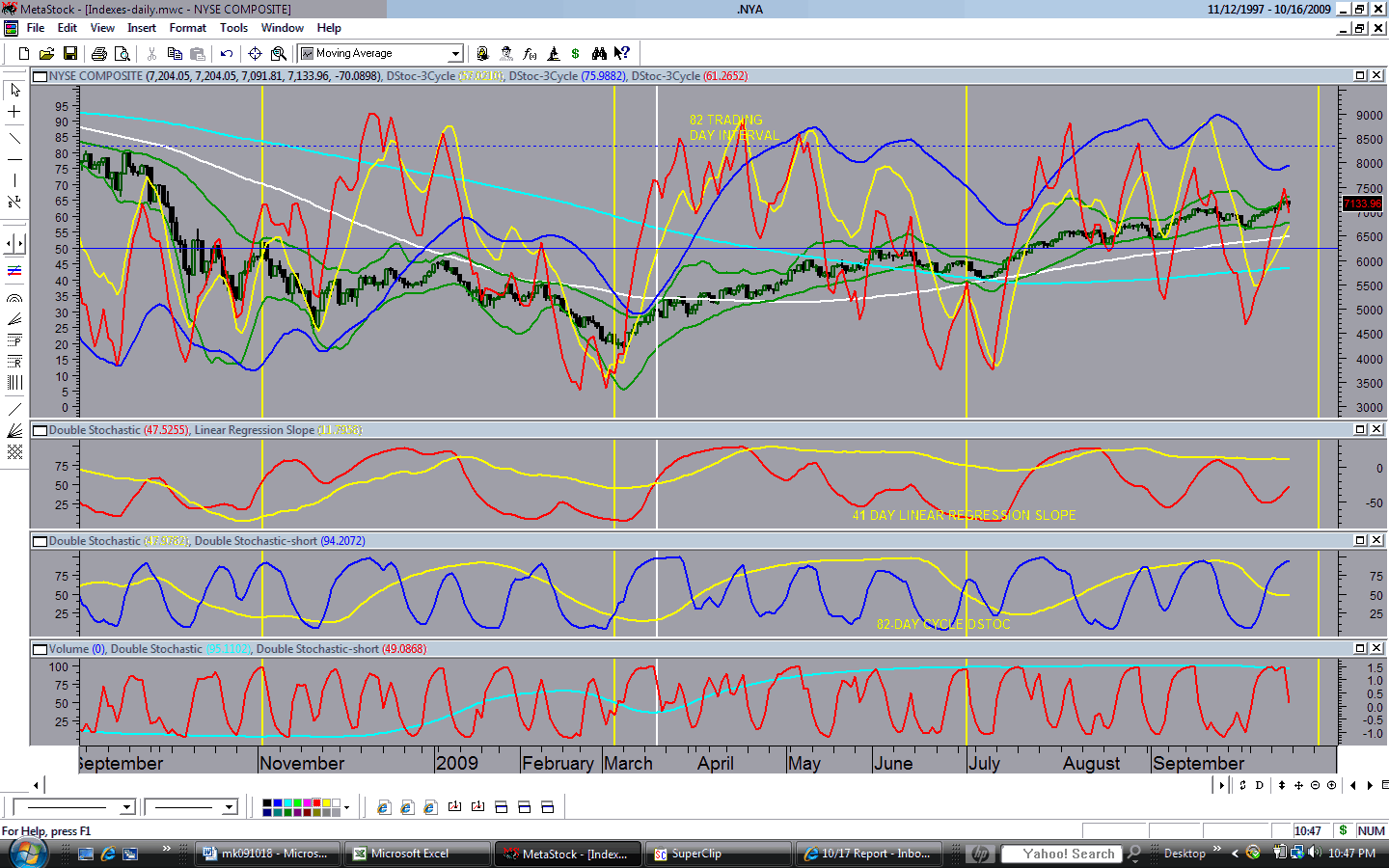
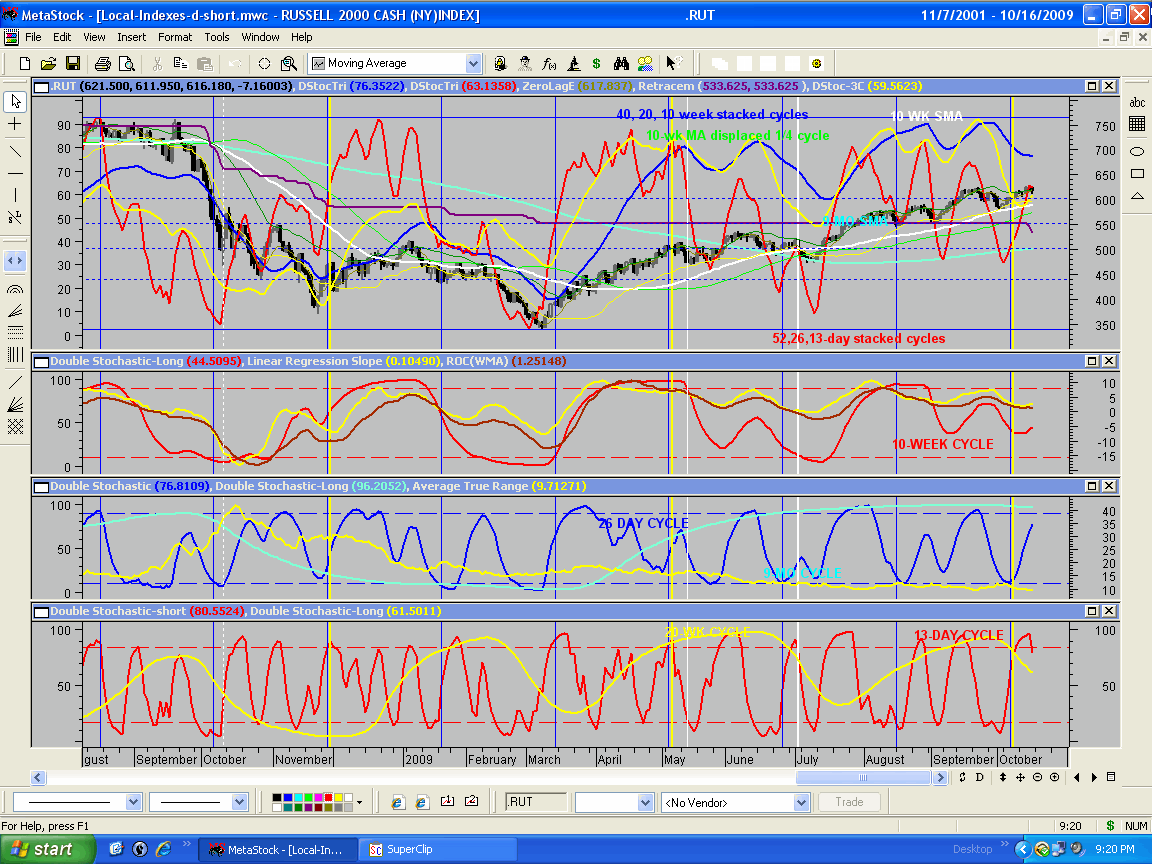
STOCKS: (http://www.geocities.com/petegersb/SP500.GIF, http://www.geocities.com/petegersb/NDX.GIF, http://www.geocities.com/petegersb/NYSE.GIF, http://www.geocities.com/petegersb/Russell2000.GIF)
The 13-day cycle
produced better results than I expected, and it looks like it may have some
upside left. More importantly, the short-term composite turned up, suggesting a
last hurrah for this market. Friday’s late sell off leaves a lot of room for
doubts about that conclusion, but such light volume holiday action is always
suspect. The same can be said for the entire week, so the upturn in the
short-term composite is suspect as well. The intermediate composite, however,
is much less affected by distortions in a 4-day holiday week, and it remains in
a well-defined downtrend on all of the indexes. The next couple of weeks should
be more definitive for the markets. We may find a reasonable amount of stock
dumped on the market by those investors that have been recently holding off
intended selling in order to defer capital gains taxes for another year.
The entire fourth
quarter didn’t follow the “most
likely scenario” that I described on 9/4. Adjustments in my outlook are shown in black:
1)
A short-term decline beginning early this week (began 9/6) that
produces a nested low of the 13 and 26-day cycles near the middle of the month
– not serious enough to be called anything other than a “healthy” correction by
the market pundits. (The 13 and 26-day cycles bottomed on 9/11 following a
1%-3% correction, depending on index.)
2)
A weak short-cycle rally in the second half of September
that struggles against downtrending 10 and 20-week cycles. (The rally was much
stronger than expected as the 10 and 20-week cycles unexpectedly headed for
right-translated peaks, thereby providing support rather than resistance during
September, October and November.).
3)
A steeper decline in October that leads to a nested low of
the 13-day, 26-day, 10-wk, and 20-week cycles sometime (probably late) in
October. (Despite the lack of any significant pullback,
it now appears likely that the 20, 10 and 5-week cycles established a nested
low in late November, or mid December in the case of the Nasdaq.)
4)
A 20-week cycle rally off of the October low that’s good
enough to convince most market observers that the widely expected 4-year cycle
low is a done deal. (Many are already convinced.) Accordingly it’s likely to
be accompanied by rapidly increasing optimism that the traditionally favorable
November -January period and the traditionally favorable 3rd year of
a presidential cycle will produce strong gains in stocks. (Sentiment indicators
are still a mixed bag but rapidly turning negative)
5)
An intermediate-term peak, probably in November or December
(Looks
like we got it in mid-December for some indexes) as sentiment again reaches
euphoric levels on expectations that the Fed will soon be cutting rates in
response to a rapidly deteriorating economy. Prevailing market commentary
should be dismissing the weak economy with the observation that the market
usually bottoms about 6-months before the economy does, and the belief that
such a bottom had occurred in October. (Hasn’t worked quite that way, but belief in a Goldilocks
economy and a soft landing is widespread). The 9-month and 10-week cycle (also the 20-week
cycle) should be middle aged by then and ready to produce some
serious downward pressure.
6)
A plunge into the 9-month/4-year cycle low sometime in the
first half of 2007. That seems unlikely by recent history, but there is plenty
of precedent for multi-year lows in the first half, among them: 1932, 1938,
1942, 1962, 1970, 1978, 1980, and perhaps even 2003 when the NYSE Composite
bottomed at lower low in March of 2003 than in October of 2002 when the other
indexes made their lows. Just because it hasn’t happened in the last quarter of
a century is all the more reason to expect it soon. A generation of investors who didn’t develop their market biases
in the last quarter of a century has gone to its graves, and the current generation
rarely looks back at market history before the great bull market that began in
1982. The market usually does what it needs to do to disillusion the maximum
number of investors.
All sectors except
Industrials rose last week, and it was unchanged. Nevertheless, the board
continues to show mostly red for both short and intermediate trends. The rally
was too week to reverse any intermediate downtrends, and only the week’s two
strongest sectors, Technology and Materials, managed to begin short-term
uptrends. Over the last 10 weeks, Energy has moved from first to last in
relative strength, while Health Care moved from last to first.
|
RELATIVE
PERFORMANCE OF S&P SECTORS |
|
|
|
|
SYMBOL |
|
|
|
Three |
|
||
|
|
|
|
|
|
|
|
|
|
|
|
Week's
% |
Prior |
|
12/29/2006 |
|
13
DAYS |
5 WKS |
10 WKS
|
20 WKS
|
40 WKS |
|
INTERM
COMP |
SHORT
COMP |
Price |
Change |
Wk Price |
|
|
|
|
|
|
|
|
|
|
|
|
|
|
|
CONSUMER
DISCRETIONARY |
|
4 |
6 |
3 |
1 |
2 |
XLY |
67 |
39 |
38.36 |
0.34% |
38.23 |
|
TECHNOLOGY |
|
6 |
9 |
6 |
2 |
8 |
XLK |
52 |
22 |
23.26 |
0.95% |
23.04 |
|
INDUSTRIALS |
|
5 |
8 |
8 |
5 |
7 |
XLI |
69 |
24 |
35.01 |
0.00% |
35.01 |
|
MATERIALS |
|
7 |
7 |
2 |
3 |
4 |
XLB |
71 |
28 |
34.81 |
0.93% |
34.49 |
|
ENERGY |
|
9 |
5 |
1 |
9 |
3 |
XLE |
66 |
23 |
58.63 |
0.07% |
58.59 |
|
CONSUMER
STAPLES |
|
3 |
3 |
7 |
7 |
6 |
XLP |
84 |
72 |
26.12 |
0.19% |
26.07 |
|
HEALTH
CARE |
|
1 |
4 |
9 |
8 |
9 |
XLV |
68 |
52 |
33.49 |
0.15% |
33.44 |
|
UTILITIES |
|
8 |
1 |
4 |
6 |
1 |
XLU |
72 |
23 |
36.72 |
0.41% |
36.57 |
|
FINANCIALS |
|
2 |
2 |
5 |
4 |
5 |
XLF |
84 |
65 |
36.74 |
0.57% |
36.53 |
|
|
|
|
|
|
|
|
Average |
70 |
39 |
35.90 |
0.40% |
35.77 |
|
|
|
|
|
|
|
|
S&P |
63 |
36 |
1418.30 |
0.53% |
1410.76 |
|
STRONG |
|
|
|
|
|
|
SPY |
59 |
32 |
141.62 |
0.62% |
140.75 |
|
WEAKENING |
|
|
|
|
|
|
|
UPTREND |
|
|
|
|
|
WEAK |
|
|
|
|
|
|
|
OVERBOUGHT |
>80 |
|
|
|
|
STRENGTHENING |
|
|
|
|
|
|
|
DOWNTREND |
|
|
|
|
|
Sectors
Beating S&P 500 |
|
2 |
4 |
4 |
4 |
6 |
|
OVERSOLD |
<20 |
|
|
|
INTEREST RATES AND BONDS:
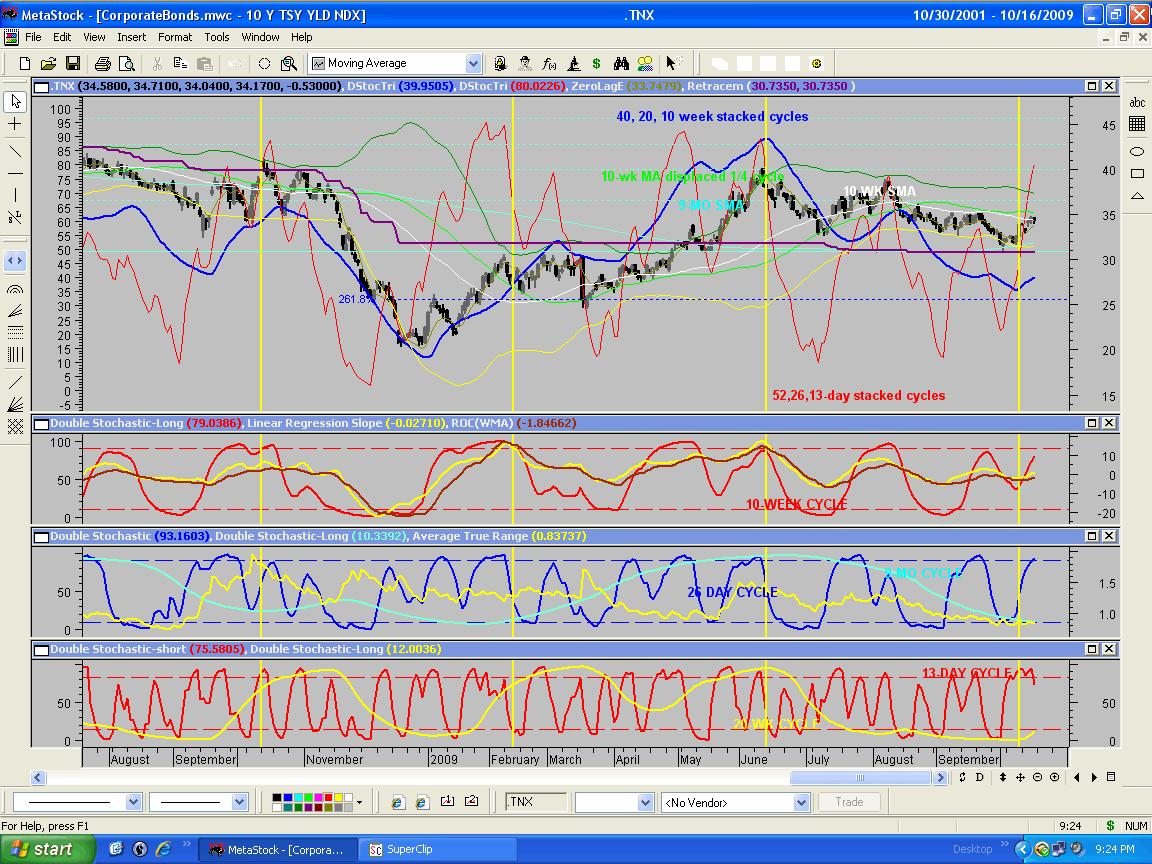
The 10-year treasury interest rate (http://www.geocities.com/petegersb/TreasuryYield-10yr.GIF) continued its uptrend last week to produce an extreme short-term overbought condition and firmly establish the intermediate uptrend. While the uptrend is ripe for a short-term pause, the intermediate trend is unlikely to encounter much resistance below about 4.85%, where it would have retraced 50% of the June-November decline and meet the 200-day moving average.
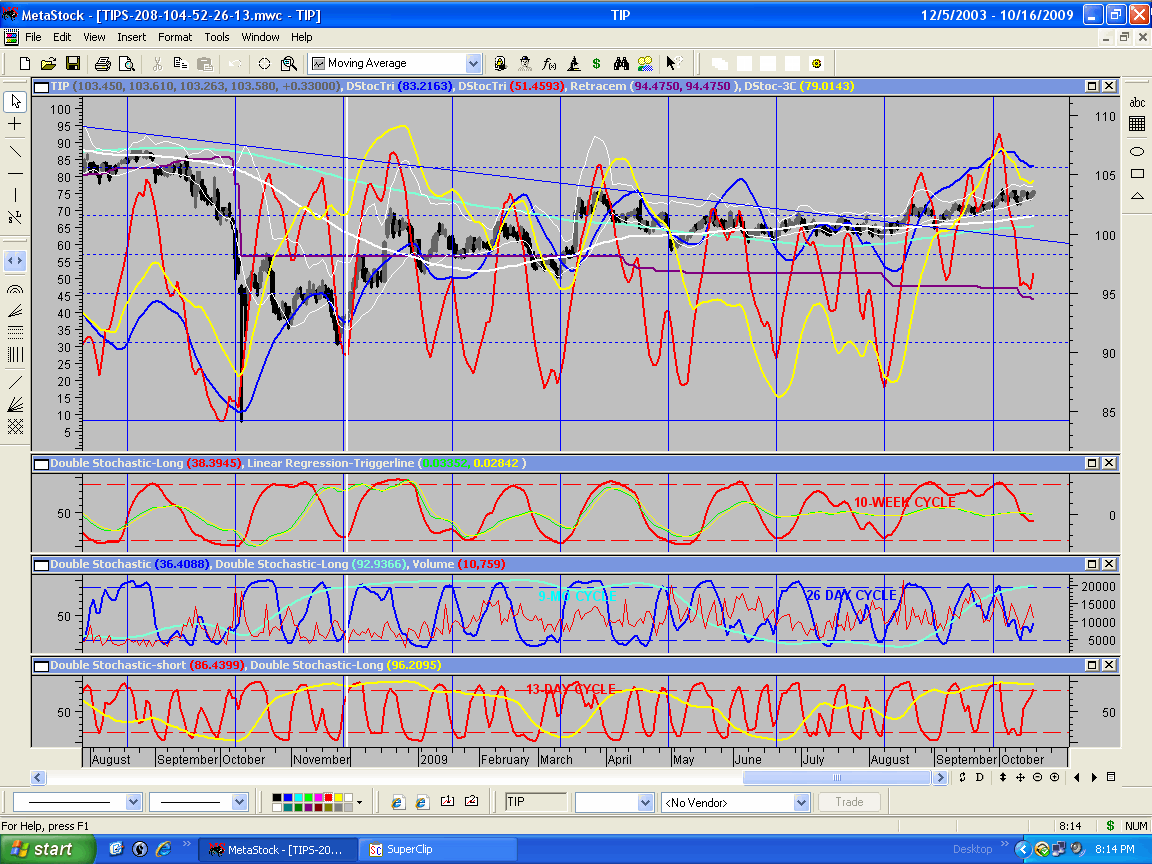
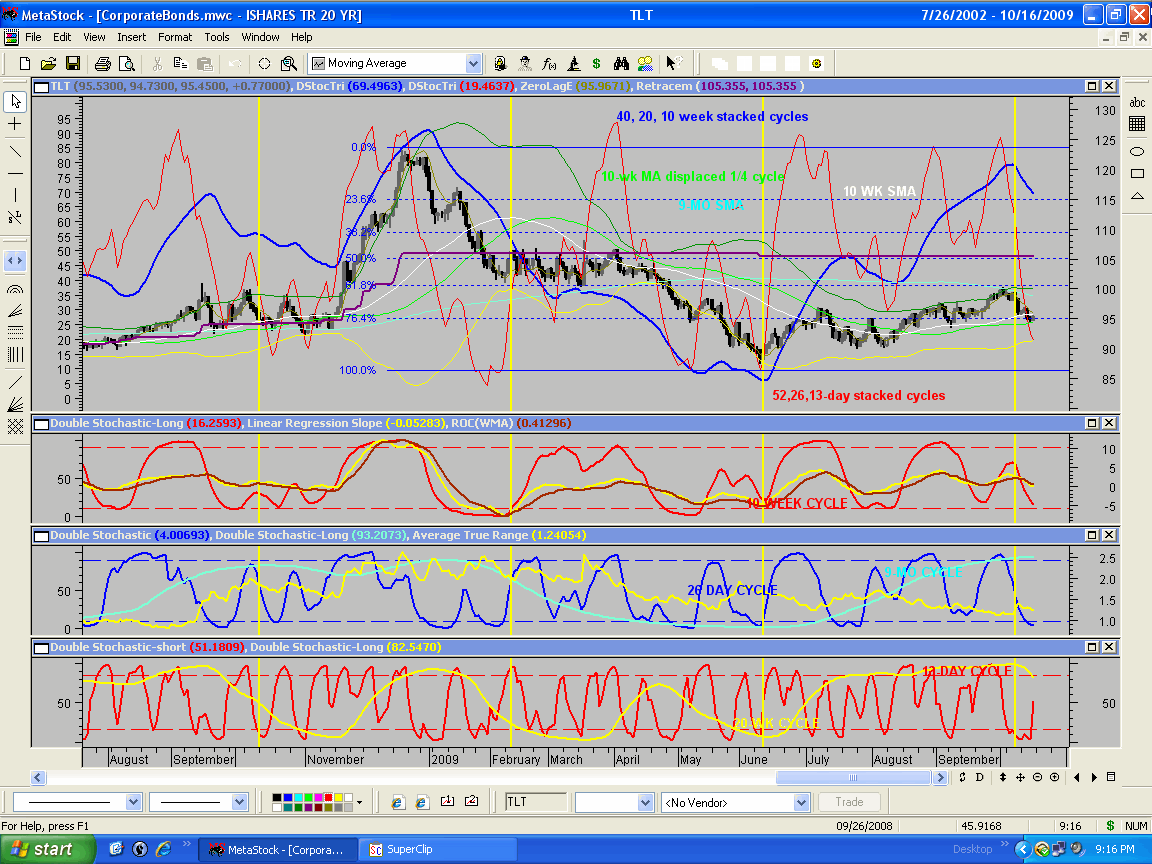
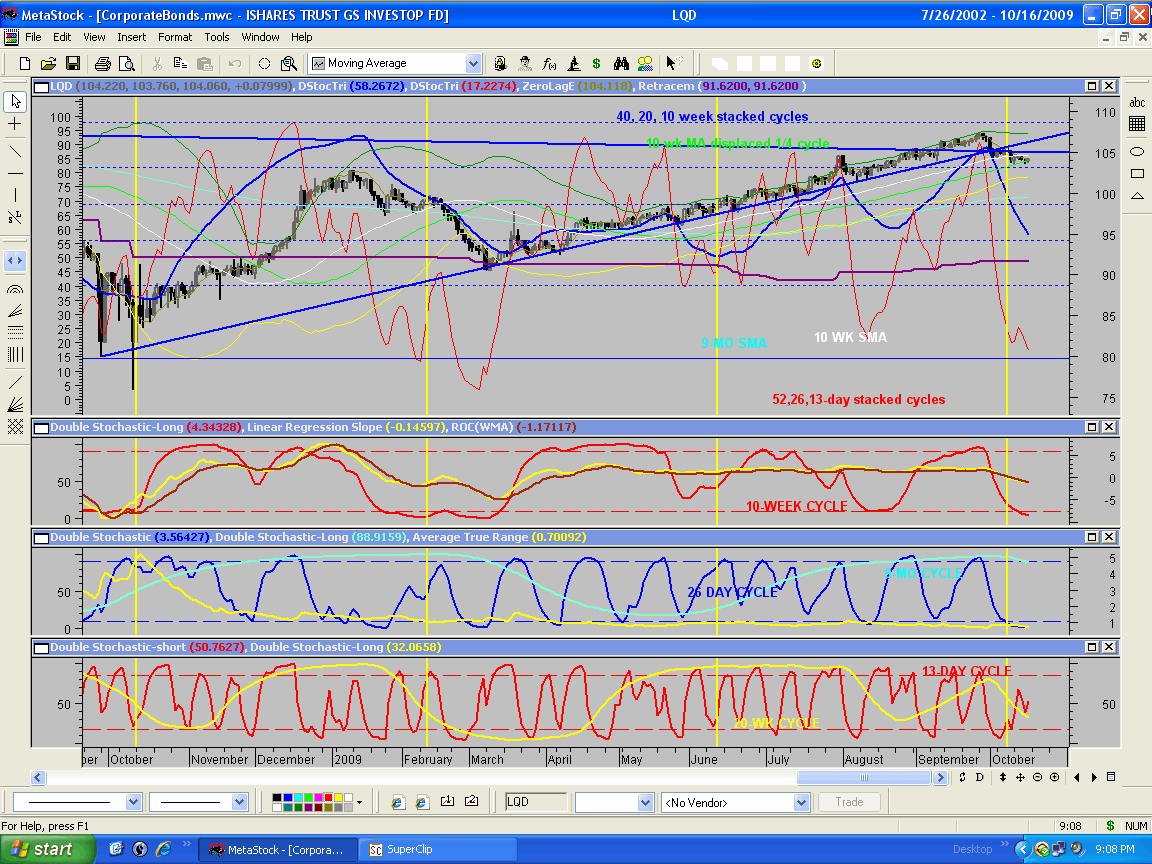
Inflation Protected Treasuries (http://www.geocities.com/petegersb/TIPs.GIF) outperformed conventional bonds (20-year Treasuries (http://www.geocities.com/petegersb/Treasury-20yr.GIF), but declined steeply nonetheless. Corporate bonds (http://www.geocities.com/petegersb/CorporateBonds.GIF ) also declined steeply. The cyclic picture for all continues to look much like it did last February, leaving room for a short-term rally attempt within an ongoing intermediate downtrend.
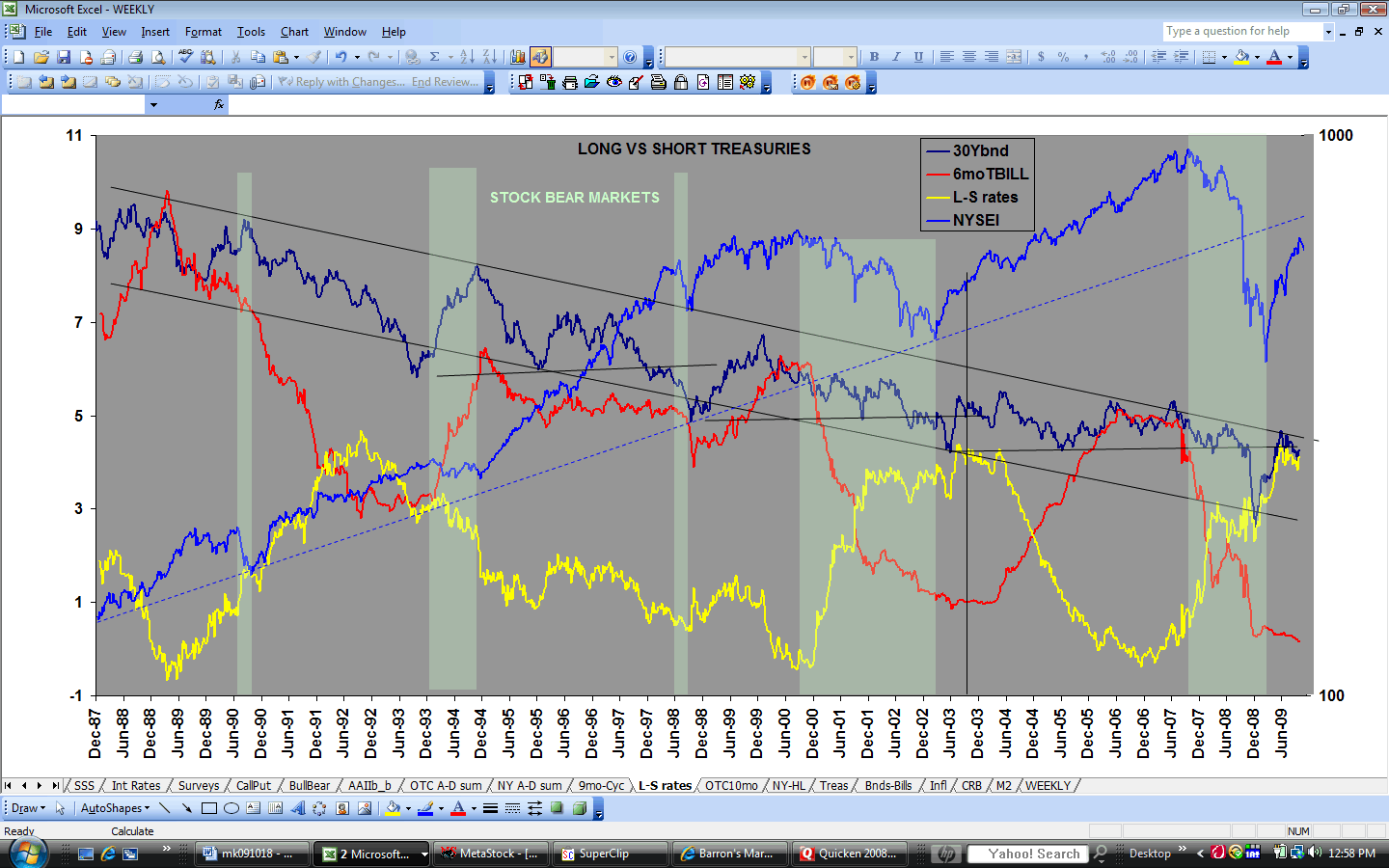
The spread (http://www.geocities.com/petegersb/Long-ShortYields.GIF) between long-term (latest issued 30-year bond) and short-term rates (6-month T-Bill) bounced from its early December low of -0.39% to –0.09% currently - a dramatic drop from its peak of 4.27% in May of 2004. The last two times that the spread reached negative territory, 1989 and 2000, the cyclical low in bonds had already passed, but the 4-year cycle low in stocks lay ahead and so did the last two recessions. It’s also noteworthy that the pattern of short-term and long-term interest rates looks very similar to that of 2000, when a lengthy plunge in stocks ensued, and very unlike the end of the prior two tightening cycles when brief or mild bear markets followed. If the pattern continues to track it’s good time to sell stocks and buy bonds.
GOLD:
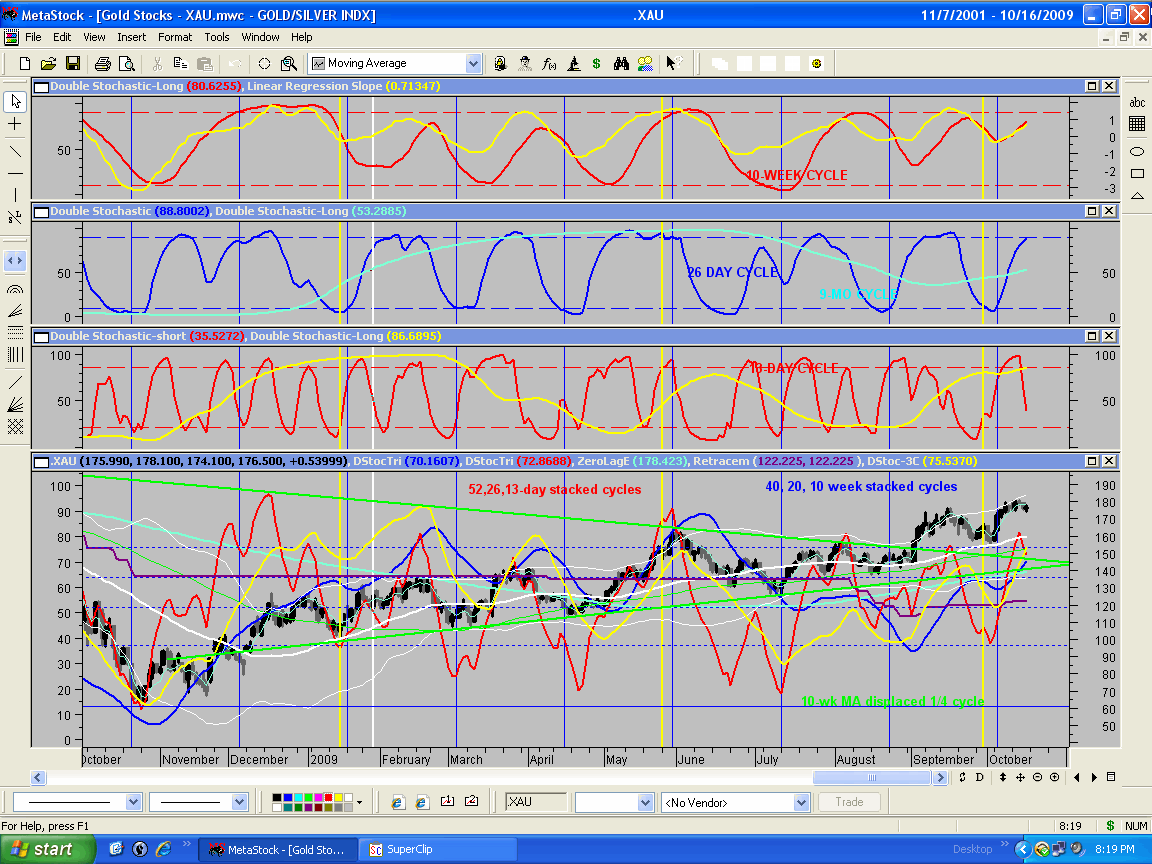
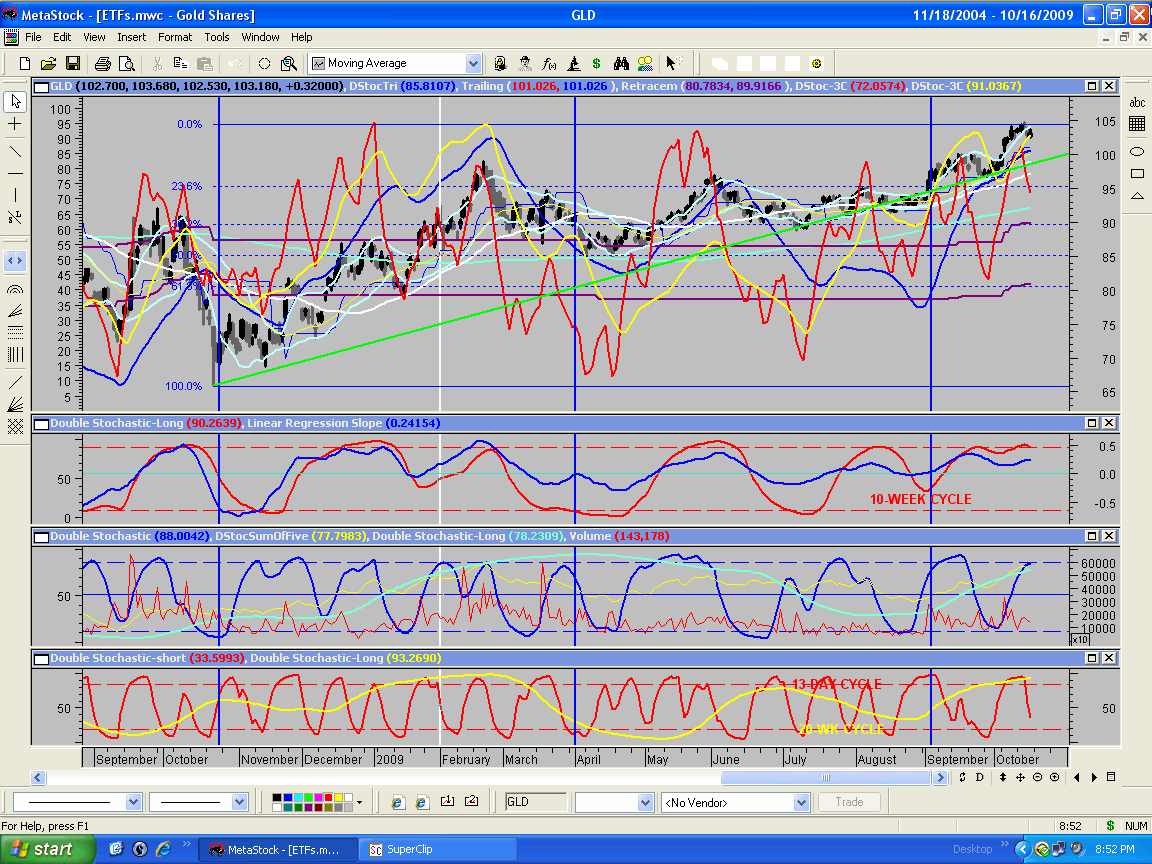
Gold stocks, as represented by the XAU (http://www.geocities.com/petegersb/GoldStocks.GIF), found short-term support last week at the convergence of the 50 and 200-day moving averages. The short-term rally is bucking a continuing intermediate downtrend, so the trading range between 120 and 150 should continue. The better of the ULTRA gold timing systems (see below) issued a sell signal on Friday.
Gold Bullion (http://www.geocities.com/petegersb/GoldBullion.GIF) also bounced off of support at the convergence of its 50 and 200-day moving averages. Conflicting cycle directions should also hold Bullion in its trading range between $560 and $650 for a while longer.
DOLLAR:
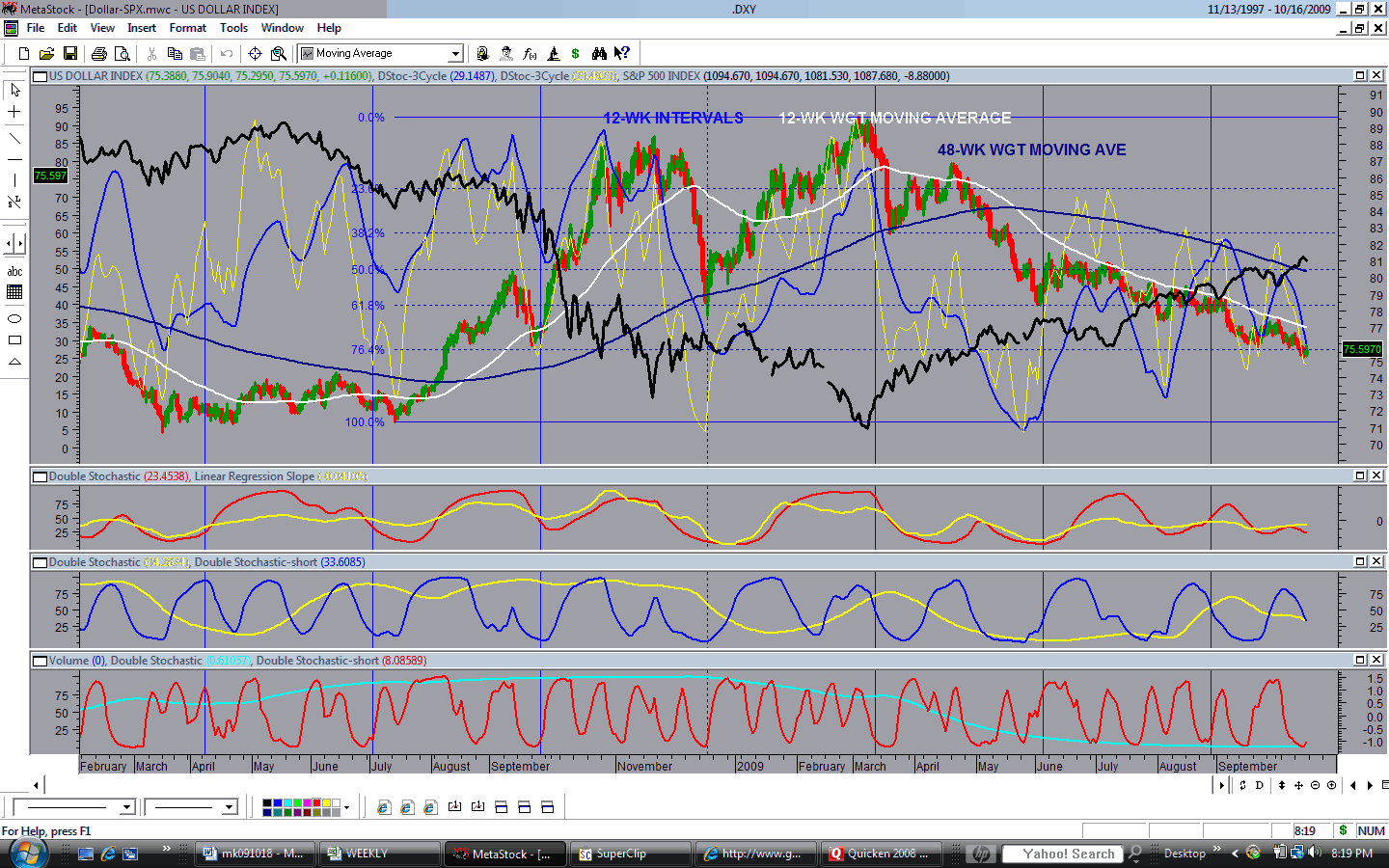
The 20-week cycle rally in the Dollar (http://www.geocities.com/petegersb/Dollar.GIF) that began on 12/5 has been stalled for the last two weeks. It is now short-term overbought, and any significant short-term correction threatens to turn the intermediate composite downward as well. The long-term downtrend in the dollar shows no indication of being near a bottom. What will eventually stop the dollar’s slide? Perhaps significantly higher interest rates and a reversal of the negative savings rate in the US that forces us to rely on foreigners to fund our twin deficits.
ENERGY:
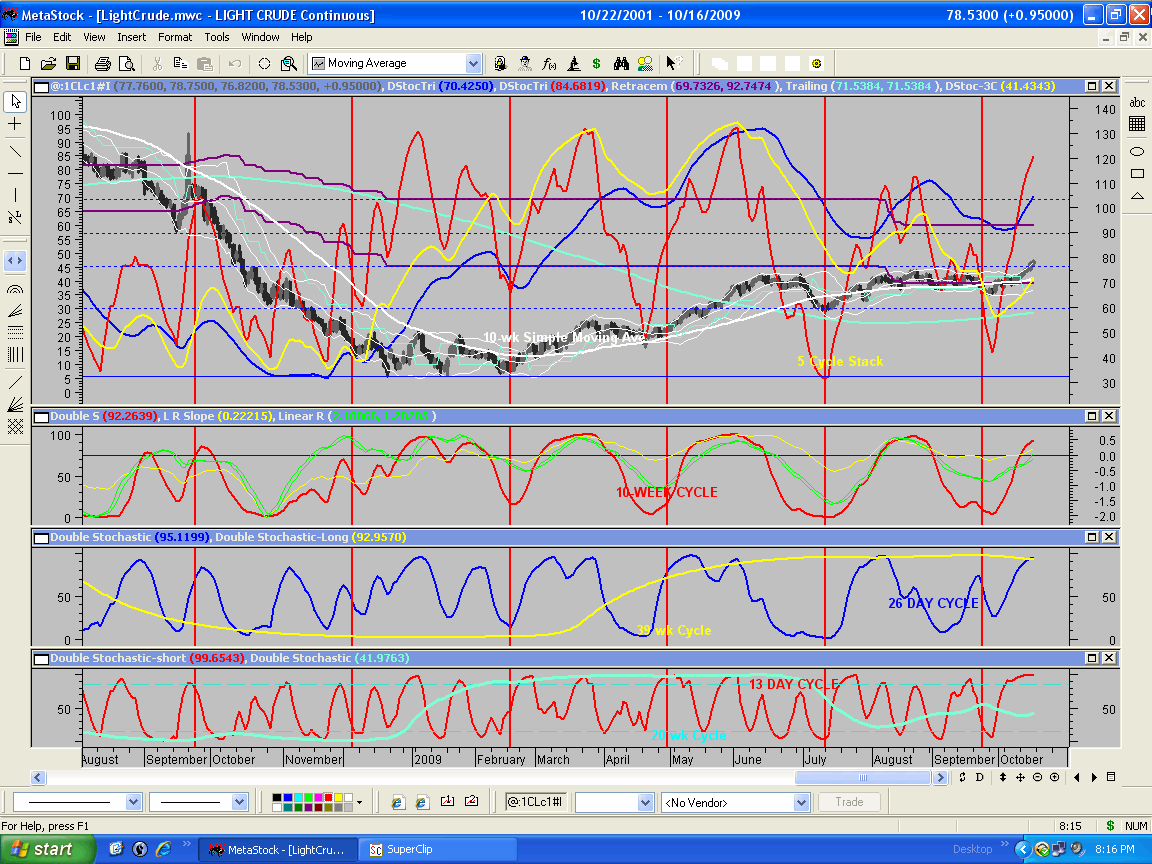
Crude Oil (http://www.geocities.com/petegersb/CrudeOil.GIF) followed the script last week. It turned down from a left-translated 20-week cycle top at $64 and has found at least temporary support at the 50-day moving average near $60. With both the short and intermediate composites now trending downward in the middle of the range, $60 support is likely to be broken this week. Look for next support in the mid $50 range.
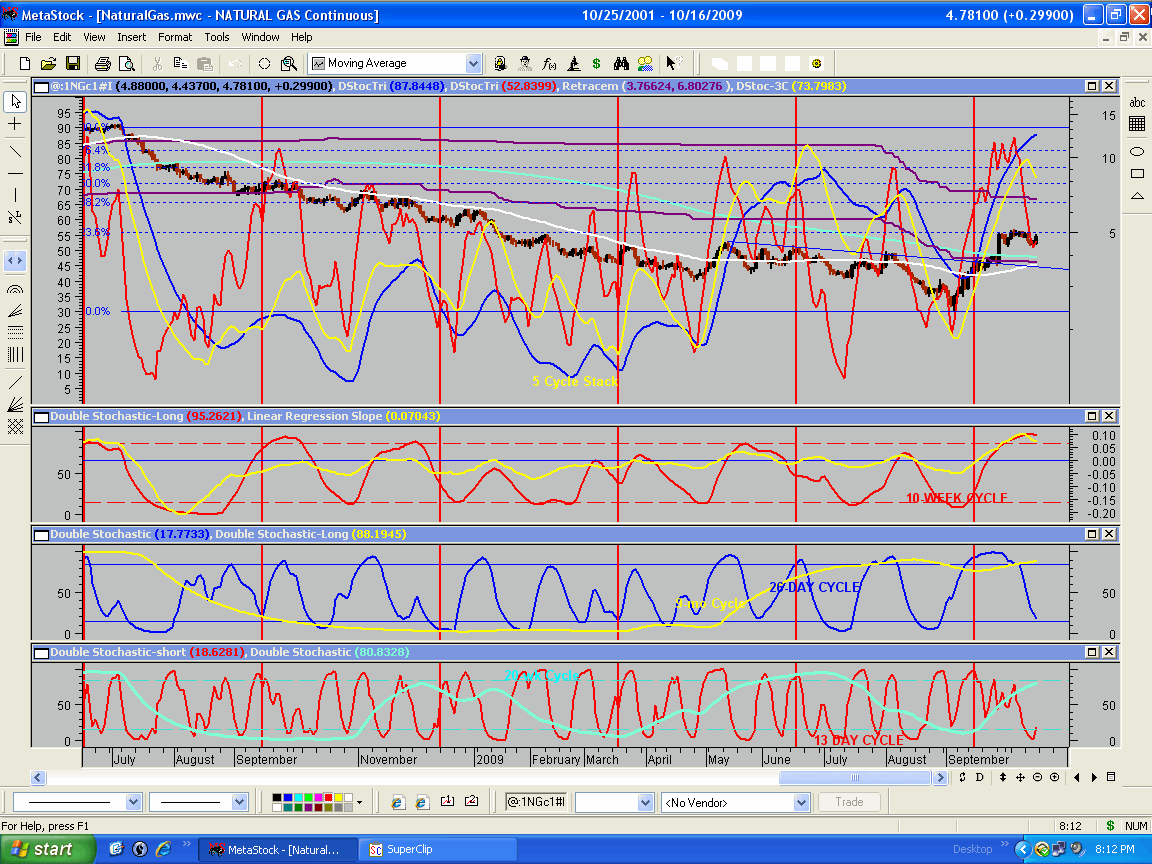
Natural Gas (http://www.geocities.com/petegersb/NaturalGas.GIF) found short-term support in the middle of last week – a little later and lower than expected. It’s likely to produce a rally of 10-week cycle proportions, but it probably won’t put much of a dent in the intermediate downtrend.
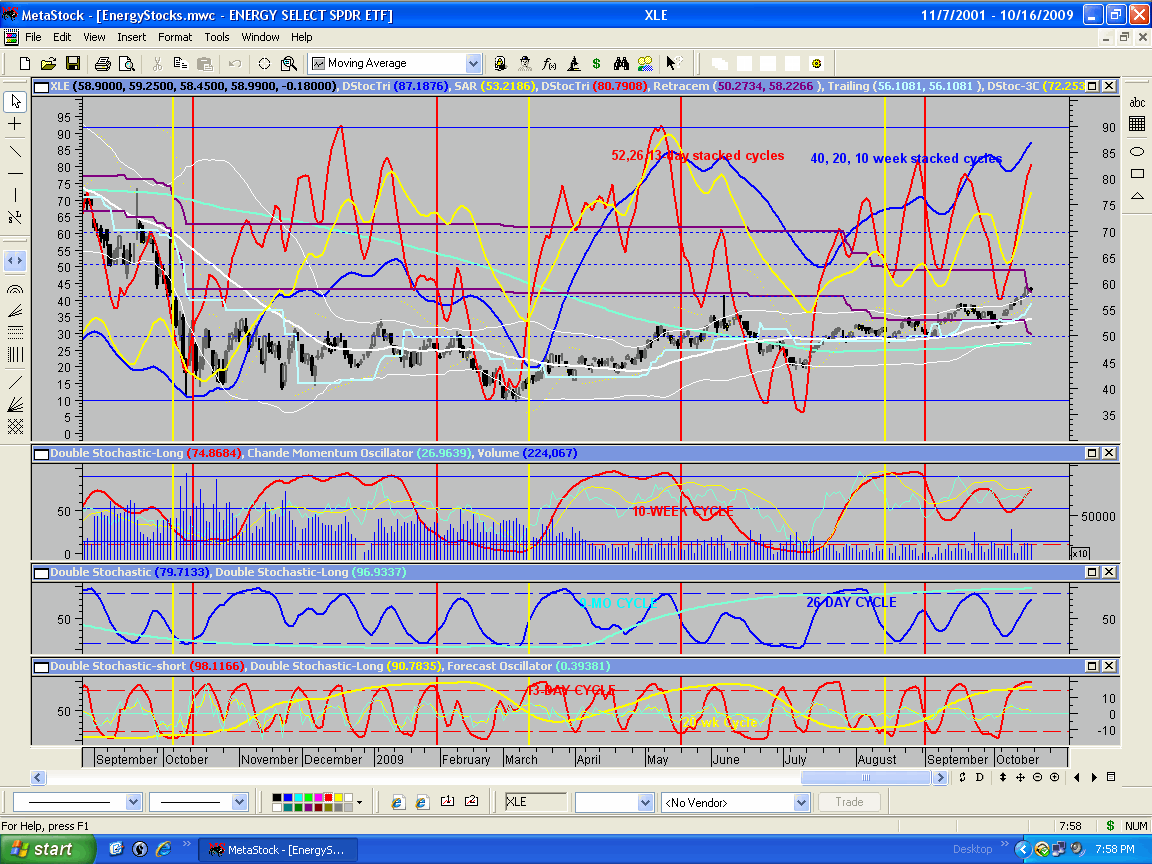
Energy stocks (http://www.geocities.com/petegersb/EnergySPDR.GIF) were little changed last week – holding up better than the underlying commodities. Nevertheless, the short and intermediate composites continue in downtrends that show little sign of bottoming. A test of the bottom of the trading range still appears likely in the March time frame.
SENTIMENT:
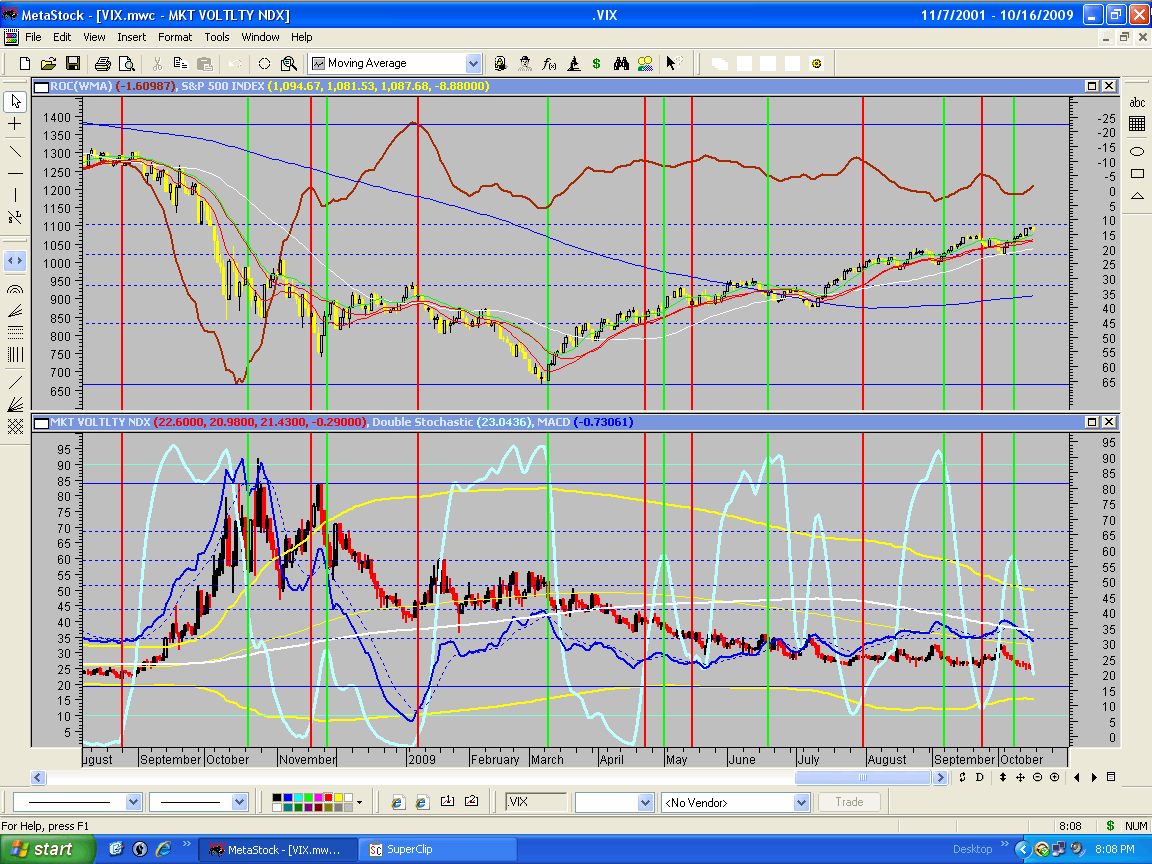
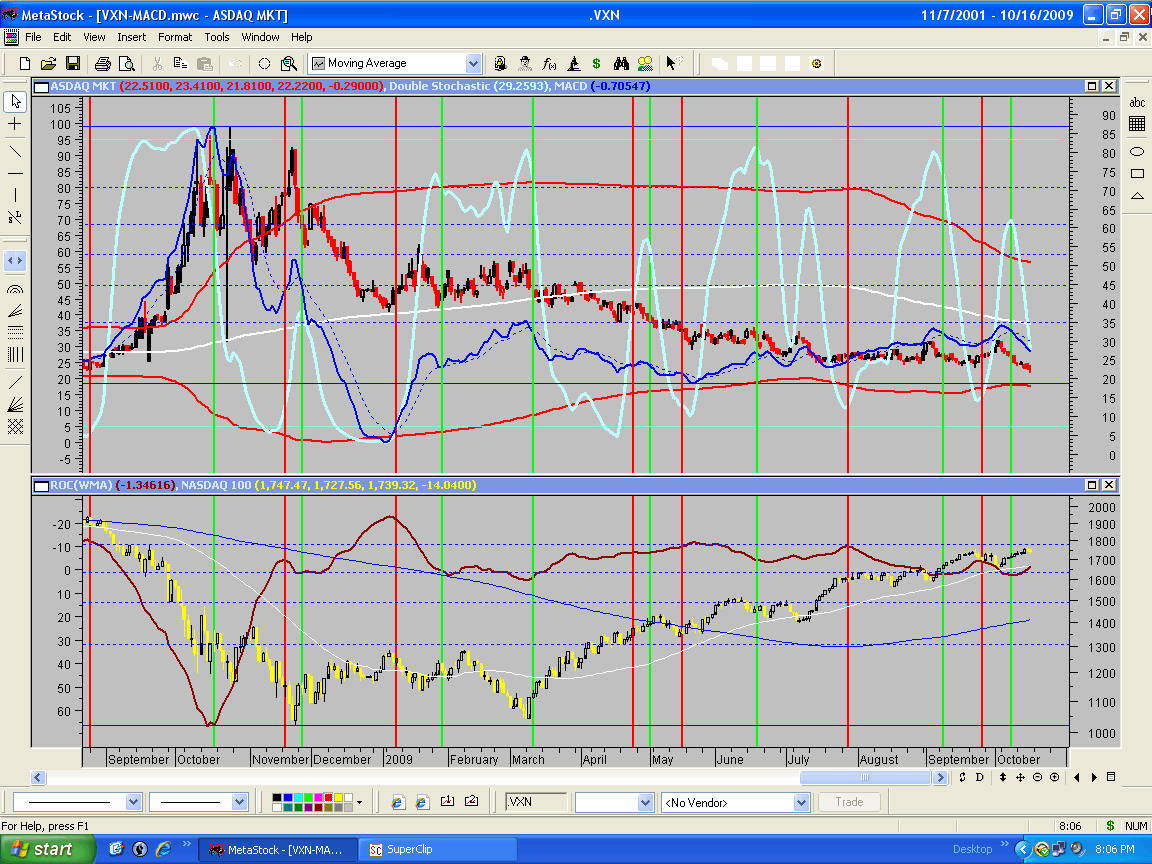
The DStocs and MACDs for the daily
VI X (http://www.geocities.com/petegersb/VIX.GIF)
and for the daily VXN (http://www.geocities.com/petegersb/VXN.GIF)
maintained their uptrends last week to sustain their recent sell signals.
The DStocs of the weekly VIX (http://www.geocities.com/petegersb/VIX-weekly.GIF)
and the weekly VXN (http://www.geocities.com/petegersb/VXN-weekly.GIF) continued to rise last week to sustain their 20-week
cycle sell signals
for the NDX and the SPX.
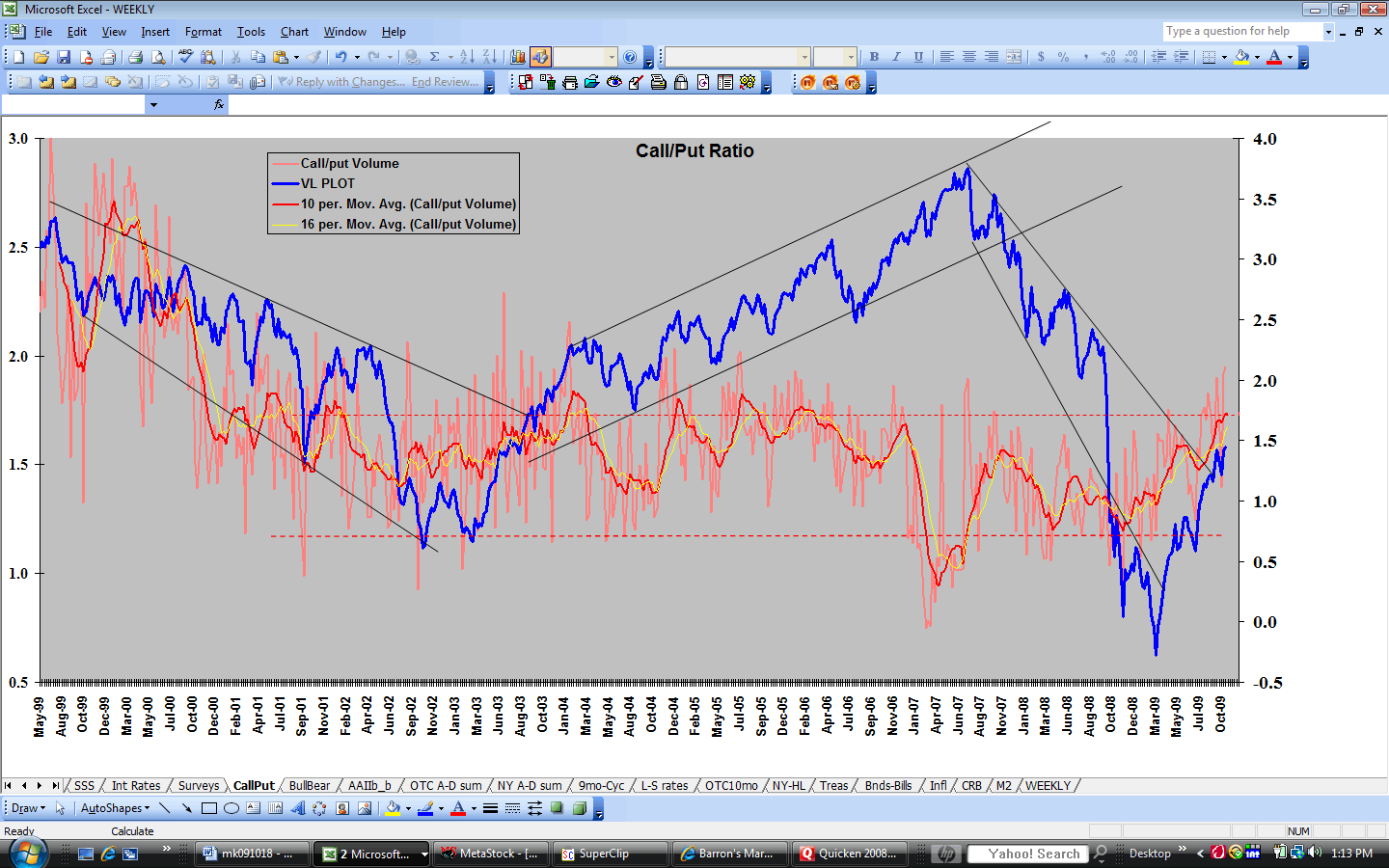
The CBOE equity Call/Put ratio (http://www.geocities.com/petegersb/Call_Put.GIF)
crossed below its 10-week moving average last week but not by enough to turn
that average downward. Consequently the buy signal remains intact, but it won’t survive
another decline this week.
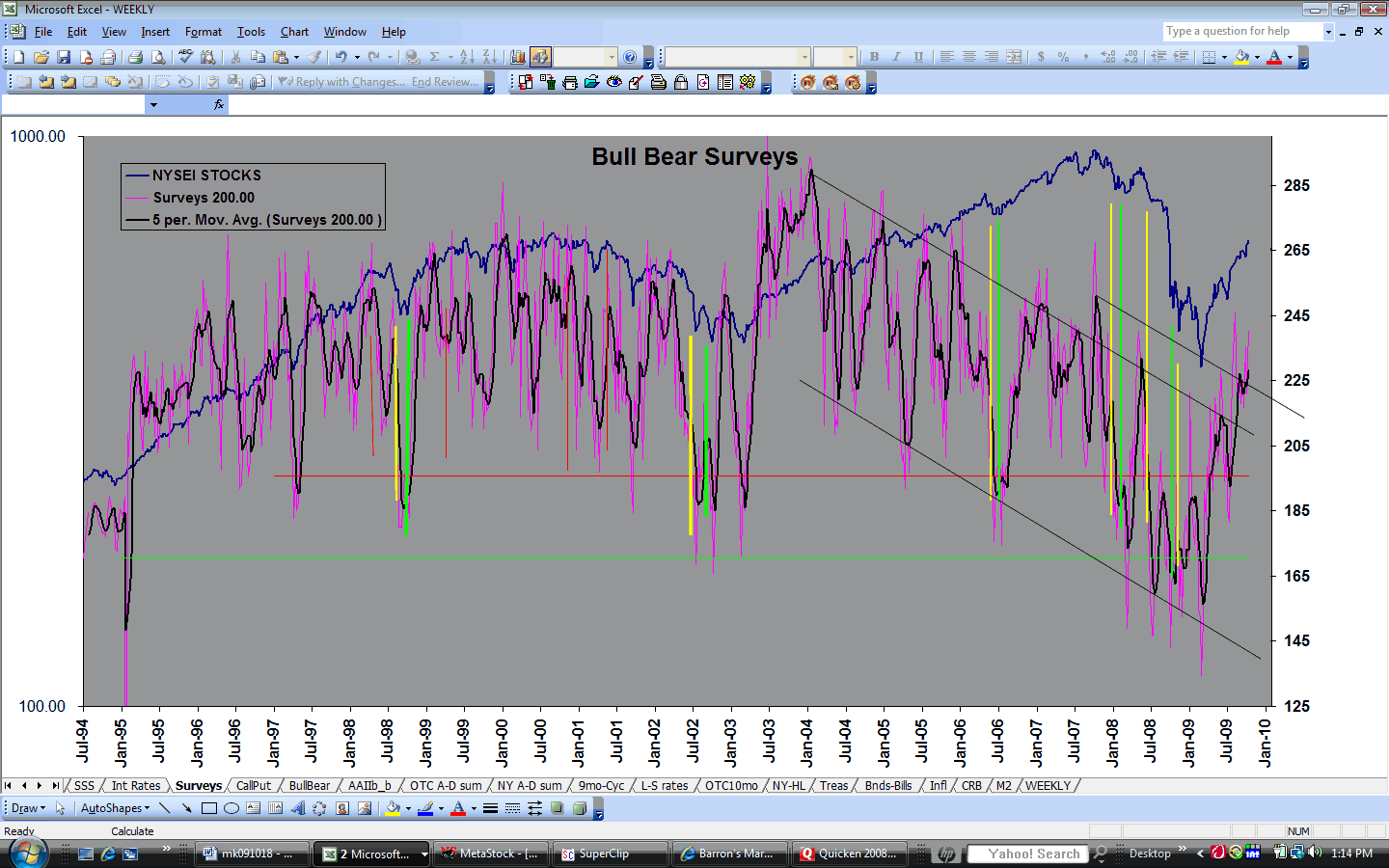
Still few doubts about this market
in the Advisory service camp. Optimism
(http://www.geocities.com/petegersb/InvestorsIntelligence.GIF)
continued to hover at the levels typical of 9-month market peaks during the
last four years. The buy
signal remains intact despite the nosebleed levels for this
indicator. Due to the high level of
optimism, this indicator should be treated as a hold rather than a buy
indication. It’s setting up for a 9-month cycle peak.
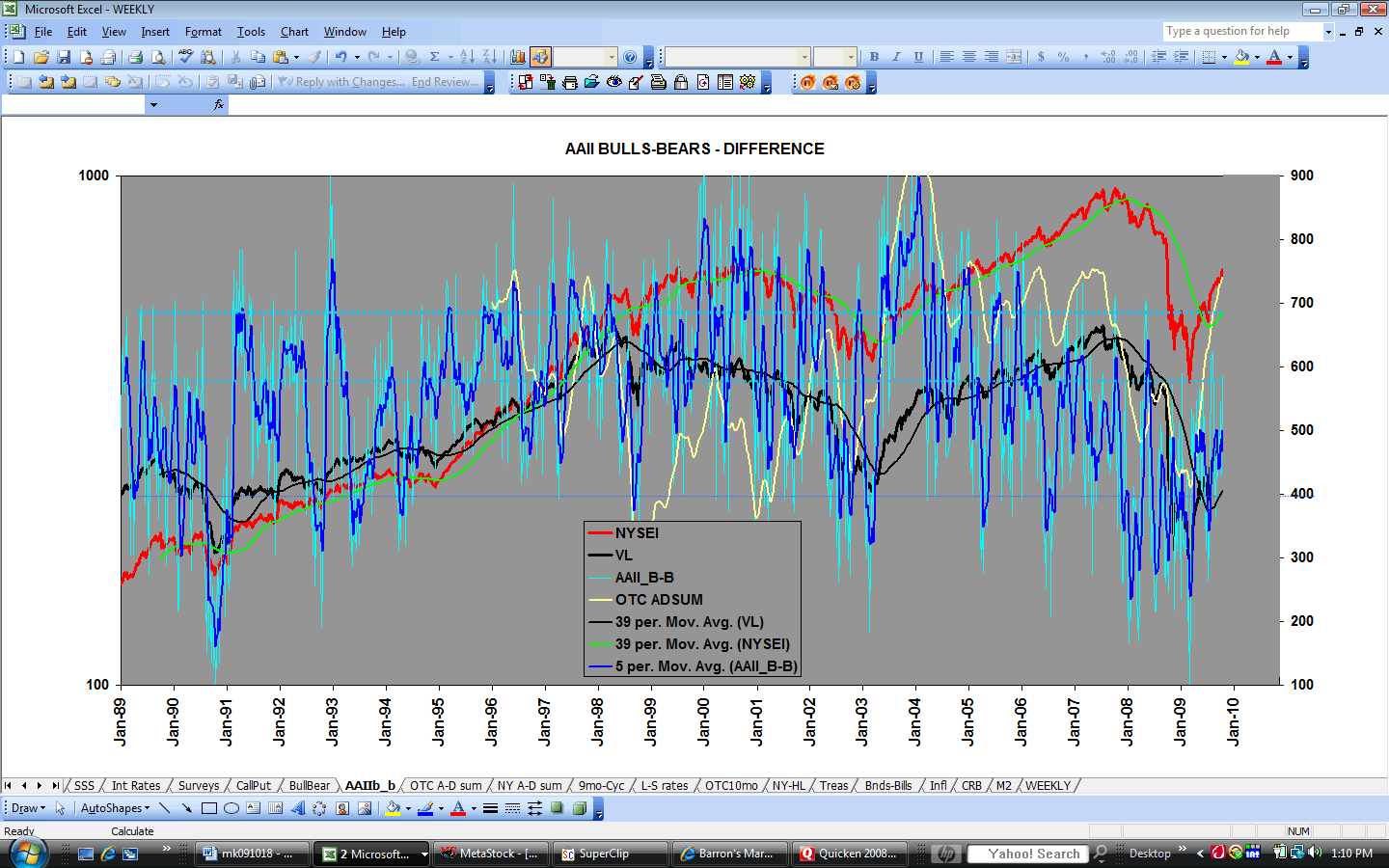
Bulls regained the majority among
AAII members (http://www.geocities.com/petegersb/AAIIsentiment.GIF
). The shift was enough to reverse the downtrend in the 5-week moving average
and produce a buy signal.
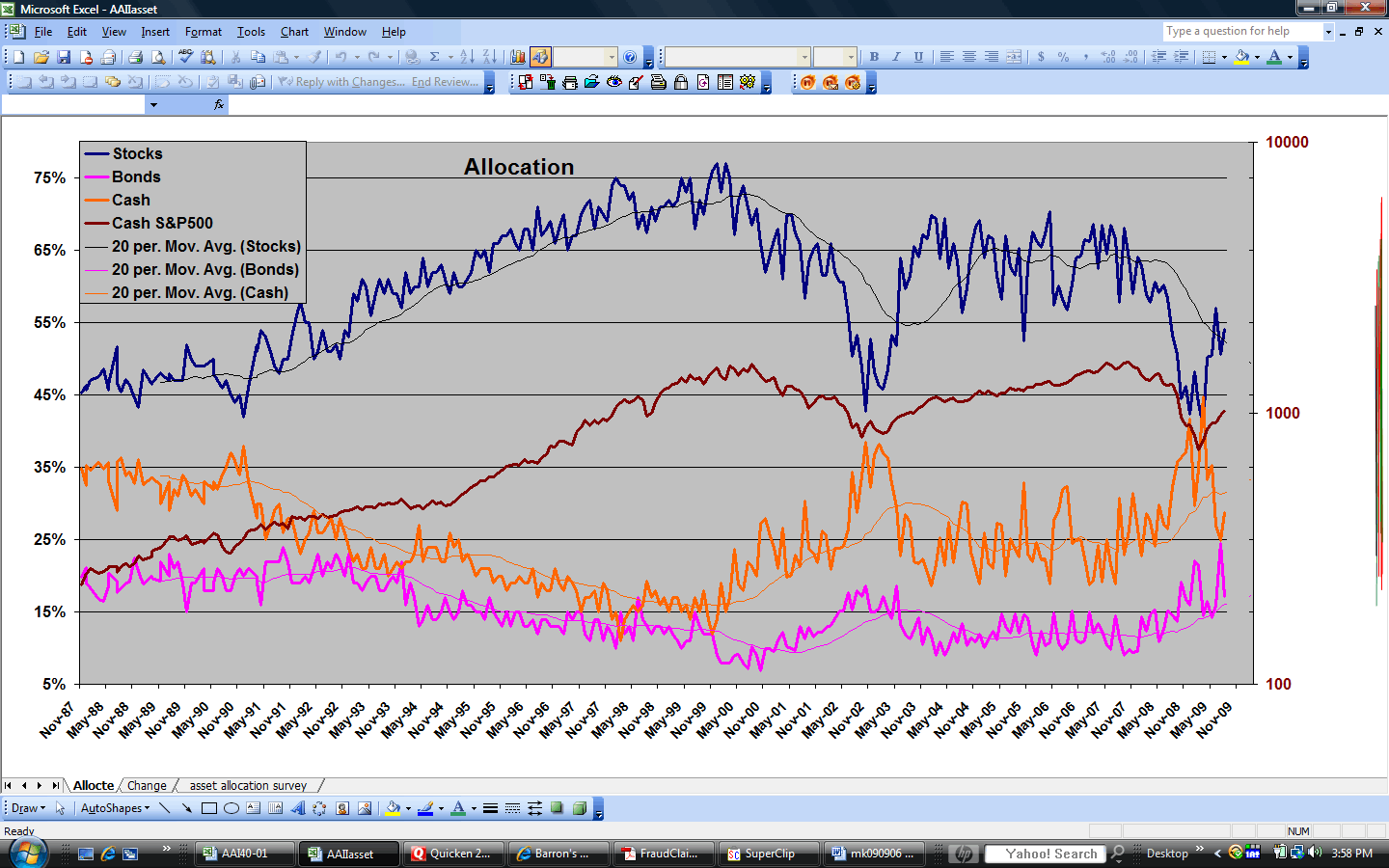
In a month when the S&P gained 1.3%, AAII members (http://www.geocities.com/petegersb/AAIIassets.GIF) increased their stock allocation by 2.2 percentage points
to 66.6%. That’s still a little short of the 67%-70% level seen at recent
9-month cycle peaks. Cash declined to 22.5% - also a little above the 18%-20%
allocation seen at recent 9-month cycle peaks for stocks. The bond allocation
rose slightly to 11% - still well below the 15.2% average allocation. The data suggests a little more upside
potential for stocks, and is positive for bonds as well.
Barron’s reports that insiders are
ramping up their selling. Compared to an average sell/buy ratio of 10.7 in the
prior 10 months, the ratio increased to 35 in November, and 55 during the first
two weeks of December. I don’t have historical data on this indicator, but such
a large increase in selling by knowledgeable insiders can’t be a good omen,
even if they are merely dumping the stocks they acquired through exercise of
backdated options.
The high level and rapid rate of
increase in margin debt (http://www.tradingthecharts.com/phpBB/viewtopic.php?t=1352
) is another reason to believe that this 4-year-old bull market is in its late
stages. Margin debt is highly correlated with stock prices, so like most
sentiment indicators it does not become a negative indicator until it begins to
decline. That hasn’t happened, but the current level and parabolic rise is
similar only to the one that preceded the 4-year cycle peak in 2000. The latest
report covers only through November, so it’s a pretty good bet that margin debt
has now exceeded the prior peak in 2000. When margin debt does start to unwind,
it will accentuate the selling pressure and produce a steeper decline than
otherwise might have been expected.
Advisory sentiment for bonds (http://www.geocities.com/petegersb/BondSentiment.GIF ) wasn’t reported last week. It’s unlikely that optimism increased, and if it held steady at 59% the sell signal it issued in mid-December remains intact.
In summary, sentiment indicators are roughly evenly
balanced for both stocks and bonds.
VALUATION:
Standard & Poor’s has taken down the web page that listed its earnings predictions. If any reader knows of a convenient source for this data, please let me know. Until I find a new source, the earnings growth chart (http://www.geocities.com/petegersb/EarnY-Y.GIF) will not be updated.
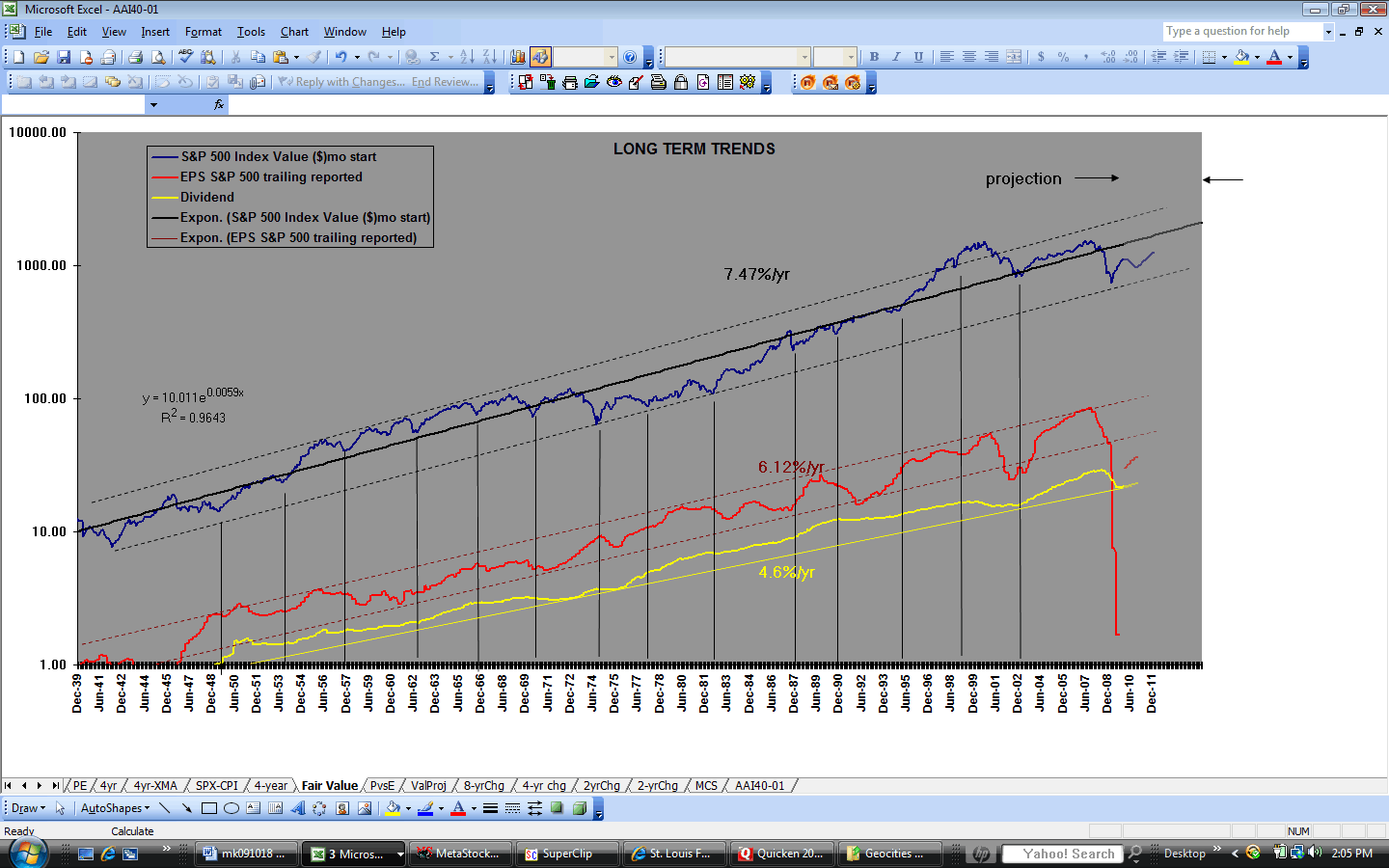
With corporate earnings far above the historical trend (http://www.geocities.com/petegersb/Earn-IntRates.GIF) and at the top of the trend channel that has contained earnings for over 60 years, there is lots of room for a downside surprise in 2007. With corporate earnings currently taking a record share of GDP (over 10.2% vs. a historical average of 5.4% and a prior peak of 7%), and profit margins at record levels, there is also plenty of room for profit margins to drop. If they were to revert to the mean, (or lower), P/E ratios would have to surge to the absurd late 90’s levels just to prevent stocks from plunging. Some P/E’s are in that range now. The top 10 components of the Nasdaq 100 reportedly sell for an aggregate 33 times earnings and 6 times sales.
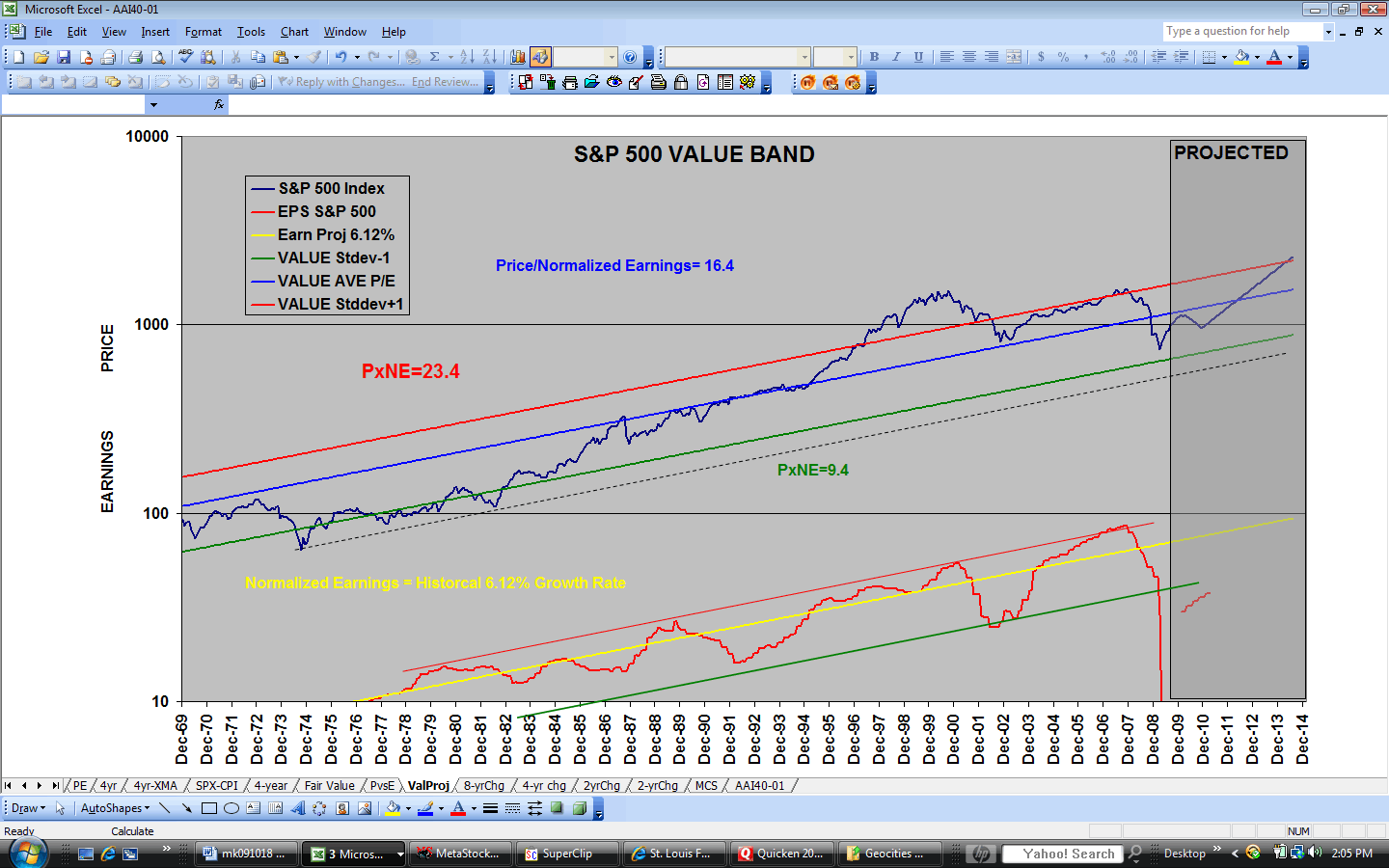
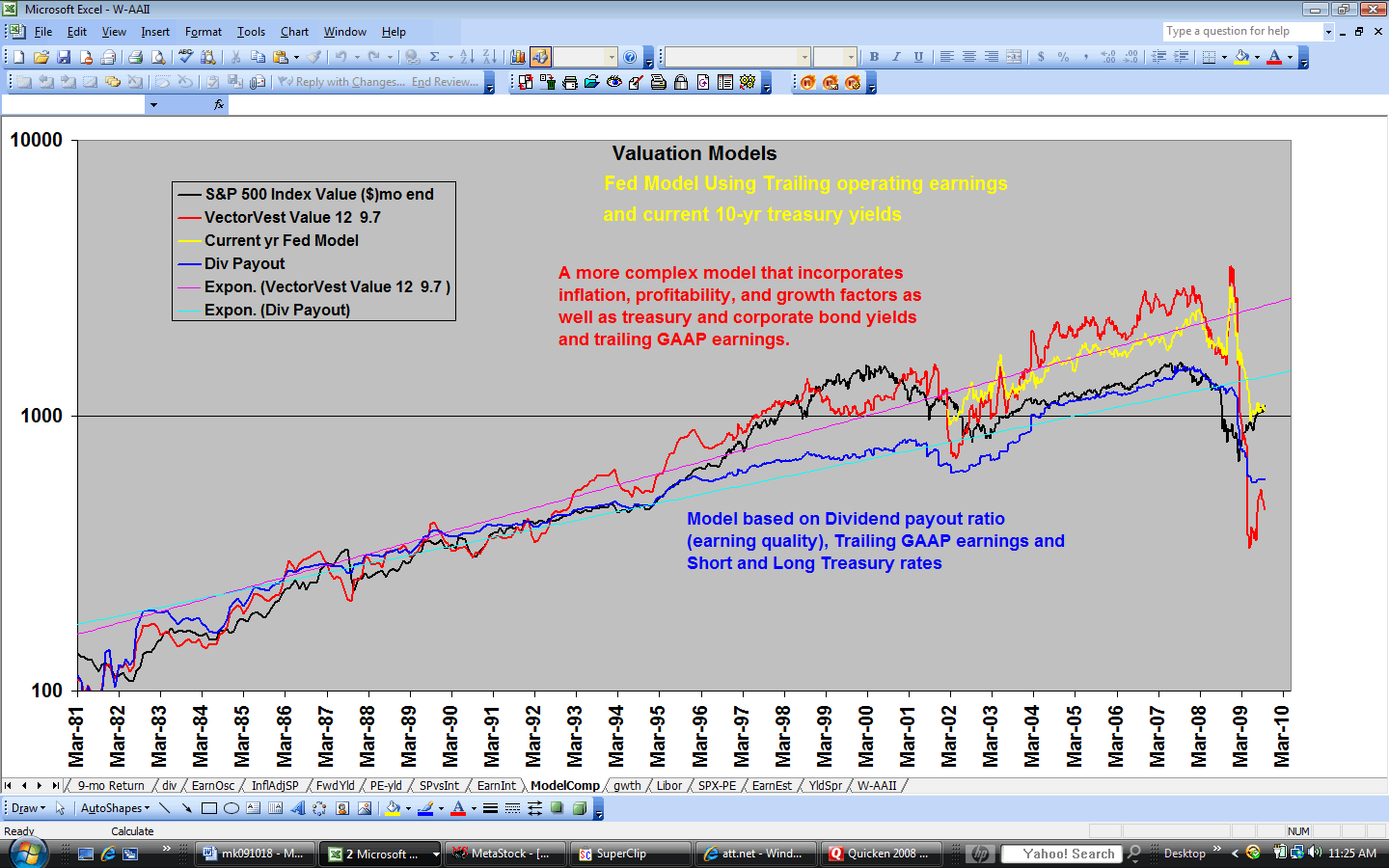
The following table provides a summary of the valuation of the S&P500 estimated by various models. The models suggest that stocks are moderately overvalued based on historical trends, but significantly undervalued based on current interest rates. Based on the average of these models (excluding outliers), the S&P is fairly valued. Based on the median, it is moderately over-valued.
|
S&P
VALUATION MATRIX |
|
TRAILING
12mo EARN |
FORECAST
12mo EARN |
|
||
|
12/24/2006 |
|
REPORTED
|
OPERATING |
REPORTED
|
OPERATING |
|
|
|
|
|
|
|
|
|
|
NORMALIZED
EARN X 16.4 |
|
985 |
|
|
|
|
|
60 YR
PRICE TREND |
|
1256 |
|
|
|
|
|
HISTORICAL
P/E = 16.4 |
|
1289 |
|
|
|
|
|
DIVIDEND
PAYOUT MODEL |
|
1294 |
|
|
|
|
|
LYNCH
INFLATION MODEL |
|
1573 |
|
|
|
|
|
FED
MODEL |
|
1668 |
|
|
1943 |
|
|
VECTORVEST
MODEL |
|
2540 |
|
|
|
|
|
|
|
|
|
|
|
|
|
Average |
|
1515 |
|
|
|
|
|
Average
excluding outliers |
|
1416 |
|
|
|
|
|
Median |
|
1294 |
|
|
|
|
|
|
|
|
|
|
|
|
|
Closing
Price |
|
1418.3 |
|
|
|
|
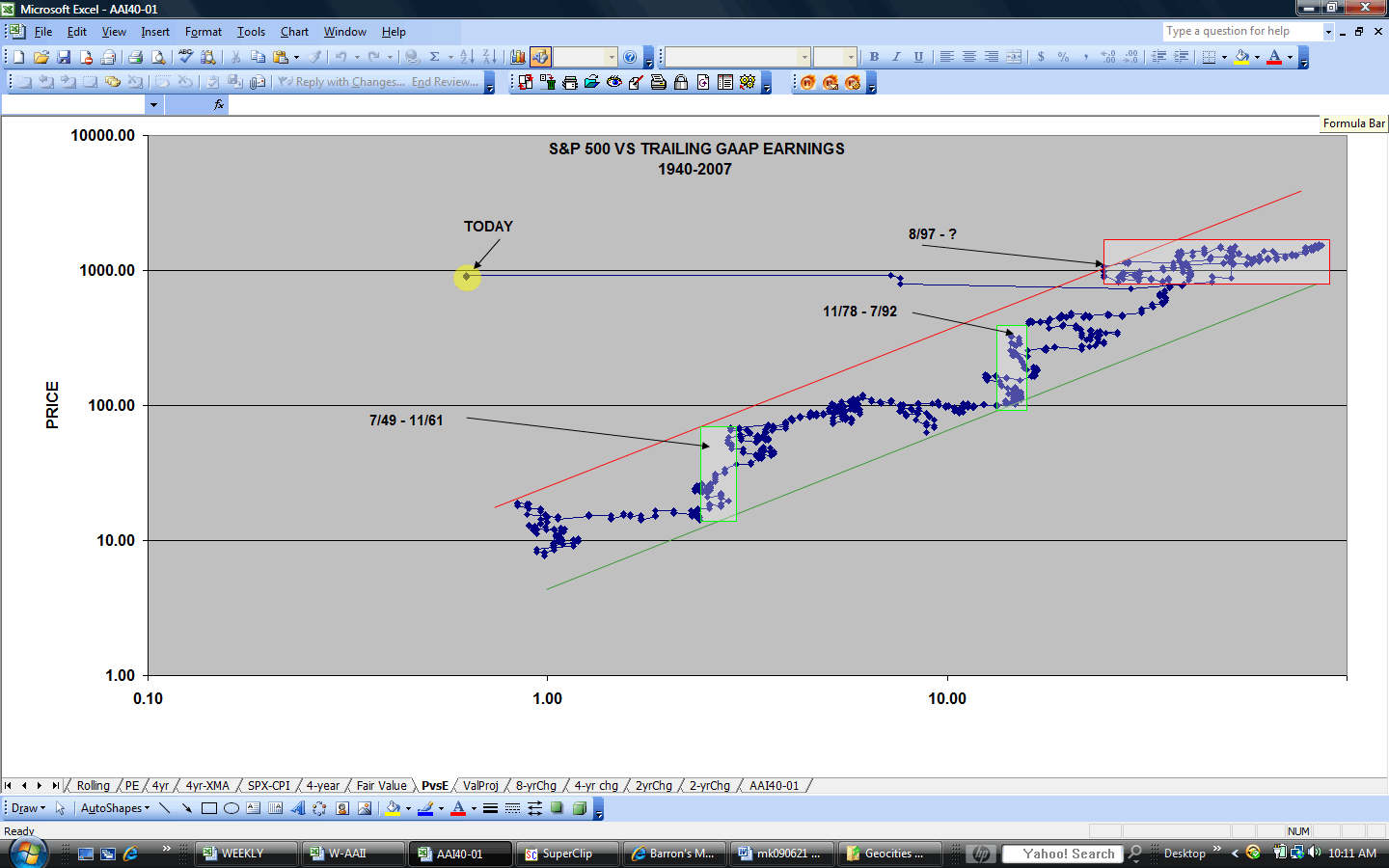
The good correlation of stock prices with earnings over very long periods of time is illustrated by http://www.geocities.com/petegersb/PEcorrelation.GIF . The plot of the S&P price level as a function of its earnings since 1940 on that chart also illustrates the poor correlation over periods measured in only a few years. Note the stair step relationship. The price level tends to change rapidly while earnings are relatively stagnant. After each order of magnitude change in the price level, earnings fluctuate widely while the prices remain somewhat constrained. The market has been encased in one of these relatively static-price steps since August of 1997, as shown by the box with the red border. The relationship between price and earnings is currently very near the norm, but it’s migrating from left to right as it normally does while earnings catch up with the last price jump. In the past it hasn’t ended that left to right migration until it reaches the lower end of the price vs. earnings channel. It can get there with an increase in earnings, a drop in price or some combination of the two. I’ve made a projection of that path into late 2006 that assumes S&P earnings increase as S&P has projected and that the price level falls to roughly 1100. That’s not quite enough to get to the lower right boundary of the channel. To get there, the S&P would have to decline to about 800 if earnings meet the current forecast – lower if earnings fall short.
INFLATION:
Driven largely by autos (which couldn’t be sold without a large discount) and another 1.2% decline in gasoline prices, the CPI (http://www.geocities.com/petegersb/CPI.GIF) dropped 0.15% in November (unchanged with seasonal adjustment), but the 12-month change rose to 1.97% from 1.31%. If the transportation costs, which constitute 17.4% of the index, had been unchanged instead of falling 1.0%, the CPI would have risen on both an adjusted and unadjusted basis. It’s unlikely that this sector will continue to drag the CPI downward. The core rate, seasonally adjusted, was unchanged in November (-0.1% unadjusted) to bring the annual rate to 2.6% - still within the 2.6% to 2.9% range seen in the prior four readings, and still above the Fed’s presumed target range of 1% to 2%. It the Fed still pays attention to the core rate, the latest numbers won’t inspire them to cut.
The 2% jump in PPI inflation during November increased the year-over-year rate from –1.75% to +0.9% - the same annual rate seen two months ago, and a sharp drop from 3.7% in August, 4.3% in July, 5.3% in June, 4.5% in May, and 3.5% in March. The 6.1% jump in Energy was the main culprit. Excluding Food and energy, the so-called core rate, the monthly increase was “only” 1.1% following a 0.8% decline in the prior month. On a year-over –year basis, the core rate rose from 0.6% to 1.8% - a modest rate, but a large increase from the prior reading.
Average hourly earnings of production workers rose from $16.91 to $16.94 in November (seasonally adjusted) – an increase of 0.18%. Weekly earnings increased by 0.13% to $574.27. On an annual basis, hourly wages rose by 4.05% and weekly earnings rose by 4.36%. So earnings are now rising much faster than CPI inflation, and that trend has helped consumers to maintain their profligate spending. How much longer depends on the price of energy, continued wage inflation, and the their ability to continue borrowing at the same torrid pace.
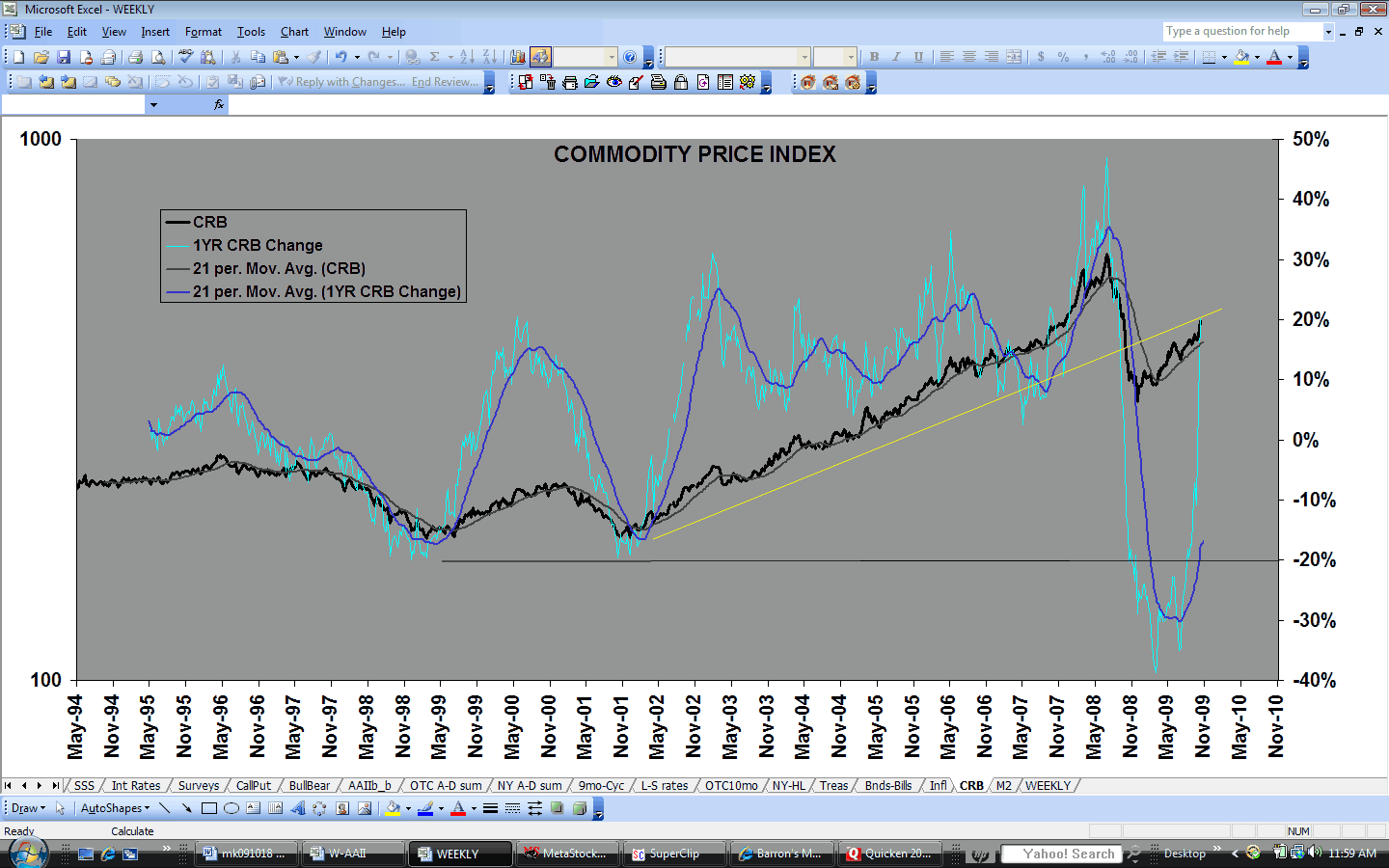
Commodities gained a little last week, but the year-over-year increase in the CRB index (http://www.geocities.com/petegersb/CRB.GIF ) dropped a little to end the year with an increase of 14.7% - a disturbing rate despite its substantial moderation from last years rate of 22.49%. According to the short-term composite, a rally short-term began last week, but it must contend with a continuing downtrend in the intermediate composite.
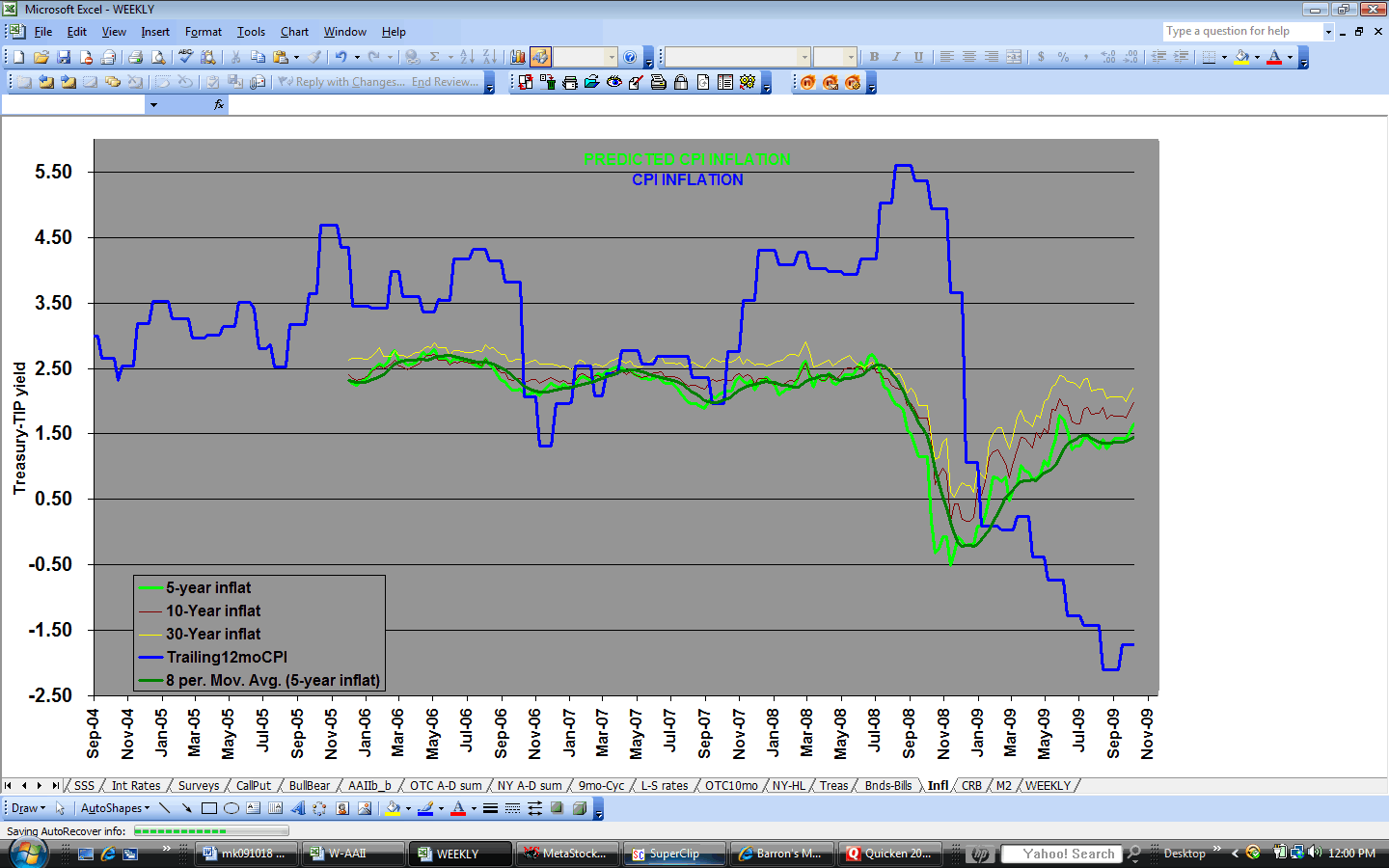
According to the spread between the yields on the conventional and the corresponding inflation protected treasuries, (http://www.geocities.com/petegersb/CPI.GIF), inflation expectations rose a little last week. Annual inflation expectations for the next 5 years rose from a low of 2.08% in mid-November to 2.25% currently.
The CPI inflation rate would be much higher if it were measured by the same standard that was used prior to the early 90’s. John Williams’ “Shadow Government Statistics” report (http://www.gillespieresearch.com/cgi-bin/bgn/article/id=343 ) provides an interesting assessment of the impact of the distortions introduced into the CPI over roughly the last 15 years. He estimates that CPI inflation, if measured by the earlier standard, would register about 2.7% higher. While you might think that the changes are justified, there is no disputing that current inflation numbers cannot be compared to those of decades past. If inflation is running closer to 6% than the reported 3%, as he estimates, that perhaps explains some current anomalies. While the inflation distortion doesn’t impact nominal GDP numbers, it hugely impacts real GDP. If real GDP has really been growing in the 1% range rather than the 4% range, as implied by 6% rather than 3% inflation, it perhaps helps explain why jobs and wages have been so much weaker in this recovery than in past recoveries. However, I suspect that the main culprit is the accelerating pace of job exportation overseas. The lower cost labor has been a large factor in both the record corporate profits and the lack of bargaining power for US labor.
INTERMEDIATE TIMING SYSTEMS
STATUS:
Semiannual: The buy signal that this system (http://www.geocities.com/petegersb/SemiAnnualSystem.GIF ) issued on 9/1/06 was reversed on 9/8/06. Consequently, it sold on 9/11/06 the position it entered on 9/5/06 at a loss of 0.9%. It simultaneously sold the SPX short at a price of 1298.92. (It sells on the first Monday when the 7-week DStoc closes below the 15-week DStoc on the prior Friday between April 1 and September 30. It buys on the first Monday when the 7-week DStoc closes above the 15-week DStoc on the prior Friday between September 1 and April 30.). Although the time window is now open for another buy signal, the DStocs are not in position to issue one until the current decline in the SPX reaches an intermediate-term low.
Over the past 46 years this
system has been profitable in 68% of its long positions, but only 40% of its
short positions. Nevertheless, its short positions have been net profitable
because the average gain has been 2.47 times as large as the average loss. Over that period
(to the last signal) it has gained 1920 S&P 500 points while the S&P
has gained about 1250 points.
For more on this seasonal
tendency, go to http://www.streetsmartreport.com/sts.html
ULTRA Bond Composite: This system has outperformed the DJ 20 Bond Index by only about 0.5 percentage points annually for the last 20 years, but it has done so with about half the Ulcer Index. It last bought on 7/31/06 at 134.01. It sold on 12/11/06 at 141.67 for a gain of 5.72% in 4.5 months. Currently 140.27
ULTRA Gold: DUALB:
This system is the better of the two gold timing systems. It has outperformed
the XAU by about 10.1 percentage points annually over the last 22 years with
about a third of the Ulcer Index, but it is underperforming by 30.4% this
year. It is based on the relative
strength of the Barron’s gold mining index and spot gold. It last bought
on 8/14/06 at 139.71. It will sell on Wednesday’s opening. Currently 142.25
.
TRIADG:
This system has outperformed the XAU by about 2.4 percentage points annually
over the last 22 years with about half the Ulcer Index, but it has
underperformed buy and hold for the last two years and by about 4.4% this
year. It is a trend following system
that buys on rising trends in the Barron’s Gold Mining Index, spot gold, and
the Swiss Franc. It last sold on 7/24/06 at 135.66 for a loss of 9% in 3 weeks.
It bought again
on 12/4/06 at 149.38. Currently 142.25