"THE NEW ROMANTICS ARE HERE!"
 This
was the most frequently used heading in most English papers
in 1979. It was a groundbreaking year for the British music
scene. During that time, the English music industry encompassed
a myriad of musical styles and genres. The industry included:
The Punk scene, which by now was on it's last spin due to
the break-up of the Sex Pistols ; The Underground scene, which
brought Joy Division to the foreground, along with Adam Ant,
and a new band known as Simple Minds; The New Soul/Reggae
scene in which The Police bombarded the market with record
sales; The Mod scene which made a comeback thanks to groups
like The Jam, with their who were referred to as dandies;
and finally, for supporters of The Black Music scene, a great
number of bands were making their way through the club circuit.
Meanwhile, in some smaller, London-based clubs like Billy's,
The Blitz, Le Beat Route, and Le Kilt, a new musical phenomenon
was in the making: NewRomanticism. This
was the most frequently used heading in most English papers
in 1979. It was a groundbreaking year for the British music
scene. During that time, the English music industry encompassed
a myriad of musical styles and genres. The industry included:
The Punk scene, which by now was on it's last spin due to
the break-up of the Sex Pistols ; The Underground scene, which
brought Joy Division to the foreground, along with Adam Ant,
and a new band known as Simple Minds; The New Soul/Reggae
scene in which The Police bombarded the market with record
sales; The Mod scene which made a comeback thanks to groups
like The Jam, with their who were referred to as dandies;
and finally, for supporters of The Black Music scene, a great
number of bands were making their way through the club circuit.
Meanwhile, in some smaller, London-based clubs like Billy's,
The Blitz, Le Beat Route, and Le Kilt, a new musical phenomenon
was in the making: NewRomanticism.
NewRomanticism, developed in rebuttal to the Punk philosophy,
utilized music as a means of escapism rather than as a socio-political
platform. Another more obvious difference between the two
musical genres was the "look" adopted by the fans
and followers. The punk-rocker's straggled and shabby appearance
reflected the nihilistic and anarchistic attitudes prominent
in the punk movement as a social comment. On the flip-side,
NewRomantics (also known as Blitzkids) paid close attention
to their appearance, including the most minute details. They
were quickly identified on the streets of London with their
Victorian-influenced outfits, and their incredible hairstyles
which involved the most intricate detailing. Considering the
remarkable differences between Punk and NewRomanticism, both
movements suprisingly stemmed from the similar roots; both
were a product of the working class. It was precisely in one
of the typically working class boroughs of London (Islington),
that 5 school chums decided to form a band which, along with
Duran Duran, Classic Noveaux, and Visage, would become one
of the pioneering trend-setters of this new wave of romanticism.
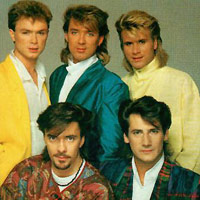
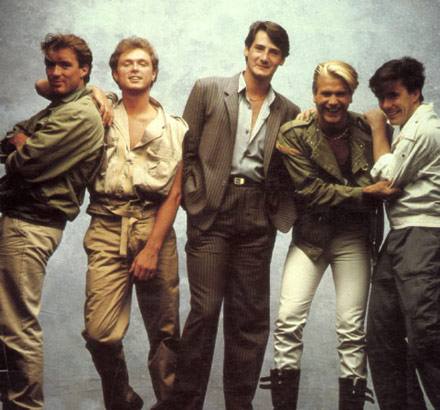
They would be known throughout the world as Spandau Ballet.
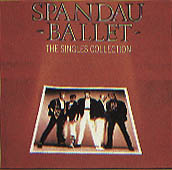 Two
years earlier, Gary Kemp, Tony Hadley, Steve Norman, John
Keeble, along with Richard Miller (a friend of theirs) had
put together a band known as The Makers. This band often played
to crowds in the smokey pubs of the East-End. However, after
a short trip to Berlin, a spin-off of the group came to life.
Spandau Ballet was born! The foundation of the group remained
intact with a minor change. Martin Kemp, Gary's brother, replaced
Richard Miller, while the rest went untouched. The band's
new name was derived from an inscription on a wall near a
prison in Spandau, Berlin. Two
years earlier, Gary Kemp, Tony Hadley, Steve Norman, John
Keeble, along with Richard Miller (a friend of theirs) had
put together a band known as The Makers. This band often played
to crowds in the smokey pubs of the East-End. However, after
a short trip to Berlin, a spin-off of the group came to life.
Spandau Ballet was born! The foundation of the group remained
intact with a minor change. Martin Kemp, Gary's brother, replaced
Richard Miller, while the rest went untouched. The band's
new name was derived from an inscription on a wall near a
prison in Spandau, Berlin.
By the fall of 1979, the NewRomantic movement was at the
height of it's power. The only thing missing at that point
was a group to act as the voice of this new wave. Hence, on
November 17th, a studio was rented while 50 followers of NewRomanticism
witnessed the "unveiling" of the new Spandau Ballet.
The debut concert was a smash hit. From that moment on, the
group played the nightclub circuit in only the most fashionable
and trendy London spots.
Spandau Ballet started out in an environment which was extremely
fashion-conscious with regard to the club scene, and overall
attitude, said Gary Kemp. He went on to say, we never intended
to create an artificial front for the band. We are what we
are.
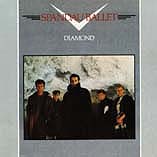 The
most noteworthy of all of Spandau Ballet's concerts took place
on the British cruiser, the HMS Belfast, which was anchored
near the Tower of London. At this time, there was a buzz in
the music industry and all eyes were on the groups next move.
Surely enough, record deals and contracts started pouring
in to Steve Dagger, the group's manager. One such offer came
from Chris Blackwell of Island Records. The response to the
offer was startling: Spandau Ballet do not wish to sign to
any contract which puts them at risk of losing their identity
and autonomy, claiming that along with the group itself, their
staff (including stylists and all creative sources) would
also fall under the negotiations. As well, they requested
complete and total control of all band-related activity, including
graphic, visual, and stylistic rights. The
most noteworthy of all of Spandau Ballet's concerts took place
on the British cruiser, the HMS Belfast, which was anchored
near the Tower of London. At this time, there was a buzz in
the music industry and all eyes were on the groups next move.
Surely enough, record deals and contracts started pouring
in to Steve Dagger, the group's manager. One such offer came
from Chris Blackwell of Island Records. The response to the
offer was startling: Spandau Ballet do not wish to sign to
any contract which puts them at risk of losing their identity
and autonomy, claiming that along with the group itself, their
staff (including stylists and all creative sources) would
also fall under the negotiations. As well, they requested
complete and total control of all band-related activity, including
graphic, visual, and stylistic rights.
Finally, in October of 1980, Spandau Ballet signed to Chrysalis.
|