The word weather is a short-term aspect of climate. Weather is the condition of the atmosphere in one place during a limited period of time. Climate is the term for the weather patterns that an area typically experiences over a long period of time.
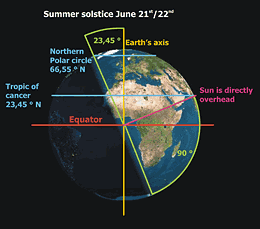
The earth's axis is currently tileted at an angle of about 32 and a half degrees. That is why not all places of the earth recieve the same sunlight. The axis is and imaginary line running fromt he North Pole to the South Pole through the planet's center. That is why the angle of the earth affects the temperature. Temperature is the word for how hot of cold a place is. Temperature is ussually meassured in degrees on a set scale. The most common ways to measure temperature are called Fahrenheit and Celsius. If a particular place on earth does or does not recieve sunlight depends on the side of the planet that is facing the sun. Ussualy the part faving the sun is hotter that the one not faving the sun.
While the earth is rotating on its axis, it is also revolving around the sun. It takes the earth about one year to complete one revolution. That means it takes earth about a year to go all the way around the sun once. The earth's revolutions and it's tild cause the changes of the amount of sunlight that reaches each part of the planet. These changes are called the four seasons. That is why we can tell the change of weather due to the four seasons. The seasons are reversed north and south of the equator. When it is spring in the north, it is fall in the south. When the rays fall directly on the equator, it is called equinox meaning equal night. That is when dayling and nighttime hours are equal.
The Tropic of Cancer is the northernmost point on the earth to recieve the direct rays of the sun. These rays reach the tropic of cancer on about June 21 wich brings the longest day of sunlight. This day is known as the summer solstice. The summer solstice marks the beginning of summer in the northern hemisphere.
By about September 23, the earth has moven on so that the sun's rays directly strike the equator again. That marks the beginning of fall in the northern hemisphere. Then the sun's rays will strike farther out reachig the tropic of capricorn. The tropic of capricorn is at about 23 1/2 degrees south. These rays reach the tropic of capricorn on about December 22. The winter solstice is the day with the least dayling of the year. That day is the begging of winter. This cycle repeats itself every single year bringing to us the four seasons.
For six months of the year, one Pole is tilted toward the sun. That pole recieves continious light, meanwhile, the other pole is tilted away from the sun and it receives a little to no sunlight.