







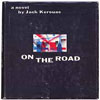

The main character in On the Road, who is also the narrator, is Sal Paradise. Sal Paradise is essentially Jack Kerouac, and one of Sal’s friends, Dean Moriarty, another major character in the story, is a real life friend of Jack’s named Neal Cassady. The story begins with Sal, who’s a writer, living with his aunt in New York. He gets invited to go West and visit a friend but he first stops in Denver before going to San Francisco, his ultimate destination for part one of the novel. Part two of the novel starts with Sal in New York again, but this time his trip west takes him to Virginia, back to New York, then to New Orleans, and finally San Francisco once again. Sal’s third trip takes him on the same route as his first, ultimately arriving in San Francisco one more time. His final trip takes him into Mexico. This whole novel is about these trips that Sal takes along with his friends. The book talks about events that occur while hitchhiking on the way to certain cities. It also talks about people Sal meets on the way. The book focuses mainly on the relationships Sal has with different people and the relationships Sal’s friends have with other people. Most of what happens in this book actually did happen to Jack Kerouac and the main purpose of the book is just to tell what happens to Sal while he’s on the road.
Information About the Beat Generation
The literary movement known as the Beat Generation exploded into American consciousness with two books in the late 1950s. The first, Howl and Other Poems by Allen Ginsberg, was published in 1956. The book achieved notoriety when poet and bookstore owner Lawrence Ferlinghetti went to trial for selling it in San Francisco. The second book had an even more profound cultural effect when it was published. Jack Kerouac's On the Road, published in 1957, was viewed as nothing less than a manifesto for the Beat Generation.
On the Road is the story of two young men, Sal Paradise and Dean Moriarty, who travel frantically back and forth across the American continent seeking thrills. The novel is actually a thinly veiled account of Kerouac's own life in the late 1940s, when he fell under the spell of a charismatic drifter named Neal Cassady (represented by Moriarty in the novel). Every episode in the novel was inspired by real-life events. The book, which would probably be considered rather tame today, shocked readers in 1957 with its depiction of drug use and promiscuous sex. Many critics attacked the work as evidence of the increasing immorality of American youth. Other critics saw it as a groundbreaking work of originality. American readers, fascinated with the bohemian lifestyle of the characters, turned the novel into a bestseller.
The Beat literary movement
was short-lived. Most of the work Kerouac published in the 1960s had been
written during his creative peak in the 1950s. Beat literature retains
its popularity decades later because the writers of the Beat Generation
must ultimately be judged by their work, not by any real or imagined influence
on popular culture. Allen Ginsberg's poetry is still revered. The nightmarish
visions of William Burroughs continue to influence post-Modern writers.
Finally, Kerouac's On the Road is still a campus favorite, and continues
to draw scholarly criticism.