Stifled on the Big Screen: The Story of One Man's Hero
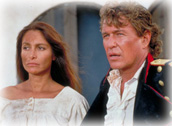
The year was 1999. Actor/Producer Tom Berenger and Producer/Director Lance Hool were on the verge on finally realizing a dream that had drawn them together: bringing the story of the St. Patrick's Battalion to the big screen. Though many in Hollywood had been interested in bringing this story to the screen, it had never before been told. For years, studios in Hollywood balked at doing a film about Irish Catholic "traitors" who deserted America and ended up fighting for Mexico during the Mexican-American War (1846-48). More to the point, Hollywood studios did not seem interested in telling the story of how Irish Catholic immigrants were gravely betrayed by the U.S. government in the 1840s. Anti-Catholicism was standard fare in America during that period, one example being the government's refusal to provide Catholic soldiers with military chaplains, even though about one-third of U.S. Armed Forces were Catholic.
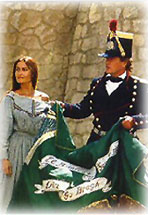
Denied their First Amendment rights to practice their Catholic Faith, subjected to sermons that often railed against their religion, and punished in various ways when they refused to acquiesce, some of these Catholic soldiers, mostly Irish, left America for a country in which their religious convictions would be respected: Mexico. There were also enticements of land and citizenship, but a common faith was the primary attraction. These immigrants fought for Mexico to preserve both their own religious and civil rights and also those of their newfound Catholic countrymen, rights that had been promised but not delivered by the U.S. government during their short time in America. They fought valiantly for a courageous but outgunned country, and most of the "San Patricios" who didn't die in battle were tried as deserters as the war moved to its conclusion.
John Wayne, among several other actors, had once desired to portray the leader of the San Patricios, John Riley, in a major motion picture. But "The Duke" was counseled that such a movie would jeopardize his "American Hero" persona. Not long after, Hool, the head of Silver Lion Films (www.silverlionfilms.com), embarked on his 20-year quest to bring this story to the big screen. Independently, Berenger, a man of Irish ancestry, pledged to his dying father that—one day—he would portray Riley on the big screen. Orion Pictures eagerly agreed to distribute the film.
Orion purchased distribution rights for several English-speaking countries: the United States, Canada, Ireland, the United Kingdom and Australia. The studio planned on marketing the movie in the major manner it had promoted its Academy-Award-winning films Platoon and Dances with Wolves. Excitement increased as the studio viewed the film that was being shot and expressed eagerness to promote the motion picture for Oscar (Academy-Award) consideration.
In the meantime, however, MGM purchased Orion, including all of its films. MGM did not share Orion's enthusiasm for One Man's Hero. On the other hand, fans of Tom Berenger, Daniela Romo and Joaquim de Almeida rallied together in an international letter-writing campaign to pressure MGM to release the film after learning that MGM had no immediate plans to release it. Despite very favorable reviews in the Los Angeles Times, Box Office and other publications, the studio decided to release the film in less than 60 theatres--all in the southwest. MGM provided no major release in L.A. and, despite the promise of a very favorable review in The New York Times, the most influential newspaper in the world, the studio did not release the film at all in New York City. The Times review consequently was never published.
Despite this setback, Lance Hool, producer Conrad Hool and Berenger traveled as planned to Ireland, where the movie previewed to standing ovations in theaters in both Dublin (the Republic of Ireland) and Belfast (Northern Ireland). Despite the advance promise of box office profits, MGM refused to release One Man's Hero to movie theaters in Ireland. MGM also declined to release the movie in Canada, the United Kingdom and Australia. The film distribution rights had previously been sold to other companies in Spain, Germany, Italy, Mexico and other territories, so the film thereby and thankfully received a proper distribution in those countries.
Some argue that many films never get released on the big screen but go right to VHS/DVD sales. This is true, but One Man's Hero had shown great promise on the big screen in English-speaking countries. In addition, unlike with other films that debut in the VHS/DVD market, MGM did minimal promotion for One Man's Hero. In fact, MGM did not market the film to its most obvious audiences: the Irish and Catholics. MGM could have easily gotten free publicity through movie reviews in the major Catholic media, but the studio chose not to do so. Consequently, even media-savvy Catholics didn't hear of the film when it came out in 1999, discovering its existence only by word-of-mouth advertising and—even then—often three to four years after the movie's initial release.
Why did MGM deliberately stymie One Man's Hero, especially when it showed such promise for the big screen? One studio representative said MGM feared box office backlash in the United States because of the film's "anti-Americanism." Films criticizing the U.S. government's historic mistreatment of African-Americans have not been condemned as "anti-American," so why should a film criticizing the U.S. government's severe mistreatment of Irish Catholic soldiers in the 1840s be smeared as such? And if there is a real concern about anti-American fallout, why not sell the distribution rights to someone else who would be willing to take on such a "risk"? And how could foreign releases really foment box-office backlash within the United States?
In fact, MGM's refusal to release the film even in Ireland manifests the studio's own anti-Catholic bias. How else can one reasonably explain MGM's decision to sacrifice major gate receipts in the country from which the San Patricios hailed? MGM's reprehensible decision was an insult not only to Ireland, but to Irish-Americans and Catholics everywhere as well.
In addition, in the United States, where the movie was released in a very limited fashion, why did MGM not even market the movie through the Catholic media? Is it because the movie portrays the Catholic Church and Catholic Faith in a positive light? MGM clearly did not want One Man's Hero to succeed in America. Furthermore, why do movies critical of the Catholic Church (e.g., Dogma and The Magdalene Sisters) consistently get big support in today's Hollywood? And why haven't movies that portray the Church favorably been promoted on the big screen vigorously since the mid-1960s?
One Man's Hero has been unjustly stifled by MGM. The film has become a modern-day metaphor for the story it portrays, with MGM's treatment of the film sadly paralleling that of the U.S. government's treatment of the San Patricios. Our goal is to have the movie re-released domestically in time for the weekend before St. Patrick's Day 2004. We also seek a similar March 2004 first release for Ireland.
By visiting this website, you have registered your support for a domestic re-release and a first release in Ireland. By clicking on the email link on the upper right of this page, you can send an additional message directly to MGM. MGM's phone number and mailing address are also listed. If MGM won't re-release the film domestically and provide a first release in Ireland, demand that the studio sell those distribution rights for a just price. We thank you very much for your support and ask that you spread the word to your friends and families, encouraging them to visit this site on a regular basis, registering their continued support until the movie hits the big screen domestically and in Ireland. |
|
|