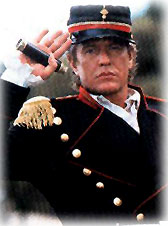
What follows is an exchange between Tom Nash, One Man's Hero Campaign leader, a Theology Advisor at the Eternal World Television Network (EWTN; www.ewtn.com) and Patrick Sweeney, a Catholic teacher and apologist living in New York City. Mr. Sweeney also oversees the website
http://www.extremecatholic.blogspot.com.
Their exchange was originally posted at www.bettnet.com in November 2003.
Mr. Nash wishes to emphasize that what unites him and Mr. Sweeney as brothers in Christ in the Catholic Church is far more significant than what divides them regarding their respective positions on the San Patricios. That unity is manifest in Mr. Sweeney’s kind comments after reading Mr. Nash’s lengthy response. In light of the unity they share, Mr. Sweeney’s final email and Mr. Nash’s final email reply will appear first, and then their respective positions on the San Patricios will follow.
Patrick Sweeney’s final email:
Tom,
Your posts on the San Patricios are the best justification for their actions that I have ever read. Ultimately, it’s God’s judgment of the heart, mind, and soul of these men that matters most and this will not be revealed to us in this life.
The verdict of history is clearly divided as our own posts show. Like you I believe that a soldier can be released from an oath when his participation is no longer morally compatible with the Catholic faith. Applying this principle to the circumstances of the Irish enlistee of the American army in the Mexican War we have come to different conclusions.
I hope no present or future war waged by the United States presents a soldier with a similar choice to make.
Pat Sweeney
Tom Nash’s final email reply:
Pat,
Thank you for replying and for your kind words. And Amen re: present and future wars waged by the United States not presenting soldiers with similar choices.
May you and your family enjoy blessed Advent and Christmas seasons.
In Christ,
Tom
Patrick Sweeney’s Comments on the San Patricios (SPs), responding to Tom Nash’s Initial Posting at www.bettnet.com. Nash’s initial comments may still be read at www.bettnet.com, but his lengthy response below covers the salient points made in his original postings.
The San Patricios were traitors. They were traitors because they violated an oath to God to defend the United States and as soldiers to obey the orders of their officers.
There may have been an excuse for deserting, they may have even done so for sincere religious reasons as opposed to the inducements to desert given by Mexico or cowardice, and I can concede that.
There is no excuse for taking up arms against the United States and becoming combatants. Their Catholic faith did not require that.
Just as they volunteered to be in the United States Army, they volunteered to be part of the San Patricio brigades and attack the United States army at the battles of Monterrey, Saltillo, Buena Vista, and Churubusco.
In an indication of the lack of honor of these men, when Mexican regulars were overwhelmed and sought to surrender to the Americans, the San Patricios fighting at their side would kill Mexicans in the process, because if the garrison surrendered, the Mexicans would be regarded as POW's and the SP's would be executed as deserters. That was their desperation.
The United States did not wage a war "against Catholicism" but a war against Mexico. It was not a war between Christ and Caesar but between Caesar-1 and Caesar-2. Indeed the Catholic Church itself in Mexico regards the Caesar of Mexico during most of the war, General Antonio López de Santa Anna to be an enemy of the Church. Santa Anna was generous to the SP's because they were willing to fight to the death for pushing the border of Mexico north a few hundred miles not because of sympathy to their Catholic faith. They were used by Mexico under the rule of "warlords" in near anarchy continuously since its own independence.
As far as "atrocities" go, this is the same Santa Anna who killed the Americans who surrendered and were wounded at the Alamo in cold blood. The SP's did not switch sides because they believed the Mexican side did not commit atrocities.
The SP's may be considered heroic to this day by Mexicans, just as I am sure the (Communist) Vietnamese consider the GI's who deserted and took up arms against the United States to be heroes of their struggle against the Imperialists.
Likewise I'm sure that Al-Qaeda believes that the Muslim chaplains of the American armed services who have been accused of treason are heroes to their cause as well.
As an Irish-American and Catholic I utterly reject the attempt to deny guilt and shame that the SP's brought upon the Irish immigrants, who had to bear the suspicion of disloyalty until Irish-American loyalty was proven in blood in the Civil War. If the SP's were "right", then the vast majority of Irish-Americans who did not desert were "wrong" to keep their loyalty to the United States. The passage of time does not erase treason.
Tom Nash’s Response
Patrick,
You raise several new issues, yet some of those you raise I addressed in previous correspondence, and I respectfully ask that you reread the previous correspondence again. Given the range of points you have made, I will have to divide my letter into six or seven parts (we’ll see how it turns out) to both adequately respond and also conform to Bettnet provisions. Given the breadth of my response, I don’t anticipate my making much, if any, further comment on the SP controversy.
Regarding oaths, it’s important to know when one is bound by an oath and when one is not. As the Catechism of the Catholic Church reaffirms, an oath “must be refused when it is required for purposes contrary to the dignity of persons or to ecclesial communion” (no. 2155). In addition, “if rulers were to enact unjust laws or take measures contrary to the moral order, such arrangements would not be binding in conscience” (no. 1903). After their First Amendment Rights to practice their faith had been betrayed, and they had suffered further when they tried to go to Mass, many of the San Patricios deserted and subsequently took up arms when the Catholic country that welcomed them was invaded by a larger, stronger, anti-Catholic Protestant country—sad to say, our country. To the San Patricios, and to the Church in Mexico, the war against Mexico was unjust. Given how they were treated in America, the SPs rightly feared this unjust invasion and how they and their brothers and sisters in Christ in Mexico would fair if the conquered Mexico. (Indeed, the U.S. considered annexing all of Mexico at the end of the war.) Remember too that many in America saw the Army’s invasion of Mexico as unjust on other grounds, namely, as an attempt to advance the nation’s Manifest Destiny policy.
Irrespective of the corruption of Santa Anna, which I acknowledged in my letter, the SPs saw the invasion as an unjust attack against Catholic Mexico, and so did the Church in Mexico. No one is arguing for Santa Ana’s canonization. However, whatever the Church in Mexico thought about Santa Anna, you are seriously mistaken if you think that that same Mexican Church did not see the U.S. invasion as an unjust invasion of a Catholic country by a larger, stronger Protestant country that had a great aversion for the Catholic Church. (Indeed, it is well-known that Catholic priests sought out U.S. Catholic soldiers to witness to them about the injustice of the war against Catholic Mexico. One place they gave their witness to U.S. soldiers was during Masses during the war. Remember, the U.S. provided no Catholic chaplains to its Catholic soldiers, and begrudgingly allowed them to go to Masses in occupied Mexico during the war after they realized the imprudence of doing otherwise.)
In short, the San Patricios saw the United States’ actions as contrary to the moral order and contrary to ecclesial communion. When the Catholic country that welcomed them was invaded by the very Army that had persecuted them for their Catholic Faith, I would hope that you could see that they might feel inclined to defend themselves and their newfound Catholic country. And irrespective of Santa Anna and other less-than-perfect Mexican leaders, there is no doubt that Mexico was a Catholic country at that time—and still is today, to a large extent.
Indeed, no oath to God is binding when keeping it effectively entails waging an unjust war on a segment of the People of God and the Church in general, aside from any other political motivations the U.S. government and Army had. And, as noted in prior correspondence, the U.S. did indeed take aim (pun intended) at the Church in Mexico, wantonly shelling the Cathedral in Monterrey; deliberately and blasphemously stabling horses in the same Cathedral so that they would defecate on Catholic holy ground in the Presence of the Blessed Sacrament, an offense they still talk about today in Mexico; and seeking out and mowing down scores of unarmed Catholic noncombatants, who unsuccessfully attempted to flee this immoral activity of the U.S. Army. If one misunderstands the Church’s teaching on oaths, he might erroneously conclude that even a U.S. Catholic soldier who stayed would be guilty of violating his oath to God if he refused to carry out any or all of the aforementioned three immoral activities. However, according to Church teaching, and thus in fact, such a soldier would not be guilty of violating an oath to God. To persist to the contrary is to say that God would have expected them to obey orders, even if it meant committing atrocities. I really don’t think you believe that, Patrick, but that’s the logical conclusion if one misapplies the Church’s teaching on oaths.
A U.S. Catholic soldier who stayed would have rightly resisted orders to participate in these grave wrongdoings. Similarly, other Catholic soldiers might have seen these actions as legitimate reason to fight against the U.S. so that such grave wrongdoings would not be further perpetrated against God’s Church.
Indeed, not surprisingly, the U.S. saw an increase in desertions to the Mexican side after the Battle of Monterrey precisely because of these immoral activities against the Catholic Church, including the slaughter of many of the faithful. In addition, Patrick, you sidestep an issue when you say, “The SP's did not switch sides because they believed the Mexican side did not commit atrocities.” No, as illustrated after Monterrey, they switched sides because they saw their “Caesar” waging war on a Catholic country and God’s Church. (Of course, I have previously documented at length why those SPs who left prior to Monterrey would have justly took up arms against the U.S. Army at an earlier point.)
You also sidestep an issue when you say, “There is no excuse for taking up arms against the United States and becoming combatants. Their Catholic faith did not require that” (emphasis original). As I have noted again and again, the SPs who traveled to Mexico certainly had excuse to defend themselves and their brothers and sisters in Christ in Mexico. Did their Catholic Faith absolutely require it? No, not absolutely, but it was admirable that they did. And recognize, Patrick, that it is not simply the Mexican government that honors the SPs. It is the Catholic Church in Mexico that has long affirmed their sacrifices on behalf of the faith in general and Catholic Mexico in particular. And the Church in Ireland for that matter. In contrast, the Church in Vietnam did not affirm U.S. traitors in that war. I make that note since you tried to analogize the two wars, an issue I address below. Suffice it to say for now that we both know that the Vietnamese communists persecuted the Church in Vietnam. In contrast, the Church in Mexico was deliberately persecuted by the U.S. Army in the Mexican-American War.
If you want to persist in labeling these the SPs as traitors, Patrick, that’s your free-will choice, but stop for a moment and consider what they experienced. And, for a moment, consider how the U.S. government in general and the U.S. Army betrayed their own oaths to uphold the U.S. Constitution regarding the religious rights of U.S. Catholic soldiers and how that greatly contributed to the desertion rate. You’ve haven’t yet fully acknowledged that, Patrick. Also, you haven’t seriously taken into account how the state of Texas was settled under false pretenses going back to the early 1820s, i.e., by Americans who lied about being Catholic, as noted in previous correspondence, and how that false settling aided and abetted their eventual declaration of independence and subsequent U.S.-declared annexation and then invasion in the following decades. And consider how we peacefully purchased the Louisiana Purchase territory but decided to take Mexican territory by force when Mexico declined to sell it, Mexican territory that constituted most of what is now the western United States, incidentally, not simply modern Texas. Why not persist in the path of peaceful acquisition instead of violently invoking “Manifest Destiny?”
You assert “that Santa Anna was generous to the SP's because they were willing to fight to the death for pushing the border of Mexico north a few hundred miles. . . .” Actually, as noted, that is not the primary reason the SPS fought for Mexico.
You also mention that you’re Irish and Catholic, Patrick. I am also. My great-grandfather, Patrick Nash, came over from Ireland in the latter 1800s. My father, Joseph Patrick Nash, is a decorated WWII veteran. He and my uncle Frank Szczesny, a Polish Catholic and also a decorated WWII veteran, were the ones who introduced me to the movie in 2002. They see a qualitative difference between the war they participated in vs. the Mexican-American War and the events that led to the SPs fighting for Mexico. They see these men as Catholic heroes who resisted the unjust, anti-Catholics actions of the U.S. government against them and Catholic Mexico.
Your analogies with Vietnam and Al-Qaeda are, respectfully stated, flawed, Patrick. Whatever one thinks about the Vietnam War and how it was conducted, including the My Lai massacre (speaking of another case when military orders can be disobeyed), one can at least recognize that the United States was trying to free a people from unjust communist oppression. In contrast, the Mexicans were not beckoning to America to be liberated, whatever the civil unrest in Mexico that prevailed. Regarding Al-Qaeda, these terrorists attacked us on our own soil, targeting innocent, noncombatant civilians in the destruction of the Twin Towers in NYC. Those who seek to aid and abet such terrorism while wearing the American uniform, such as the Muslim chaplains you noted, are indeed traitors. In great contrast, the San Patricios left America because America gravely betrayed them and also because America engaged in an unjust war against Catholic Mexico, which included immoral actions directly targeted at the Church, as the aforementioned incidents in Monterrey, for example, illustrate. The San Patricios never would have taken up arms against America had America never 1) first betrayed them and then 2) attacked Catholic Mexico. You may see it as Caesar vs. Caesar, Patrick, but the SPs and the Church in Mexico did not, and they had good reason for their judgment.
If you want to believe that Mexico attacked America on American soil, that’s a view that doesn’t take into account fairly the history of Texas, how it was settled falsely by Americans, etc. Polk was looking for a way to implement Manifest Destiny and he saw a war as a way to accomplish it. In our then anti-Catholic country—it’s still anti-Catholic for similar but different reasons—Polk was able to win over the majority of Americans, even though honorable men like Lincoln and Grant could see the unjust invasion for what it was, and, again, they weren’t Catholics.
As an Irish Catholic, you may “utterly reject” that the San Patricios can be considered anything but traitors, Patrick, but the nation of Ireland and the Church in Ireland have long revered these men. A further testimony in this regard is that “One Man’s Hero” previewed to standing ovations in both Dublin and Belfast. Elsewhere, for example, many, many Irish Catholics in Chicago who have heard Dr. Michael Hogan speak on the subject several times also revere the SPs. (Again, I urge you to buy his book The Irish Soldiers of Mexico, which is available via www.amazon.com). And the papal nuncio to Mexico, acting on behalf of Pope Pius IX—no modernist he—also disagreed that the SPs were traitors. The nuncio interceded on behalf of the San Patricios when they were scheduled to be executed. So the Pope did not see these men as traitors either.
Neither, in fact, did the U.S. Army see the SPs as traitors, at least officially. The SPs were tried for desertion, not for being traitors. (Speaking of which, there were more than 9,000-plus U.S. deserters in the Mexican-American War, more than all U.S. wars combined.) Desertion during peacetime in that era carried one of three punishments: 50 lashes; branding on the hip, not on the face as was inflicted on John Riley (on both cheeks, no less); or hard labor. Riley endured all three punishments. In addition, while the executions for those who deserted after the war were lawful, they were done in a way to maximize suffering. The normal way—as you’ll see in old westerns—was for trap doors to give way and thereby break the necks of the victims quickly when slack in the hanging rope ended. Instead, the Army made sure the SPs suffered for several minutes before dying by placing them on horse-drawn carts that were then driven away, and by providing no slack in the hanging rope. The combination prevented a quick death.
The U.S. Army was understandably not proud of its unlawful treatment of the SPs and for years tried to pretend it never happened. From about 1880 to the 1910s, when inquiries came in from Irish groups and others, the adjutant generals for the U.S. Army consistently denied that there was ever an Irish battalion/brigade made up of former U.S. soldiers that fought for Mexico. The adjutant generals also denied the mass executions regarding the men in this battalion/brigade. (Dr. Hogan purchased and thoroughly examined the entire 15,000 pages of documentation on the San Patricios in the U.S. National Archives. These writings were finally made available to scholars in the 1960s.)
In addition, Patrick, you’re mistaken about the alleged lack of honor of the SPs in allegedly killing their Mexican comrades to avoid execution. What happened was something quite different, and it happened at the Battle of Churubusco. In fact, the SPs never killed any Mexicans who attempted to surrender. However, the SPs resisted attempts to wave the white flag three times. Why? Because, unlike the Mexican soldiers, the SPs still had ammunition. Supplies that came in during this battle could be used in their U.S. guns, but not in the Mexicans’ guns. So the SPs kept fighting because they had the means to do so. Read the history of this in Hogan’s book. If the SPs were truly desperate and afraid of dying, as you state, they would have headed for the mountains of Mexico City, where the Mexicans would have hidden them, not stayed and fought in the battle. Again, the Mexicans see the SPs as heroes, not as men who engaged in any dishonorable actions against Mexican troops. To the contrary, they were recognized for their valor in battle, such as taking two U.S. cannons at the Battle of Buena Vista.
Again, read Hogan’s book. He’s a first-rate scholar and his book is much more illuminating re: the SPs than the standard pro-U.S. tomes that don’t focus on the SPs as their main subject.
You also said that Irish Catholics had to endure the treason of the SPs because they were seen as “disloyal” by their fellow Americans. C’mon Patrick. The Irish were treated like second-class citizens long before the SPs came along, and they were treated as such long after the Civil War as anyone who’s lived in Massachusetts, for example, could tell you. What Irish Catholics and other Catholics endured in this country was primarily because of their Catholicism, because of the anti-Catholic prejudices of the Protestant ruling class, not because of the actions of the SPs.
And, again, who betrayed whom? The U.S. government and Army gravely betrayed Irish Catholic soldiers. That’s where it all began. And then the U.S. targeted Catholic Mexico in an unjust land grab. The U.S. government should apologize for its grave mistreatment of Irish Catholic soldiers during the Mexican-American War and also for its actions against the Catholic Church in Mexico during the war. Indeed, the passage of time does not erase America’s wrongdoing, both before and during this war. And c’mon, Patrick. Even from an 1840s/1850s anti-Catholic U.S. Protestant perspective, how could any of them seriously question the loyalty of U.S. Irish Catholic soldiers when the overwhelming majority of such soldiers did not desert, let alone, join the Mexican Army? C’mon.
Further, what about the Irish who stayed and fought with the U.S.? You say, “If the SPs were ‘right,’ then the vast majority of Irish-Americans who did not desert were ‘wrong’ to keep their loyalty to the United States.” But it’s certainly not that simple, Patrick, as I’ve noted in previous correspondence.
What is the case is that the U.S. Army changed its tune regarding Catholicism and the Church as the war progressed, making a concerted effort to placate its Catholic soldiers while also trying to pacify the Mexican people. The Army allowed soldiers to go to Mass in occupied Mexico and made a lot of P.R. efforts to the Mexican people and its own Catholic troops that it was not interested in doing harm to the Church, even though it subsequently engaged in gravely immoral activity, such as after the U.S. took Mexico City. The U.S. Army learned the hard way that defeating Mexico politically was one thing, but prevailing against the Catholic Church and the Catholic faithful in Mexico was quite another.
The modified policy of the U.S. apparently placated U.S. Catholic soldiers, who were likely ambivalent about the war. Many of them were likely not well-educated and maybe they sincerely bought the U.S. Army argument that Mexico had attacked America. But they understandably didn’t like what they saw at Monterrey and so the U.S. had to make adjustments. And, as noted, the Army made adjustments re: Mass, particularly when there was almost a mutiny with one platoon/brigade. In summary, I think there was ambivalence on the part of U.S. soldiers as they entered Mexico and learned more about the country and its Catholicity, including, as noted, from America-criticizing Mexican priests at Mass.
I’m sure they were not proud of much of what the U.S. did during the war, and I’m sure they protested and tried to limit wrongdoing against the Church in Mexico when they were able, assuming they were faithful Catholics. Indeed, their actions and those of the San Patricios undoubtedly contributed to a modified stance by the U.S. Army regarding the Catholic Faith and faithful during the war.
Further, there are other mitigating circumstances regarding those who stayed. Perhaps they feared for their own lives if they deserted. In addition, we must remember that their U.S. citizenship was contingent on their serving in the U.S. Army. Many of them likely had families in the U.S. and felt obligated to them in various ways. In summary, there are various factors that contributed to these men’s decision to stay and fight, and, as noted I don’t presume to judge them. I do, however, presume to affirm the heroism of the SPs.
Finally, Mr. Kabala made light of my comment about the British-induced Potato Famine. My simple point was to allude that the British ruled Ireland at the time and that British policies played no small part in the magnitude of that tragedy. Any objective history of the event will confirm that.
Sincere prayers for blessings on you, Patrick, Mr. Kabala, and all others reading this message.
Your brother in Christ,
Tom Nash
|