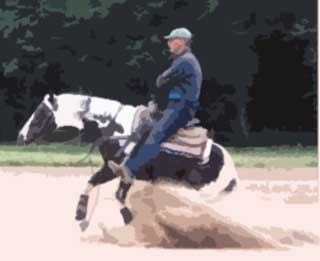
Reining is known for its dramatic sliding
stops and spins, but the sport is far more than fancy moves.
Reining is often likened to dressage, and many trainers believe horses benefit from learning the
basics of reining no matter what discipline they compete in.
Reining is dominated by quarter horses and paints, with some crosses and other breeds.
Reining horses must be incredibly responsive, performing difficult patterns with a variety of
moves, gait changes, circles, and legwork while receiving nearly invisible cues from the rider.
The dramatic sliding stop is the signature move of the reining horse. To perform this, the horse
must pick up a rapid gallop, then practically sit on its haunches. Horses can slide for several
feet and leave measurable marks.
The spin is another difficult move. It is basically a turn on the haunches, where the horse
plants one back foot and spins its body around that foot without moving it or lifting it. However,
the horse must spin very quickly, without losing its balance or slowing, and must start and stop
at a certain point.
In addition, horses must be very responsive to leg in order to perform the lateral work and
flexion necessary. Most patterns call for sidepasses or similar movements.
 Reining is known for its dramatic sliding
stops and spins, but the sport is far more than fancy moves.
Reining is known for its dramatic sliding
stops and spins, but the sport is far more than fancy moves. 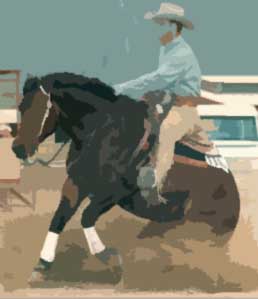 must pick up a rapid gallop, then practically sit on its haunches. Horses can slide for several
feet and leave measurable marks.
must pick up a rapid gallop, then practically sit on its haunches. Horses can slide for several
feet and leave measurable marks.