|
|
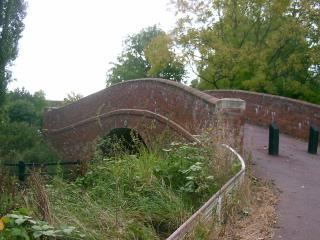
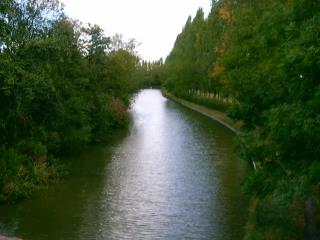
Canal bridge used by Redway The Grand Union Canal is the second oldest of four major north-south transportation routes which pass through the area designated as the site for Milton Keynes in 1967. The next route to be constructed is the West Coast Main line railway, originally the London and Birmingham Railway, opened in 1838. |
|
The newest route is the M1 motorway, opened in 1959 and since extended to link London and Yorkshire. The first and oldest surviving route is the A5, part of the London to Holyhead road linking Britain and Ireland. It was originally constructed by the Romans but improved in the 1820s by Thomas Telford. The Roman alignment of Watling Street has been incorporated into the grid as V4. |
|
|
|
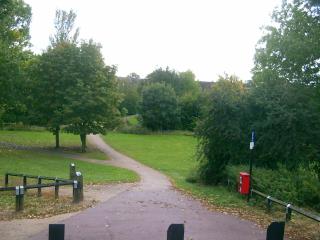
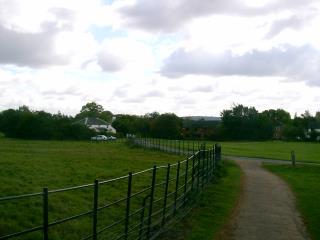
The view into Woughton from the canal bridge. |
|
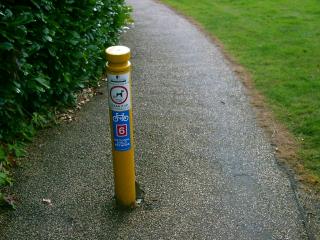
The Redway becomes part of the
National Route 6 runs from London to the Lake District. |
|
|
|
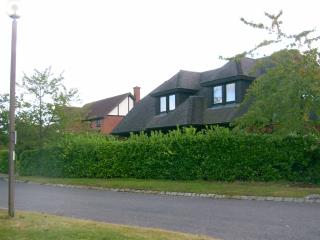
Social engineering seventies style - executive housing added to a pre-existing village preserved within its own grid square. Most of the villages within the Milton Keynes area, including the village which gave the new city its name, have been expanded with premium housing developments. |
|
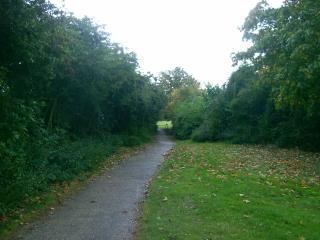
At this point rabbits are often encountered on early morning rides. |
|
|
|
Woughton on the Green is typical of a number of ancient settlements incorporated in to the new city. Aerial view of Woughton village green, site of the medieval village HERE. |
|
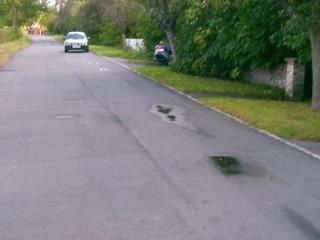
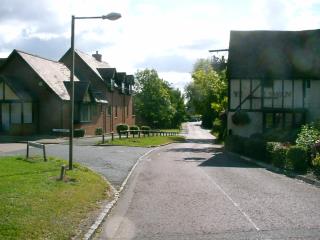
This part of the village remains without street lighting and most cars are parked off the street giving an impression of a pre-automobile rural environment. |
|
|
|
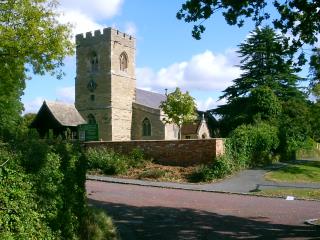
The thirteenth century village church of St Mary's serves a parish of some 28,000 people. |
|
The village also has a sub-post office and ye Old Swan pub, typically of many surviving pubs in the city it is part of a national chain, in this case Chef and Brewer. |
|

 |
 |
 |
 |
This page is maintained by
Stephen Little
Head,
Centre for Innovation, Knowledge and Enterprise
Open University Business
School
Milton Keynes, U.K.
[email protected]