Volume
6, Issue #7
August 8, 2005
"An Outsider's Glimpse into Meditation"
By Michael Kwan
Alternative medicine. We've all heard of it and know that it's a growing trend. Sure, most of us adhere to scientifically-proven, or rather scientifically-evidenced treatments like taking aspirin or resorting to chemotherapy, but more and more people are seeking other possibilities. A common question is, "Why is it that no matter what I try, be it a new pill or a new mattress, I never get a good night's sleep?" Or, likely more common that most men are willing to admit is the difficulty in
overcoming impotence, or women's fertility issues. What do you do when Viagra and in-vitro fertilization do nothing but empty your pocketbook?
More and more people are looking into the value of taking daily doses of ginseng and gingko, or drinking green tea instead of coffee, or dabbling in the possibilities of Eastern traditions like accupuncture, herbal medicine, and a more restricted diet. Those dedicated to weekly (or more frequent) yoga sessions, or those who swear by meditation to calm and rejuvenate themselves assert that it has amazing positive ramifications on their physical, emotional, and spiritual well-being. By contrast, several non-practitioners are quick to dismiss these "non-proven" and "non-Western" practices as a bunch of hippie garbage, so to speak.
Indeed, it is incredibly difficult, if not impossible to prove the value of meditation or yoga. It is impossible to prove that it is because of the meditation that a previously impotent man can suddenly father a large family. That being said, countless practitioners of Bodhi Dharma meditation has expressed their gratitude to the Bodhi Dharma Society and to Master JinBodhi for miraculously curing cancer, solving fertility problems, and helping irritable people become compassionate and selfless.
Mary Chen, a young
accountant in Vancouver, suffered from migraines and with a single visit
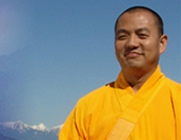
with Master JinBodhi, founder of the Bodhi Dharma Society, the headaches
disappeared and never returned. Shen HuànCuì had a CAT scan
that revealed lung cancer that had developed into sizable lung and brain
tumours. Chemotherapy results were inconclusive and expensive, but after
treatment by some Dharma teachers, they found that the tumours in her
lungs and head had miraculously disappeared. They "don't know how
this happened, but we feel we owe a great deal to the Bodhi Dharma Society."
Chen Lijuan taught a class of Grade 7 delinquents who were performing
very poorly academically, but after introducing her class to Bodhi Dharma
techniques, "the students' behaviour improved: they found that they
were better able to concentrate on their studies, enjoying them more."
Indeed, they "altogether stopped being disruptive...and actually
started helping each other, and enjoyed it."
.

Bodhi, or Puti, is "the greatest state of mental and spiritual awakening: enlightenment.... In Buddhist terminology, it refers to the supreme state of inner cultivation: a state in which one has a true understanding of the natural laws of the universe." Dharma is "the Buddha's wisdom, which is also Buddhist law, which is right living, which is the Way to true awakening." The Bodhi Dharma Society markets its particular brand of meditation as non-denominational, but it has very obvious roots in Tibetan Buddhism. The vast majority of practitioners are ethnic Chinese or immigrants with an ethnic Chinese background, but they are looking to expand. As a result, several texts, meditation CDs and videos, and other works are in the process of being fully translated into English to make them more accessible to non-Mandarin speakers. Certain particulars have to be reworded as they begin to sound too mystical, or at times
"goofy," to native English speakers. An example is the alteration of terms like "legs in full lotus position," and the removal of sheep and cow sounds in the meditation CD.
It is difficult to study meditation using the scientific method, especially when trying to determine its effectiveness, reliability, and value. It runs into the same problems as the scientific study of psychodynamic or psychoanalytic psychotherapy, which has its roots in Freudian theory but has expanded and changed substantially since Freud's Viennese days. These are the same problems in trying to study any of the world's religions, like Christianity. Using proper scientific methods, one cannot prove the effectiveness of meditation just as one cannot prove the existence of God. Keep in mind, neither can be disproved either. Like the study of psychotherapy (the use of hypnosis or dream analysis, for example), it is impossible to compare meditation against a control condition. Is the meditation itself that is curing a woman's chronic headache, or is just a coincidence? Perhaps she started taking a new medication, or starting eating differently, drinking more water at the same time that she started meditating. Perhaps it is the interaction with a "Master," or any authority figure, and the meditation works as an excellent placebo. Or it could very well be simply the passage of time that "cures" a backache or joint pain. Of course, the Bodhi Dharma society would not publish testimonials that say how horrible meditation is or how it has ruined a person's life.
In surveying a small handful of scientific articles that have addressed the value or nature of meditation, they have said that new participants generally feel more relaxed, sleep better and are more effective at work. Using a number of standard tests and scales, like the Beck Depression Inventory and a number of proven health-related checklists, the results seem promising, especially in a group psychotherapy context. A popular secularized version of meditation - Mindfulness Based Stress Reduction (MBSR) - has received consistent scientific research and support. Meditation is starting to find considerable integration into psychodynamic and cognitive-behavioural frameworks and practice.
At the same time, negative consequences have also been recorded, including a paradoxical anxiety and an addiction to meditation. Again, one cannot prove that either the positive or the negative effects are due entirely, in part, or not due to the introduction to meditation and adherence to a certain meditative lifestyle. In one particular study, the researcher looked into the use of meditation as part of group therapy and found that most participants were more engaging, empathic, and amiable than the group that did not include traditional meditative practices as part of the therapy.
I have always believed in a laissez-faire attitude in that if someone wants to be Christian, practice Buddhist meditation, or be an adamant atheist, that is all fine with me insofar as it doesn't affect me directly and they make no outright attempt to convert me to their views. I have yet to try out any of the Dharma meditations, but have listened to a few translations and have read several testimonials. The mantra of "Don't knock it until you've tried it" seems to apply. Most of modern society runs at breakneck speed and all the associated stress can be quite overwhelming. If going to the gym seems to soothe you, great. If catching a flick with the girlfriend puts you at ease, great. And for several thousand followers, if Bodhi Dharma meditation grounds you and gives you peace, then all the more power to you. The intrinsic and absolute value or lack of value in meditation is inconclusive, but it clearly has positive effects for several of its practitioners. So, although science hasn't proven anything, anecdotal evidence seems to say that meditation can do wonders at best, and does little harm at worst. I think an open mind is always the best approach, but hey, that's just me.