|
The
Pledge of Allegiance
Here's a line-by-line review of America's popular oath.
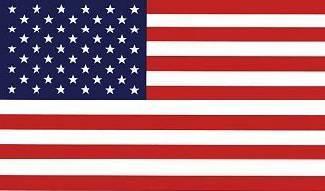
I pledge allegiance to the flag...
The beginning of an idolatrous and pagan-like, prayer. How could it
be otherwise when "duty, obligation to support, and loyalty"1
are directed at an inanimate object? Even Jehovah's Witnesses recognize
the flaw and so refuse to recite the pledge. OK, so the words "the
flag" have to go.
...of the United States of America
A point of order: "...these united colonies are, and of right
ought to be, free and independent states." See the final
paragraph of the Declaration of Independence, Action of Second
Continental Congress, July 4, 1776.
and to the republic for which it stands,
In a republic, supreme power rests
with those citizens old enough to vote, but many Americans think it
means that government exists to "help people" (-Sen. Chuck Schumer, a Democrat),
to hand out rights and favors as if we
were children from whom obedience and loyalty are the payment in kind.
As for voting, Americans should know by now that their elections
are a formality if only by virtue of the fact that deep pockets
rule the roost. Frequently, incumbent politicians simply choose their
voters, rather than the other way around, in back room redistricting
sessions every few years. The Fortune 500 write whatever laws
strike their fancy, the budget deficit and public interest be damned.
There have been reports of their lobbyists literally doing so within
closed committee sessions of Congress.
Well, is the Republic alive and kicking on the bench of the U.S. Supreme
Court? Nope. The nine geezers are still pretending that, among other
delusions,
corporations are the same as real, live people and so have rights, too.
In other words, American lawyers conjured up real rights for artificial,
government-made entities which themselves are not citizens, not
people, not alive, and hence cannot possibly have rights. But
this twist is better for some to do their ruling to you. Hawai'i's five-term
U.S. Rep. Cecil Heftel (1976-1986) attacked the resulting cult of corruption
in a book titled End Legalized Bribery. Look it up in the Library
of Congress: ISBN 0-929765-59-1.
Speaking of Hawai'i, not long ago that kingdom was free and independent
of foreign government. At the behest of commercial interests, it was
seized by the USA near the end of the 19th century. Another burgeoning
empire attacked it about four decades later.
one nation
Well, not exactly. It was Honest Abe who turned the words of Daniel
Webster into a motto of the Republican party: "Liberty and Union,
now and forever, one and inseparable." But what kind of liberty
and union is created and preserved ad infinitum through naked,
brute force? Recall that the United States of America can be thought
of as a common defense area and a customs union, and reread
the section "...of the United States of America" for the quote
about free and independent states.
under God,
Never mind, for the moment, whether or not this claim is true and simply
consider that Congress added it in 1954 during Sen. Joe McCarthy's (R-WI)
witchhunt for Communist sympathizers. (A Senator from Michigan actually
proposed its addition.) The Constitition is quite plain about religion:
"Congress shall make no law respecting the establishment of religion..."
Some have suggested that the phrase "under God" is just an
acknowledgement of tradition, but it is a religious claim no less than if it read
"one nation under no god." Each entails belief, if not unreasonable
blind faith, about the nature of existence. If such statements aren't
about establishing or prohibiting religion, then there is no such thing
as religion. So, although it is your own business to recite the words
of your chosing, the law which added "under God" is anti-Constitutional
and has to go.
As for the veracity of the claim itself? Let's ignore the metaphor
and try to figure out exactly how far one would travel to be up close
to the Sky Father
of ancient times. The magazine Scientific American tells us that the
nearest of infinitely many parallel universes, some of which have another
you, is only 10 to the 1023 meters away. (That's 10
multiplied by itself 1023 times. In comparison, 10 raised
to the 101 equals 10,000,000,000; 10 raised to the 102
equals 10100, also called a googol.) Calculations
and observations, not faith, support this claim.
indivisible,
We've already covered this ground. Now, nothing lasts forever, and
"it is the right of the people to alter or abolish it." (See
The Declaration of Independence, again.)
with liberty and
Not long after the 9/11 attacks, U.S. Rep. Jesse Jackson, Jr. (D-IL)
informed us in an op-ed piece written for a Chicago newspaper that "our
rights are whatever we say they are." With such thinking it would
follow that we free to do whatever we please. The trouble is that some
acts motivated by want, e.g. slander, stealing or dumping you company's waste into
groundwater supplies, are clearly wrong if not always illegal, too.
(Must we explain why "justification" for such acts is all
sophistry and illusion?) It is therefore fallacious,
i.e. irrational, to conclude that one is free to act simply on account
of want. If the logical structure of an argument founded on want is
invalid in one case, e.g. stealing, it is invalid in all cases.
Read about the distinction between validity
and soundness to understand why this is so.
Viewed from another angle, an argument for liberty defined only in
terms of the freedom to do what you want lacks the necessary and
sufficient premises to conclude that one's action would be justified.
In a very real way, "want" has nothin' to do with Liberty.
In a similar vein, we need to be careful about confusing want with need.
Do I "need" to earn a million dollars because I want to buy
a million-dollar home? Of course not; the so-called need for money is
just a secondary want, the means to another desire.
And, of course, some things are just impossible.
You aren't free to have or do the impossible. Sorry, Libertarians, but
you should be happy to know that politicians and judges will have their
freedom of action similarly constrained
justice for all.
Well, not exactly. Justice is a noble goal, but we need to work on
follow-through. For example, is it just when we conservatives rig the
tax code, the common law, and the Uniform Commercial Code (UCC) on behalf
of the Fortune 500 and against the interests of small business owners,
even if a few bones are thrown to the little guy? The limited liability
corporation was conceived as a way to limit the losses that can be experienced
by investors when a business goes bankrupt, commits fraud, and so forth,
but where's the justice in a system of personal profit without personal
responsibility? (Pandering relativists argue that "anyone can participate!")
And don't ignore busy American troops long garrisoned all around the
globe in spite of warnings by the Founding Fathers themselves about
the dangers of standing armies and foreign adventures in search of monsters
to destroy.
The phrase "justice for all" ought to be the pivotal phrase
of the pledge, so it begs the question: Why isn't the pledge aimed directly
at We, the people, rather than the often-fuzzy concept of "the
republic" and it's chief symbol? One possibility is that it would
weaken the people's obedience to government if not subvert the national
religions of self-absorption and money grubbing.
Conclusions: (1) The pledge is a prayer to several objects,
one material and another imaginary. (2) The USA has a few minor character
flaws. They can be repaired, but don't count on much help from Congress,
the President, the judiciary, Democrats or Republicans. (3) The pledge
is a high-minded oath best not foisted on gullible kids by politicians
until they (the kids, that is) are old enough to understand its implications.
(4) The USA is still dominated by workaholic conservatives, a few
of whom are doing God's supposed will, and oh, brother do we know what
that means2. (5) A corrected version of the pledge would
run something like:
I pledge allegiance to the People
of the United States of America.
And to the Republic for which We stand,
One Nation of free and independent States,
with liberty and justice for all.
Try not to let the apparent inconsistencies bake your noodle.
1. Webster's New World Dictionary - Second College
Edition, © 1982
2. "I smote the peasants; all their blood is on my head; the Lord
God ordered it." Martin Luther, as quoted by Jacques Barzun
in From Dawn to Decadence: 1500 to the Present - 500 Years of Western
Cultural Life, (New York: HarperCollins, 2000), p.19.
E Pluribus Unum
E Unus Pluribum
E Pluribus Unum
|
|