


 THE INGREDIENTS
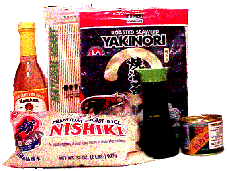
VINEGAR
The word comes from vin (wine) and aigre (sour). Sugared water or any alcoholic
beverage, allowed to stand long enough, naturally sours and becomes vinegar.
In Japan it is made from rice, the grain from which sake is brewed. With the power
to alter proteins, vinegar destroys bacteria. Adding sugar to sushi rice
is to prevent the tartness of vinegar from coming through to strongly.
 SOY SAUCE

Soy sauce is highly recommended as a natural fermented food, superior to salt,
sugar or synthetic seasonings. It is essential to most traditional Japanese foods,
including sushi, tempura, sukiyaki and noodles. Soy sauce should be stored in a
cool, dark, dry place or refrigerated.
 WASABI

Grown only in Japan, wasabi horseradish, removes unpleasant fishiness.
Fresh wasabi is very expensive, and adequate and much cheaper alternatives
are powdered and pasted wasabi.
GARI

Pickled ginger root is eaten to refreshen your mouth between bites of sushi.
It can be bought in well-sorted shops if you don't want to pickle it yourself.
NORI

After harvesting, the seaweed is dried, toasted and sold in packaged in standard
size sheets 19X21 cm. Once the sealed cellophane or plastic bag has been opened,
nori should be eaten at once. If not it should be stored in a sealed container
in a dry, cool, dark place to preserve its crispiness.
MISO

A soup which is usually served togheter with sushi.