






 |

Great Dane Breeding
There are only six recognized colors; all these basically fall
into four color strains:
 | FAWN and BRINDLE |
| HARLEQUIN, MANTLE and HARLEQUIN BRED BLACK |
| BLUE and BLUE BRED BLACK |
| BLACK |
Color Classifications being well founded, it is an
inadvisable practice to mix color strains and a breeder should adhere only to
the following breedings:
|
Color of Dane
|
Approved Breedings
|
Desired Pedigrees
|
1. FAWN
1. BRINDLE |
1. FAWN bred to FAWN or BRINDLE only.
1. BRINDLE bred to BRINDLE or FAWN only. |
Pedigrees of FAWN or BRINDLE Danes should not
carry BLACK, HARLEQUIN or BLUE upon them. |
| 2. HARLEQUIN
2. MANTLE
2. BLACK (HARLEQUIN BRED)
|
2. HARLEQUIN bred to HARLEQUIN, BLACK from HARLEQUIN
BREEDING or BLACK from BLACK BREEDING only.
2. MANTLE bred to HARLEQUIN, MANTLE, BLACK from HARLEQUIN breeding or
BLACK from BLACK breeding only.
2. BLACK from HARLEQUIN BREEDING bred to HARLEQUIN, BLACK from HARLEQUIN
BREEDING or BLACK from BLACK BREEDING only. |
Pedigrees of HARLEQUIN, MANTLE or HARLEQUIN BRED BLACK
Danes should not carry FAWN, BRINDLE or BLUE upon them. |
3. BLUE
3. BLACK (BLUE BRED) |
3. BLUE bred to BLUE, BLACK from BLUE BREEDING or BLACK
from BLACK BREEDING only.
3. BLACK from BLUE BREEDING bred to BLUE, BLACK from BLUE BREEDING or
BLACK from BLACK BREEDING ONLY. |
Pedigrees of BLUE or BLUE BRED BLACK Danes should
not carry FAWN, BRINDLE, or HARLEQUIN upon them. |
| 4. BLACK (BLACK BRED) |
4. BLACK from BLACK BREEDING
bred to BLACK, BLUE or HARLEQUIN and MANTLE. (See note below) |
Pedigrees of BLACK BRED Danes should not carry
FAWN, BRINDLE, HARLEQUIN, MANTLE or BLUE upon them. |
NOTE: Black Bred Great Danes may
be bred to Blacks, Blues, Harlequins or Mantles only. Puppies resulting from
these breedings will become Blacks, Harlequins from Harlequin breeding or
Mantle. (category 2 above). Blacks or Blues from Blue breeding (category 3
above) or Blacks from Black breeding
(category 4 above).
Color Information
|
Harlequin - Base color shall be pure white with black torn patches irregularly and well distributed over the entire body; a pure white neck is preferred. The black patches should never be large enough to give the appearance of a blanket, nor so small as to give a stippled or dappled effect. Eligible, but less desirable, are a few small gray patches, or a white base with single black hairs showing through, which tend to give a salt and pepper or dirty effect. Any variance in color or markings described above shall be faulted to the extent of the deviation. Any Great Dane which does not fall within the above color classifications must be disqualified. |
|
Black - The color shall be a glossy black. White markings at the chest and toes are not desirable. |
|
Mantle - The color shall be black and white with a solid black blanket extending over the body; black skull with white muzzle; white blaze is optional; whole white collar preferred; a white chest; white on part or whole of forelegs and hind legs; white tipped black tail. A small white marking in the black blanket is acceptable, as is a break in the white collar. |
|
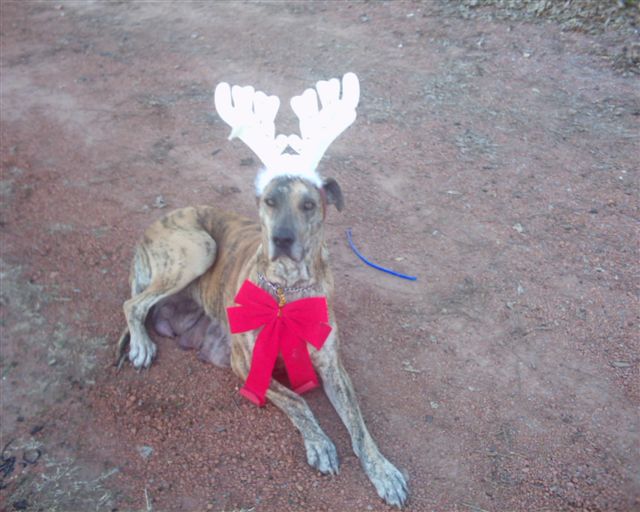
Fawn - The color shall be yellow gold with a black mask. Black should appear on the eye rims and eyebrows, and may appear on the ears and tail tip. The deep yellow gold must always be given the preference. White markings at the chest and toes, black-fronted dirty colored fawns are not desirable. |
|
Brindle - The base color shall be yellow gold and always brindled with strong black cross stripes in a chevron pattern. A black mask is preferred. Black should appear on the eye rims and eyebrows, and may appear on the ears and tail tip. The more intensive the base color and the more distinct and even the brindling, the more preferred will be the color. Too much or too little brindling are equally undesirable. White markings at the chest and toes, black-fronted, dirty colored brindles are not desirable |
|
Blue - The color shall be a pure steel blue. White markings at the chest and toes are not desirable. |
back to top
Owning a Great Dane
Great Danes should be raised in the house as a family member; they do not do
well as yard dogs, although they do need a fenced yard for exercise and
playtime. Just as you would not leave older siblings alone with a baby, young
children should never be left unattended with your puppy or dog. Because a puppy
is not a toy, children must be taught the correct way to interact with a puppy;
fair play and respect are a must. Puppies often think of toddlers as other
puppies since they are close to the same size and make similar sounds. As the
parent, you must teach and monitor correct behavior on the part of the child and
the puppy. Puppies chew on each other, wrestle, and growl to determine their
pack structure. With correct and consistent training, your puppy will learn that
your children are not puppies, but small humans. Quick movements and
high-pitched squealing will excite a puppy or dog while loud, harsh corrections
will confuse and intimidate it. Dogs learn through consistency and repetition,
with love and positive reinforcement. The adults in your household must assume
the role of pack leader in order for your puppy to grow up secure and confident.
We also recommend crate training your puppy. The crate, when placed in the
living area of your home, will become your puppies "den." Keep soft,
washable bedding and toys in the crate; newspapers just inside the crate door
can help with the baby accidents. The crate door should be left open while you
are at home with the puppy so that it can go to the den at will. Children should
be taught that they are never to bother the puppy when it is in its den - this
is a safe place. The puppy should also sleep in its crate until it is old enough
to sleep through the night without accidents. If you do not have room for a
crate in your bedroom, be sure to leave soft music and a large, stuffed toy for
it at night so that it does not feel completely alone. You should also use a
crate or seatbelt harness in your vehicle for the same reasons that your child
rides in a car seat.
As you have probably come to realize, prior to approximately four months of age
puppies eat, sleep and potty a lot! The initial 3-4 meals each day can be
reduced to 2 meals per day by 6-9 months of age. The last meal and water should
be approximately two hours before bedtime with one last play period and potty
break just before going to bed. While still a puppy it will need to potty
immediately after a nap, upon coming out of its crate after eating, and after
(if not during) a good round of play. Accidents in the house are not the fault
of the puppy. If you take the puppy out often, stay with it, and give soft
praise, it will soon be housebroken. Your Dane should continue to eat twice each
day its entire life. Follow your breeder's advice on feeding and nutritional
supplements.
back to top
|