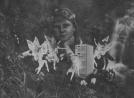
In 1917, two little girls in England took
photographs that shocked the world.
They said they were photographs of real fairies.
For almost a century, children and secretly many adults have answered Peter
Pan's entreaty to save the fairy Tinkerbell with resounding applause. In the
dark of a theatre, in that one magical moment, it is a very powerful thing to
believe.
But what happens when that belief is carried into the light of the real world?
In the summer of 1917, in the midst of the Great War, ten year-old Frances
Griffiths sat clapping furiously in her seat as Peter Pan flew across the stage
of the Duke of York Theatre in London. Just for those wondrous few minutes, she
was transported away from the reality of her missing soldier father and her new
life as a war orphan and into an exuberant world of innocence and hope.
Frances could not have known then that in a few short months she and her cousin
Elsie would bring others hope as they stood at the center of one of the 20th
centuries most incredible controversies - a controversy that would have some of
the greatest minds in the world, including Sir Arthur Conan Doyle and Harry
Houdini, wondering if they too should dare to believe in fairies.
As recently as 1997 there story was told in a motion picture

Thou the Girls later recanted their story. To this day the technology
of how those pictures were produced on glass plates is impossible.
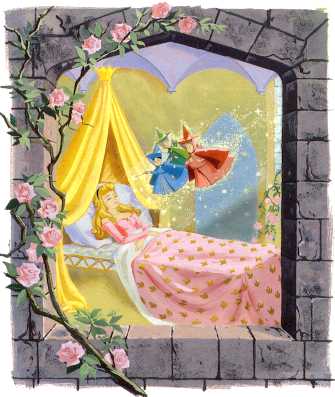
We have embodied the faery into our culture through the stories we tale
our children Sleeping Beauty and the 7 faeries that Blessed the Princess.
Cinderella and her fearie godmother. Peterpan and Tinkerbell. Ferngully and the
faeries that protect the rain Forest, and Thumbalina earning her wings.
Throughout the centuries our parents have taught use to
believe in faeries by us losing our first tooth. We take that tooth
and place it under our pillow in hopes that the the tooth faerie will some
how come and take it away and leave us a trinket in its place.
Under certain beliefs the Faery and the Angel can be viewed in the same
light.
Example is that both have wings