MUAYTHAI
(Thai boxing) is a Thai self-defense art which follows a specific format and
features a unique character. It signifies the uniqueness of the Thai people in
the skill of transforming different parts of the body into both defensive and
offensive tools.
MUAYTHAI is known to be over two thousand
years old. Originating from the Warrior systems Krabi Krabong (pronounced
Krah-bee-krah-bong) literally translated means "long and Short
Weapons", the warrior using the short weapons represents the monkey and the
warrior using the long weapons, the Giant. This system of monkey fighting the
giant is also seen in MUAYTHAI but is not as apparent as in Krabi Krabong.
MUAYTHAI evolved when a warrior was disarmed and had to use the body's natural
weapons, hands, knees, elbows and feet, adopting the same principles as Krabi
Krabong.
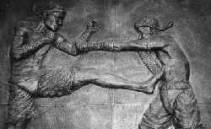
In
the early days, boxers fought without gloves using only hemp rope to bind their
fists. One of the most famous fighters of this era was His Majesty PRA
CHAO SUUA (King White Tiger). This renowned royal boxer travelled his
country incognito, boxing at country fairs against local champions. After
receiving his meagre purse for the fight, he would disappear from the village
without his identity ever being discovered. It is PRA CHAO SUUA who is
credited as the founder of modern day MUAYTHAI, through his study and
development of the unarmed system, honing and sharpening the skills and
techniques, MUAYTHAI became the "Science of Eight Limbs".
In the 1930s the Thai people, proud of their
fighting heritage, developed a formal structure for MUAYTHAI, whilst preserving
the rituals of the Wai Kru/Ram Muay (dance to teachers before the tournament),
the sacredness of Mongkol (head band), arm band on the upper arms and retaining
the traditional music which accompanied every bout. Boxing gloves were to be
worn, weight divisions were introduced and rules and regulations were formulated
in order to govern and promote Thailand's National Treasure - MUAYTHAI.
The first professional stadium, dedicated solely to MUAYTHAI was built on
Rajadamern Avenue, Bangkok - the renowned Rajademern Stadium. Shortly after, a
second stadium, Lumpini opened its doors, giving fight fans the chance to see
Live Thai Boxing seven days a week. Now there are five stadiums in Bangkok
alone, a testimony to the popularity of this fascinating sport.
MUAYTHAI has reduced its martial role and put
more emphasis on the sport aspect. This has resulted in a huge increase in its
popularity and many foreigners having witnessed Thai Boxing for the first time
wanted to know more about the art and began to promote MUAYTHAI in their own
countries.
Today, there are over 110 countries in over 6
continents, including Singapore, which are actively practicing this sport.
The illustrious history of MUAYTHAI will continue as it receives greater
recognition and gains international popularity.


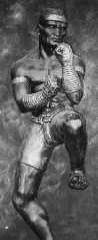 MUAYTHAI
(Thai boxing) is a Thai self-defense art which follows a specific format and
features a unique character. It signifies the uniqueness of the Thai people in
the skill of transforming different parts of the body into both defensive and
offensive tools.
MUAYTHAI
(Thai boxing) is a Thai self-defense art which follows a specific format and
features a unique character. It signifies the uniqueness of the Thai people in
the skill of transforming different parts of the body into both defensive and
offensive tools.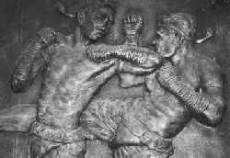 In
the early days, boxers fought without gloves using only hemp rope to bind their
fists. One of the most famous fighters of this era was His Majesty PRA
CHAO SUUA (King White Tiger). This renowned royal boxer travelled his
country incognito, boxing at country fairs against local champions. After
receiving his meagre purse for the fight, he would disappear from the village
without his identity ever being discovered. It is PRA CHAO SUUA who is
credited as the founder of modern day MUAYTHAI, through his study and
development of the unarmed system, honing and sharpening the skills and
techniques, MUAYTHAI became the "Science of Eight Limbs".
In
the early days, boxers fought without gloves using only hemp rope to bind their
fists. One of the most famous fighters of this era was His Majesty PRA
CHAO SUUA (King White Tiger). This renowned royal boxer travelled his
country incognito, boxing at country fairs against local champions. After
receiving his meagre purse for the fight, he would disappear from the village
without his identity ever being discovered. It is PRA CHAO SUUA who is
credited as the founder of modern day MUAYTHAI, through his study and
development of the unarmed system, honing and sharpening the skills and
techniques, MUAYTHAI became the "Science of Eight Limbs".