|
      
|
 |
What should I do if my child knocks out a tooth? When Should My Child
Begin Flossing? Is
Teething Painful? Yes. When babies are teething,
usually between the ages of four months and 2½ years, they often
have sore and tender gums. Teething can
show up in a child in various ways.
A few are listed below:
Teething does not cause a fever. If your child has an elevated temperature, it needs to be addressed as a separate medical concern. If your baby continues to be cranky and uncomfortable after you attempt to ease its teething pain, call your physician. What to do? Let your child chew on a cold, hard object, such as a teething ring. The coldness helps ease the discomfort and the hardness will speed up the eruption of the tooth. Massaging your child's gums with a clean finger can help reduce pain and discomfort during teething. Teething gels or ointments (ask your pharmacist for a brand name) are used to numb the gums and reduce the discomfort. When should thumbsucking stop? Children should have ceased thumbsucking by the time the permanent front teeth are ready to erupt. It is important for a child to stop sucking their thumb before the age of 6 years. However, it is strongly suggested that this habit be broken before this age is reached to prevent future teeth problems for the child.
When should we be concerned about
orthodontics for my child? What is
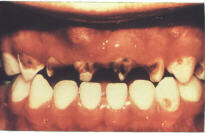
bottle caries? If a child is nursing with a bottle containing sugar in it, the acids can cause serious decay on the baby teeth. One way to prevent this is problem is to not let your baby sit for long periods of time with sugar flavored drinks (juices, sodas, milk, etc.) in their bottle. You should clean their gums and/or teeth after eating.
Is
My Child Teething? When should crooked teeth be straightened? As
soon as they're detected! Lots
of times fixing crooked teeth at a young age is recommended when
teeth are overcrowded to prevent tooth problems in the future.
Some baby teeth may be removed ahead of their normal shedding time
to allow nature to do a certain amount of tooth straightening.
This is known as interceptive orthodontics. Does my child need fluoride supplements?In general, yes. All children need supplemental fluoride after they are six months old to help prevent cavities. For most children, they can get this fluoride from the water they drink if they are in an area where the city water supply has an adequate amount of fluoride in it (greater than 0.6 ppm), and they are drinking tap water. Sources of water that generally don't have enough fluoride include well water and filtered or bottled water. Also, commercially prepared pre-mixed infant formulas do not contain an adequate amount of fluoride. Talk to your Pediatrician about taking a multivitamin that contains fluoride in it or obtain it from your dentist. It is in general better to have your child
drink water that is supplemented with fluoride instead of giving
extra fluoride drops or supplements. Too much fluoride can cause fluorosis, What is Fluorosis?
· To
ensure your child does not have any adverse effects from fluoride,
you can follow some basic rules: 1. fluoridated products should not be swallowed! 2. Only a small amount of toothpaste, such as the size of a small pea is needed for a child 3. fluoridated products, especially mouthrinses should not be given to a child under 6 years of age, or to anyone who cannot rinse ( those you suspect are swallowing some of the product) 4. keep fluoridated products out of reach of children 5. parental supervision is needed for children when brushing or using any fluoridated substances Fluoride Dental decay is a very common disease in North America and throughout most of the world. One way to help prevent this disease from occurring is through the use of fluoride. Fluoride helps to harden tooth enamel and make it more resistant to tooth decay. A small cavity can be stopped and even reversed by the remineralization process enhanced by fluoride. Fluoride
is usually delivered to the teeth in 2 ways; topically (directly
on the teeth) and/or systemically (enters through the blood
stream). Systemic Fluoride Systemic fluoride is delivered to the tooth surface via the bloodstream from a food source, water source, or dietary supplement like a pill, tablet, or drops. Fluoridated water is a very effective way to reduce dental decay. Fluoridated water and dietary supplements can reduce up to 60 % of tooth decay. Some water supplies already naturally contain fluoride, for others, fluoride is intentionally added to the water supply. Some communities have no fluoride in their water. Other communities are unaware of this option. Check with you city officials or health department and they should be able to tell you the levels of fluoride in your water. Children 15 years of age and younger will benefit the most from the systemic fluoride. When the teeth are developing in the jawbone, the fluoride ion is then built into the enamel structure of the developing tooth, making the tooth bond more resistant to acids that attack the tooth. Topical Fluoride Topical fluorides are applied directly to the tooth structure to delay or slow down the tooth decay process. Topical forms of fluoride include: · toothpaste - used daily, must have an ADA or CDA Seal of Acceptance on the label. · professional fluoride application - this is a gel that is applied for 1 to 4 minutes, usually in a tray at the end of a dental appointment. Not everyone is given a professional fluoride treatment. It depends on your oral health needs. · fluoridated home mouthrinses – these can be purchased over-the-counter for children over 6 years of age, and adults who are susceptible to cavities. · home care fluoride gels - applied by trays or by brush, these gels are for those who are highly susceptible to cavities. These people would include: -adults with a high incidence of root cavities -those who experience an extremely dry mouth -people who wear braces or orthodontic appliances -those who have rampant or excessive cavities Fluoride gels can be bought over-the-counter or by prescription. Seek the advice of your dental hygienist or dentist for a daily home fluoride program that is individualized for your needs. Fluoride Safety · Fluoride is very effective in controlling dental decay when used properly. If not used in the proper doses, fluoride toxicity and dental fluorosis can occur. · Fluoride toxicity is when large amounts of fluoride are ingested during a short period of time. This can be dangerous to your health. Symptoms may include nausea, diarrhea, vomiting, abdominal pain, increased salivation or increased thirst. These symptoms would begin 30 minutes after ingestion and can last up to 24 hours. Depending on how much of a toxic overdose of fluoride is ingested, certain emergency procedures should be implemented. If you feel nausea, drink milk, or try to induce vomiting, and call your dental office or medical doctor. If these symptoms do not subside, or the conditions worsen ( hard to breath), call an emergency service to transport you to the hospital. Helpful Books for teaching children about the dental officehttp://www.dentalreview.com/childrens_books.htm
Pediatric Pamphlet at: www.ada.org/public/topics/parents/tips.html
|
||||||||||||||||||||||||||||||||
Entire contents copyright (c) 2002 Dr. Sean Lorscheider. All rights reserved world wide.