 |
 |
 |
 |
| Photo| Courtesy Michaelamendolia.com |
 |
| http://210.8.112.197/fotoweb/fwbin/preview.dll? |
 |
| http://210.8.112.197/fotoweb/fwbin/preview.dll |
 |
| http://www.hollows.org.au/About_Fred/ |
 |
| http://upload.wikimedia.org/wikipedia/en/thumb/ 5/5f/Fred_Hollows.JPG/180px-Fred_Hollows.JPG |
 |
| Photo| Courtesy Michaelamendolia.com
http://www.hollows.org.au/Assets/Images/FredsVision.jpg |
 |
| http://www.hollows.org.au/Assets/Images/Simila[6].jpg |
|
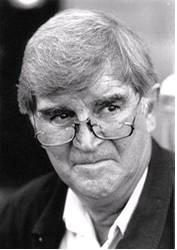
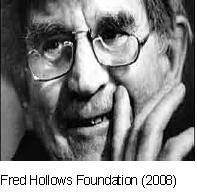
Introduction Frederick Cossom Hollows was born 9 April 1929 in Dunedin New Zealand, the son of a train driver and he had three brothers. After finishing high school, he wanted to become a priest but then changed his degree and enrolled at the Otago Medical School to study medicine. He studied at eye hospitals in England and Wales, and then moved to Australia in 1965 (Corris, 1991). Fred became an ophthalmologist and decided to spend his life restoring eyesight and improving medical conditions to people all over the world. Fred got married two times, first to Mary Skiller, who passed away, then to Gabi O�Sullivan and has five children (Profile, 2007). The following paper is an interpretation of leadership theories that attribute to the success of Fred Hollows as a leader, to allow his humanitarian work to survive and prosper through periods of political unrest, overt racism, and indifference. It examines his traits, |
| References
Aaker, D.A. (2005, pp. 28-35). Strategic Market Management. New Jersey: John Wiley & Sons, Inc. CRP (2007). Australian Stories � Fred Hollows. The Australian Government Cultural and Recreational Portal. Retrieved March 10, 2008, from http://www.cultureandrecreation.gov.au/articles/fredhollows/ Dubrin, A. & Daglish, C. & Miller, P. (2006). Leadership (2nd ed.). Milton: John Wiley & Sons Australia, Ltd. FHF (2008). About Fred. The Fred Hollows Foundation Website. Retrieved March 10, 2008, from http://www.hollows.org.au/About_Fred/ FHF NZ (2007). Fred Hollows - Information Sheet. The Fred Hollows Foundation NZ [Electronic version]. Retrieved March 10, 2008, from http://webadmin.hollows.org/Assets/Files/Schools%20factsheet%20Fred%20Hollows.pdf Herzberg, F. (1987, pp. 29-32). Workers needs: The same around the world. Industry Week. 27 September 1987. Hollows, F. & Corris, P. (1991). Fred Hollows an autobiography with Peter Corris. Richmond, Victoria: John Kerr Pty Ltd Maclurcan, D. (2002). The man who had vision. See Australia Run. Retrieved April 13, 2008, from http://www.seeaustraliarun.com/hollows/fred_hollows.shtml Marks, K. (2004, April 1). Aboriginal males unlikely to live beyond mid-40s. Independent Newspapers UK Limited [Electronic version]. Retrieved 13 April, 2008 from http://findarticles.com/p/articles/mi_qn4158/is_20040401/ai_n12785083 Owens, J. (2007). Leadership for Project Managers. Free articles [Electronic version]. Retrieved April 26, 2008, from http://www.freearticles.com.au/launch/26-02-2007Leadership-for-Project-Managers.htm Profile. (2007). Profile � Fred Hollows. Wikipedia � The Free Encyclopedia [Electronic version]. Retrieved March 10, 2008, from http://en.wikipedia.org/wiki/Fred_Hollows |
| Fred Hollows passed away in 1993 at the age of 64. He set up the Fred Hollows Foundation to make eye care available for the poor and disadvantaged, and to enhance the health of Aboriginals (Profile, 2007). |
| Conclusion
By possessing and displaying a vast array of the theoretical leadership traits, Fred was able to get people to overlook and tolerate his many shortcomings to share his image of how the world should be. Fred started as a servant leader who devoted his life to helping people see. International honours from charities, governments, and the people he helped reinforced his ideals about facilitating and empowering people. |
| In 1992, he set up the Fred Hollows Foundation, which, even without his direct leadership has continued with his work for over fifteen years. This foundation is a testament to a visionary man that surpassed all expectations, and has restored sight to over one million people and trained more than 750 doctors in countries all over the world (Maclurcan, 2002).
After thirty years of helping others, Fred, who was nicknamed the �Wild Colonial Boy� transcended servant leadership and became transformational, with his unwavering behaviours, beliefs and attitudes; he has become a symbol of hope and has shown us all what one man can achieve through leading others. As a true reflection on his values, Fred once said, �To my mind, having a care and concern for others is the highest of the human qualities� (CRP, 2007). |
| 1981: Advance Australia Award
1985: refused the Order of Australia 1990: received Human Rights Medal 1990: named Australian of the Year 1990: Advance Australia Award 1991: named Humanist of the Year 1991: Fellow by Rotary International 1991: received Order of Australia 1991: first honorary citizen of Eritrea 1993: Rotary - World Understanding 1993: Fellow Lions Club International 2005: NZ Top 100 History Makers 2006: 100 most influential Australians Courtesy of (Profile 2007) |
| Honours & Accolades |
| Fred revolutionised poorly developed countries health and attitudes using his coaching skills. He listened closely when people talked and asked questions of him. The �big picture� was always in his mind and he was clear with everyone exactly what he expected (Hollows, 1991). Fred delegated the entire task, once his teaching was completed, it was then up to the student to become the teacher and pass skills on. This empowered entire villages and gave people hope for the future. Fred was an inspirational leader using his expert skills and zeal (Dubrin, 2006). |
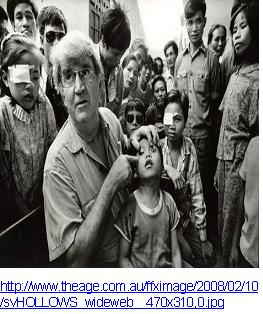
| Due to his concern for eye disorders, mainly trachoma, he went to Nepal, Eritrea, and Vietnam to teach local doctors how to perform eye surgery. Fred�s motivation to travel came from internal gratification he received from the work, responsibility, achievement, and personal growth he experienced dealing with and helping different cultures. By receiving recognition, rewards, and support Fred managed to maintain his leadership in this field for over thirty years (Herzberg, 1987).
Fred was arrested for being involved in an anti-apartheid demonstration in Sydney. He was a member of the Communist Party. He believed in labour unions and a workforce that was democratically self-managed by workers. This belief was at the foundation of how he treated his team (Hollows, 1991). |
| He developed most of his leadership skills while being in charge of the eye divisions at the University of NSW, Prince Henry hospital and the Prince of Wales hospital. He also travelled extensively, which exposed him to a reality that there were so many a lot worse off than thought possible.
In 1971, he helped set up the Aboriginal Medical Service and then other medical services all over Australia for Aboriginals. He believed in coaching people to give them the knowledge and abilities to train others and provide medical care for themselves. A by-product of his religious upbringing, his mountaineering, or wanting to be a priest gave Fred an immense drive, a very strong work ethic, high motivation, courage, and passion for his work (Corris, 1991). |
| Leadership Development |
| Fred was disgusted by the governments �blatant disinterest in eye care for Aboriginal people� and was not shy in saying so. He observed firsthand the inconsistency in medical care between white and indigenous Australia, such as it was that the life expectancy of an Aborigine is 20 years less than a white Australian, and that only 24% of their men and 35% of women live until 65. Often his outspoken, uncensored comments, short temper, and total lack of diplomacy created leadership polarity within different groups of people (Marks, 2004). |
| Weaknesses
Warmth and empathy were shown to all his patients, however only to those colleagues with similar ideals to his own were afforded the same treatment. At times Fred lacked emotional control and became frustrated. He had zero tolerance for inaction, political agendas, or turf wars and upset many people with his blunt observations on health care, HIV Aids, and greedy corporations (Profile, 2007). Fred�s mission started when he visited Aborigines in the Northern Territory in 1968. He commented that he had seen �eye diseases of a degree that hadn't been seen in Western society for generations.� This really annoyed Fred to the point where his lack of emotional control was nearly his undoing. The consensus was that he made outrageous, defamatory remarks about Australia and Australians and unequivocally believed that Australians were racist and did not care about Aborigines. This was a very unpopular view back in that time and did not win Fred many followers at all (Marks, 2004). �Each year in Africa about two and a half million people go blind...and they just go blind... they sit around in their huts� Fred Hollows (CRP 2007). |
|
According to Gover (1989), Fred had the strong personality characteristics of a creative leader, being a non-conformist, energetic, persistent, thrill seeking, and self-confident (Dubrin, 2006 p330).
Fred had the natural ability to inspire people by doing what needed to be done, by open communication, shear persistence, and vision. �A leader encourages, leads by example, cares about the team and gives regular feedback� (Owens 2007). |
| "I believe that the basic attribute of mankind is to look after each other" Fred Hollows (Profile 2007).
Fred was a humanitarian, a socialised leader, with a very strong work ethic combined with a high level of devotion and drive. One day in Mexico, he walked 20km to visit and treat sick people (Hollows, 1991). |
| Strengths
Fred Hollows had many strong leadership personality traits. He was assertive, warm, trustworthy, enthusiastic, and self-confident (Dubrin, 2006). He was fast to identify a problem and found answers even faster. In his words: 'When I've seen an opportunity, I haven't sat down and called a committee meeting...we've gone and done it.' This attitude helped him to inspire many doctors and other health professionals to volunteer their time (CRP 2007). |
| He was a committed, caring, highly moral man when it came to helping less fortunate people. He turned his own personalty disadvantages into strengths by focusing on the task that needed completing. His passion, courage and flexibility allowed him to follow his mission all over the world. He had very strong core values, allowing him to set very ambitious goals, which is important to any leader (Aaker, 2005).
According to Owens (2007) �a true leader inspires others to greatness, and they do this through their direct influence. They help others achieve what those individuals thought was impossible for them to do.� This is at the heart of what Fred lived day to day, by having that direct influence on so many people. |
| __________________________________________________________________________________ |
| __________________________________________________________________________________ |
| __________________________________________________________________________________ |
| __________________________________________________________________________________ |
| __________________________________________________________________________________ |
| __________________________________________________________________________________ |
| strengths, weaknesses, and the development of his unique style of leadership. It is formatted into newspaper style columns with pictures and graphics. |
| Dr Fred Hollows |
| To reinforce this view of Fred, the Foundation website states, �above all else he was a humanitarian, which made him a terrific doctor. He truly believed it was the role of the doctor to serve, to help those in need� (FHF 2008). |
| Written by David McCleay Business Student ECU Bunbury for Leadership 3 MAN3121 Major: Accounting & Public Practice |
| by David McCleay |