|
THE HONORABLE, ERNEST EVERETT JUST 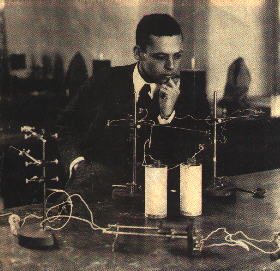 Brother
Just arrived at Howard University in 1907 as an Instructor in English and
in 1908 was asked
In 1909, Brother Just began graduate studies at the Marine Biological Laboratory at Woods Hole, Massachusetts, under Dr. Frank R. Lillie, Head of the Zoology Department at the University of Chicago.� It was at the Marine Biological Laboratory that he was to spend most of his summers for the next 30 years with marine eggs becoming the center of his research interest. Brother Just's first paper was published in 1912; he received the Doctor of Philosophy Degree in Biology from the University in 1916.� We, the blessed Brothers of Omega Psi Phi Fraternity, Inc. stand daily, in appreciation of God Almighty; for on a rainy Friday evening, on November 17, 1911, He guided Edgar A. Love, Oscar J. Cooper, Frank Coleman and Professor Ernest E. Just as they founded our, BELOVED FRATERNITY.� Before earning his doctorate degree, Brother Just received the first Spingarn Medal, awarded by Dr. J. E. Spingarn, first chairman of the Board of Directors of the National Association for the Advancement of Colored People (NAACP).� Brother Just was married to Ethel Highwarden of Columbus, Ohio, in 1912. There were three children, Dr.� Margaret Just Butcher, Distinguished Professor of American Literature at Federal City College, Washington, D.C.; Mr. Highwarden Just, a school principle in Cordele, Georgia, and Mrs. Maribel Just Butler, an employee of the Bureau of Census, Washington, D.C.� In 1920, Brother Just became a Julius Rosenwald Fellow in Biology of the National Research Council.� He was a special lecturer at the Congress of Zoologist in Padua, Italy, in 1930, and did research for three consecutive years at the Kaiser Wilhelm Institute for Biology in Berlin. Subsequently, Brother Just worked at the Sorbonne in Paris, the Biological Station in Naples, and was once a guest of the Prince of Monaco, conducting experiments in the Prince's private laboratory.� Brother Just became Vice President of the American Society of Zoologists; was an Associate Editor of:� Biological Bulletin, Journal of Morphology, Physiological Zoology, Collaborator Protoplasm (Berlin), and Cytologia (Japan).� In spite of his many offers to go to larger universities, Brother Just remained at Howard University spending his summers doing research either at the Marine Biological Laboratory at Woods Hole or abroad in Europe at the Marine Biological Laboratory, Naples, Italy.� The exceptional scholarly environment created by his intellectual devotion to science, inspired many people of African descent to become teachers (Bishop Edgar A. Love), physicians (Dr. Oscar J. Cooper), and research scientists (Professor Frank Coleman).� As a research scientist, Brother Just had boundless enthusiasm for his chosen field, but it was quiet rather than explosive enthusiasm.� His contributions were models of scientific presentation, numbering approximately seventy papers. He was co-author with Dr. Frank R. Lillie on the chapter on Fertilization in Cowdry's Symposium entitled "General Cytology." In 1939, Brother Just published two books, Basic Methods for Experiments in Eggs of Marine Animals", (P. Blakiston's Sons and Company, Philadelphia), and "The Biology of the Cell Surface", (by the same publisher).� In
spending his life attempting to unravel the mysteries of cell development,
Brother Just achieved distinction as a teacher, author, and scientist.
It is little wonder that he was able to say:� "If I can give the boys
and girls a scientific start, it will help them in whatever they do later.�
It will clarify life.� I doubt if I'd leave Howard to go into the
best research laboratory in the world.� I believe in mass action,
and I'm here to help raise the general level of race attainment.�
I feel as if I ought to do something for my race in the South." (The Negro
in World History, Philip
- Taken from the Memorial Symposium and Dedication, Ernest Everett Just Laboratory of Cellular Biology, Thursday, May 18, 1972.� My Brothers, on this day, from now and ever more, let us accept this challenge.� THE CHALLENGE� Following the Great War, we are now in an era of universal reconstruction. This nation, all nations must play a part; we men of the Omega Psi Phi, all men must play a part. Earth, old traditions, hopes as old as man himself, ay, and prejudices too, our heritage from ages gone, part of the price we pay for our evolution, all of these are in the balance. Many of these must and shall go; we tremble lest others go. The world is well nigh hysteria. Under the shock of these last four years, civilization, fresh from the rim of Hell is convulsive; orderly activity is difficult indeed in these hyper excitable times. What shall we do?� These times demand clean men, of clear vision, of straight thinking, of unselfish doing.� And every Omega man must accept this challenge.� Out of groups like ours, men who know and feel TO THE UTMOST Fidelity, Liberty and Fraternity, must come to the world absolution.� Only by the bonds of brotherhood, stronger than life or death, which shall grip harder and more securely as ever greater numbers feel the tie, shall the world at last stand unfettered of evil, because chained in real fraternity.� -Ernest Everett Just, The Oracle, Spring 1919� |
